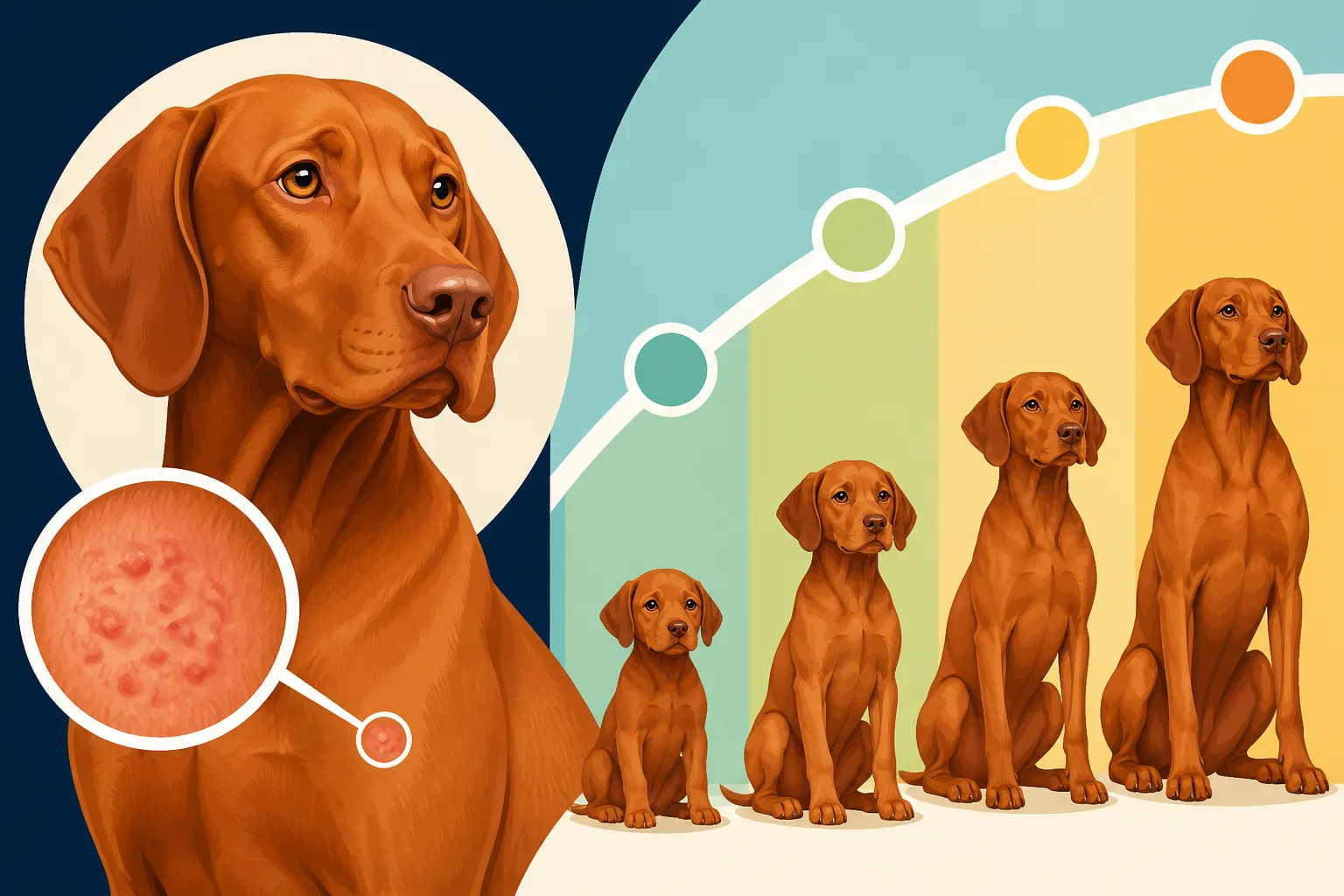
The Age a Vizsla’s Skin Disease Appears
It’s a deeply frustrating experience to watch your beloved Vizsla struggle with skin issues. One minute they’re a picture of health, all sleek copper and boundless energy, and the next you’re seeing flaky patches, relentless scratching, or thinning fur. It’s natural to wonder, "When did this start? Is this normal for their age?" This guide is here to shed light on the typical ages Vizslas might begin to exhibit signs of various skin diseases, helping you understand what to look for and when to act.
Understanding the Onset of Common Vizsla Skin Conditions
Vizslas, with their beautiful, single coats and sensitive systems, are unfortunately predisposed to a range of skin conditions. The age at which these issues first manifest can vary widely, from early puppyhood to their senior years, and often gives clues about the underlying cause. Knowing these timelines can help you differentiate between a passing irritation and a more serious, chronic problem.
Early Puppyhood Concerns: Allergies and Irritations
Sometimes, skin troubles can pop up surprisingly early in a Vizsla's life, even before they’ve celebrated their first birthday. These early signs often point towards environmental allergies or even certain types of puppy-specific skin infections. Imagine bringing home your bouncy, adorable copper shadow, only to notice them constantly rubbing their face, scratching behind their ears, or developing little red bumps on their belly. It’s heart-wrenching, and immediately makes you question if you're doing something wrong.
Often, what you're seeing in a young pup could be the first flicker of atopic dermatitis, an allergic skin disease. Puppies as young as three to six months might start showing signs, reacting to pollens, dust mites, or molds in their environment. These aren't necessarily severe at first; it might just be mild itching or a bit of redness in their armpits or groin. Sometimes, it can even be a reaction to their food, though true food allergies are less common than environmental ones. It’s a bit of a detective game to figure out what's bothering them, and it can feel overwhelming when you just want your pup to be comfortable.
Sebaceous Adenitis: A Key Vizsla Skin Challenge
One of the more notorious skin diseases in the Vizsla breed is Sebaceous Adenitis (SA). This isn't just a simple itch; it's a serious autoimmune condition where the immune system mistakenly attacks and destroys the sebaceous glands, which are responsible for producing the oils that keep skin and coat healthy. When these glands are gone, the skin becomes dry, flaky, and prone to secondary infections. For many Vizsla owners, this diagnosis can feel like a punch to the gut.
The typical age for Sebaceous Adenitis to appear in Vizslas is usually in young adulthood, often between one to five years old, though it can certainly strike later. You might first notice a dulling coat, then patches of dry, scaly skin, often starting along the back, neck, or top of the head. It's not uncommon for owners to initially mistake it for dry skin or seasonal shedding, applying conditioners and hoping for the best, only to find it worsens. We’ve dedicated a whole article to exploring what Sebaceous Adenitis Does to a Vizsla, diving deep into its mechanisms. It’s a condition that truly highlights Why a Vizsla's Immune System Is the Breed's Weak Point, as their genetic makeup makes them more susceptible to these immune-mediated attacks.
The Variable Timeline of Autoimmune Skin Diseases in Vizslas
Beyond SA, Vizslas are unfortunately prone to a host of other immune-mediated skin issues. The appearance of these conditions isn't always neat and tidy, often emerging over a span of years, and sometimes mimicking other ailments. This variability can make diagnosis incredibly challenging and frustrating for both owners and veterinarians alike.
When Genetics and Environment Collide: Autoimmune Manifestations
Many autoimmune skin conditions in Vizslas, like pemphigus foliaceus or certain forms of discoid lupus erythematosus, can show up from young adulthood to middle age – typically between 2 to 6 years old. It’s a period when your Vizsla is usually in their prime, full of energy and vitality, which makes the onset of such a debilitating condition all the more distressing. These conditions are a complex dance between a dog's genetic predisposition and various environmental triggers. A dog might carry the genetic markers for an autoimmune disease, but it might only be "switched on" by something like stress, an infection, or even exposure to certain chemicals or medications.
The initial signs can be incredibly subtle, like intermittent lameness, slight fever, or general malaise, before any skin lesions become obvious. When they do, you might see crusts, scabs, pustules, or ulcerations, often on the face, paw pads, or mucocutaneous junctions (where skin meets mucous membranes, like around the eyes or nose). These symptoms can be incredibly uncomfortable for your dog and confusing for you. Understanding How Common Sebaceous Adenitis Is in Vizslas gives us a benchmark for just how prevalent these genetic predispositions can be within the breed.
Later-Life Skin Changes and Diagnoses
Just when you think you’ve navigated the tricky waters of youthful exuberance and potential early-onset conditions, a Vizsla's skin can present new challenges as they enter their senior years, typically from 7 or 8 years onward. These can range from benign age-related changes to new disease processes entirely. For an old Vizsla, whose body has worked so hard, skin can thin, become less elastic, and be more prone to injury and infection. You might find yourself checking them over more frequently after a hunt, noticing how much more delicate their skin seems.
Hormonal imbalances, such as Thyroid Failure in a Vizsla, can also manifest as skin changes, including coat thinning, dry skin, and recurrent infections. While thyroid issues can appear earlier, they are more common in middle-aged to older dogs, and often the first visible symptom is a dull, sparse coat. Then, of course, there’s the increased risk of certain Cancers That Take a Vizsla Early, some of which present as lumps and bumps on or under the skin. It’s crucial to know that not every lump is malignant, but any new growth, especially in an older dog, warrants a prompt veterinary check.
Recognizing Symptoms and Seeking Timely Diagnosis
The key to managing any Vizsla skin condition, regardless of when it appears, is vigilance and prompt action. Our dogs can't tell us exactly what hurts or how much they're itching, so it's up to us to be their advocates and observant caregivers. This means understanding what to look for and not delaying a visit to the vet when something seems off.
Initial Signs and Red Flags to Watch For
Being a Vizsla owner means being intimately familiar with your dog's skin and coat. Their short, fine hair makes it easier to spot issues than on a long-haired breed, but you still need to be looking.
- Persistent Itching and Scratching: This is often the first and most obvious sign. If your Vizsla is constantly scratching, licking, or chewing at certain areas, it's a huge red flag. It might start subtly, but if it becomes habitual or interferes with their daily life, it's time to investigate.
- Redness or Inflammation: Inspect their armpits, groin, belly, and between their toes. These areas are often more sensitive and can show redness early on.
- Hair Loss Patterns: Are there patches of thinning hair or complete bald spots? Pay attention to the pattern. Symmetrical hair loss, especially on the flanks, can suggest hormonal issues, while patchy loss with scabs might point to parasitic or infectious causes.
- Dryness, Flaking, or Scaling: If you notice your Vizsla's skin seems excessively dry, or you can literally see flakes or dandruff, this is a common sign of conditions like sebaceous adenitis. Our article Whether a Vizsla's Skin Flakes Badly goes into detail on what to watch for.
- Unusual Odor: While Vizslas are generally known for not having a strong "doggy" smell, a sudden musky or yeasty odor, especially from their skin or ears, often indicates a bacterial or fungal infection.
- Lumps, Bumps, or Sores: Any new growths, scabs that don't heal, or open sores need immediate attention. Even small ones.
These signs, especially when combined, paint a picture that your vet needs to see. Don't fall into the trap of thinking it's "just a scratch" or "they're probably just hot." Early detection can make a world of difference in treatment success and your Vizsla's comfort.
The Importance of Veterinary Consultation and Testing
When you spot any of these red flags, your first and most crucial step is to get your Vizsla to the veterinarian. It’s easy to get lost down the rabbit hole of online self-diagnosis, but a professional assessment is invaluable. A good vet will take a thorough history, conduct a physical exam, and then recommend diagnostic tests tailored to your dog's symptoms. This is where Managing a Vizsla's Skin for Life truly begins.
Common diagnostic tools might include:
- Skin Scrapes: To check for external parasites like mites.
- Cytology: Examining cells from skin lesions under a microscope to identify bacteria, yeast, or inflammatory cells.
- Fungal Cultures: To rule out ringworm.
- Allergy Testing: If environmental allergies are suspected, your vet might recommend blood tests or intradermal skin tests to identify specific allergens. You might also need to consider Whether a Vizsla Reacts to Its Food and pursue an elimination diet trial.
- Skin Biopsy: For more complex or persistent conditions like Sebaceous Adenitis or other autoimmune diseases, a skin biopsy is often definitive. This involves taking a small sample of skin for histopathological examination. We discuss this process in Whether a Skin Biopsy Confirms It in a Vizsla.
It’s important to remember that treating Vizsla skin diseases is often a multi-faceted approach, involving medications, special shampoos, dietary changes, and sometimes ongoing management. Pet insurance providers like Healthy Paws can be a huge help here, as chronic skin conditions can become quite expensive over time. They understand that a Vizsla's health can be a marathon, not a sprint. Choosing to invest in their health early with comprehensive coverage can save you immense financial stress down the road. Healthy Paws is often praised for its coverage of chronic conditions, which is especially relevant for a breed like the Vizsla.
| Skin Condition | Typical Age of Onset (Approx.) | Common Initial Signs | Vizsla Predisposition (Yes/No) |
|---|---|---|---|
| Atopic Dermatitis | 3 months – 3 years | Itching, redness (paws, ears, belly) | Yes |
| Sebaceous Adenitis | 1 – 5 years (can be later) | Dull coat, scaling, hair loss (neck, back, head) | Yes (strong) |
| Food Allergies | Any age (often young) | Itching, gastrointestinal upset | Yes |
| Pyoderma (Bacterial) | Any age (puppies common) | Red bumps, pustules, scabs, hair loss | Yes (secondary to allergies) |
| Fungal Infections | Any age | Circular patches of hair loss, redness, scales | Yes |
| Hypothyroidism | 2 – 8 years (middle age common) | Coat thinning, dry skin, weight gain, lethargy | Yes |
| Autoimmune Pemphigus | 2 – 6 years | Crusts, pustules, ulcers (face, paws) | Yes |
| Lumps/Bumps (Benign/Cancerous) | Middle to Senior years | New growths on or under the skin | Yes (certain cancers) |
When considering the full scope of What a Vizsla Costs a Year to Keep, the potential for ongoing skin treatments, especially for conditions like Sebaceous Adenitis, can be a significant factor. That's why having a plan for financial support, like a Healthy Paws policy, can offer real peace of mind. It allows you to focus on getting the best care for your Vizsla without constantly worrying about the veterinary bills for things like medicated shampoos, specialized diets, or even immunosuppressant drugs. Ultimately, the goal is to keep your Vizsla comfortable, happy, and living their best life, no matter their age or the skin challenges they might face.
Disclaimer
This article is for general informational purposes only and does not constitute professional advice. Laws, prices and regulations vary by location and change over time. Consult a qualified professional for guidance on your specific situation.