Settling a Vizsla Rehomed at Two
Settling a rehomed two-year-old Vizsla requires predictable routines, safe spaces, and patience during the initial honeymoon period.
Work with the temperament you have.
House-training and crate work, recall, leash manners, separation anxiety, and the behaviors this breed is wired for.

Settling a rehomed two-year-old Vizsla requires predictable routines, safe spaces, and patience during the initial honeymoon period.

Vizsla maturity timelines and developmental stages explain when extended adolescence ends and calmer adult behavior finally begins.

Neutering a Vizsla changes hormone-driven behaviors like roaming and marking, but does not inherently eliminate their natural high energy.

Intact male Vizslas mark territory due to testosterone and instincts, creating indoor and outdoor management challenges for owners.

Vizsla puppy socialization during early vaccination windows explains safe places to visit before full immunity develops.
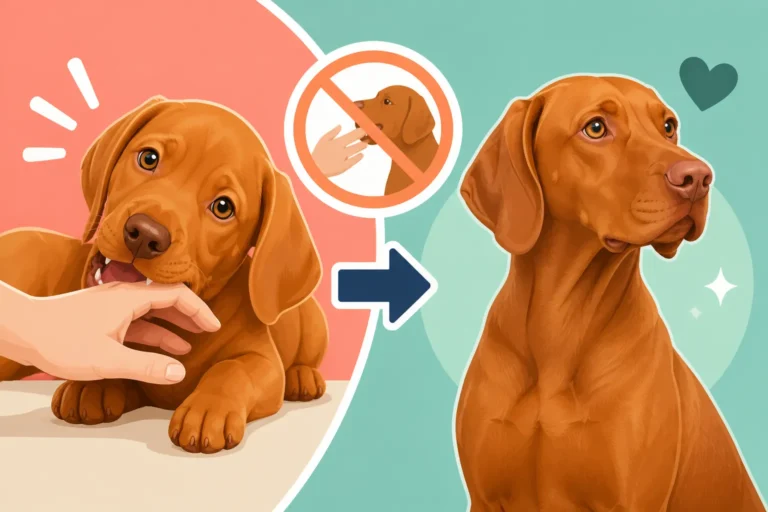
Vizsla puppy mouthing explains the natural teething phase, breed genetics, and strategies for teaching proper bite inhibition.

Vizsla puppy biting behavior and high energy levels explained, with methods to teach a softer mouth and manage sharp teeth.

Crating a Vizsla puppy at night helps prevent accidents, controls chewing behavior, and builds house-training consistency.

Vizsla puppy overnight bladder control depends on age, metabolism, and routine, allowing owners to set realistic expectations.

House training for a Vizsla puppy takes four to six months, requiring a consistent schedule and careful attention to bladder control.