Whether Any Test Predicts VIP in a Vizsla
The thought of your vibrant Vizsla, full of life and bounding energy, suddenly facing a debilitating condition like Vizsla Inflammatory Polymyopathy (VIP) is truly heartbreaking. As Vizsla owners, we constantly worry about the unique health challenges our beloved copper dogs face, and the uncertainty around early detection for serious illnesses can be incredibly frustrating. This guide aims to shed light on whether any current tests can truly predict VIP, offering clarity on diagnostic tools, ongoing research, and how best to support your Vizsla's health journey.
Understanding Vizsla Inflammatory Polymyopathy (VIP)
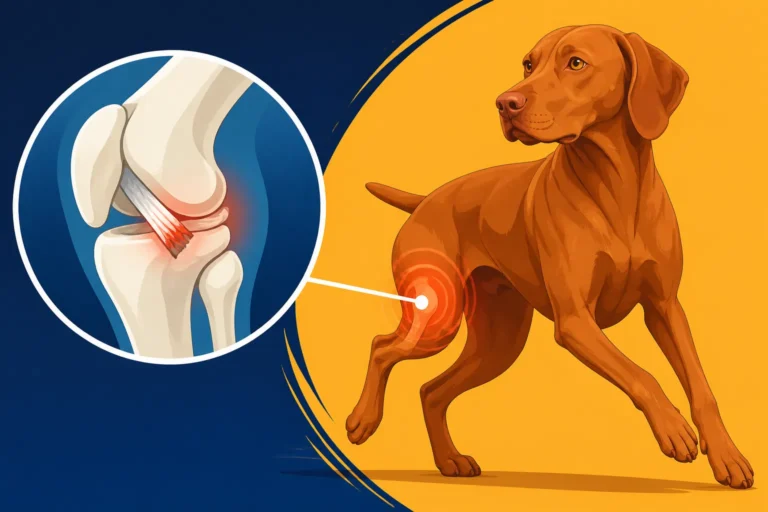
Vizsla Inflammatory Polymyopathy, often simply called VIP, is a severe, progressive autoimmune neuromuscular disease that primarily affects the muscles of the head, neck, and sometimes the limbs in Vizslas. It's a condition that can steal away your dog's ability to eat, drink, and even hold their head up, leaving owners feeling helpless and desperate for answers. The onset can be swift and devastating, making the quest for predictive tests all the more urgent for concerned Vizsla families.
The Cruel Nature of VIP
Imagine your typically eager-to-please Vizsla, who normally inhales their food, suddenly struggling to chew or swallow. This isn't just a minor inconvenience; it's a sign of a serious underlying issue. VIP specifically targets the masticatory muscles – those vital for chewing – as well as muscles in the neck. Over time, these muscles can waste away, leading to a sunken appearance around the temples, difficulty barking, and profound weakness. It’s a truly cruel disease that robs a dog of fundamental functions, and watching your energetic companion decline in this way is agonizing. This condition is part of a broader category, sometimes referred to as The Muscle Disease Named After the Vizsla, highlighting its specific impact on our breed. The progression of VIP can be incredibly disheartening, with dogs often losing significant muscle mass in their head, making their once-regal appearance gaunt and fragile.
Why Early Identification Matters
For any progressive disease, early identification is almost always the key to better management and improved quality of life. With VIP, while there isn't a definitive cure, timely intervention can help control the inflammation, slow muscle degeneration, and support the dog's ability to eat and maintain some comfort. If you could know in advance that your Vizsla was predisposed to VIP, you might be able to implement preventative strategies, carefully monitor for the earliest signs, or simply prepare yourself and your veterinary team for the challenges ahead. This proactive approach could potentially extend the period of good health and minimize suffering. The thought of spotting signs like The First Signs of Polymyopathy in a Vizsla and having a predictive test would be a game-changer for so many families.
The Challenges of Diagnosing VIP in Vizslas
When it comes to VIP, one of the most frustrating aspects for owners and veterinarians alike is the lack of a simple, non-invasive predictive test. We live in an age of incredible medical advancements, yet for this specific, breed-specific condition, a crystal ball remains out of reach. Current diagnostic methods are reactive, not proactive, meaning they confirm the disease once symptoms are already present rather than predicting its onset.
Current Diagnostic Approaches
Currently, diagnosing VIP often involves a combination of tests once clinical signs like difficulty swallowing, muscle wasting, or changes in bark begin to appear.
- Muscle Biopsy: This is often considered the gold standard. A small sample of affected muscle tissue, typically from the temporalis or masseter muscles in the head, is surgically removed and sent for histopathological examination. The biopsy will show characteristic inflammatory changes and muscle degeneration indicative of polymyopathy. This procedure requires general anesthesia, making it more invasive and costly than a simple blood test.
- Blood Tests: While not diagnostic on their own, certain blood markers can support a suspected VIP diagnosis. Creatine Kinase (CK) levels, an enzyme released when muscle tissue is damaged, are often significantly elevated in dogs with VIP. However, elevated CK can also be a sign of many other muscle injuries or conditions, so it's not specific enough to diagnose VIP in isolation. Other blood tests might look for autoantibodies, but a specific, reliable antibody test for Vizsla Inflammatory Polymyopathy has not yet been identified.
- Electromyography (EMG): This diagnostic procedure involves inserting small needle electrodes into the muscles to record their electrical activity. Abnormal electrical activity can indicate muscle disease, denervation, or inflammation. Like a muscle biopsy, EMG requires specialized equipment and expertise, and often sedation, making it a more complex diagnostic step.
It's crucial to understand that these tools—biopsies, elevated CK levels, and EMGs—are used to diagnose VIP once symptoms manifest. They confirm What Vizsla Inflammatory Polymyopathy Does to the body, particularly how Why VIP Attacks a Vizsla's Head and Neck and how Whether a Vizsla's Head Muscles Waste Away, but they do not predict which seemingly healthy Vizsla will develop the condition in the future. This distinction is vital for managing owner expectations and understanding the current limitations of veterinary science regarding VIP.
The Genetic Predisposition Puzzle
It’s widely suspected among Vizsla breeders and veterinary geneticists that VIP has a strong genetic component. The fact that it's largely confined to the Vizsla breed, and anecdotal evidence from breeding lines, certainly points to an inherited predisposition. However, identifying the specific genetic markers responsible for VIP has proven to be incredibly challenging.
Most complex diseases like VIP aren't caused by a single, easily identifiable gene mutation (like, say, progressive retinal atrophy in some breeds). Instead, they are often polygenic, meaning multiple genes, each contributing a small risk, work together in combination with environmental factors to trigger the disease. This makes the search for a predictive genetic test akin to finding several needles in a haystack, rather than just one. Researchers are actively working on this puzzle, using advanced genomic sequencing techniques to compare the DNA of affected Vizslas with unaffected ones. Until a specific gene or set of genes is identified, and a reliable test developed, breeders and owners are left navigating a difficult landscape where knowing Whether VIP Is Inherited in the Vizsla is one thing, but predicting it is another entirely. This is why some breeders try to avoid breeding dogs with known family histories of VIP, but without a genetic test, it's a difficult gamble.
Exploring Potential Predictive Avenues and Research
The desire for a predictive test for VIP is palpable within the Vizsla community. Every owner wants to protect their dog from suffering, and researchers are well aware of this need. While we don't have a magic bullet yet, there are avenues being explored that offer hope for the future.
The Hope for Genetic Markers
The most promising long-term solution for a predictive test lies in identifying specific genetic markers. Researchers around the world are continuously working on canine genomics, and the Vizsla breed is certainly on their radar due to conditions like VIP. If a specific genetic mutation or a panel of mutations could be identified that significantly increases a Vizsla's risk of developing VIP, then a simple cheek swab or blood test could one day allow breeders to screen potential breeding dogs, and for owners to understand their puppy's predisposition.
Imagine a scenario where a puppy comes with a "VIP risk score" based on its genetics. While this wouldn't be a guarantee, it would allow owners to be incredibly vigilant, working closely with their vets to monitor for subtle changes, potentially even before they are obvious. This kind of information would not only empower individual owners but also inform responsible breeding practices, potentially reducing the prevalence of VIP in future generations. The work involved is immense – it requires large cohorts of affected and unaffected dogs, advanced genetic sequencing, and rigorous statistical analysis to pinpoint causal or highly correlated genes. But the scientific community remains hopeful that such breakthroughs are on the horizon.
Proactive Monitoring and Early Warning Signs
In the absence of a predictive genetic test, the most powerful tool an owner has is vigilant observation and proactive communication with their veterinarian. Knowing what to look for and acting swiftly can make a significant difference in managing the disease if it does appear.
Key early warning signs for VIP can include:
- Difficulty eating or drinking: This might manifest as dropping food, struggling to chew hard kibble, taking longer to finish meals, or having trouble lapping water. Sometimes, a Vizsla might aspirate food or water, leading to coughing after eating or drinking. Spotting Swallowing Trouble in a Vizsla is paramount.
- Changes in facial expression: The powerful muscles in the head can begin to atrophy, leading to a noticeable hollowing around the temples. Your dog might appear to have a "sad" or "strained" expression.
- Changes in bark: The muscles involved in vocalization can also be affected, leading to a weaker, hoarser, or changed bark.
- Generalized muscle weakness: While initially affecting the head and neck, VIP can sometimes progress to limb weakness, making your Vizsla less enthusiastic about exercise or struggling with stairs.
- Lethargy or changes in demeanor: Any inexplicable shift in your Vizsla's typically vivacious personality warrants attention.
Keeping a detailed log of any subtle changes in behavior, appetite, or physical appearance can provide invaluable information to your vet. Regular check-ups, even when your Vizsla seems perfectly healthy, are also crucial. Your vet can monitor muscle mass, observe gait, and discuss any concerns you might have. While these aren't predictive tests, they are the best current defense for early detection and intervention.
Managing Risk and Supporting Your Vizsla
While the absence of a predictive test for VIP is undoubtedly frustrating, it doesn't mean Vizsla owners are powerless. There are proactive steps we can take to manage risk, ensure the best possible care, and financially prepare for potential health challenges.
Breeding Considerations
For those considering adding a Vizsla to their family, responsible breeding practices are paramount. Even without a direct VIP genetic test, reputable breeders make informed decisions based on pedigree, health clearances, and the health history of their breeding lines. They should be transparent about any instances of VIP in their dogs' lineage and be committed to producing healthy puppies.
Breeders should be performing recommended health screenings for the Vizsla breed, which include hip and elbow evaluations, eye certifications, and thyroid testing. While a test for Whether a Vizsla Breeder Screens for Thyroid doesn't directly relate to VIP, it demonstrates a commitment to overall breed health. A good breeder will talk openly about the health issues in the breed and in their specific lines, answering your questions thoroughly. They may also participate in research efforts by submitting DNA samples from their dogs to help scientists identify those elusive genetic markers for VIP and other conditions. Choosing a puppy from well-screened parents and a breeder who prioritizes health above all else is currently the best way to mitigate known risks, even if VIP remains a mystery to predict.
The Role of Veterinary Care and Insurance
Maintaining a strong, open relationship with your veterinarian is essential for any Vizsla owner, especially when dealing with breed-specific health concerns. Regular wellness exams are your first line of defense, allowing your vet to catch subtle changes and establish a baseline for your dog's health. Discuss any concerns you have, no matter how minor they seem, as early intervention is critical for many conditions, including VIP.
Financially preparing for potential health issues is also a wise decision. Treatments for conditions like VIP, if diagnosed, can be extensive and costly, including long-term medication, specialized diets, and supportive care. This is where pet insurance can be a real lifesaver. Companies like Healthy Paws offer comprehensive coverage that can help ease the financial burden of unexpected illnesses. While no insurance policy covers pre-existing conditions, enrolling your Vizsla early in life can ensure that future conditions like VIP, if they arise, are covered. Having a policy from Healthy Paws can provide peace of mind, allowing you to focus on your dog's recovery without the added stress of crushing veterinary bills. It’s worth exploring different plans and understanding what they cover for chronic conditions, knowing that managing What Treating a Vizsla's Polymyopathy Costs can be substantial. Investing in your Vizsla's health, both through excellent veterinary care and a robust insurance plan, is a proactive step every owner should consider.
| Diagnostic Tool | What It Does | Is It Predictive for VIP? | Pros | Cons |
|---|---|---|---|---|
| Muscle Biopsy | Examines muscle tissue for inflammation and degeneration. | No, diagnostic | Definitive diagnosis when clinical signs are present. | Invasive, requires anesthesia, expensive, reactive. |
| Blood Test (CK levels) | Measures creatine kinase, an enzyme released by damaged muscle. | No, supportive | Relatively simple, non-invasive, inexpensive. | Not specific to VIP; elevated in many muscle conditions; reactive. |
| Electromyography (EMG) | Records electrical activity of muscles. | No, diagnostic | Helps localize nerve/muscle damage; can indicate muscle inflammation. | Requires specialized equipment/expertise, often sedation; reactive. |
| Genetic Test (Hypothetical) | Analyzes DNA for specific VIP-associated genes. | Yes, potentially | Non-invasive, can identify risk before symptom onset, informs breeding. | Currently, no such test exists for VIP. |
| Veterinary Exam / Owner Observation | Clinical assessment of symptoms and changes. | No, early detection | Non-invasive, constant vigilance, can trigger further diagnostics. | Not a "test," relies on symptoms already appearing. |
Disclaimer
This article is intended for informational purposes only and does not constitute veterinary advice. Always consult with a qualified veterinarian for any health concerns or before making any decisions about your Vizsla's care, diet, or treatment. The information provided here is based on general knowledge and research and may not be applicable to every individual case.