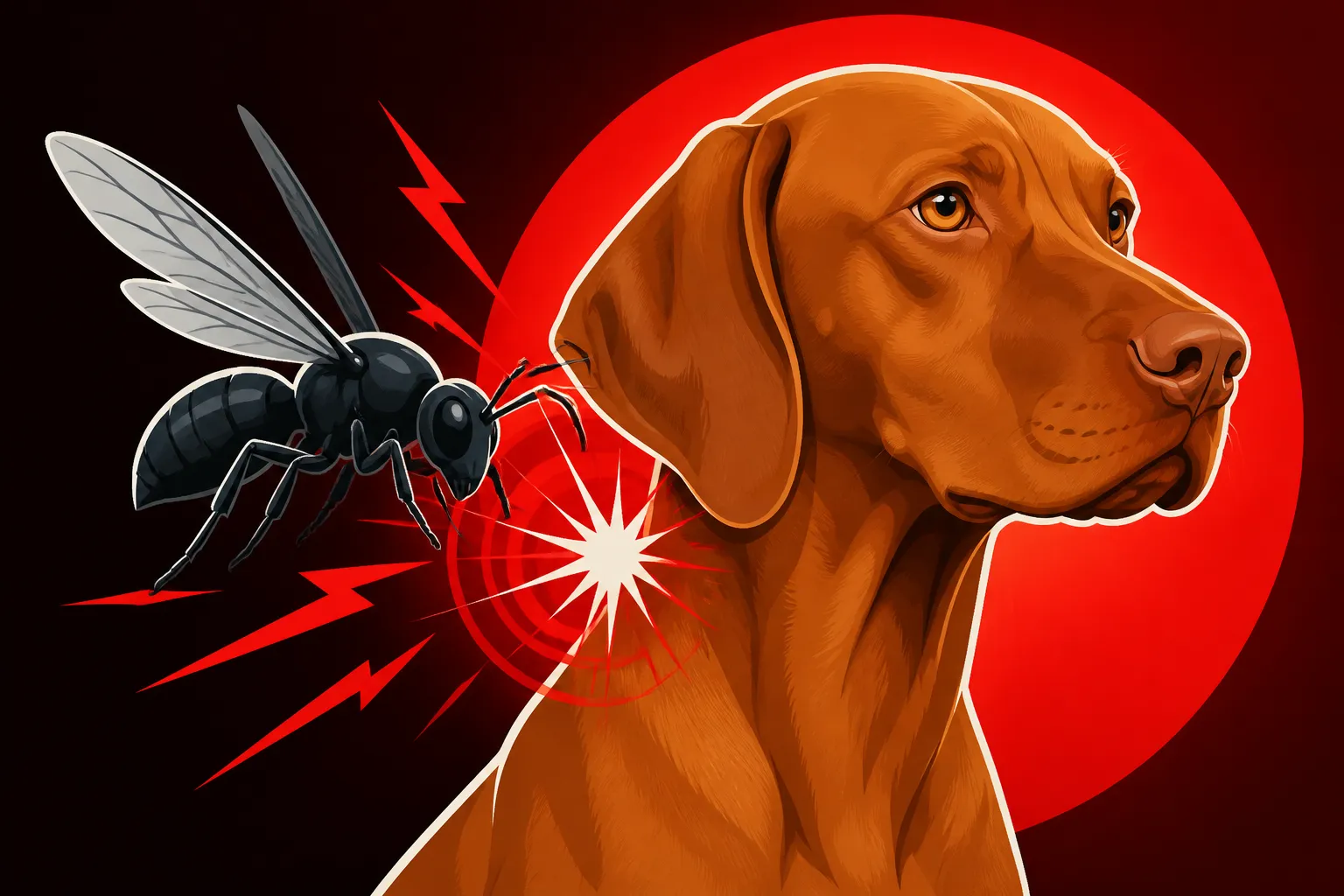
Why VIP Attacks a Vizsla’s Head and Neck
It's heartbreaking to watch your beloved Vizsla struggle with something as fundamental as eating or even holding their head comfortably. Many Vizsla owners face this devastating reality when their energetic, affectionate companion is diagnosed with Vizsla Inflammatory Polymyopathy (VIP), a condition that often targets the vital muscles of the head and neck, leaving owners searching for answers and practical ways to help. This guide will meticulously explore why VIP specifically attacks these crucial areas, helping you understand the intricacies of this challenging disease and how it impacts your dog's daily life.
Unraveling Vizsla Inflammatory Polymyopathy (VIP)
Vizsla Inflammatory Polymyopathy (VIP), sometimes referred to simply as polymyositis in other breeds, is a complex and often frustrating condition that specifically impacts our beautiful Hungarian Pointers. It's a disease that strikes at the very core of what makes a Vizsla so vibrant: their incredible athleticism and boundless joy. Unlike a simple sprain or strain, VIP is a systemic issue, rooted deep within the dog's own immune system, turning it against its own body.
What is Vizsla Inflammatory Polymyopathy
At its heart, Vizsla Inflammatory Polymyopathy is an autoimmune disease where the body's immune system mistakenly attacks its own muscle tissue, leading to widespread inflammation and degeneration. Imagine your body's defense system, designed to protect you from invaders like bacteria or viruses, suddenly deciding that your own muscles are the enemy. That's essentially what happens with VIP. This inflammatory response doesn't just cause pain; it actively breaks down muscle fibers, leading to weakness, atrophy (wasting away), and a significant impact on mobility and quality of life. The condition is progressive, meaning it tends to worsen over time without intervention, and its unpredictable nature can be incredibly distressing for owners. Understanding the nuances of What Vizsla Inflammatory Polymyopathy Does is crucial for any Vizsla parent.
What makes VIP particularly insidious is its predilection for certain muscle groups. While it can affect muscles throughout the body, the most striking and debilitating symptoms often manifest in the head and neck. This is why you'll often see dogs with VIP struggling with actions we take for granted, like chewing their food, swallowing, or even just holding their head up straight. The inflammation causes these muscles to become painful and weak, making everyday activities a monumental effort. Early detection and understanding of the specific muscles targeted can make a significant difference in how the disease is managed and how comfortable your Vizsla can remain.
How VIP Differs from Other Muscle Diseases
While VIP presents with symptoms that might initially resemble other muscle or neurological conditions, its underlying autoimmune mechanism sets it apart. For instance, you might see a Vizsla with sudden weakness and think of an injury, or perhaps even a tick-borne illness that affects nerve-muscle transmission. However, VIP's hallmark is the inflammatory infiltration of muscle tissue itself, a direct attack by the immune system. It's not a bacterial infection that can be cleared with antibiotics, nor is it a simple degenerative process like arthritis, although secondary arthritis can develop due to altered biomechanics.
Another condition sometimes confused with VIP is Masticatory Myositis, which specifically targets the masticatory (chewing) muscles. While Masticatory Myositis is also an immune-mediated condition and affects some of the same muscles, it's generally considered a distinct entity with different antibodies involved. VIP, on the other hand, is often more generalized, even if the head and neck are the most visibly affected. The muscle disease named after the Vizsla, VIP is unique in its prevalence and specific presentation within the breed, making accurate diagnosis by a veterinary neurologist or internal medicine specialist critical. They will often look for specific antibodies or characteristic changes in muscle biopsies to differentiate VIP from other muscle disorders.
The Anatomy of a Vizsla's Head and Neck Vulnerability
To truly grasp why VIP hits the head and neck so hard, we need to take a quick dive into canine anatomy. These aren't just pretty parts of your dog; they house some of the most complex and critically important muscle groups responsible for survival functions. When these muscles fail, the impact on a Vizsla's life is immediate and severe.
Muscles of Mastication and Swallowing
The head and neck area of a Vizsla, like all dogs, is packed with incredibly powerful and intricate musculature. Let's start with the muscles of mastication – these are the muscles responsible for chewing. Think about the temporalis, masseter, and pterygoid muscles. They allow your Vizsla to open and close their jaw with force, tear kibble, and chew on their favorite toy. When these muscles are inflamed and weakening, the simple act of eating becomes excruciatingly difficult, if not impossible. Dogs with VIP often show visible atrophy in these areas, particularly across the top of the head and cheeks, making their skull appear more prominent. This can be one of the first visible signs, causing owners to worry that a Vizsla's head muscles waste away.
Beyond chewing, the muscles involved in swallowing are equally vital and located in the neck and throat region. These include the pharyngeal muscles and those of the esophagus, which work in a coordinated, reflexive dance to propel food from the mouth down to the stomach. Imagine trying to swallow if these muscles aren't working in perfect harmony – food can get stuck, or worse, be inhaled into the lungs, leading to aspiration pneumonia. This is a very real and dangerous complication for Vizslas suffering from VIP. The intricate neural control and constant activity of these muscles might make them particularly susceptible to immune attack.
Neck Muscles and Their Critical Functions
Moving down to the neck, we find a complex network of muscles that do far more than just hold the head up. The cervical muscles allow for a wide range of motion: looking up, down, side-to-side, and rotating the head. These muscles are engaged almost constantly throughout the day, whether your Vizsla is scanning the horizon for birds, leaning in for a snuggle, or simply balancing while running. Powerful neck muscles are also essential for the hunting Vizsla, enabling them to carry game, push through dense cover, and maintain balance over uneven terrain.
When VIP attacks these neck muscles, the consequences are profound. Dogs can develop a stiff gait, reluctance to move their head, or even a noticeable head tremor. The weakness can be so severe that they struggle to lift their head from the ground, or it might sag downwards, a tell-tale sign of muscle weakness. This constant discomfort and struggle significantly diminish their quality of life, transforming a once agile dog into one that moves slowly and painfully. The muscles around the larynx and trachea are also susceptible, which can further complicate breathing and swallowing.
The Unique Blood Supply to These Areas
Another factor that might contribute to the head and neck being prime targets for VIP is their rich and complex blood supply. Muscles, especially those that are highly active, demand a constant and robust flow of blood to deliver oxygen and nutrients and remove waste products. The head and neck region, with its many vital organs and constant movement, is exceptionally vascularized. This means there are numerous blood vessels, both large and small, permeating the muscle tissue.
While good blood supply is generally beneficial, in an autoimmune disease like VIP, it can also act as a double-edged sword. A denser network of blood vessels means more access points for immune cells to infiltrate the muscle tissue. If the immune system is mistakenly targeting these muscles, a richer blood supply could facilitate a more aggressive and widespread immune attack in these areas. The constant turnover of cells and high metabolic activity in these muscle groups might also present more "targets" or signals that the errant immune system identifies as problematic.
Why Muscles Become Targets in VIP
It’s not just where the disease strikes, but why these particular tissues become targets for the immune system’s misguided assault. The mechanisms behind this cellular miscommunication are still being fully explored, but we understand some key factors at play.
Inflammation and Muscle Fiber Damage
At its core, VIP is characterized by inflammation. When the immune system launches an attack, it sends inflammatory cells – like lymphocytes and macrophages – to the targeted muscle tissue. These cells release a cocktail of inflammatory mediators, such as cytokines, which are designed to combat pathogens but, in this case, end up damaging healthy muscle fibers. This process is essentially a slow, relentless destruction of the very cells that enable movement.
As muscle fibers are damaged, they release their internal contents, which can further signal the immune system to continue its attack, creating a vicious cycle of inflammation and tissue destruction. The body attempts to repair this damage, but chronic inflammation often leads to fibrosis (scar tissue formation), which replaces functional muscle tissue. This scar tissue is inelastic and doesn't contract like healthy muscle, further exacerbating weakness and limiting range of motion. For a Vizsla, this means permanent loss of function if the inflammation isn't controlled, directly leading to issues like spotting swallowing trouble in a Vizsla.
Genetic Predisposition and Triggers
While the exact "trigger" for VIP isn't always clear, a strong genetic predisposition within the Vizsla breed is undeniable. It's not a random occurrence; there's something in the Vizsla's genetic makeup that makes them uniquely susceptible. This inherited susceptibility means certain genes might make a Vizsla's immune system more prone to misidentifying its own muscle cells as foreign invaders. This makes understanding whether VIP is inherited in the Vizsla incredibly important for breeders and prospective owners.
It’s believed that while the genetic blueprint loads the gun, an environmental trigger or a combination of factors might pull the trigger. These triggers could be anything from a viral infection, a specific vaccination, stress, or even certain medications. For example, an infection might initially activate the immune system, and if there's a genetic predisposition, the immune response might then "cross-react" with muscle proteins that coincidentally resemble components of the pathogen. This phenomenon, known as molecular mimicry, is a suspected mechanism in many autoimmune diseases. The age a Vizsla develops polymyopathy can vary, but these early triggers are thought to play a role.
The Immune System's Role in VIP
The immune system is a marvel of biological engineering, but sometimes, its programming goes awry. In the case of VIP, it turns its formidable power inward, targeting the very body it's meant to protect. Understanding this internal struggle is key to developing effective treatments.
Autoimmune Response Specificity
In VIP, the autoimmune response isn't just a general attack; it's quite specific. The immune system generates antibodies and T-cells that are directed against components of muscle tissue. Researchers have identified specific autoantibodies in some forms of immune-mediated myositis, although the precise targets in Vizsla VIP are still an area of active study. What we do know is that these autoantibodies and autoreactive T-cells specifically recognize proteins within muscle cells, labeling them as "foreign" and initiating a destructive cascade.
This specificity helps explain why muscles are targeted and not, for example, kidney or liver tissue. It also suggests that certain muscle proteins might share characteristics with external pathogens, fooling the immune system into attacking. This highly targeted attack means that while the damage might be widespread across muscles, the underlying mechanism is a precise, albeit mistaken, identification process by the immune system's cellular and humoral components.
The Role of T-cells and Antibodies
Both cellular immunity (T-cells) and humoral immunity (antibodies) play significant roles in the pathogenesis of VIP. T-cells, particularly cytotoxic T-lymphocytes, are like the immune system's assassins. They directly attack and destroy cells they perceive as threats. In VIP, these T-cells infiltrate muscle tissue, leading to direct destruction of muscle fibers. The presence of these inflammatory cells on muscle biopsies is a strong diagnostic indicator of polymyopathy.
Concurrently, B-cells produce autoantibodies. These antibodies can bind to specific muscle proteins, marking them for destruction by other immune cells or interfering with their normal function. While the role of antibodies in VIP is less clear than T-cells, both branches of the adaptive immune system contribute to the chronic inflammation and muscle damage observed in affected Vizslas. The coordinated attack by both T-cells and antibodies makes VIP a particularly challenging condition to manage, as both aspects of the immune response need to be modulated for effective treatment. Pet insurance providers like Healthy Paws often cover treatments for chronic conditions like VIP, offering a lifeline to owners facing ongoing veterinary expenses.
Recognizing the Signs of Head and Neck Involvement
One of the most crucial aspects of managing VIP is early detection. Because the disease often manifests visibly in the head and neck, astute owners have a chance to catch it before it progresses too far. These signs can be subtle at first, but they will become increasingly apparent.
Difficulty Eating and Drinking
This is often one of the first and most alarming signs for many Vizsla owners. Your dog, who once enthusiastically wolfed down their dinner, now approaches their bowl with hesitancy. They might drop food, chew slowly and painfully, or even let kibble fall out of their mouth. You might notice they take longer to finish meals or refuse to eat harder foods, preferring softer, more easily swallowed options. This is a direct result of the inflammation and weakness in their masticatory muscles.
Drinking can also become a challenge. A Vizsla might try to lap water but struggle to form a proper seal with their lips, leading to messy drinking. They might gag or cough after drinking, indicating that water is entering their airways rather than going down their esophagus. If a Vizsla with VIP struggles to eat or drink, immediate veterinary attention is needed, as dehydration and malnutrition can quickly become secondary problems. It might be time to consider whether a Vizsla needs a feeding chair to assist with mealtime.
Changes in Facial Expression and Neck Movement
Vizslas are incredibly expressive dogs, and VIP can dramatically alter their facial appearance and how they hold their head. You might notice a subtle change in their smile or how their eyes appear. As the temporalis and masseter muscles atrophy, the head might look thinner, almost gaunt, with the bony contours of the skull becoming more prominent. Their expression might seem more "flat" or sad, as the muscles responsible for subtle facial movements are weakened.
Neck movement is also profoundly affected. A healthy Vizsla holds its head high and moves it fluidly. A Vizsla with VIP might hold its head lower, struggle to lift it, or appear stiff and reluctant to turn its head. Some dogs develop a noticeable head tremor, especially when trying to focus or hold their head in a certain position. This can lead to an awkward, almost painful posture, and a clear indication that the muscles are failing. Watching for the first signs of polymyopathy in a Vizsla can really help with prompt treatment.
Progressive Muscle Wasting
While often starting in the head and neck, VIP is a progressive disease, meaning muscle wasting (atrophy) will eventually extend to other areas if not controlled. However, the visible wasting in the head and neck is usually the most striking. The once strong, athletic jawline and prominent neck muscles will begin to shrink. This isn't just a cosmetic issue; it's a direct indicator of muscle fiber loss and replacement by fibrous tissue or fat.
As the disease progresses, other muscle groups, particularly in the shoulders and hindquarters, can also show signs of atrophy, leading to generalized weakness and a reluctance to exercise. Your Vizsla, once a tireless companion, might become lethargic, struggle to jump into the car, or find climbing stairs difficult. This generalized weakness further impacts their quality of life, making even short walks exhausting. Early and aggressive treatment is essential to try and halt or slow this progression and preserve as much muscle mass and function as possible.
Managing VIP and Supporting Affected Muscles
Receiving a VIP diagnosis can be overwhelming, but it's not a death sentence. While there's no cure, proactive management and supportive care can significantly improve your Vizsla's quality of life and potentially extend their functional years.
Early Diagnosis and Intervention
The sooner VIP is diagnosed, the better the prognosis for managing the disease and minimizing long-term damage. If you notice any of the aforementioned signs – difficulty eating, changes in facial expression, neck stiffness, or unexplained muscle weakness – don't hesitate to contact your veterinarian. They will likely recommend a series of diagnostic tests, which can include blood work (looking for elevated muscle enzymes like CK), electromyography (EMG) to assess muscle electrical activity, and muscle biopsies, which are often definitive.
Once diagnosed, immediate intervention is key. The primary goal of treatment is to suppress the overactive immune system and reduce inflammation, thereby preventing further muscle destruction. This often involves high doses of immunosuppressive medications. The faster you can bring the inflammation under control, the more muscle tissue you can save from irreversible damage.
Therapeutic Approaches to Reduce Inflammation
The cornerstone of VIP treatment revolves around immunosuppression. Corticosteroids like prednisone are typically the first line of defense. They work by dampening the immune response and reducing inflammation throughout the body. While highly effective, long-term steroid use comes with its own set of potential side effects, so your vet will aim to find the lowest effective dose to control symptoms. Many owners wonder whether steroids control a Vizsla's polymyopathy, and the answer is often yes, at least initially.
In cases where steroids alone aren't sufficient, or if side effects become problematic, other immunosuppressive drugs might be added. These can include medications like azathioprine, cyclosporine, or mycophenolate. These "steroid-sparing" agents can help reduce the amount of prednisone needed, thereby mitigating its long-term adverse effects. Your vet will work closely with you to tailor a treatment protocol that addresses your Vizsla's specific needs, carefully monitoring their response and adjusting medication as necessary. Regular follow-ups and blood tests are crucial to ensure the medications are working and not causing undue harm. Planning for these long-term medical needs is where a good pet insurance plan from a provider like Healthy Paws can be incredibly helpful.
Supportive Care for Head and Neck Function
Medical management is only one part of the equation; supportive care for the compromised head and neck muscles is equally vital. Because eating and drinking are often severely affected, dietary adjustments are paramount. Switching to a soft, palatable diet, or even adding water to kibble to create a gruel, can make meals easier to consume. Some dogs benefit from eating from elevated bowls to reduce the strain on their neck or, in severe cases of swallowing difficulty, might even require a feeding tube for a period. If a Vizsla with VIP struggles to eat, these adaptations are not just helpful, they're essential.
Physical therapy can also play a significant role. Gentle massage, passive range-of-motion exercises, and supervised short walks can help maintain muscle flexibility and strength, preventing contractures and secondary issues. It's about finding a balance between encouraging movement without causing pain or overexertion. Maintaining a warm, comfortable environment can also help, as muscle pain can be exacerbated by cold. Regularly assessing your Vizsla's ability to eat, drink, and move their head will allow you to quickly adjust supportive care as needed, ensuring they remain as comfortable and functional as possible.
| Symptom Category | Specific Manifestations in Head/Neck VIP | Impact on Vizsla | Management Strategy |
|---|---|---|---|
| Eating & Drinking | Difficulty chewing, dropping food, messy drinking, coughing/gagging | Malnutrition, dehydration, aspiration pneumonia | Soft/liquid diet, elevated bowls, hand-feeding, feeding chair |
| Facial & Oral | Atrophy of temporal/masseter muscles, drooping lips, weak jaw | Altered facial expression, inability to grasp/hold food | Gentle massage, soft toys, consistent oral hygiene |
| Neck & Head | Reluctance to move head, low head carriage, head tremor, stiff neck | Pain, limited mobility, difficulty balancing | Pain management, gentle exercise, warm bedding, supportive collars |
| General | Lethargy, generalized weakness, muscle wasting | Reduced activity, loss of muscle mass, discomfort | Immunosuppressants, controlled exercise, high-quality nutrition |
Final Thoughts on This Challenging Condition
Living with a Vizsla diagnosed with VIP, especially when it impacts their head and neck so profoundly, is a journey filled with challenges, but also immense love and dedication. It requires vigilance, patience, and a close partnership with your veterinary team. While the disease can be heartbreaking, understanding why it attacks these vital areas empowers you to provide the best possible care for your cherished companion. From medical interventions to daily supportive adjustments, every step you take helps them navigate this condition with greater comfort and dignity.
Disclaimer
This article is intended for informational purposes only and does not constitute veterinary advice. Always consult with a qualified veterinarian for any health concerns or before making any decisions about your pet's medical care. Vizsla Inflammatory Polymyopathy (VIP) is a serious condition, and professional diagnosis and treatment are essential.