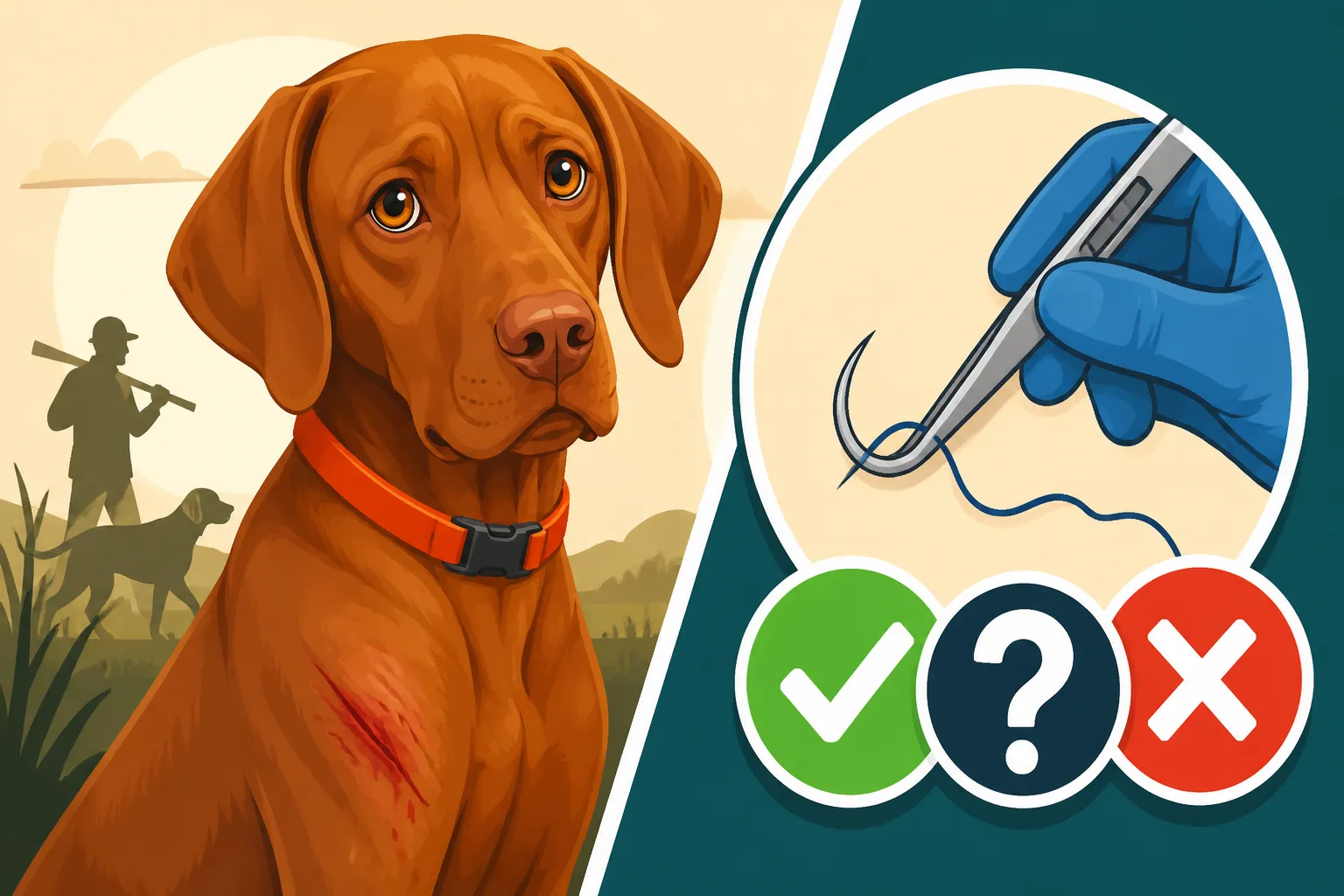
Whether a Vizsla Needs Stitches After a Hunt
It’s a scenario every Vizsla owner who hunts dreads: you’re out in the field, your magnificent rusty dog is doing what they love, and suddenly, you see a limp, or worse, a patch of blood. Vizslas are undeniably tough and driven, but their signature fine, thin skin can be surprisingly delicate when faced with the rigors of heavy cover. This guide will walk you through how to assess those inevitable cuts and scrapes, helping you understand when a quick clean-up at home will suffice and when a trip to the vet for stitches is absolutely necessary.
Understanding the Vizsla's Delicate Skin in the Field
There’s nothing quite like watching a Vizsla work. Their boundless energy, graceful movement, and intense focus are a joy to behold. But for all their athletic prowess, Vizslas have a particular vulnerability that often catches new owners off guard: their skin. It's a trade-off for that sleek, low-maintenance coat and efficient cooling system, but it means they can pick up injuries that a denser-coated breed might shrug off.
The Thin Coat and Fine Skin Challenge
A Vizsla's single, short coat is one of its defining features. It’s magnificent to touch, practically self-cleaning, and contributes to their minimal "doggy" smell. However, this coat offers very little protection against sharp thorns, abrasive brush, or jagged edges you might encounter in the field. Beneath that sparse covering lies skin that is equally fine and thin. It’s not a defect; it’s just how they’re built. This makes them incredibly flexible and agile, allowing them to twist and turn through dense cover with ease, but it also means that what might be a minor snag for a Labrador could be a significant laceration for your Vizsla.
Think about it from your own perspective: imagine running through a thorny rose bush in a thick canvas jacket versus a silk shirt. The silk shirt is going to tear, and your skin beneath it is far more likely to get scratched or cut. That's essentially the difference for a Vizsla. They aren't built with the same dense undercoat or thick hide that many other hunting breeds possess. This characteristic, while making them efficient in milder climates and less prone to overheating, comes with the responsibility of careful inspection and proactive protection from their owners. You might find superficial scratches that barely break the skin, but just as often, you'll encounter deeper nicks and cuts that seem to appear out of nowhere, testament to the unforgiving nature of wild terrain. It's simply part of owning and hunting with this amazing breed.
Common Areas for Field Injuries
When your Vizsla is barreling through fields or pushing through thickets, certain parts of their body bear the brunt of the contact. These are the hotspots where you're most likely to find injuries, and knowing them helps you focus your post-hunt inspection.
The belly and chest are prime targets. When a Vizsla "pushes" through dense cover or crawls on their chest to get under low-hanging branches, their underside is completely exposed. Bristly bushes, sharp sticks, and even barbed wire (a true nightmare scenario) can easily slice through the thin skin here. Imagine the vulnerable area just behind their front legs, or the soft skin of their abdomen — these spots often show the wear and tear of a dedicated hunter. Many owners find long, linear cuts on their dog’s chest or flank after a particularly rigorous hunt, which can sometimes look superficial but be surprisingly deep due to the momentum of the dog moving through the obstacle. You really need to part the hair and get a good look.
Their ears are another common injury site. Vizslas have those beautiful, soft, low-set ears that flap and swing as they move. While they’re great for scenting, they’re incredibly susceptible to tears from thorns, briars, or sharp branches. An ear wound can bleed profusely, making it look much worse than it is, but it can also be genuinely deep and require specific attention. Similarly, their legs and paws are constantly in motion, churning through all kinds of terrain. Pads can get cut on sharp rocks or glass, while the soft skin between the toes is a magnet for thorns, stickers, or even nasty Whether a Vizsla Gets Grass Seeds in Its Feet. These seemingly small foreign bodies can quickly cause swelling, lameness, and lead to deeper infections if not removed promptly. Even their tail, if undocked and whipping through brush, can suffer nicks and scrapes. It's important to be thorough in your Checking a Vizsla Over After a Hunt after every outing.
Assessing the Wound: When Stitches Might Be Needed
Discovering a wound on your Vizsla can be startling, especially if it's bleeding. Your first instinct might be panic, but taking a deep breath and systematically assessing the injury is crucial. Not every cut needs immediate veterinary intervention or stitches, but understanding the signs that do require professional care can prevent complications and ensure proper healing.
Identifying a Superficial Scratch vs. a Deep Laceration
The immediate challenge is to tell the difference between something you can handle at home and something that needs a vet. A superficial scratch or abrasion typically affects only the top layers of the skin. It might look red, raw, and ooze a bit, or even bleed lightly for a few moments, but the edges of the skin usually lie close together naturally. These wounds often occur when your Vizsla brushes against rough surfaces rather than being punctured or sliced. The bleeding tends to stop relatively quickly with gentle pressure, and you won’t see gaping tissue or underlying structures. These are the kinds of scrapes that often heal well with diligent cleaning and monitoring at home, sometimes just requiring a little What a First Aid Kit for a Hunting Vizsla Holds cream or antiseptic spray.
A deep laceration, on the other hand, is a different beast entirely. These wounds penetrate through multiple layers of skin, sometimes into the muscle or even exposing bone. You'll often see the edges of the skin pulled apart, leaving a noticeable gap. Bleeding can be more persistent, sometimes bright red and pulsing, indicating a cut to a small artery or vein. You might even see fat globules (which look yellow and lumpy) or muscle tissue (darker, fibrous) deep within the wound. A common scenario is a long, linear slice from barbed wire or a sharp branch, or a puncture wound from a pointed stick. These types of injuries almost always warrant a trip to the vet because they are more prone to infection, may have hidden damage, and won't heal properly without closure. For these deeper cuts, getting veterinary attention within the "golden hour" – generally considered to be within 6-8 hours of the injury – allows for the best chance of successful primary closure, meaning the wound can be cleaned and stitched immediately. After this window, the risk of infection increases, and the vet might opt for a different approach.
Factors Influencing the Decision to Stitch
Deciding whether a wound needs stitches isn't always straightforward, and it's definitely a judgment call best made with a veterinarian if there's any doubt. However, several factors guide this decision:
-
Depth and Size: This is often the most obvious indicator. Wounds that are deep enough to expose subcutaneous fat, muscle, or other underlying tissues almost certainly require stitches. If you can see beyond the skin, it’s typically too deep to heal cleanly on its own. Similarly, wide wounds where the skin edges are pulled far apart, regardless of depth, will struggle to close and scar poorly without help. Imagine a two-inch-long gash on your Vizsla's flank where the skin is clearly separated; that's a prime candidate for closure.
-
Location of the Wound: The area of the body where the injury occurs plays a huge role. Wounds over joints (like an elbow, knee, or hock) are problematic because constant movement makes natural healing difficult and can cause the wound to continually reopen. Stitches provide the necessary tension to hold the skin together in these high-motion areas. Similarly, cuts on the face or ears, even if not extremely deep, might warrant stitches for cosmetic reasons or to prevent long-term functional issues, such as a permanently floppy ear. Wounds on the delicate skin of The Thin Skin a Vizsla Takes Into the Field or armpits are also tricky because of constant rubbing and stretching.
-
Bleeding: While a lot of blood can come from a relatively minor wound, especially on the head or ears, persistent or arterial bleeding (bright red and pulsing) is a clear sign for immediate veterinary attention. The vet can identify the source of the bleeding and properly control it before closing the wound. If you’ve applied pressure for a good 10-15 minutes and it's still seeping, don't delay.
-
Contamination: Hunting environments are rarely sterile. Wounds often become contaminated with dirt, debris, plant matter, or even bacteria from the dog's own skin. A heavily contaminated wound, especially a puncture wound, might not be stitched immediately. Sometimes, a vet will thoroughly clean and debride the wound, and then choose to leave it open to drain for a day or two, or use a "delayed primary closure" where it's stitched a few days later once the infection risk is lowered. Stitches can inadvertently trap infection inside if the wound isn't perfectly clean. This is particularly relevant for deeper Whether a Vizsla's Skin Gets Secondary Infections.
-
Time Since Injury: This is a critical factor. Generally, wounds that are clean and fresh, ideally less than 6-8 hours old, have the best prognosis for primary closure with stitches. As time passes, tissue swelling increases, and the risk of bacterial contamination multiplying within the wound escalates, making stitching more complicated or even counterproductive. If your Vizsla has been injured all day and you only find the wound at night, the vet might decide on a different approach to avoid sealing in an infection.
The Role of a Veterinarian's Expertise
When in doubt, always err on the side of caution and consult your veterinarian. Their trained eye and diagnostic tools are invaluable. They can thoroughly clean the wound, a process called debridement, which might involve trimming away damaged or contaminated tissue that you wouldn't be able to safely remove at home. This step is crucial for preventing infection and promoting healthy healing.
Furthermore, a vet can explore the wound to check for hidden damage. This is particularly important with puncture wounds or deep lacerations, where sticks, thorns, or other foreign bodies might be embedded, invisible from the surface. They can also assess for nerve damage, tendon damage, or if a joint capsule has been compromised, all of which require specific medical or surgical interventions beyond simple stitches. Ignoring these underlying issues can lead to chronic pain, lameness, or severe infection. They might also choose surgical glue or staples for closure, which are often faster and appropriate for certain types of wounds, rather than traditional sutures. Understanding the What Stitching a Field Cut Costs on a Vizsla is also a practical consideration for owners.
First Aid in the Field and Post-Hunt Care
Even if your Vizsla is the most careful hunter in the world, injuries can happen. Being prepared with a basic first aid kit and knowing how to respond immediately in the field can make a significant difference in the outcome of an injury. Equally important is diligent care once you're back home.
Immediate Field Response
When you spot an injury, the first step is to calmly stop the hunt. Your Vizsla will feed off your energy, so remaining calm helps them relax and allows you to assess the situation more effectively. Gently restrain your dog, speaking in a soothing voice. If you're alone, you might need to leash them to a secure object or have them lie down while you work.
The primary goal in the field is to control bleeding and prevent further contamination. For bleeding wounds, apply firm, direct pressure with a clean cloth or gauze from your What a First Aid Kit for a Hunting Vizsla Holds. Hold the pressure steadily for several minutes. Avoid peeking too often, as this can dislodge clots. If blood soaks through, add more material on top; don't remove the original dressing. For minor cuts and scrapes that aren't actively bleeding, a quick rinse with sterile saline or even bottled water can help remove some surface dirt. Pat the area dry, and if you have antiseptic wipes, you can gently clean around the wound. Avoid harsh antiseptics like undiluted hydrogen peroxide directly in open wounds, as they can damage healthy tissue.
Once the bleeding is controlled, gently cover the wound with a clean, non-stick pad and secure it with vet wrap or athletic tape. This protects it from further contamination during the walk back to your vehicle. If the wound is on a paw, you might need to fashion a makeshift bootie. Remember, this is about stabilization, not a permanent fix. Your goal is to get your Vizsla safely and comfortably to a place where you can properly assess the injury, which often means heading straight to the vet.
Cleaning and Monitoring at Home
Once you're home or at the vet, proper wound care really begins. If the wound isn't immediately going to the vet for stitches, thorough cleaning is paramount. Use warm water and a mild, pet-safe antiseptic solution like diluted povidone-iodine (Betadine, diluted to the color of weak tea) or chlorhexidine (also diluted according to product instructions). Gently flush the wound, removing any visible debris. You can use a clean washcloth or gauze pads to gently clean the surrounding skin.
After cleaning, allow the wound to air dry or gently pat it dry with a clean cloth. For minor cuts, a thin layer of a veterinarian-approved antibiotic ointment can be applied. The biggest challenge then is preventing your Vizsla from licking or chewing the wound, which can introduce more bacteria and prevent healing. An Elizabethan collar (e-collar or "cone of shame") is often essential here. Even if they hate it, it's temporary and vital for proper healing. Keep the wound dry and clean, changing bandages as often as your vet recommends, or at least daily if it's an open wound.
Closely monitor the wound for any signs of infection: increased redness, swelling, warmth to the touch, pus or unusual discharge (especially green or yellow), or a foul odor. If your Vizsla seems unusually lethargic, develops a fever, or the wound doesn't show signs of improvement within a day or two, it’s time to call the vet again. Even seemingly minor wounds can develop complications, especially given Whether a Vizsla's Skin Gets Secondary Infections. Sometimes, what looks like a simple scrape can be deeper or more contaminated than initially thought.
Preventing Future Injuries
While you can't eliminate all risks, proactive measures can significantly reduce the chances of your Vizsla getting injured in the field. One of the most effective strategies is using protective gear. A good quality hunting vest, often made of tough Cordura or canvas, can shield your Vizsla's vulnerable chest and belly from thorns, briars, and sharp sticks. Whether a Vizsla Needs a Vest in the Field is a question many owners ponder, and for those hunting in thick cover, the answer is often a resounding yes. These vests act as a second, tougher skin, taking the brunt of the abuse.
Beyond gear, careful selection of hunting terrain makes a difference. Avoid areas known for heavy barbed wire, broken glass, or exceptionally dense, thorny bushes if possible. If you must traverse such areas, consider keeping your Vizsla on a lead or walking them through yourself first to clear a path. Regular conditioning also plays a role; a well-muscled, agile Vizsla is less likely to stumble or misstep into an obstacle. Maintaining healthy, tough paw pads with balms or waxes can also help prevent cuts and cracks.
Finally, establish a routine of thoroughly Checking a Vizsla Over After a Hunt immediately after every outing. This isn't just a quick pat down. It means a systematic inspection of their entire body – parting the fur on their belly, checking between their toes for foreign bodies, feeling their legs for swelling, and looking closely at their ears. Early detection allows for prompt treatment, often preventing a small issue from becoming a big, complicated one requiring significant veterinary intervention.
Alternatives to Traditional Stitches and Healing
Stitches are a common and effective method for closing wounds, but they're not the only solution a veterinarian might employ, nor are they always the best course of action. Depending on the wound's nature, location, and contamination level, other techniques or approaches to healing might be considered.
Surgical Glue and Staples
For smaller, clean, and superficial cuts that have minimal tension across the wound edges, veterinary-grade surgical glue can be an excellent alternative to stitches. This adhesive is applied directly to the clean, approximated edges of the skin, holding them together while the underlying tissues heal. It dries quickly and provides a good barrier against external contaminants. Surgical glue has the advantage of not requiring removal, as it sloughs off naturally as the skin heals, typically within 5-10 days. It's often used for minor lacerations on areas like the ears or face where traditional sutures might be more difficult to place or less comfortable for the dog. However, it's crucial to remember that this is a veterinary product and should only be applied by a professional. Using household super glue on a pet's wound is dangerous and can cause more harm than good.
Surgical staples are another rapid method for closing certain types of wounds. These sterile metal staples are applied with a special stapler, quickly bringing the skin edges together. They are often used for straightforward, linear lacerations, especially in areas where speed of closure is beneficial or where skin tension is moderate. Staples tend to be quicker to apply than traditional sutures and can be particularly useful in situations where the dog might be fractious or the wound is in an awkward location. Like stitches, staples typically need to be removed by a vet, usually within 10-14 days, once the wound has sufficiently healed. Both surgical glue and staples are tools in a vet's arsenal, chosen based on the specific characteristics of your Vizsla's injury.
Secondary Intention Healing (Natural Healing)
Sometimes, a wound simply cannot or should not be stitched closed. This is often the case with heavily contaminated wounds, deep puncture wounds with small openings, or wounds that are older than the "golden hour" for primary closure, where the risk of trapping infection is too high. In these situations, the vet might recommend healing by secondary intention. This means the wound is left open to heal naturally from the inside out.
The process involves diligent cleaning and managing the wound as it gradually fills in with granulation tissue (new, healthy tissue) and then epithelializes (skin grows over the surface). This method takes considerably longer than primary closure, often weeks or even months, and requires significant owner commitment to daily wound care. This includes frequent cleaning, applying topical treatments (as prescribed by the vet), and sometimes packing the wound with specialized dressings. The goal is to keep the wound bed moist but not soggy, prevent infection, and encourage healthy tissue growth. Your vet will likely provide detailed instructions, and regular check-ups might be necessary to monitor progress and adjust treatment. While slower and more labor-intensive, secondary intention healing can be incredibly effective for complex or infected wounds, ultimately leading to a strong, if sometimes larger, scar.
Wound Care Products and Supplements
Whether your Vizsla's wound is stitched, glued, or healing by secondary intention, proper at-home care with the right products is essential for a smooth recovery. The most basic and universally important product is an Elizabethan collar (E-collar or "cone"). Even the most well-behaved Vizsla will instinctively lick or chew at a wound, undoing stitches, introducing bacteria, or irritating delicate healing tissue. The cone, though unpopular with dogs, is non-negotiable for most wound care scenarios. You can find comfortable options on sites like Amazon or Chewy.
For cleaning, your vet may recommend specific antiseptic solutions or wipes, such as diluted chlorhexidine or povidone-iodine, to keep the wound site clean and free of bacteria. Over-the-counter antibiotic ointments designed for pets might be suggested for minor scrapes or as part of a larger wound care plan, but always confirm with your vet before applying anything directly to a deep or stitched wound. Some products could interfere with healing or simply aren't appropriate.
Beyond external care, nutrition plays a supporting role in healing. A diet rich in protein, essential fatty acids, and vitamins can help the body repair itself. While specific supplements are rarely needed for minor wounds if your Vizsla is on a high-quality diet (like those offered by Ollie for example), for extensive injuries or dogs struggling to recover, your vet might discuss options. Things like Whether a Vizsla Needs Fish Oil for Its Skin can contribute to overall skin health, which in turn supports the body’s ability to heal. Ensure your Vizsla maintains good hydration, and if they're a working dog, continue to monitor their weight closely, especially if they're laid up for a while, as discussed in Whether a Vizsla Should Be Weighed Through the Season. Always follow your veterinarian's specific instructions for wound care and product use to give your Vizsla the best chance for a complete recovery.
| Wound Type | Characteristics | Recommended Action | Vet Visit Necessary? |
|---|---|---|---|
| Superficial Scratch | Top layer of skin, minimal bleeding, edges touch. | Clean with mild antiseptic, keep clean and dry. | Usually not |
| Minor Laceration | Breaks skin, slight gaping, light bleeding. | Clean thoroughly, apply antibiotic ointment, monitor. | Potentially, if gaping or in awkward spot |
| Deep Laceration | Penetrates multiple skin layers, gaping, persistent bleeding. | Apply pressure, cover, seek vet immediately. | Always (urgent) |
| Puncture Wound | Small entry, unknown depth, high infection risk. | Clean around, do NOT probe, seek vet immediately. | Always (urgent) |
| Heavily Contaminated | Visible dirt/debris, often deep. | Gently rinse, apply pressure if bleeding, seek vet. | Always (urgent) |
| Wound Over Joint | Any depth, located on knee, elbow, etc. | Clean, cover, seek vet for proper closure and mobility. | Almost Always |
Disclaimer
This article is for general informational purposes only and does not constitute professional advice. Laws, prices and regulations vary by location and change over time. Consult a qualified professional for guidance on your specific situation.