Whether a Vizsla Blows Coat Seasonally
If you're a Vizsla owner, or thinking of becoming one, you might be wondering if these beautiful, sleek dogs shed their coats in big seasonal "blow-outs" like some other breeds. It's a common question, and one that often leads to a bit of a surprise for new owners. The truth is, while your Vizsla might shed a little more at certain times of the year, they don't typically "blow coat" in the dramatic way that, say, a German Shepherd or a husky does. Instead, what you're likely to experience is a more continuous, year-round shedding pattern. This guide will help you understand your Vizsla's unique coat and how to manage its consistent contribution of golden-rust hair to your home.
Understanding the Vizsla's Unique Coat Structure
Vizslas are known for their striking golden-rust color and their short, smooth, dense coats. This isn't just about aesthetics; their coat structure plays a huge role in how they interact with their environment and, of course, how much hair ends up on your sofa. Unlike many breeds, the Vizsla has a single coat, meaning they lack the thick, insulating undercoat found in dogs bred for colder climates.
The Single Layer Advantage and Disadvantage
The Vizsla's single coat is one of their defining characteristics. On the "advantage" side, this sleek, close-lying coat means less bulk, quicker drying after a swim, and a remarkable ability to stay relatively clean. It's often described as self-cleaning because dirt and debris tend to brush right off rather than getting trapped in a dense underlayer. This is also why many owners adore the fact that a Vizsla has no doggy smell, as there's less hair and oil to accumulate odors.
However, this single-layer construction comes with its own set of considerations. Without an insulating undercoat, Vizslas are far more susceptible to cold weather. You'll often see them shivering outdoors in temperatures that other dogs barely notice, and they'll seek out the warmest spots in the house. This lack of a thick, protective layer also means their thin skin is more vulnerable to cuts and scrapes when running through dense cover in the field. But when it comes to shedding, the single coat dictates a different rhythm. Instead of big seasonal dumps of fluff, a Vizsla's coat tends to replace individual hairs steadily throughout the year.
Why Continuous Shedding is the Vizsla Norm
Imagine a constant, low hum of hair replacement rather than a loud, seasonal burst. That's essentially what continuous shedding in a Vizsla looks like. Every hair on your dog's body goes through a growth cycle: it grows, rests, and then falls out to make way for a new one. In breeds with double coats, these cycles often synchronize with the seasons, leading to massive "coat blows" where they shed their entire undercoat to prepare for warmer or colder weather.
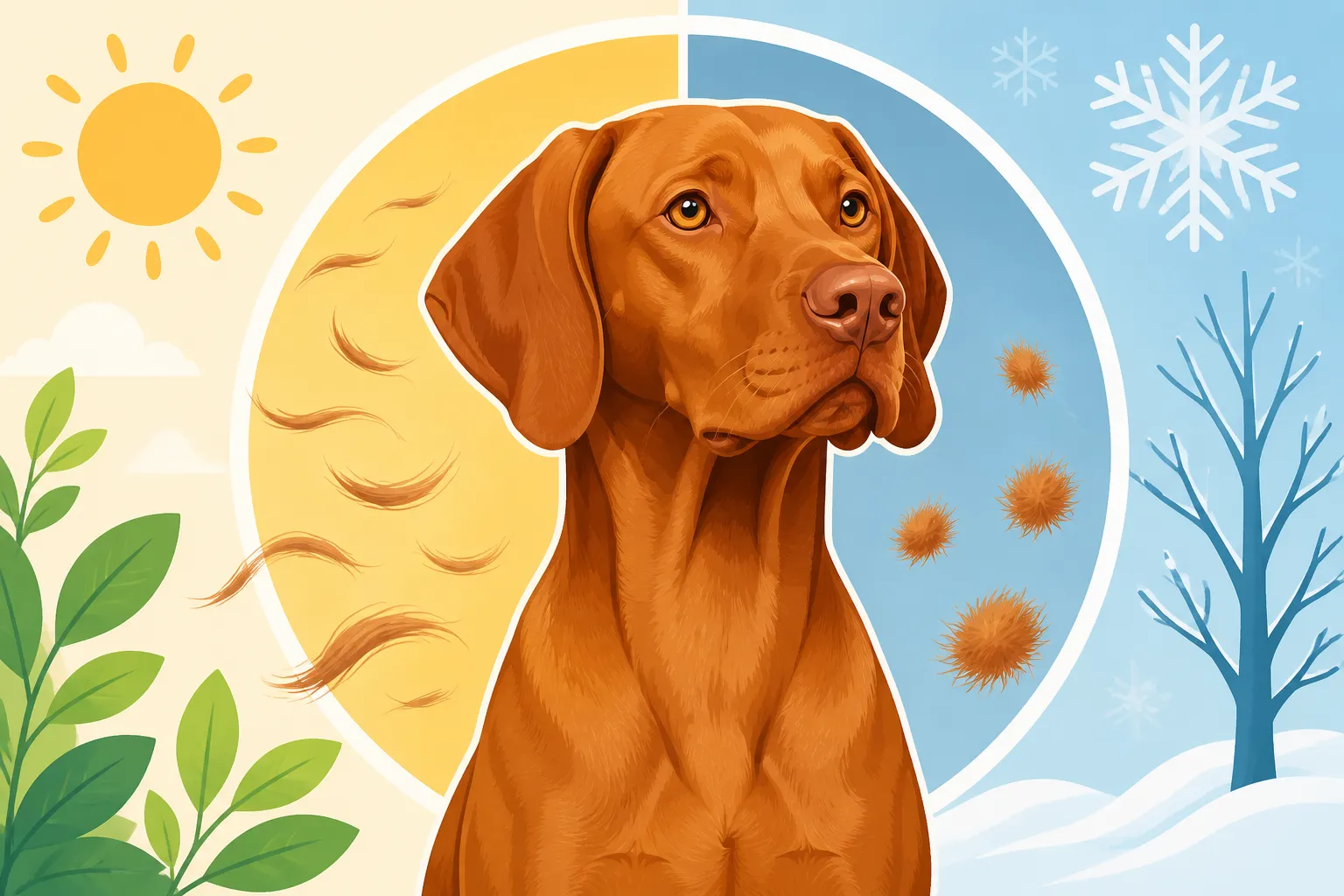
Vizslas, however, don't have that seasonal "reset" button. Their hair cycles are less synchronized, meaning different hairs are at different stages of growth and loss at any given time. This results in a steady, ongoing release of their short, stiff golden hairs. You might find a bit more hair around during spring as they shed a slightly thicker winter coat, or in the fall as new growth comes in, but it won't be the dramatic fluff explosion you see with breeds like Labs or Golden Retrievers. It's more about managing a consistent sprinkle of hair rather than battling a seasonal blizzard. For a deeper dive into the volume, check out How Much a Vizsla Sheds.
Factors Influencing Vizsla Shedding Beyond Season
While the Vizsla's single coat means they don't "blow coat" in the traditional sense, their shedding can still fluctuate. These changes are usually influenced more by internal and environmental factors than by the calendar seasons themselves. Understanding these influences can help you better manage the amount of hair you find around your home.
Diet and Nutrition's Role
Just like with humans, what your Vizsla eats directly impacts the health of their skin and coat. A dog receiving inadequate nutrition might have a dull, brittle coat and experience increased shedding as their body struggles to maintain healthy hair follicles. Conversely, a high-quality diet provides the essential building blocks for strong, healthy hair, which can minimize excessive shedding.
Look for dog foods with quality protein sources as the first ingredient, and healthy fats like omega-3 and omega-6 fatty acids. These fatty acids are critical for skin hydration and coat luster. Many owners find that supplementing with fish oil or choosing foods specifically formulated for skin and coat health can make a noticeable difference. Brands like Ollie, known for its fresh, human-grade ingredients, can provide excellent nutrition that supports a healthy coat. If you're using kibble, even adding a salmon oil pump from a retailer like Chewy can boost those essential omegas. Good nutrition isn't just about reducing shedding; it's about overall health, as detailed in Feeding a Vizsla That Burns Everything It Eats and Whether a Vizsla Needs Fish Oil.
Health, Hormones, and Stress
Your Vizsla's internal state can manifest externally, and shedding is often a key indicator. Hormonal changes, for instance, can significantly impact hair growth and loss. Spaying or neutering can sometimes lead to changes in coat texture and an increase in shedding due to shifts in hormone levels. It's a common, if frustrating, side effect for some dogs.
Underlying health issues are another major cause of excessive shedding. Conditions like hypothyroidism (an underactive thyroid) can lead to a dry, brittle coat, hair loss, and increased shedding. Allergies, both environmental and food-related, can also cause skin irritation, itching, and subsequent hair loss. Parasites like fleas and mites, though tiny, can cause immense discomfort and lead to scratching, licking, and localized hair loss. Even stress and anxiety can play a role; a highly stressed Vizsla might shed more than usual. If you notice a sudden, dramatic increase in shedding, bare patches, or a change in coat quality, it's always best to consult your vet to rule out any medical concerns. Addressing issues like Thyroid Failure and the Vizsla's Coat or Managing a Vizsla's Skin for Life can significantly impact shedding.
Environment and Grooming Habits
The environment your Vizsla lives in also affects their coat. Dogs that spend more time outdoors might develop a slightly thicker coat in winter for warmth, which they then shed in spring. However, this is still not a "blow" in the traditional sense, but rather a subtle adjustment. Indoor dogs, constantly exposed to stable temperatures and artificial lighting, tend to maintain a more consistent shedding pattern year-round.
Perhaps the most impactful factor you can control is your grooming routine. Regular brushing is paramount for managing a Vizsla's continuous shedding. It helps remove loose hairs before they can land on your furniture and clothing, distributes natural skin oils for a healthy coat, and stimulates circulation. Without an undercoat, a rubber curry brush or a shedding blade designed for short coats works wonders. How Often a Vizsla Needs Brushing is a key component of good coat health. Neglecting grooming simply means more hair in your home.
Managing Vizsla Shedding in Your Home
Since Vizslas are continuous, year-round, low-level shedding machines, your strategy shouldn't be about bracing for a seasonal event, but about consistent management. It's about proactive care and having the right tools on hand to keep your home from becoming entirely covered in fine golden hairs.
The Right Tools for the Job
Investing in the correct grooming tools makes a world of difference. For a Vizsla's short, dense coat, you'll want something that can effectively grab those shedding hairs without irritating their sensitive skin.
- Rubber Curry Brush: These are fantastic. The rubber nubs gently massage the skin, stimulating circulation and loosening dead hair, which then gets trapped in the brush. They're also great for a quick once-over to remove dirt and dust.
- Shedding Blades/Loops: Often called "deshedding tools," these are metal loops with very fine teeth. They work exceptionally well on short-coated breeds like Vizslas to pull out loose undercoat hairs. Be careful not to press too hard or overuse them, as they can sometimes irritate sensitive skin if not used correctly. Products from brands available on Amazon or Chewy often include these types of brushes, and reading reviews from other short-coated dog owners can guide your choice.
- Grooming Mitts: Similar to a curry brush but worn like a glove, these are excellent for getting into all the nooks and crannies, especially around legs and belly, and for a quick tidy-up before cuddling.
- Vacuum with Pet Attachments: This isn't a grooming tool for your dog, but it's crucial for your home! A good vacuum designed for pet hair, often with specialized brushes and attachments, will be your best friend.
A consistent brushing routine, even just a few minutes every day or every other day, can drastically reduce the amount of hair that ends up elsewhere. For more on what your Vizsla needs daily, consult What a Vizsla Needs Every Day.
Routine Care and Cleaning
Managing Vizsla shedding goes beyond just brushing the dog; it extends to how you maintain your home and laundry. Their short, stiff hairs have a magical ability to weave themselves into fabric, making them quite tenacious.
- Bathing: While not a primary solution for shedding, regular baths (every 4-6 weeks, or as needed) can help remove loose hairs and promote healthy skin. Use a gentle, dog-specific shampoo that won't strip their natural oils. Consider one with oatmeal or aloe if your Vizsla has sensitive skin. Too frequent bathing with harsh shampoos can dry out their skin, potentially leading to more shedding. Afterwards, towel them down thoroughly, and a quick brush while they're still damp can help pull even more loose hairs.
- Laundry Habits: Prepare to lint-roll! Keep lint rollers strategically placed by doors, in your car, and in your laundry room. Wash pet beds, blankets, and even your own clothes frequently. Adding a half-cup of white vinegar to the rinse cycle can sometimes help loosen pet hair from fabric.
- Cleaning Surfaces: Regular vacuuming is non-negotiable. Invest in washable covers for your furniture. Hard floors are easier to clean, but even then, those little hairs can drift into corners. Swiffer-type dry mops are great for quick daily sweeps on hard surfaces.
- Dealing with Static: In dry climates or during winter, static electricity can make Vizsla hair stick to everything. A humidifier in your home can help reduce static in the air, making the hair easier to clean up.
Embracing the "Golden Shower"
The most important aspect of managing Vizsla shedding is managing your expectations. Despite all your best efforts with brushing, proper nutrition, and cleaning, you will always find Vizsla hair. It’s part of the package. They are not a non-shedding breed, nor are they hypoallergenic. Whether a Vizsla Suits an Allergy Household is a question usually answered with a gentle "no."
Instead of fighting an unwinnable war against every single golden hair, learn to embrace the "golden shower" – those little reminders of your beloved companion. Understand that this constant, low-level shedding is perfectly normal for the breed. Your Vizsla is a beautiful, active, and deeply affectionate dog, and a bit of hair is a small price to pay for their companionship. Just keep up with your grooming routine, maintain a healthy lifestyle for them, and keep those lint rollers handy. It’s a small trade-off for the boundless joy and affection these incredible dogs bring into our lives.
Disclaimer
This article is for general informational purposes only and does not constitute professional advice. Laws, prices and regulations vary by location and change over time. Consult a qualified professional for guidance on your specific situation.