Checking a Vizsla Over After a Hunt
After an exhilarating hunt, it's all too easy to focus on the memories made and the sheer joy of watching your Vizsla work. However, skipping a thorough post-hunt check can lead to overlooked injuries, hidden debris, and escalating health issues down the line. This guide will walk you through a detailed, head-to-tail examination to ensure your loyal hunting companion remains happy, healthy, and ready for the next adventure.
Why a Thorough Post-Hunt Check is Non-Negotiable for Your Vizsla
Our Vizslas are incredible athletes, built for endurance and speed, but their very enthusiasm and the environments they work in can put them at risk. They don't always show pain until it's significant, and by then, a minor issue can become a major one. A diligent check immediately after a hunt isn't just a good practice; it's a critical part of their care.
The Vizsla's Athleticism and Drive
Vizslas are renowned for their boundless energy and powerful athleticism. They can cover miles of varied terrain in a single outing, crashing through dense underbrush, leaping over obstacles, and swimming through icy waters without a second thought. This incredible drive, while a hallmark of the breed, means they often push themselves to the limit, sometimes ignoring discomfort in the heat of the moment. They are so focused on their task, on scenting and retrieving, that they might not react to a thorn embedded in a paw pad or a small cut on their flank until hours later, when the adrenaline has worn off. This stoicism can be both a blessing and a curse.
Their lean, muscular bodies are designed for efficiency, but this also means less padding against sharp objects or impacts. A strong point or a powerful retrieve might conceal a minor strain or bruise that, if left unattended, could develop into a more serious musculoskeletal problem. Regular checks help you catch these subtle signs before they compromise their ability to perform or their overall comfort.
The Hidden Dangers of the Field
The beauty of the outdoors is also where many hazards lurk for a working Vizsla. Think about it: thickets of thorny bushes, jagged broken branches, barbed wire fences hidden in tall grass, and uneven ground filled with rocks and holes. These aren't just minor inconveniences; they pose real threats. A Vizsla's The Thin Skin a Vizsla Takes Into the Field can easily be torn by briars or sharp twigs, leading to cuts that can become infected if not cleaned promptly. Even seemingly innocuous elements like burrs or sticky seeds can become problematic, burrowing into fur or between paw pads.
Water hazards, too, bring their own set of risks. Mud can cause skin irritation, and stagnant water bodies can harbor bacteria or parasites. Moreover, the simple act of running through fields exposes them to ticks, fleas, and other parasites that can transmit diseases. A quick visual scan is simply not enough to detect these hidden dangers. A hands-on, methodical examination is essential to identify and address any potential issues before they escalate.
A Head-to-Tail Approach: What to Look For
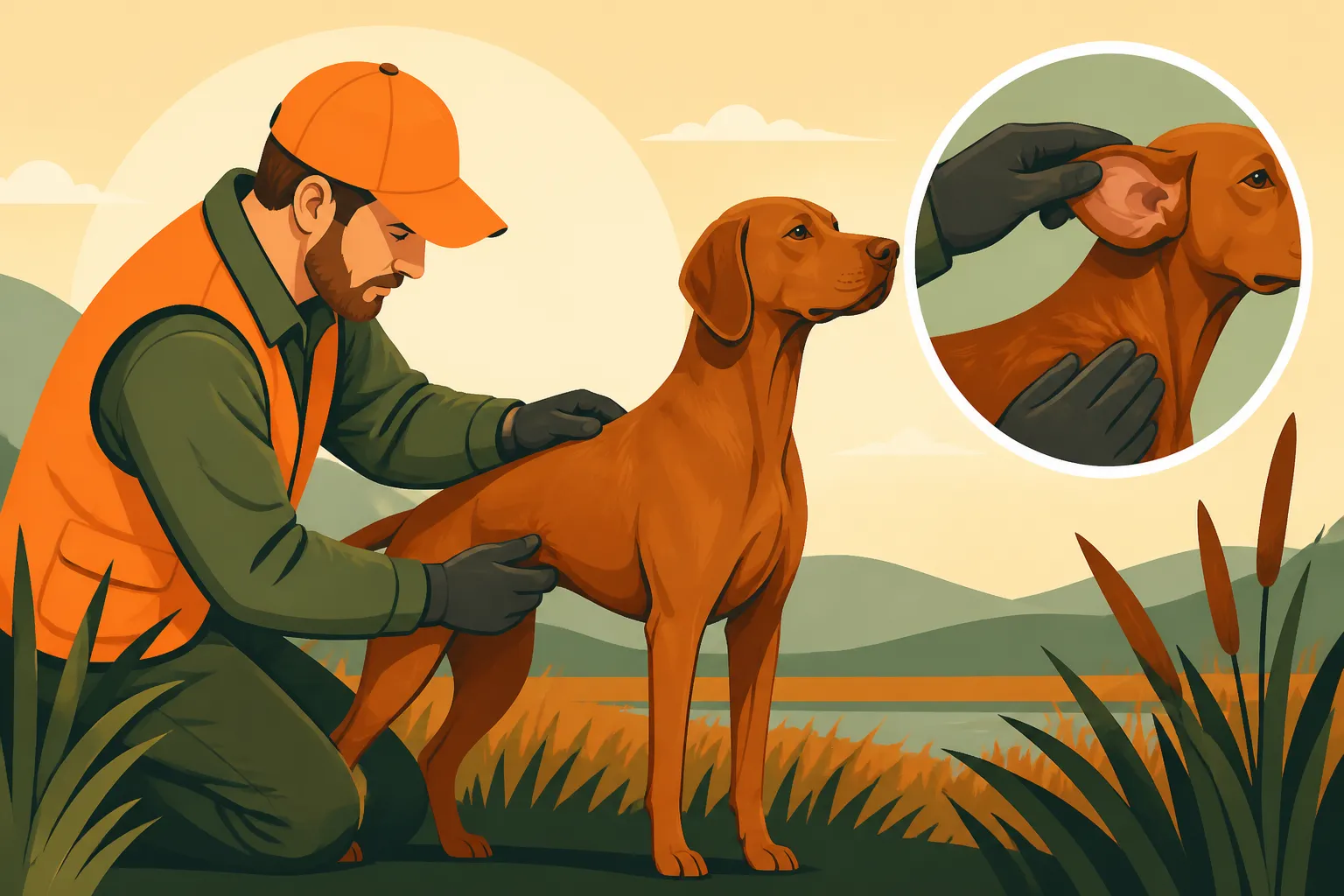
To ensure nothing is missed, approach your post-hunt check systematically, starting from your Vizsla's head and working your way down to their tail. This methodical process helps you cover every inch and catch even the most minor abnormalities.
Eyes, Ears, and Nose Inspection
Start with their expressive face. Their eyes are incredibly important for spotting game and navigating terrain, so check them closely. Look for any redness, discharge, squinting, or signs of irritation. Grass seeds, dust, or tiny foreign bodies can easily get lodged in the eye, causing discomfort or potential injury. Gently pull down the lower eyelid to check the conjunctiva, which should be a healthy pink. If you see anything suspicious or if your Vizsla is rubbing their eye, it warrants closer attention.
Next, move to their long, velvety ears. Vizslas have drop ears, which can trap moisture and debris, especially after running through wet fields or swimming. Keeping a Vizsla's Ears Clear After Water Work is crucial. Lift each ear flap and inspect the ear canal for redness, swelling, discharge, or any unpleasant odor, which could indicate an infection. Look for burrs, ticks, or plant material that might have found a hiding spot deep inside. Gently wipe the outer ear canal with a soft cloth if needed. Finally, check their nose. It should be moist and free of discharge. Look for any cuts or scrapes on the sensitive skin of the nose, particularly if they were pushing through dense cover.
Mouth and Dental Health Check
Often overlooked in a post-hunt examination is the mouth. Your Vizsla uses their mouth for retrieving and occasionally to pick up things they shouldn't. Gently lift their lips and inspect their gums, which should be a healthy pink color (unless naturally pigmented). Look at their teeth for any chips, cracks, or excessive wear, which could happen if they've chewed on a hard branch or rock. Pay close attention to their tongue and the roof of their mouth, as thorns or splinters can easily become embedded.
Feel along their jawline for any swelling or tenderness. Sometimes, an energetic retrieve can lead to a minor jaw strain. While you're at it, check for any cuts or abrasions on the inside of their cheeks or lips. It's also a good time to check for any unusual odors, which could point to an infection or dental issue. If you notice any broken teeth, severe swelling, or difficulty closing their mouth, it's definitely time for a vet visit.
Skin and Coat Scan
Given the Vizsla's short, single coat, their skin is quite exposed to the elements. Start by running your hands thoroughly over their entire body, feeling for any lumps, bumps, swelling, or heat that wasn't there before. The Thin Skin a Vizsla Takes Into the Field means they are prone to scrapes and cuts. Pay particular attention to areas where the skin is thinnest or where they rub against cover, such as their chest, armpits, flanks, and belly.
Part the fur to get a good look at the skin underneath. You’re searching for small cuts, abrasions, puncture wounds, or areas of irritation. Even tiny nicks can become infected if not cleaned. Check for embedded burrs, twigs, or any hitchhiking ticks, especially in creases like the groin or behind the elbows. Ticks can be tiny and easily missed, so a systematic approach is key. Look for any signs of rash or hives, which could indicate an allergic reaction to a plant they brushed against. Don't forget to check under their tail and around their hindquarters, as these areas can also pick up debris.
Paw Care: The Most Vulnerable Area
If there's one area of a hunting Vizsla's body that takes the most abuse, it's their paws. They are their primary tools for navigating the field, and meticulous paw care after every hunt is paramount to preventing lameness and infection.
Pads, Toes, and Nails
Your Vizsla's paw pads are incredibly tough, but they're not indestructible. They take the brunt of every step, jump, and sprint. After a hunt, thoroughly inspect each paw. Spread their toes apart to check the pads themselves. Look for any cuts, punctures, abrasions, or cracks. Whether a Vizsla's Pads Split is a common concern, especially on dry, rough ground or in cold weather. Small cuts might not bleed much but can be painful and prone to infection. If you find a cut, clean it gently with antiseptic solution and assess if it needs bandaging or veterinary attention.
Examine between each toe for any redness, swelling, or irritation. This is a prime spot for debris to lodge and cause discomfort. Don't forget their nails. Long nails can be torn or cracked, causing significant pain. If your Vizsla has dewclaws, inspect them carefully, as they can easily get snagged on brush. Whether a Vizsla Needs Its Dewclaws Watched is often overlooked, but a torn dewclaw can be a very painful injury. If you notice any torn or broken nails, it's best to consult your vet.
The Menace of Grass Seeds and Debris
Grass seeds, foxtails, burrs, and other plant material are insidious enemies of a Vizsla's paws. Their barbed design allows them to burrow deep into the skin, causing abscesses, infections, and intense discomfort. These seeds can work their way up the leg, into the ears, or even into the nose, creating serious problems. Whether a Vizsla Gets Grass Seeds in Its Feet is a perpetual concern for any hunting dog owner.
After every hunt, take the time to meticulously pick out any visible seeds or burrs from between the toes and from the fur around the paws. It's often helpful to have a fine-toothed comb or tweezers for this task. If you see a small red bump or a draining tract between the toes, it could be a sign that a grass seed has already begun to burrow. If you suspect a deeply embedded seed, do not try to remove it yourself if it seems to be under the skin, as you could push it further in or leave fragments behind. This is a job for your veterinarian, who can extract it safely and prescribe antibiotics if an infection is present. Regular inspection and prompt removal are your best defenses against these tiny but troublesome invaders.
Beyond the Physical: Behavioral Cues and Internal Concerns
Sometimes, the signs of trouble aren't obvious cuts or embedded seeds. A Vizsla might try to hide discomfort, so paying attention to their behavior and general well-being after a hunt is just as crucial as the physical examination.
Observing Gait and Demeanor
Once the adrenaline of the hunt wears off, your Vizsla's true state often becomes more apparent. Watch them as they move around the house or yard. Is their gait even and fluid, or do you notice any subtle limping, stiffness, or reluctance to put weight on a particular leg? A slight head bob or an unusual swing of the hips could indicate muscle soreness or joint discomfort. They might be trying to compensate for pain in one area by shifting weight to another.
Pay attention to their overall demeanor. Are they their usual bouncy, affectionate selves, or do they seem unusually quiet, withdrawn, or irritable? Are they struggling to lie down or get up? Do they flinch when you touch certain areas? Even a slight change in their enthusiasm for dinner, or a reluctance to engage in their usual post-hunt cuddle, can be a red flag. These subtle behavioral shifts can be early indicators of a sprain, strain, or a deeper injury that might not be visible on the surface. Whether a Vizsla Hides Its Pain is definitely something to be aware of; they're tough dogs but they still feel it.
Hydration, Appetite, and Elimination
Beyond physical injuries, the exertion of a hunt can take a toll on your Vizsla's internal systems. Ensure they have access to fresh water immediately after returning, and monitor their water intake. Dehydration can be a serious concern, especially after prolonged exercise in warm weather. Overheating is also a risk.
Observe their appetite. While a well-worked Vizsla will usually be ravenous, a sudden disinterest in food could signal an issue. How Much a Working Vizsla Eats can be substantial, so a refusal to eat is a significant concern. Ensure they are eating their normal amount and are not having any difficulty chewing or swallowing. Also, keep an eye on their urination and defecation. Any changes in frequency, consistency, or color of their stool or urine could indicate an internal problem, such as an upset stomach from ingesting something undesirable in the field, or a more serious internal injury. Whether a Vizsla Should Rest After Eating is also important to consider to prevent issues like bloat, especially after intense activity.
First Aid Essentials and When to Call the Vet
Even with the most careful checks, sometimes issues arise that require immediate attention. Being prepared with a comprehensive first aid kit and knowing when to seek professional veterinary help can make all the difference.
Your Hunting Dog First Aid Kit
Every Vizsla owner, especially those who hunt, should have a well-stocked first aid kit readily accessible, both at home and in the vehicle. This isn't just for major emergencies; it's for those common scrapes and minor irritations that pop up. What should it include? Start with antiseptic wipes or solution (like chlorhexidine or diluted povidone-iodine) for cleaning wounds. You'll need sterile gauze pads, non-stick bandages, and self-adhering wrap (like Vetrap) to cover cuts and provide light compression. Adhesive tape is also useful.
Other crucial items include blunt-tipped scissors for cutting bandages, tweezers for removing thorns or ticks, a tick removal tool, and a digital thermometer. Saline solution is great for flushing eyes or wounds. Consider carrying some dog-safe pain relief, but always consult your vet before administering any medication. What a First Aid Kit for a Hunting Vizsla Holds can also include things like paw balm for dry or cracked pads, an emergency muzzle (even the gentlest dog can bite when in pain), and a small bottle of hydrogen peroxide (only for inducing vomiting under strict vet guidance, never on wounds!). You can easily find pre-made kits or individual supplies on platforms like Amazon or Chewy to build your own.
Identifying Red Flags and Urgent Care Needs
Knowing when to administer basic first aid versus when to rush to the vet is crucial. Small, superficial cuts and scrapes can usually be cleaned and bandaged at home, monitored for infection. Minor limping that resolves within an hour or two with rest might just be muscle soreness. However, certain signs are immediate red flags that warrant urgent veterinary attention.
These include deep puncture wounds, uncontrolled bleeding, severe lameness (especially if your Vizsla cannot bear weight), signs of severe pain (whining, panting excessively, reluctance to move, aggression), broken bones, or any injury near the eyes. If you suspect an embedded object that you cannot easily remove, such as a large thorn or piece of glass, a trip to the vet is necessary to prevent further damage or infection. Symptoms like persistent vomiting or diarrhea, signs of heatstroke (heavy panting, weakness, disorientation), or any sudden, unexplained swelling are also emergencies. Remember, What a Vizsla's Emergency Field Injury Costs can be significant, but delaying care can make things worse. When in doubt, always err on the side of caution and call your veterinarian. They can guide you over the phone and tell you if an immediate visit is required.
Here’s a handy checklist to make your post-hunt inspection efficient:
| Area to Check | What to Look For | Potential Issues | Action |
|---|---|---|---|
| Eyes | Redness, discharge, foreign objects | Irritation, infection, corneal scratch | Flush with saline, remove debris (if safe), vet if persistent |
| Ears | Redness, discharge, odor, debris, ticks | Infection, ear mites, embedded seeds | Clean gently, remove debris/ticks (if safe), vet if infected/deep |
| Nose | Cuts, scrapes, discharge, embedded seeds | Injury, infection, foreign body | Clean cuts, vet if embedded object or persistent discharge |
| Mouth | Cuts, torn gums, chipped teeth, embedded items | Injury, infection, dental issues | Clean minor cuts, vet for broken teeth or deep embeddings |
| Neck | Lumps, swelling, heat, tenderness | Strain, impact injury, tick bites | Palpate gently, monitor, vet if swelling/pain persists |
| Chest/Ribs | Cuts, scrapes, swelling, tenderness | Abrasions, bruises, muscle strain | Inspect thoroughly, clean wounds, vet if deep/painful |
| Belly/Groin | Cuts, scrapes, tick bites, rash, burrs | Abrasions, irritation, parasite attachment | Visual check, remove ticks/burrs, clean wounds |
| Legs | Swelling, limping, cuts, heat, pain | Sprains, strains, fractures, deep cuts | Observe gait, palpate, clean minor cuts, vet if limping/painful |
| Paws | Cuts, punctures, cracks, burrs, grass seeds | Pad injury, infection, foreign body, torn nails | Clean, remove debris, check between toes, vet for deep cuts/seeds |
| Tail | Cuts, scrapes, swelling, tenderness | "Happy tail" injury, abrasions | Inspect entire length, clean wounds |
| Overall | Gait changes, lethargy, loss of appetite | Dehydration, internal injury, exhaustion, illness | Monitor behavior, provide water, vet if persistent symptoms |
This comprehensive check might seem like a lot of work, but it quickly becomes second nature, a small investment of time that pays dividends in your Vizsla's health and longevity.
Disclaimer
This article is for general informational purposes only and does not constitute professional advice. Laws, prices and regulations vary by location and change over time. Consult a qualified professional for guidance on your specific situation.