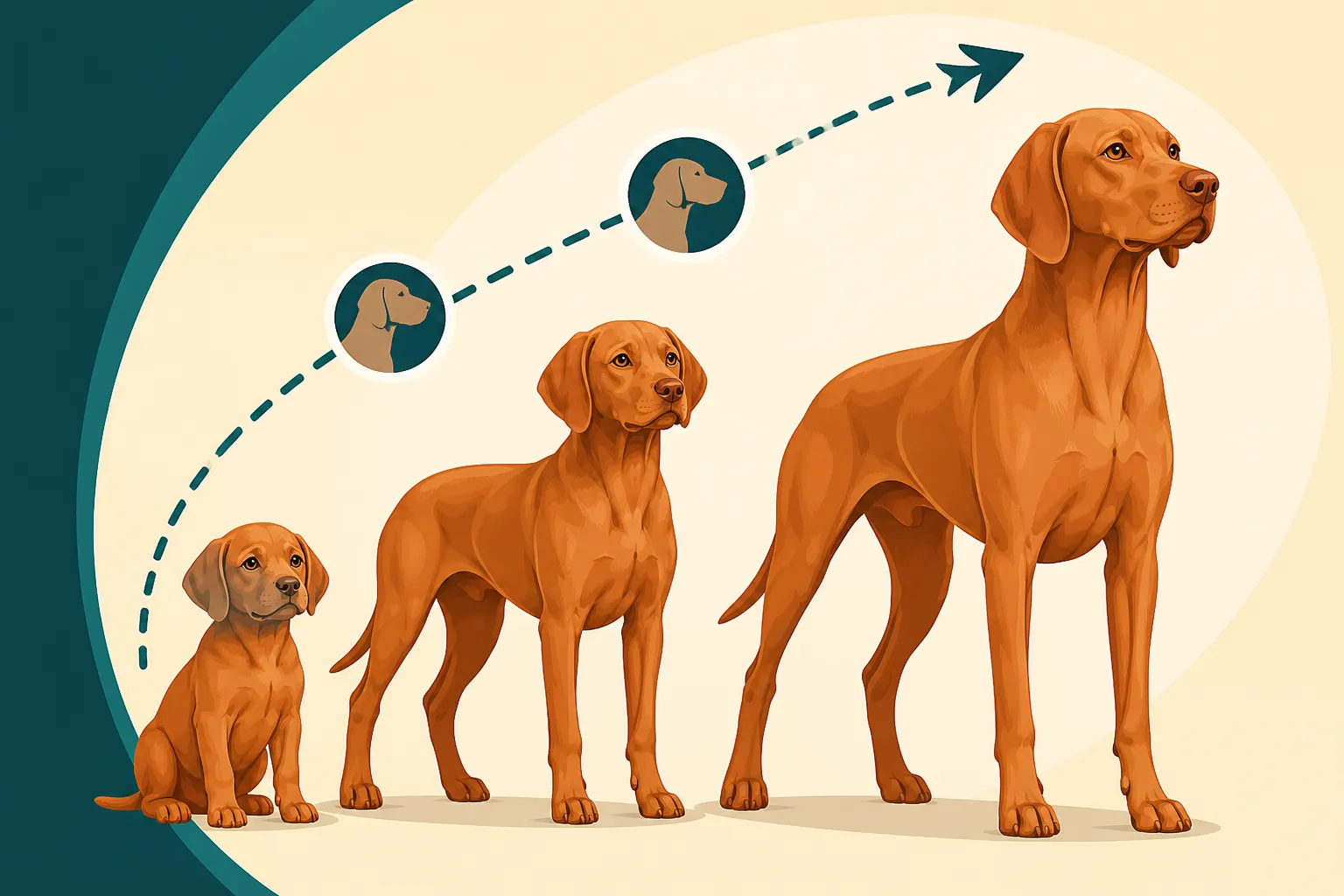
How Big a Vizsla Gets
One of the first questions many potential Vizsla owners ask, right after "how much exercise do they need?", is "how big do they actually get?" It's a fair point, because while photos can be deceiving, knowing the typical size range helps you prepare for everything from living space to car travel, and even how much food you'll be stocking up on from places like Chewy. This guide aims to clear up any confusion about the majestic Vizsla's size and what you can truly expect as they grow from a leggy puppy into a full-grown, loyal companion.
Understanding the Vizsla Standard for Size
When we talk about how big a Vizsla gets, we're not just guessing; there's a breed standard that reputable breeders and enthusiasts follow. This standard gives us a good set of guidelines for what constitutes a typical, well-proportioned Vizsla. It's important because it reflects the breed's functional purpose as an agile, medium-sized hunting dog, rather than a giant or a tiny lapdog.
Height and Weight Ranges for Males
Male Vizslas are generally the larger of the sexes, carrying a bit more height and substance. According to the breed standard, you're looking at a height range that positions them comfortably as a medium-to-large dog, though they tend to be on the leaner, more athletic side. This isn't a bulky breed by any stretch. They're built for endurance and speed in the field, which means a streamlined physique is paramount. Expect a male to stand between certain measurements at the shoulder, with their weight being proportionate to their frame and musculature. Don't be surprised if your boy feels heavier than he looks; they're packed with muscle! What a Male Vizsla Weighs delves deeper into these specifics.
For instance, a fully grown male Vizsla typically stands around 22 to 24 inches at the shoulder. Their weight usually falls between 55 and 60 pounds, though some particularly robust individuals might push slightly beyond this. It's about balance, not just raw numbers. A Vizsla carrying too much weight can suffer from joint issues, especially with their high-energy lifestyle, so maintaining that lean, athletic build is crucial for their health and ability to perform their job in the field, or simply enjoy a long run with you. They should always appear elegant and well-conditioned, never chunky or gangly.
Height and Weight Ranges for Females
Female Vizslas share the same graceful, athletic build as their male counterparts, but they tend to be a touch smaller and often more refined in their features. While they might not carry the same heavy bone structure as some other breeds, they are still incredibly strong and capable. Their standard calls for a slightly smaller stature, which also means a generally lighter body weight. This difference isn't always immediately obvious to the untrained eye, but when you stand a male and a female side-by-side, you'll often notice the subtle distinctions in height and overall presence. What a Female Vizsla Weighs offers a more granular look at what to expect for your girl.
A mature female Vizsla typically measures between 21 to 23 inches at the shoulder. Their weight generally ranges from 45 to 55 pounds. Again, these are averages, and individual dogs can vary. It's less about hitting an exact number and more about maintaining a healthy, lean physique that allows them to move with the characteristic agility and tireless energy for which the breed is famous. A healthy female should also exhibit the strong musculature characteristic of a working dog, with visible tuck-up and a well-defined waist when viewed from above.
Factors Influencing a Vizsla's Growth and Final Size
While the breed standard gives us an ideal range, several factors can influence how big an individual Vizsla gets. It's not always a straightforward path to their adult size, and understanding these influences can help you support your Vizsla's healthy development from a tiny pup to a magnificent adult.
Genetics and Lineage
The genetic blueprint inherited from your Vizsla's parents plays the most significant role in determining their ultimate size. If both parents are on the larger side of the breed standard, there's a good chance their offspring will also grow to be larger. Conversely, smaller parents tend to produce smaller pups. This is why looking at the size and conformation of your puppy's parents, and even their grandparents if possible, can give you a very strong indication of what to expect. A responsible breeder will be transparent about the lineage and the typical size of dogs in their lines, helping you anticipate your pup's potential adult dimensions.
It's also worth noting that different lines within the Vizsla breed might naturally lean towards certain characteristics. For example, some field lines might produce slightly leaner, more compact dogs optimized for agility, while others might prioritize a bit more bone and substance. However, these are often subtle differences within the overall breed standard. Always choose a breeder who focuses on health, temperament, and adherence to the overall breed standard, rather than chasing extreme sizes in either direction. Whether Field Vizslas Look Different further explores the nuances of variations within the breed.
Nutrition and Diet
What you feed your Vizsla, especially during their crucial growth phases, directly impacts their development. High-quality puppy food, appropriate for their activity level and breed size, provides the necessary nutrients for strong bone and muscle development. Overfeeding a puppy, particularly with calorie-dense food not designed for slow growth, can lead to excessively rapid growth. This rapid growth can put undue stress on developing joints, potentially contributing to orthopedic issues down the line, even in a breed generally considered healthy like the Vizsla. It's a delicate balance.
Conversely, underfeeding or providing a low-quality diet can stunt growth or lead to deficiencies that impact overall health and skeletal development. It's about consistent, balanced nutrition. Many owners rely on reputable brands found on platforms like Chewy for their Vizsla's dietary needs, ensuring they get all the right vitamins and minerals. Your veterinarian can offer specific guidance on the best food choices and portion sizes as your Vizsla grows. How Much an Adult Vizsla Eats Daily and Whether a Vizsla Needs Large Breed Puppy Food offer more guidance on feeding.
Spay/Neuter Timing
The timing of spaying or neutering your Vizsla can also have an impact on their final size. Sex hormones play a role in the closure of growth plates in bones. When these hormones are removed early via spay or neuter, the growth plates may remain open longer, resulting in dogs that grow taller than they might have otherwise. This can create a leggier appearance and, in some cases, might impact joint conformation.
This is a topic with ongoing discussion among veterinarians and breeders, with different perspectives on the optimal timing for a Vizsla. Some advocate waiting until the dog is fully mature, around 18-24 months of age, to allow for full hormonal development and growth plate closure. Others consider earlier timings for various health and behavioral reasons. It's important to have an open conversation with your veterinarian about the pros and cons for your individual Vizsla, considering their activity level, potential future roles, and health history.
Visualizing Vizsla Size: What to Expect in Your Home
Numbers on a page can only tell you so much. What does a 55-pound, 23-inch Vizsla actually feel like in your home? They're often described as "medium-sized," but their lean, athletic build and constant desire to be close to you give them a unique presence that feels much larger than their actual mass might suggest.
Their Presence and How They Fit
A Vizsla's presence in the home is significant. They aren't huge, but they are certainly not small. They are lean, leggy, and often feel like they're all muscle. When they stretch out on the rug, they take up a surprising amount of floor space. On the sofa, they're not content with a small corner; they want to be right with you, often leaning their full weight into you or snuggling under a blanket. The Vizsla That Sits On You Rather Than Beside You perfectly describes this characteristic.
Consider your living arrangements:
- Apartments: While a Vizsla can adapt to apartment living with enough outdoor exercise, their size means they need room to stretch and move indoors. They won't disappear under a coffee table.
- Cars: A standard sedan might feel a bit cramped for a fully grown Vizsla on a long journey. Many Vizsla owners opt for SUVs or vehicles with ample cargo space to accommodate a crate or a comfortable dog bed for travel. Traveling With a Vizsla is a great resource for this.
- Bed: If you're envisioning sharing your bed, prepare to lose a significant portion of it. A 50-60 pound dog takes up considerable real estate, especially when they stretch out or try to burrow under the covers. Whether a Vizsla Sleeps in the Bed explores this common Vizsla trait.
Despite their size, their incredible agility and grace often mean they navigate tight spaces better than their bulkier cousins. They are rarely clumsy, but always present.
The Lean, Athletic Build
One of the most striking features of a Vizsla is their lean, athletic build. They are often described as appearing "wiry" or "fine-boned," but don't let that fool you into thinking they are delicate. Underneath that short, golden-rust coat is a dense network of powerful muscles designed for sustained activity. Their deep chest and tucked-up waist are hallmarks of a true athlete.
This build means that while their weight might be comparable to some stockier breeds, their silhouette is entirely different. They are built for speed and endurance, not for pulling heavy loads or guarding. You should be able to see the outline of their last two to three ribs when they are standing relaxed, and their waist should be clearly defined. If you can't see any ribs, your Vizsla might be carrying too much weight, which can be detrimental to their joints and overall health. On the flip side, seeing too many ribs or prominent hip bones could indicate they are underweight, which is also a concern for such an active breed. Whether a Vizsla Looks Underweight When It Is Not is a must-read for assessing their condition.
This lean physique means they require consistent, high-quality nutrition to fuel their active lifestyle. Keeping weight on a working Vizsla can sometimes be a challenge, especially during hunting season. Keeping Weight On a Working Vizsla offers practical tips for managing their diet to maintain that ideal, athletic form.
Comparing Vizsla Size to Other Breeds
To truly appreciate a Vizsla's size, it's often helpful to compare them to other popular breeds, especially those in the Sporting Group. They sit in a unique position, not as heavy as a Labrador, not as lanky as a Greyhound, and distinct from their fellow pointing breeds.
Vizsla Versus Weimaraner and German Shorthaired Pointer
The Vizsla is frequently compared to the Weimaraner and the German Shorthaired Pointer (GSP) due to similar roles as versatile hunting dogs and their general appearance. However, there are notable differences in their average sizes and builds.
| Feature | Vizsla | Weimaraner | German Shorthaired Pointer |
|---|---|---|---|
| Height (Male) | 22-24 inches (56-61 cm) | 25-27 inches (64-69 cm) | 23-25 inches (58-64 cm) |
| Height (Female) | 21-23 inches (53-58 cm) | 23-25 inches (58-64 cm) | 21-23 inches (53-58 cm) |
| Weight (Male) | 55-60 pounds (25-27 kg) | 70-90 pounds (32-41 kg) | 55-70 pounds (25-32 kg) |
| Weight (Female) | 45-55 pounds (20-25 kg) | 55-75 pounds (25-34 kg) | 45-60 pounds (20-27 kg) |
| Build | Lean, athletic, fine-boned, elegant | Muscular, powerful, moderately boned | Muscular, robust, well-boned |
| Coat | Short, smooth, golden-rust | Short, smooth, solid grey | Short, dense, liver and white (or solid) |
As you can see, the Weimaraner is distinctly larger and heavier, often called the "Grey Ghost" for its striking silver coat and more imposing presence. The GSP is often similar in height to the Vizsla, but typically carries more weight and a more robust, compact build. Vizslas tend to be Whether a Vizsla Is Lighter Than a Weimaraner, making them feel more agile and less cumbersome in a home setting. The Vizsla is often described as more elegant and refined compared to the GSP's more rugged appearance. The Vizsla Against the Weimaraner and the Shorthair provides a more in-depth comparison.
Against Retrievers and Other Sporting Breeds
When placed alongside popular retriever breeds like Labradors or Golden Retrievers, the Vizsla's size differences become even more apparent. While Labradors and Goldens also fall into the medium-to-large category, they are typically much heavier and stockier than a Vizsla. A male Labrador can easily weigh 65-80 pounds or more, and a Golden Retriever isn't far behind. These breeds have a denser bone structure and a more robust frame, built for retrieving in varied terrain and often cold water.
The Vizsla, with its single, short coat and leaner body, is built for speed and endurance, covering ground quickly and pointing game. They are not typically as massive as a retriever, which means less bulk on your furniture and in your car, but still a substantial canine presence. Whether a Vizsla Is Cheaper to Keep Than a Retriever discusses some of the cost implications, which can be indirectly related to size and dietary needs. Owners often find that while a Vizsla eats a good amount, their leaner build means they don't necessarily require the sheer volume of food a heavier retriever might, especially when comparing non-working dogs.
Growth Stages: From Puppy to Adult Vizsla
Watching a Vizsla puppy grow is a journey filled with adorable awkwardness and sudden growth spurts. Understanding these stages helps you manage their development, ensuring they mature into healthy, well-adjusted adults.
Puppy Growth Spurts and Milestones
Vizsla puppies grow remarkably quickly in their first few months. They transform from small, cuddly bundles into gangly, long-legged adolescents with surprising speed. Typically, the most significant growth spurts occur between 3 and 6 months of age, where they seem to add inches to their height almost weekly. During this period, their coordination might lag behind their physical growth, leading to some truly comical moments of clumsiness.
By around 6 months, many Vizsla puppies have reached a significant portion of their adult height, though they still have a lot of filling out to do. It's during these rapid growth phases that proper nutrition and controlled exercise are paramount. Too much strenuous activity or high-impact exercise, like jumping from heights or long-distance running, can be detrimental to their developing joints and growth plates. Instead, focus on short, frequent play sessions, walks, and mental stimulation. The First Year With a Vizsla Puppy covers all these critical early development stages.
When a Vizsla Reaches Full Size
While Vizslas might reach much of their adult height relatively early, typically by 8 to 12 months, they are not truly "full grown" until later. Reaching full size involves more than just height; it includes developing full musculature, filling out their chest, and maturing emotionally. The Age a Vizsla Reaches Full Size helps clarify these timelines.
Most Vizslas will continue to fill out and gain muscle mass until they are about 18 to 24 months old. This "filling out" phase is where they transition from a lanky adolescent to a solid, powerful adult. Their chest will deepen, their musculature will become more defined, and their head will take on its mature appearance. Some may even continue to subtly mature in terms of bone density and coat quality up to three years of age. Whether a Vizsla Fills Out After Two discusses this extended maturation process. During this period, maintaining a consistent, balanced diet and appropriate exercise regimen remains crucial to support their complete physical development without stressing their still-developing bodies.
Addressing Common Misconceptions About Vizsla Size
There are a few recurring ideas and questions about Vizsla size that pop up, often fueled by anecdotal evidence or internet photos. Let's clear up some of these common misconceptions.
The "Vizslas Are Small" Myth
Despite their medium-to-large classification, some people mistakenly believe Vizslas are smaller dogs. This might stem from their sleek appearance, fine bones, and generally lean build compared to the bulkier retrievers or Rottweilers often seen. While they are indeed more graceful and less massive than many larger breeds, a full-grown Vizsla is by no means small. They are substantial dogs, capable of covering vast amounts of ground in the field and needing ample space in your home.
It's important to remember that "small" is subjective. If you're used to owning a Chihuahua or a Cavalier King Charles Spaniel, a Vizsla will feel very large. If you're coming from a Great Dane or an Irish Wolfhound, a Vizsla might feel more compact. The key takeaway is to rely on the breed standard's height and weight guidelines to get an objective measure of their typical size. They are perfectly sized to be both agile hunters and devoted, full-bodied cuddle bugs.
The "Field vs. Show Line Size" Debate
It's a common discussion among enthusiasts: do Vizslas from field lines look significantly different in size or build compared to those from show lines? While there can be subtle differences, it's generally a misconception that there's a drastic size divergence. Both lines are still Vizslas and are expected to adhere to the breed standard for size, albeit with varying interpretations or emphases.
Field-bred Vizslas are often selected for traits that enhance their performance in hunting, such as higher drive, more endurance, and sometimes a slightly more athletic, compact build. Show-bred Vizslas are selected for conformation to the breed standard's aesthetic ideals, which still includes a proportionate, athletic body. Any differences in size are usually marginal and still well within the accepted standard. You might find field lines tending towards a slightly leaner frame and show lines sometimes having a bit more bone or substance, but neither should be significantly outside the established height and weight ranges. The goal for both is a functional, beautiful dog. Whether a Vizsla Has Been Split by Show and Field offers more on this topic.
The Appearance of Being Underweight
Given their naturally lean and athletic build, many Vizsla owners sometimes worry that their dog looks underweight, especially if they are accustomed to breeds with more body mass. It’s true that a healthy Vizsla should be lean, with visible ribs (usually the last 2-3) and a distinct waist. This isn't a sign of being underfed; it's the ideal condition for a dog built for speed and endurance.
However, there's a fine line between lean and genuinely underweight. If you can see prominent hip bones, vertebrae, or all of your Vizsla's ribs very clearly without them moving or breathing, or if they appear gaunt, it might be a sign they need more calories. Factors like a high metabolism, immense energy expenditure, or underlying health issues can contribute to weight loss. Always consult your vet if you're concerned about your Vizsla's weight. They can help you assess their body condition score and recommend appropriate dietary adjustments, perhaps even suggesting specialized high-calorie performance foods available on platforms like Chewy, or ruling out any health problems. Whether a Vizsla Looks Underweight When It Is Not offers a detailed guide on how to evaluate your dog's condition.
Disclaimer
This article is for general informational purposes only and does not constitute professional advice. Laws, prices and regulations vary by location and change over time. Consult a qualified professional for guidance on your specific situation.