Whether a Vizsla’s Ears Should Be Long
A Vizsla’s ears should be long enough to hang close to the cheeks, but not so exaggerated that they look oversized or interfere with the dog’s comfort. Their shape is part of the breed’s familiar outline, and it can vary a little from dog to dog. This guide explains what “long” means, how ears change as a puppy grows, and which ear concerns deserve a veterinarian’s attention.
What Vizsla ears are meant to look like
Length, shape, and position
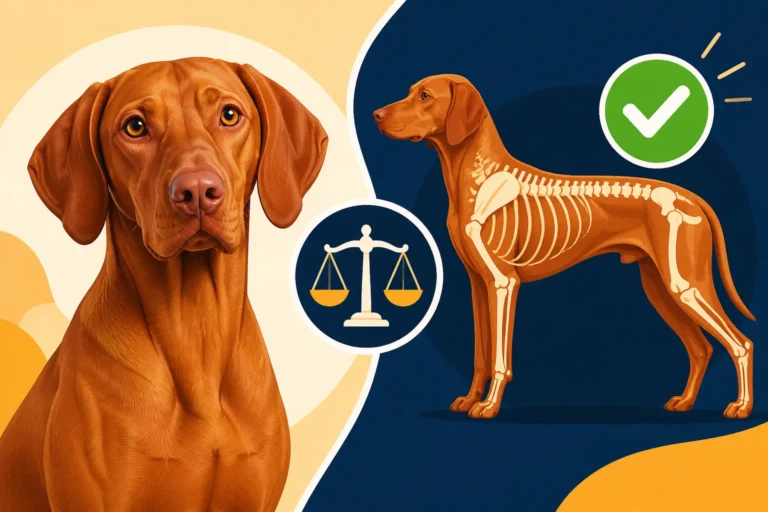
A Vizsla’s ears are naturally pendant ears: they hang down rather than standing upright. They are fairly thin, rounded at the tips, and set moderately low on the head. When relaxed, they lie close to the cheeks and frame the face. That combination gives the breed its soft, expressive look without making the ears appear heavy.
“Long” is relative, not a single measurement. A well-proportioned ear usually reaches toward the lower part of the cheek, but it should still look balanced with the dog’s head. Breed standards describe an overall shape and impression, not a ruler test. One Vizsla may have ears that appear a little longer than another’s because of head size, ear set, or coat and skin color.
The ears should not be mistaken for a sign that a dog is a different type of Vizsla. If you are comparing a dog’s proportions, How Big a Vizsla Gets offers useful context for how head and body size vary. A puppy’s ears can look especially prominent while the rest of the head is still growing, so judging proportions too early can be misleading.
Why the ears hang down
The Vizsla’s ears are not supposed to stand erect like a shepherd-type dog’s. Their natural drop is an ordinary feature of the breed, not a sign of weakness, poor hearing, or a problem that needs correcting. A healthy Vizsla may lift or angle the ears when alert, but the ear leather itself still hangs down when the dog is relaxed.
A dog’s ears also move in response to sound and mood. You may see them draw slightly forward when the dog is focused, fold back when it is uncertain, or shift independently as it tracks a sound. These movements are normal. They don’t mean the ears are changing shape or that a dog’s ear set is abnormal.
People sometimes compare a Vizsla’s ears with its eyes and other facial features when trying to decide whether the dog looks typical. The breed’s expression is a combination of details, not one feature in isolation. For more on another distinctive part of the face, see Whether a Vizsla's Eyes Blend Into Its Coat.
How to judge ear proportions without overthinking them
Compare the ears with the whole head
The best way to assess ear length is to look at the dog’s overall balance. Consider whether the ears hang naturally beside the head, whether the tips are rounded, and whether the length seems in keeping with the skull and muzzle. An ear that looks a little longer in a photograph may simply be hanging forward, caught by wind, or viewed from an angle that makes it appear larger.
It also helps to compare the dog in a relaxed position. When a Vizsla is excited, running, or listening intently, its ears may lift, flap, or spread away from the cheeks. That momentary change can make them seem shorter, wider, or more uneven than they are at rest. A calm side view and a front view are more useful than a single action shot.
If you’re considering a puppy, remember that the head and body may not develop at exactly the same pace. A puppy can go through an awkward stage where its ears seem too large for its face, then look more balanced as the skull and muzzle mature. That’s a normal reason to avoid making firm judgments from one photo or one quick visit.
What variation is normal
There is some natural variation in ear length and shape among individual Vizslas. The ears may sit slightly higher or lower, or the tips may fall at a slightly different point along the cheek. Small differences alone do not establish that a dog is unhealthy or that its ancestry is questionable.
The useful distinction is between ordinary variation and a new or uncomfortable change. Ears that have always hung in a particular way are different from ears that suddenly become swollen, painful, unusually warm, or held differently because the dog is uncomfortable. Changes like those call for attention to the dog’s health, not a debate about appearance.
| What you notice | What it may mean | What to do |
|---|---|---|
| Ears hang beside the cheeks when relaxed | Typical pendant ear carriage | No action needed if the ears look and feel healthy |
| Ears appear prominent on a young puppy | The head and body are still developing | Reassess proportions as the puppy matures |
| Ears move or flap during activity | Normal movement with attention and motion | Observe without trying to reshape them |
| One ear suddenly looks swollen or the dog resists touch | Possible irritation or injury | Contact a veterinarian |
| Persistent odor, discharge, or head shaking | Possible ear inflammation or infection | Arrange a veterinary examination |
Show appearance and everyday health are different questions
A breed standard is useful when you want to understand the appearance associated with the Vizsla. It is not a health checklist, and it should not replace an examination if your dog seems uncomfortable. For a companion dog, relaxed, healthy ears matter much more than whether their length matches an idealized picture exactly.
If you are choosing a puppy for showing, ask the breeder how they assess structure and what kind of variation they see in their lines. A responsible breeder should be able to discuss the puppy’s overall development rather than promising that one feature will be perfect. For a pet home, it is usually more helpful to focus on temperament, health history, and how the dog fits your household.
Caring for long, hanging ears
The ear shape does not automatically mean a problem
Because Vizsla ears hang down and sit close to the head, some owners assume the ears need frequent cleaning or special treatment. That isn’t necessarily so. A healthy ear does not need to be cleaned on a fixed schedule just because it is pendant. Over-cleaning can irritate the delicate skin, and cotton swabs pushed into the ear canal can cause injury or compact debris.
Instead, make a quick visual check part of ordinary grooming. Look for redness, swelling, unusual debris, a strong odor, or signs that your dog is rubbing its ear or shaking its head repeatedly. If you notice a change, avoid guessing at the cause with home remedies or leftover medication. A veterinarian can examine the ear and recommend the right response.
For a practical overview of common concerns, read Whether a Vizsla Gets Ear Infections. If you are unsure whether routine cleaning is useful for your own dog, Whether a Vizsla's Ears Need Cleaning Weekly can help you think through why cleaning frequency should depend on the dog and its circumstances rather than a blanket rule.
After swimming, bathing, or field work
Water and debris can make ear checks especially worthwhile after a swim, bath, or long day outdoors. Gently lift the ear flap and look at the visible area; don’t force the ear open or insert anything into the canal. If the outer ear is damp, dry it gently with a soft towel. A dog that has been in brush or tall grass may also need a careful check for dirt, plant material, or scratches.
If your Vizsla swims or works in the field regularly, build the check into the routine while the dog is calm. For example, after drying its body, take a moment to look at each ear and note whether anything seems different from normal. This is a simple observation habit, not a reason to clean the ears after every outing. Keeping a Vizsla's Ears Clear After Water Work covers the practical side of post-water care, while Whether a Vizsla's Ears Should Be Dried After Water looks more closely at drying.
If your veterinarian has recommended an ear cleaner, follow the product instructions and the vet’s guidance. Chewy may be one place to look for basic pet-care supplies, but choose only a cleaner your veterinarian says is appropriate for your dog. You can also find soft gauze or cotton pads through retailers such as Chewy for wiping the outer ear, provided you keep them out of the canal. If you need to restock supplies, Chewy can be a convenient shopping option; the important part is selecting products that match your veterinarian’s advice rather than using a cleaner simply because it is marketed for dogs.
When ear appearance or behavior deserves attention
Signs that are more important than length
Ear length by itself is rarely an urgent concern. Discomfort and sudden changes are more meaningful. Contact your veterinarian if your Vizsla repeatedly shakes its head, scratches at an ear, holds one ear unusually low, or seems reluctant to have its head touched. A persistent odor, redness, discharge, or visible swelling also merits an examination.
Some dogs show pain subtly. Your Vizsla may seem unusually withdrawn, stop enjoying head scratches, or turn away when you reach toward one side of its face. These signs do not point to one specific diagnosis, but they are good reasons to have the ear checked. If the dog appears severely distressed, has a rapidly swelling ear flap, or loses balance, seek veterinary care promptly.
Avoid trying to diagnose an ear problem based on the color or amount of debris alone. Wax, dirt, irritation, infection, and other issues can look similar to an owner. A clinician can examine the canal and determine what treatment, if any, is appropriate.
What not to do
Do not tape, tie, or otherwise try to reshape a Vizsla’s ears for appearance. The ears are meant to hang naturally, and attempts to alter their position can cause discomfort or skin irritation. Similarly, don’t use human ear products, oils, or leftover veterinary medication unless your veterinarian has specifically advised it. The wrong product can make an existing problem worse or complicate an examination.
It’s also best not to clean deeply just because the ears look dusty after a walk. Wipe only what you can see on the outer ear, and stop if your dog pulls away or seems uncomfortable. If debris appears lodged in the canal, let a veterinary professional assess it rather than reaching in with a swab or tool.
A simple routine is enough for most owners: notice what your dog’s ears normally look and smell like, check them after activities that may leave them wet or dirty, and seek advice when something changes. That gives you a useful baseline without turning normal ear care into a daily worry.
Questions to ask a breeder or veterinarian
If you’re looking at a puppy, ask the breeder whether the ears have been checked as part of routine veterinary care and whether the puppy has had any recurring irritation. Ask about the parents’ general health and temperament as well. You don’t need a breeder to guarantee a particular ear length; you do want clear, straightforward answers about the puppy’s care and development.
At a veterinary visit, mention the specific change you’ve noticed, when it began, and whether it affects one ear or both. If the dog has been swimming, hunting, or exposed to brush recently, include that detail. A brief description of behavior—such as head shaking after a bath or scratching mostly at night—can help the vet decide what to examine.
For most Vizslas, long ears are simply part of the breed’s familiar appearance. They should hang naturally, suit the dog’s head, and remain comfortable and healthy. If they do, a little variation in length is usually just that: variation.
Disclaimer
This article is for general informational purposes only and does not constitute professional advice. Laws, prices and regulations vary by location and change over time. Consult a qualified professional for guidance on your specific situation.