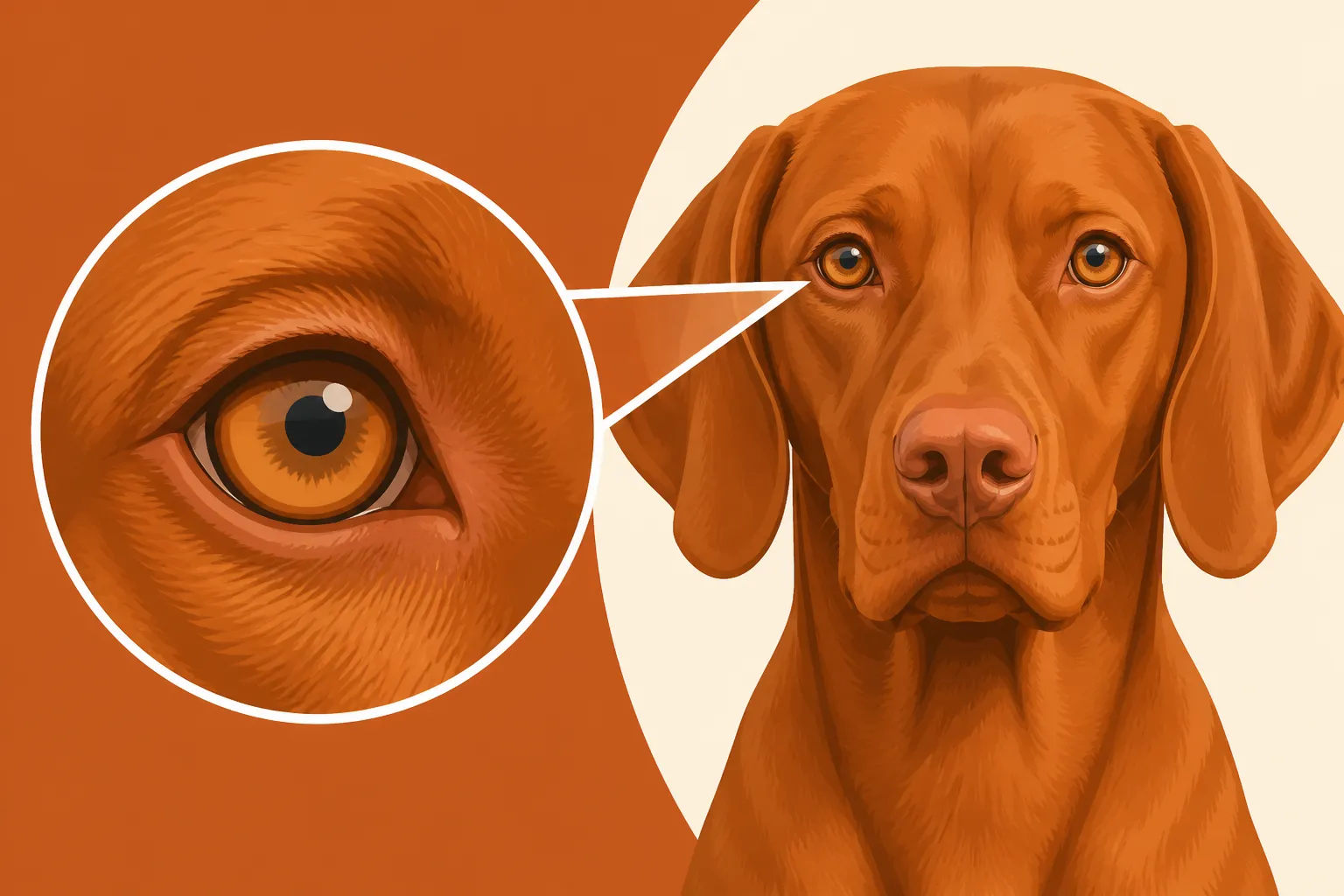
Whether a Vizsla’s Eyes Blend Into Its Coat
One common question many Vizsla owners and enthusiasts share revolves around the striking harmony between this breed's eye color and its distinctive golden-rust coat. It's not just a coincidence; this beautiful blending is a hallmark of the breed, a testament to specific genetic traits that truly define the Vizsla's unique appearance. This guide will dive deep into why a Vizsla’s eyes seem to melt into its coat, exploring the breed standard, the genetics behind it, what variations might mean, and how this feature ties into their overall health and history.
The Golden Rust Standard and Eye Color Harmony
When you first see a well-bred Vizsla, one of the most captivating features is undoubtedly the seamless transition from their rich golden-rust fur to their expressive eyes. It truly looks like their eyes were painted with the very same brush as their coat, creating a sophisticated and elegant appearance. This isn't just an aesthetic preference; it's a fundamental part of the Vizsla breed standard, meticulously preserved through generations. The Hungarian breeders who lovingly nurtured this ancient line understood that this particular hue of eye, blending almost imperceptibly with their coat, was part of what made the Vizsla so distinct and appealing.
Understanding the Vizsla's Unique Pigmentation
The Vizsla's pigmentation is quite unique in the canine world. Unlike many breeds that have contrasting eye, nose, and coat colors, the Vizsla exhibits a monochromatic beauty. Their golden-rust coat, often described as various shades of russet or copper, is consistently complemented by an equally rich nose color that matches the coat, and amber eyes that carry the same warm tones. This isn't accidental; it's the result of a very specific genetic blueprint that ensures consistency in their appearance. The genes responsible for producing the pheomelanin pigment, which gives the Vizsla its reddish-gold hue, are also intricately linked to the coloration of their eyes and nose.
Think of it like a finely tuned orchestra where every instrument plays in perfect harmony. In the Vizsla, the "instruments" of coat, nose, and eye color are all tuned to the same warm, earthy register. This genetic consistency is a prized trait, reflecting the breed's purity and the careful selection by breeders over centuries. It’s part of what makes them instantly recognizable and contributes to their overall noble presence, whether they're gracefully quartering a field or curled up on your sofa. This characteristic makes them stand out among other sporting breeds, offering a soft, warm aesthetic that is entirely their own.
Why "Blending" is More Than Just a Coincidence
The idea of a Vizsla's eyes "blending" into its coat goes beyond mere matching. It's about a harmony of tone and saturation that creates a cohesive and striking visual. This blending effect isn't just about a pretty face; it’s rooted deeply in the history and utility of the breed. The Vizsla evolved as a versatile hunting dog, working across varied landscapes, from dense Hungarian forests to open fields. Their golden-rust coat, with its subtle variations, offered excellent camouflage against autumn foliage, dry grasses, and even the ruddy soil. For eyes to stand out brightly against this natural backdrop would defeat the purpose of their camouflaging coat.
Therefore, eyes that match and blend seamlessly with the coat were, in essence, a functional trait. It allowed them to be less conspicuous to game, enhancing their ability to sneak up and point. This natural camouflage extends to their entire visage, creating a profile that doesn't immediately draw attention with contrasting features. For owners today, this "blending" is a source of immense pride, connecting them to the long lineage of these beautiful and effective hunting companions. It’s a visual signature that declares, "This is a Vizsla." You can read more about The Golden Rust Color Only a Vizsla Wears to understand the full spectrum of their coat's significance.
Shades of Amber: The Acceptable Range
While we talk about Vizsla eyes blending into their coat, it's important to understand that "amber" isn't a single, monolithic shade. Just as their golden-rust coat can range from a lighter, almost strawberry blonde hue to a deep, burnished copper, so too can their eyes vary within the acceptable spectrum of amber. This range allows for individuality within the breed while still maintaining the overall harmonious appearance that is so characteristic of the Vizsla. It means your dog’s eyes might be slightly lighter or darker than the Vizsla next door, but they’ll still fit the standard perfectly.
From Light Gold to Deep Russet
The official breed standards for Vizslas typically describe eye color as various shades of amber, often specified as "medium amber," "golden amber," or even "russet." What this means in practice is that you might see a Vizsla with eyes that lean towards a lighter, golden-honey tone, especially if their coat is on the paler side of the golden-rust spectrum. These eyes often appear luminous and warm. On the other hand, a Vizsla with a deeper, richer russet coat might have eyes that are a darker, more intense shade of amber, almost bordering on light brown but still retaining that characteristic golden glow.
The key is always the coordination with the coat. The eyes should never appear completely black, nor should they be a stark yellow or bright green. They should always echo the warmth and depth of the surrounding fur. This allows for a beautiful diversity within the breed while upholding the core principle of harmonious coloring. Breeders strive for this balance, knowing that a Vizsla's eyes are a window to its soul, and they should perfectly complement its outer beauty. You might be interested in Whether a Vizsla's Eyes Are Amber for more insight into this specific aspect of their appearance.
The Role of Genetics in Eye Pigmentation
The specific shades of amber we see in a Vizsla's eyes are primarily determined by genetics. The genes responsible for coat color, particularly those that control the production and distribution of pheomelanin, directly influence eye color. In Vizslas, the "B" locus gene, which controls black pigmentation, is typically homozygous recessive (bb), meaning they cannot produce black pigment. This is why their noses are liver-colored rather than black, and their coats are golden-rust instead of black or black and tan. This same genetic factor contributes to the amber eye color.
Furthermore, modifier genes can subtly alter the intensity and exact shade of the amber, leading to the variations from light gold to deep russet that are considered acceptable within the breed standard. Reputable breeders understand these genetic principles and select breeding pairs carefully to ensure that their puppies not only exhibit the correct coat color but also the complementary eye and nose pigmentation. This meticulous approach ensures the integrity and distinctive look of the Vizsla breed for future generations. Just as Why a Vizsla's Nose Matches Its Coat is a genetic marvel, so too is their eye color.
When Eye Color Deviates: What it Means
While the beauty of a Vizsla often lies in its harmonious golden-rust coat and matching amber eyes, sometimes deviations occur. These deviations can range from slightly off-standard shades to completely different colors like blue or green. For prospective owners, it's important to understand what these variations might signify, both in terms of breed standards and potential health implications. While an unusual eye color might make a dog unique, it’s worth investigating its origins and implications, especially if you're looking for a dog true to the breed's heritage or considering a hunting companion.
Blue Eyes, Green Eyes, and Other Unusual Hues
It's extremely rare, and generally considered a fault in the breed standard, for a Vizsla to have blue or green eyes. If you encounter a Vizsla with blue eyes, especially as an adult, it often indicates the presence of a different breed mixed into its lineage at some point, or a very unusual and non-standard genetic mutation. Blue eyes in dogs are usually linked to genes that dilute pigment (like the merle gene, which Vizslas do not carry) or specific patterns found in breeds like Huskies or some Australian Shepherds. Similarly, green eyes are not typical for a purebred Vizsla and would raise questions about its background.
Puppies, however, are a different story. Many puppies, regardless of breed, are born with blue eyes that change color as they mature. A Vizsla puppy might have eyes that appear bluish or grayish for the first few weeks or even months of its life. This is perfectly normal, and these eyes will typically transition to the correct amber shade as the dog grows. It's crucial not to confuse puppy blue eyes with the permanent blue eyes of an adult dog, which would be a deviation from the standard.
Health Considerations and Breed Standards
When a Vizsla's eye color deviates significantly from the amber standard in adulthood, it's primarily a concern for breed conformation and purity, rather than a direct health issue in most cases. For instance, a purebred Vizsla with blue eyes would be disqualified in the show ring, as it goes against the established standard. This doesn't necessarily mean the dog is unhealthy, but it indicates a departure from the breed's expected appearance.
However, sometimes unusual eye color can be associated with other genetic conditions in other breeds (like certain types of deafness in merle dogs), but for Vizslas, the link is not direct. It's more about ensuring breed integrity. Responsible breeders meticulously track pedigrees and conduct genetic health screenings to ensure they are producing Vizslas that adhere to the standard in both health and appearance. If you're considering a puppy, always ask the breeder about the eye color of the parents and what the puppy's expected adult eye color will be. This attention to detail is part of the commitment to a healthy, true-to-type Vizsla. This is one reason why questions like Whether a Blue Eyed Vizsla Exists are so common.
The Functional Aspect of Eye Color
While the striking beauty of a Vizsla's amber eyes blending with its golden-rust coat is undeniable, this coloration isn't just for aesthetics. As a breed developed for hunting, every physical trait of the Vizsla, including its eye color, was historically honed for function. The specific shade and blending of their eyes played a subtle yet important role in their effectiveness as a bird dog. These dogs were bred not just for their pointing ability or stamina, but for an overall package that allowed them to thrive in the demanding environment of the field.
Protection from Sunlight in Field Conditions
Imagine spending hours in open fields, under a bright sun, intently scanning for game. For a hunting dog, eye protection from the elements is a practical consideration. While a dog's natural eye structure offers some protection, the darker pigmentation around and within the eye in amber-colored eyes can offer a slight advantage. Just as humans with darker eyes or sunglasses might feel more comfortable in bright conditions, a dog with rich, amber eyes might experience less glare and strain compared to an animal with very light, almost colorless eyes.
This isn't to say that light-eyed dogs can't hunt, but the deep, warm tones of the Vizsla's eyes are part of a broader pigmentation package that developed in a breed meant to work tirelessly outdoors. This natural shading helps them maintain focus and comfort during long days in the field, reducing the impact of harsh sunlight. It's another subtle nod to their working heritage, where every detail contributed to their performance and endurance. For serious hunters, protecting a Vizsla's eyes from the elements is crucial, often involving checking for Whether a Vizsla Gets Grass Seeds in Its Feet or other debris after a hunt.
How Coat and Eye Color Work Together for Camouflage
The primary functional aspect of the Vizsla's harmonious coat and eye color is undoubtedly camouflage. Their golden-rust coat is a masterclass in blending into diverse natural environments. From the dry, straw-colored grasses of late summer to the reddish-brown fallen leaves of autumn, a Vizsla can practically disappear in plain sight. Their matching amber eyes further enhance this effect. If their eyes were a contrasting color, such as bright blue or stark yellow, they would create a noticeable focal point, betraying their presence to wary game.
Instead, the amber eyes soften into the overall outline of their head, allowing the dog to remain as inconspicuous as possible while on point or stalking prey. This integrated camouflage is a testament to the selective breeding that went into creating the Vizsla, a dog designed to be both beautiful and highly effective in the field. It allowed them to approach birds undetected, holding their statuesque points until the hunter was ready. This characteristic is a profound connection to their roots as silent, efficient hunters.
| Eye Color Description (Vizsla) | Breed Standard Adherence | Typical Genetic Origin | Functional Implication |
|---|---|---|---|
| Golden Amber to Russet Amber | Standard | Pheomelanin genes (bb) | Optimal camouflage, reduced glare |
| Light Gold/Honey Amber | Acceptable variation | Pheomelanin genes (bb) | Good camouflage, slightly less light absorption |
| Dark Brown (non-amber) | Fault, not ideal | Modifier genes, sometimes mixed lineage | Less ideal blend with coat, but generally not harmful |
| Blue/Green | Disqualification | Different genetic markers or mixed breed | Compromises camouflage, not typical for purebred |
| Puppy Blue/Gray | Normal for young puppies | Immature pigmentation | No long-term functional impact as color changes |
Aging and Eye Color Changes
Just like us, our Vizslas experience changes as they age, and sometimes this includes their appearance. While the fundamental amber hue of their eyes remains, some owners might notice subtle shifts in intensity or depth over the years. It's a natural part of the aging process, reflecting the long life they've lived and the many adventures they've shared with us. Understanding these changes can help distinguish normal aging from potential health concerns, ensuring our beloved companions get the care they need as they transition into their senior years.
Softening Hues in the Senior Vizsla
As a Vizsla enters its senior years, typically around the age of seven or eight, you might observe a slight softening or dulling of their eye color. That vibrant, intense amber might become a little less saturated, appearing somewhat faded or milky. This isn't usually a cause for alarm; it's often a normal physiological change related to the aging process, similar to how human hair loses pigment or skin loses its elasticity. It's part of the charming patina of age that adds character to our loyal companions.
Along with this, you might notice other signs of aging, such as a graying muzzle—a classic tell-tale sign that your Vizsla is gaining wisdom. Their fur might also thin slightly, or their coat color could become a touch less brilliant. These aesthetic changes are often accompanied by a general slowing down, perhaps less enthusiasm for those two-hour runs they once demanded, and a greater appreciation for a warm, comfortable bed. When considering The Age a Vizsla Counts as Senior, these subtle visual cues, including eye color, contribute to the picture of a graceful aging process.
Distinguishing Age-Related Changes from Health Issues
While some changes in eye appearance are normal with age, it's crucial to be able to distinguish these from signs of underlying health issues. For example, a "milky" appearance in the eyes could also be a symptom of cataracts, a common condition in older dogs where the lens of the eye becomes cloudy. Cataracts can significantly impair vision and should be diagnosed and monitored by a veterinarian. Similarly, a noticeable change in the color of the iris itself (e.g., turning reddish or yellow), rather than just a softening of the existing amber, could indicate inflammation or other ocular problems.
It's also important to monitor for signs of discomfort, redness, discharge, or any changes in vision, such as bumping into furniture or reluctance to go into dimly lit areas. A yearly veterinary check-up, including an eye exam, is essential for senior Vizslas to catch any potential problems early. While it's lovely to appreciate the subtle changes that come with age, being vigilant about their health ensures that their golden years are as comfortable and happy as possible. Remember to consult your vet for any concerns, and consider checking reliable pet supply sites like Chewy for age-appropriate joint supplements or comfortable bedding to support your aging Vizsla. Caring for an old Vizsla is a privilege, and ensuring their comfort and health is paramount. For more on general aging, see Whether a Vizsla Goes Gray on the Muzzle.
Practical Care for Vizsla Eyes
Given their active, outdoor lifestyle and the specific characteristics of their breed, Vizslas need some basic eye care to keep them healthy and bright throughout their lives. Their eyes are not just beautiful; they are vital tools for their work and play. Ensuring proper care can help prevent common issues and keep their vision sharp, allowing them to enjoy everything from a rigorous hunt to a playful romp in the yard. As with all aspects of Vizsla care, a proactive approach is always best.
Routine Checks and Cleaning
Regular, at-home eye checks are a simple but effective part of your Vizsla's grooming routine. Take a moment each week, or more frequently if your dog is particularly active outdoors, to gently examine their eyes. Look for any redness, excessive tearing, discharge, cloudiness, or signs of irritation. Their eyes should appear clear, bright, and free from debris. A healthy Vizsla’s eyes, even with their blending color, should still sparkle.
If you notice any crusting or discharge, you can gently wipe it away with a soft, damp cloth or a cotton ball soaked in plain warm water. Always wipe away from the eye, starting from the inner corner outwards, and use a fresh cloth or cotton ball for each eye to prevent potential cross-contamination. Avoid using harsh soaps or chemicals near their eyes. This simple routine can help prevent minor irritations from escalating into more serious problems. For all your grooming needs, from gentle eye wipes to brushes, Chewy has a wide selection specifically for dogs.
Addressing Environmental Irritants
Vizslas are often found exploring the great outdoors, whether it's through tall grasses, dense brush, or even water. These environments, while stimulating, can expose their eyes to various irritants. Pollen, dust, dirt, small twigs, or even grass seeds can easily get into their eyes, causing irritation or even injury. After an outing, especially in dusty or heavily vegetated areas, it's a good practice to gently flush their eyes with a sterile saline eye wash, specifically formulated for dogs. This can help dislodge any foreign particles before they cause problems.
Be mindful of strong winds, which can dry out eyes, and always keep an eye out for signs of squinting or excessive blinking after outdoor activities. If you live in an area with a lot of allergens, seasonal irritations might also affect your Vizsla's eyes, just like they affect ours. Persistent redness, discharge, or discomfort warrants a trip to the vet, as these could be signs of allergies, conjunctivitis, or other infections. Early intervention is key to preserving their precious eyesight.
The Overall Vizsla Look
The harmonious blending of a Vizsla's amber eyes into its golden-rust coat is more than just a genetic quirk; it's a defining feature that contributes significantly to the breed's overall allure and functional design. This cohesive coloration speaks volumes about their lineage, their purpose, and the meticulous care taken by breeders to maintain their distinctive appearance. It’s part of the unique package that makes a Vizsla a Vizsla, setting them apart in the world of sporting dogs.
An Unmistakable Breed Characteristic
When you describe a Vizsla, the phrase "golden-rust coat with matching amber eyes and nose" is almost universally included. This isn't by chance. It's an unmistakable breed characteristic that creates a consistent, elegant, and instantly recognizable profile. From the tips of their expressive ears to their powerful, docked tails, every aspect of their appearance is designed to work in concert. The subtle warmth of their eyes melting into their fur adds to their gentle, intelligent expression, often drawing people in with their soft gaze.
This visual uniformity is a point of pride for Vizsla enthusiasts and breeders alike. It signifies purity of type and adherence to the historical standards that have preserved the breed for centuries. Whether you're admiring them in the show ring, watching them work in the field, or simply enjoying their company at home, the beauty of their cohesive coloring is a constant reminder of their heritage and charm. They truly are a masterpiece of canine evolution and selective breeding. The story of The Vizsla Came Back From Extinction Twice highlights the dedication to preserving every aspect of this unique breed.
Vizsla Beauty and Health
Ultimately, the beauty of a Vizsla, including its perfectly blended eye color, is intrinsically linked to its health. A healthy Vizsla will have clear, bright eyes that reflect their inner vitality. While the aesthetic is important for breed standards, the practical reality is that well-cared-for eyes are healthy eyes, contributing to the dog's overall well-being and ability to perform its natural behaviors.
Reputable breeders don't just focus on superficial beauty; they prioritize genetic health to ensure that the beauty we admire is built on a strong foundation. They conduct health clearances, including eye examinations, on breeding stock to minimize the risk of inherited eye conditions that could compromise vision or cause discomfort. This commitment to both form and function ensures that the Vizsla continues to be a stunning, capable, and healthy companion for generations to come. When considering bringing a Vizsla into your life, understanding these details, from their unique coat to their perfectly matched eyes, helps you appreciate the full depth of this magnificent breed.
Disclaimer
This article is for general informational purposes only and does not constitute professional advice. Laws, prices and regulations vary by location and change over time. Consult a qualified professional for guidance on your specific situation.