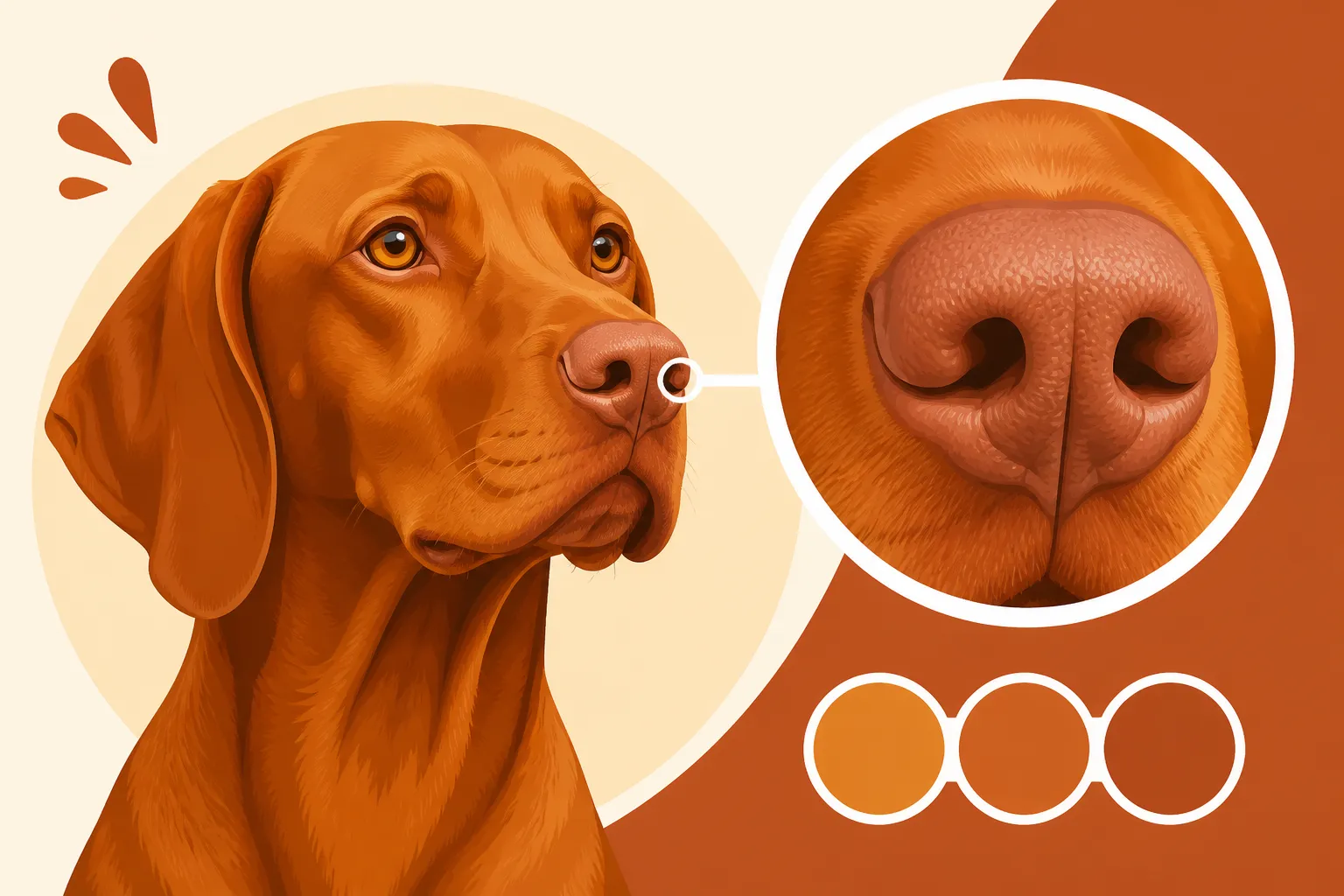
Why a Vizsla’s Nose Matches Its Coat
It’s a sight that always catches the eye: the stunning golden-rust coat of a Vizsla, so unique and vibrant, perfectly complemented by a nose of the exact same shade. This isn't just a happy accident; it’s one of the breed’s most distinguishing characteristics, a hallmark of their beauty and heritage. This guide will delve into the fascinating genetic and historical reasons behind this perfectly matched pigmentation and what it means for our beloved Hungarian pointers.
The Signature Vizsla Look: A Coordinated Color Palette
When you see a Vizsla, one of the first things that often strikes you is their incredible uniformity of color. From the tips of their expressive ears to the end of their docked tail, it's a seamless cascade of golden-rust. But look closer, and you'll notice this harmony extends beyond their fur. Their eyes are often a beautiful amber or rich brown, blending with their coat, and most notably, their nose, eye rims, and even their paw pads mirror that distinctive rust shade. This coordinated look is far from random; it's a carefully preserved genetic trait that has defined the breed for centuries.
Why the Matched Nose Stands Out
In the world of dogs, a black nose is the default for countless breeds, from Labradors to German Shepherds, even many other pointing breeds like the German Shorthaired Pointer. It's so common that a non-black nose can sometimes signify a lack of pigmentation or even a health issue in other breeds. But with the Vizsla, that deep, almost liver-colored nose, perfectly matching their coat, is not just normal—it's expected. It contributes significantly to their elegant and regal appearance, cementing their status as the "Golden Dog of Hungary." This uniformity of color is something breeders strive for, ensuring that each Vizsla embodies the classic aesthetic that makes them so recognizable. The Golden Rust Color Only a Vizsla Wears is a trait that truly sets them apart.
More Than Just a Pretty Feature
This consistent coloring is more than just aesthetic. It speaks to a specific genetic makeup that differentiates the Vizsla from many other breeds. It’s a physical manifestation of their unique genetic lineage, preserved through careful breeding practices over generations. When you see a Vizsla with this perfectly matched nose, you're looking at a dog whose ancestors were selected to carry forward this specific genetic combination. It’s a testament to the dedication of those who nurtured the breed back from near extinction, ensuring its distinctive features remained intact. This attention to detail extends to every part of their appearance, making the Vizsla a true work of art in the canine world.
The Genetic Science Behind the Golden-Rust Nose
To understand why a Vizsla’s nose matches its coat, we need to delve a little into dog genetics, specifically the genes responsible for coat color and pigmentation. It’s a fascinating dance of dominant and recessive alleles that ultimately dictates whether a dog has a black nose, a liver nose, or even a dilute blue or Isabella shade. For the Vizsla, a specific combination of genes results in that signature golden-rust with a matching nose.
The B Locus and Liver Pigmentation
The primary gene responsible for the Vizsla’s liver-colored (brown/rust) pigmentation is found at the B locus. In most dogs, the dominant allele (B) produces black pigment. However, if a dog inherits two copies of the recessive allele (bb), it will produce brown pigment instead of black. This gene affects all eumelanin (black/brown pigment) produced by the dog, including in the nose, paw pads, eye rims, and even the iris of the eyes, which is why Vizsla eyes are typically amber or brown, not dark black.
Think of it like this: the B locus is the master switch for whether the dark pigment is black or brown. Since Vizslas are genetically "bb," all their potential black pigment turns brown. This is why their nose must be brown to match their brown-based coat color. If a Vizsla were to somehow have a black nose, it would indicate a genetic deviation from the expected bb genotype, likely suggesting a mixed lineage or a very rare mutation. This genetic foundation is crucial for understanding why Whether a Vizsla Can Have a Black Nose is such a critical point in the breed standard.
The E Locus and Pheomelanin Expression
While the B locus dictates black versus brown pigment, another key gene, the E locus, controls how that pigment is expressed in the coat. The E locus determines whether a dog is able to produce black/brown pigment in its fur at all, or if it will be a "red" or "yellow" dog (producing only pheomelanin, which is red/yellow pigment, in the coat). Most Vizslas are "ee" at the E locus, meaning that while their skin, nose, and eyes produce brown (eumelanin) pigment, their coat produces only pheomelanin, resulting in the golden-rust color.
It’s a bit of a trick, really. The Vizsla is genetically a "brown" dog (bb) but its coat appears "red" or "golden" because the E locus (ee) prevents the brown eumelanin from being expressed in the fur. However, the E locus does not affect the color of the nose or eye rims; these are still dictated by the B locus. So, because a Vizsla is bb, its nose will be brown (liver). The ee then ensures that the coat color is golden-rust, perfectly harmonizing with that brown nose. This intricate genetic interplay creates the distinct and unified look we cherish in the breed.
Pigmentation and Overall Health
While primarily cosmetic, these genetic traits are tied to overall health. Reputable breeders understand the importance of genetic diversity and screening to ensure healthy dogs. For example, some dilute colors in other breeds can be linked to skin issues, but the Vizsla's specific genetic combination for its golden-rust coat and matching liver nose is well-established and not associated with such common genetic health problems. This focus on healthy breeding lines, as discussed in The Health Tests Both Vizsla Parents Should Have, helps maintain the breed's vitality alongside its unique appearance.
Breed Standard and Historical Preservation
The unique golden-rust coat and matching liver nose aren't just a happy accident; they are foundational elements of the Vizsla breed standard, meticulously preserved through generations. This standard reflects the breed's origins and the specific vision its early developers had for its appearance and utility. Understanding this historical context helps us appreciate why certain traits, like nose color, are so strictly defined.
The Vizsla Standard: A Blueprint of Perfection
Breed standards, established by organizations like the American Kennel Club (AKC) or the Fédération Cynologique Internationale (FCI), serve as the ideal description for each breed. For the Vizsla, these standards explicitly call for a golden-rust coat and a nose that matches. A black nose, or even a heavily mottled or pink nose, is considered a fault, and in many show rings, it can lead to disqualification. This isn't arbitrary; it reflects the deep historical and genetic roots of the breed.
The standard emphasizes: "Nose solid color, in shade of golden rust, blending with the coat. Black or pink nose is a disqualification." This clear directive shows just how important this single feature is to the overall integrity and recognition of the Vizsla. It’s a testament to the fact that the Vizsla's identity is inextricably linked to this precise color coordination. This adherence to a distinct color profile is part of what makes The Vizsla Came Back From Extinction Twice such a remarkable story, highlighting the effort to preserve its unique traits.
The Legacy of Selective Breeding
The Vizsla, as we know it today, is the result of centuries of selective breeding in Hungary, aimed at producing a versatile hunting dog that excelled in pointing and retrieving. During periods when the breed faced near extinction, dedicated enthusiasts worked tirelessly to revive it. In their efforts to rebuild the breed, they focused on individuals that embodied the ideal Vizsla type, including that distinctive golden-rust color and matching nose. How the Vizsla Nearly Died Out by 1900 underscores the immense effort involved in bringing the breed back, and part of that was meticulously preserving its defining aesthetic characteristics.
This rigorous selection process meant that dogs with off-color noses or coats were deliberately excluded from breeding programs, ensuring that the desired genetic traits for uniform pigmentation became firmly established and passed down. This isn't just about superficial beauty; it speaks to the purity and careful development of the Vizsla line, ensuring that dogs produced were true to type. This historical commitment to a unified appearance is why the golden-rust with a matching nose is so deeply ingrained in the breed's identity.
Variations and Things to Watch Out For
While the ideal Vizsla nose perfectly matches its golden-rust coat, there can be subtle variations, and it's important for owners to understand what's normal, what's a minor deviation, and what might be a cause for concern. Not every Vizsla will have the exact same shade of rust on its nose as another, just as their coat colors can vary slightly within the "golden-rust" spectrum.
The "Winter Nose" Phenomenon
Sometimes, you might notice your Vizsla's nose pigment seems a little lighter in the colder months. This is often referred to as "snow nose" or "winter nose," and it’s a common, harmless phenomenon that affects many breeds, not just Vizslas. It happens when the enzyme responsible for pigment production (tyrosinase) is less active in cold temperatures. The nose may temporarily lighten to a paler pinkish-brown, but it typically returns to its usual vibrant rust color once warmer weather arrives. This isn't a fault or a health concern, merely a temporary physiological response to the environment. Whether a Vizsla's Nose Loses Color explains more about this benign change.
If you notice this, it’s usually nothing to worry about. Your Vizsla is still genetically a "bb" dog, and their underlying pigmentation is still brown; it's just temporarily less intensely expressed. You might even find some reputable breeders discussing this occurrence, acknowledging it as a natural variation within the breed rather than a flaw. Chewy offers a variety of nose balms and moisturizers if your Vizsla's nose feels dry during these colder months, but they won't change the underlying pigment.
What Constitutes a Fault or Disqualification
While slight variations in shade or temporary winter nose are generally acceptable, certain nose colors are considered serious faults or outright disqualifications in the breed standard.
Let's break down the different scenarios:
- Black Nose: As mentioned, a black nose on a Vizsla is a disqualifying fault. This strongly suggests that the dog is not a purebred Vizsla or has a significant genetic anomaly that goes against the established breed type. Whether a Black Nose Disqualifies a Vizsla is unequivocal on this point.
- Pink Nose (Permanent): A permanently pink or flesh-colored nose, especially in an adult Vizsla, is also a serious fault. While puppies might have slightly pinker noses that darken with age, an adult should have a solid, liver-colored nose. A permanent pink nose indicates a lack of pigmentation that is outside the breed standard.
- Heavily Mottled Nose: A nose that is a mix of pink and liver, or excessively mottled with patches of lighter pigment, can also be a fault depending on the severity. While some slight mottling might be present, the ideal is a solid, uniform liver color.
These distinctions are important for breeders and those looking to show their Vizslas. For a pet owner, while a non-standard nose color doesn't make your Vizsla any less lovable, it's a good indicator of breed purity if you are seeking a dog that fully conforms to the established type.
| Nose Pigmentation | Description | Status in Breed Standard | Common Causes/Notes |
|---|---|---|---|
| Golden-Rust | Solid, uniform liver color, matching the coat shade. | Ideal | Proper genetic expression (bb at B locus). |
| Winter Nose | Temporary lightening to a paler pinkish-brown, especially in cold weather. | Acceptable Variation | Reduced tyrosinase activity; pigment returns in warmer months. |
| Pink Nose | Permanent pale pink or flesh color in an adult. | Serious Fault | Lack of proper pigmentation; genetic deviation. |
| Black Nose | Solid black pigmentation. | Disqualification | Indicates genetic impurity or mutation (presence of B allele). |
| Mottled Nose | Patches of pink and liver, not a uniform solid color. | Fault (severity varies) | Incomplete or inconsistent pigmentation. |
Practical Implications for Vizsla Owners
While the matched nose color is largely about aesthetics and breed purity, there are a few practical considerations for Vizsla owners related to their unique pigmentation. These often revolve around sun exposure and overall skin health, especially given the Vizsla's single, thin coat.
Sun Protection and Sensitive Skin
Vizslas, with their light pigmentation and sparse single coat, are more susceptible to sunburn than many other breeds, and this includes their noses. A pale, liver-colored nose, while beautiful, doesn't offer the same level of sun protection as a black nose. Just like humans with fair skin, Vizslas can get a sunburn on their nose, which can be painful and lead to dryness, cracking, or even increase the risk of skin cancer over time.
Owners of Vizslas, especially those spending extended time outdoors during peak sun hours or hunting in open fields, should be mindful of nose protection. Consider applying a pet-safe sunscreen specifically designed for dogs to your Vizsla's nose before heading out. Many brands offer zinc-free, fragrance-free options that are safe if licked. Monitoring your dog's nose for redness or peeling is always a good idea. Similarly, The Single Coat a Vizsla Has and Why It Changes Everything means that their skin generally needs more protection. Chewy stocks a wide range of specialized sunscreens and balms, perfect for keeping sensitive Vizsla noses protected and moisturized.
Grooming and Routine Checks
The unique pigmentation also ties into general grooming and health checks. When you're brushing your Vizsla (which isn't usually a long affair, given their short coat!), take a moment to examine their nose, eye rims, and paw pads. Look for any changes in color, texture, or the presence of scabs, cracks, or unusual growths.
A healthy Vizsla nose should be moist, smooth, and free from excessive dryness or irritation. If you notice persistent dryness, cracking, or any changes in pigmentation that don't seem like the temporary "winter nose" effect, it’s always wise to consult your veterinarian. These could sometimes be early signs of skin conditions or other health issues, though often it's just dryness from environmental factors. Maintaining good skin and coat health also involves feeding a high-quality diet, and many Vizsla owners find supplements like fish oil, readily available at places like Chewy, beneficial for their dog's skin.
Recognizing the Breed's Identity
Ultimately, the Vizsla's matching nose and coat are a huge part of what makes them, well, them. It’s an iconic feature that speaks to their purity, heritage, and the dedicated efforts of breeders who preserved this magnificent dog. For Vizsla enthusiasts, that coordinated golden-rust palette is a badge of honor, a symbol of everything that makes the breed so special. It's a key identifier that instantly distinguishes them from similar breeds and one of the many reasons we fall in love with these elegant, affectionate, and active dogs. The Golden Rust Color Only a Vizsla Wears is truly their signature.
Disclaimer
This article is for general informational purposes only and does not constitute professional advice. Laws, prices and regulations vary by location and change over time. Consult a qualified professional for guidance on your specific situation.