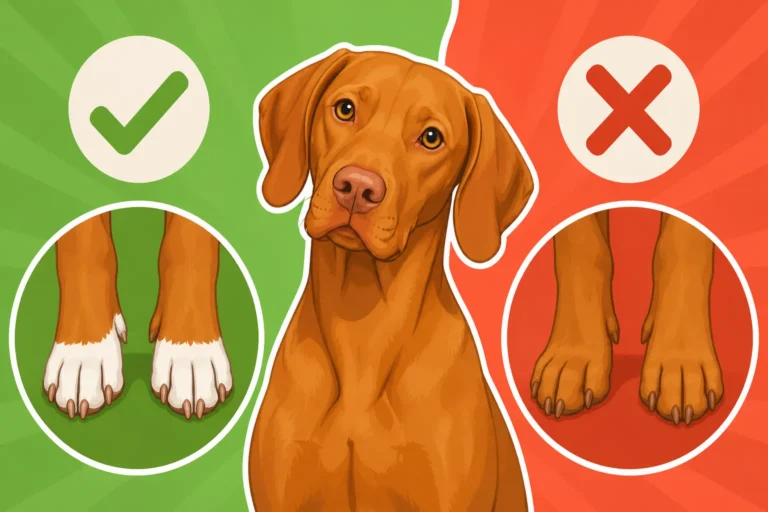
Whether the Two Vizsla Breeds Can Be Crossed
A smooth-coated Vizsla and a Wirehaired Vizsla can mate and produce puppies, but that does not make the litter a recognized purebred pairing. The two are treated as distinct breeds by major registries, and registration rules can differ by country and kennel club. Here’s what crossing them may mean for coat, pedigree, registration, health planning, and anyone considering a puppy from such a litter.
Can a smooth Vizsla and a Wirehaired Vizsla mate?
Yes. They are closely related domestic dogs, so there is no biological barrier that prevents them from mating. A litter may have puppies with a range of coat textures and appearances, rather than a predictable blend that neatly matches either breed standard.
That practical possibility is different from whether a litter is considered an approved purebred breeding. The smooth-coated Hungarian Vizsla and the Wirehaired Vizsla are recognized as separate breeds in major registries, with separate standards and pedigrees. For more on that distinction, see The Wirehaired Vizsla Is a Different Breed and Whether a Wirehaired Vizsla Is the Same Breed.
Why the breed distinction matters
The Wirehaired Vizsla was developed through deliberate breeding that included smooth Vizslas and other dogs, including German Wirehaired Pointers. Breeders selected for a practical, weather-resistant coat and the working qualities they wanted. That history explains why the breeds share ancestry, but it does not mean that crossing them today is automatically treated as an ordinary within-breed mating. How the Wirehaired Vizsla Was Made explores that development in more detail.
Breed names can make the relationship confusing. The Wirehaired Vizsla is not simply a smooth Vizsla with a longer or rougher coat. Each breed has its own standard and breeding population, and registries may maintain separate records for them. A dog that looks like a Wirehaired Vizsla is not necessarily eligible to be registered as one.
Biological possibility versus registry recognition
A cross between the two may be possible, while the resulting puppies may not qualify for registration as purebred Wirehaired Vizslas or smooth Vizslas. The exact outcome depends on the registry and its rules. Registration policies are not universal, so a breeder should confirm them directly with the relevant national kennel club or breed registry before planning a litter.
A pedigree, a registration certificate, and a dog’s appearance answer different questions. A puppy may have documented purebred parents but still be considered crossbred under a registry’s rules. Likewise, a puppy might develop a wiry coat without being eligible for a Wirehaired Vizsla pedigree. Buyers should not rely on verbal assurances such as “the coat makes it a wirehair” or “both parents are Vizslas.”
What might the puppies look like?
Coat and appearance are among the biggest uncertainties in a cross. Some puppies may look closer to the smooth-coated parent, while others may inherit more visible characteristics of the Wirehaired Vizsla. Littermates can differ from one another, and a puppy’s coat as a youngster may not show exactly how it will look when mature.
Coat texture is not a guaranteed outcome
It is tempting to assume that crossing a smooth dog with a Wirehaired Vizsla will reliably produce puppies with a particular coat. In practice, coat texture and related features can depend on inherited traits from both parents, and the appearance of one puppy does not predict the whole litter. The presence, length, and distribution of facial furnishings may also vary.
A breeder should be cautious about promising that every puppy will have a proper Wirehaired Vizsla coat. If a specific coat type matters to a buyer, ask what the breeder can support with the parents’ pedigrees, coat history, and any relevant genetic information. A DNA test may help answer a particular inheritance question, but it does not by itself establish breed identity or registry eligibility.
The question of whether two smooth-coated parents can produce a wire coat is related but different. Whether a Smooth Vizsla Litter Can Produce a Wire Coat can help clarify why coat appearance alone is not a reliable shortcut to establishing a dog’s breed.
Other features can vary too
Color, body shape, head shape, ear set, and overall size may not fall neatly between the two breeds. Even puppies from the same litter may have different combinations of traits. A dog’s eventual appearance is shaped by many inherited characteristics, not just a simple midpoint between its parents.
That variation is not inherently a problem. It does mean that a buyer should avoid choosing a puppy based only on a promise that it will look like a particular breed or perform in a particular way. Ask to meet the parents if possible, learn about their temperaments and working history, and discuss what the breeder expects from the litter without treating those expectations as guarantees.
What to consider before breeding or buying a cross
A responsible decision starts with more than the question of whether the mating can happen. The adults’ health, temperament, working ability, and suitability for breeding matter. So do the breeder’s goals, the puppies’ documentation, and the practical realities of raising a dog whose characteristics may be less predictable.
Health and temperament need individual attention
Do not assume that crossing two breeds automatically prevents inherited health problems or creates healthier puppies. Both parents need appropriate health assessments for their breed and family history. Ask which screenings were performed, who reviewed the results, and whether you can see the records rather than relying on a general claim that the dogs are “health tested.”
Temperament deserves the same care. A high-energy hunting dog with a close, people-focused nature may suit some homes extremely well and overwhelm others. Meeting the parents can offer useful context, but it cannot guarantee that every puppy will have the same disposition. Ask the breeder how the puppies are raised, how they are introduced to everyday experiences, and how they match puppies to homes.
It is reasonable to ask for the litter’s purpose. A thoughtful breeder should be able to explain why these two particular dogs were paired, what traits they hope to preserve, and what trade-offs or uncertainties they recognize. If the explanation rests only on producing unusual-looking puppies or selling them as rare, pause and ask more questions.
Registration, contracts, and accurate descriptions
Before paying a deposit, ask in writing how the puppies will be described and whether they are eligible for registration. Request the names of the registries involved and check the rules directly. Make sure the sales contract uses clear language about pedigree, registration, health disclosures, return arrangements, and any restrictions on breeding.
Be especially careful if an advertisement calls the puppies “purebred” while also describing the pairing as a cross between the two breeds. Those terms can be used inconsistently in casual conversation, but registry status is specific. Ask for the parents’ registration documents and the puppies’ paperwork, and confirm what each document does and does not establish.
If you are comparing possible puppies, this table can help organize the questions:
| Question | Why it matters | What to ask |
|---|---|---|
| Are the parents registered as separate breeds? | Their breed status does not automatically determine the puppies’ registration eligibility. | Which registry records each parent, and what rules apply to this mating? |
| What coat types are expected? | Puppies may not all develop the same texture or furnishings. | What is known about the parents’ coats, and what outcomes are uncertain? |
| What health evaluations were completed? | A cross does not remove the need to assess each parent’s health. | Which tests were done, and can I review the results? |
| How are the puppies described in the contract? | Clear wording helps prevent disputes about pedigree or registration. | Are they being sold as crossbred, and what paperwork will be provided? |
| What homes are suitable? | Energy, training needs, and hunting drive can vary by individual. | How will you assess and match each puppy to a home? |
Match the dog to your household, not just its coat
A puppy from this pairing may be a good companion, but prospective owners should plan for an active, intelligent sporting dog rather than focusing only on whether it will have a distinctive coat. Consider your daily schedule, exercise options, training experience, and whether you can provide regular mental work. A large yard alone does not replace time spent training, walking, exploring, and interacting.
Think ahead about ordinary care, too. Coat texture can affect brushing and outdoor checks, though every dog needs routine grooming and attention to skin, paws, ears, and nails. If you are putting together a puppy-supply list, a retailer such as Chewy may be one place to compare basic items like brushes, leads, and bedding; choose equipment for the individual puppy rather than assuming every cross will need the same tools. A veterinarian or experienced groomer can help you work out a suitable routine once the puppy’s coat becomes clearer.
For broader background on how the two breeds differ in cold-weather work, see Whether a Wirehaired Vizsla Handles Cold Better. Coat alone does not make a dog comfortable in every condition, so practical care and sensible limits still matter.
How to assess a breeder’s explanation
A crossbreeding decision should be transparent. A trustworthy breeder will not treat reasonable questions about breed status, health, or coat expectations as an insult. If anything, clear answers help buyers understand what they are taking on and avoid misunderstandings later.
Questions worth asking before choosing a puppy
Ask why the breeder chose these two dogs in particular. Find out what qualities they hope to preserve and how they evaluated the parents’ health, temperament, and working ability. Ask whether the litter is intended for hunting, sport, companionship, or another purpose, and how the breeder plans to assess the puppies as they grow.
Request clear records and time to read them. Ask for parent registration details, available health results, veterinary records for the puppies, and a written explanation of how the litter can or cannot be registered. If a breeder cannot answer a question immediately, they should be willing to find out rather than pressuring you to decide quickly.
For a puppy intended for field work, discuss how the breeder introduces young dogs to new environments and what support they provide after the puppy goes home. For a companion home, be candid about your routine and experience. A responsible match is about the individual puppy and household, not simply the label on an advertisement.
Red flags that deserve a closer look
Be wary of guaranteed claims about coat, adult size, temperament, hunting performance, or registration when the breeder cannot provide evidence. Be cautious if health testing is described vaguely, if the parents cannot be discussed, or if a deposit is demanded before you receive basic information about the litter.
Also ask follow-up questions when the puppies are marketed as a rare or newly recognized variety. A distinct look does not establish a separate breed, and a breeder’s description does not override registry rules. For context on how coat color and breed standards are treated, Whether a Vizsla Must Be Solid Golden Rust offers a related discussion of appearance and standards.
It can help to compare the breeder’s claims with the broader history of the breed populations. The smooth and wirehaired dogs have connected histories, but modern breeding decisions should be evaluated on their own merits. Whether the Vizsla Has Been Split by Show and Field provides additional context about variation within Vizsla populations, while Whether Hungarian and Western Vizslas Diverged discusses another kind of difference that can be mistaken for a simple breed label.
If the litter is presented honestly as a cross, the breeder explains the reasoning, and the dogs have been assessed responsibly, you can make an informed decision about whether a puppy suits your home. If the wording is unclear or the promises sound more certain than the evidence, take time to verify the details before committing. Where you are comparing everyday care products, Chewy may help you browse common supplies, but the breeder’s records and your veterinary team are the important sources for decisions about a puppy’s health and needs. A practical supply plan can also be adjusted after you see how the puppy develops; Chewy is one option for checking what is available, not a substitute for breed documentation or professional guidance.
Disclaimer
This article is for general informational purposes only and does not constitute professional advice. Laws, prices and regulations vary by location and change over time. Consult a qualified professional for guidance on your specific situation.