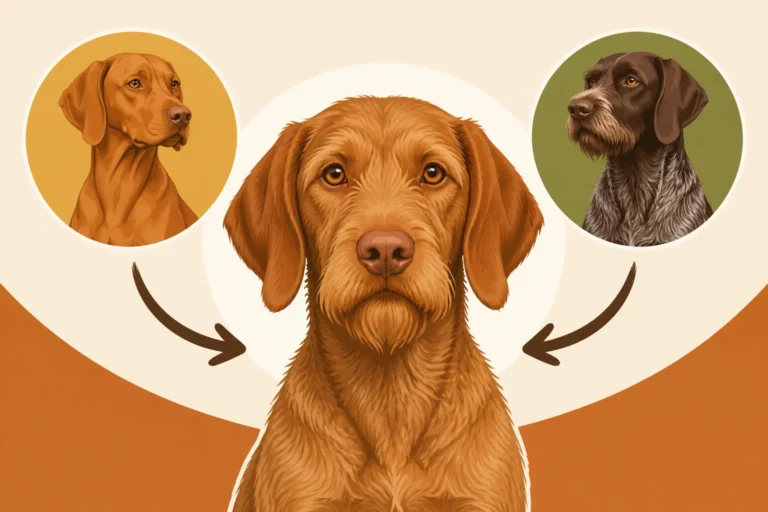
Whether a Smooth Vizsla Litter Can Produce a Wire Coat
A litter from two smooth-coated Vizslas is not expected to produce a genuine Wirehaired Vizsla. The Wirehaired Vizsla is a distinct breed, not simply a coat type that routinely appears in smooth-coated litters. If a puppy has a coarse, wiry coat, the key questions are its parentage, breed background, and whether the coat is truly wirehaired or just an unusual puppy coat.
Can two smooth Vizslas produce a wirehaired puppy
The short answer for a purebred litter
If both parents are genuinely smooth-coated Vizslas with known pedigrees, a Wirehaired Vizsla puppy would be unexpected. The smooth Vizsla and the Wirehaired Vizsla are recognized as separate breeds, and a rough coat is not considered a normal variation within a smooth-coated Vizsla litter.
That does not mean a breeder should dismiss an unusual puppy or make a snap judgment based on a photograph. Coat texture can be hard to assess when a puppy is very young, and lighting, damp fur, and temporary coat changes can make hair appear rougher than it is. But a distinctly wiry coat—especially with furnishings such as a beard or pronounced eyebrows—deserves a careful conversation about the puppy’s ancestry.
The most useful first step is to confirm what the breeder means by “smooth Vizsla litter.” Ask about both parents’ registered breeds, pedigrees, and health and breeding records. If there is uncertainty about parentage, a veterinarian or an appropriate genetic testing service may help clarify the situation. A coat alone cannot establish breed identity.
Why the two breeds are different
The Wirehaired Vizsla was developed as a separate hunting breed using Vizsla ancestry and other wire-coated hunting dogs. Breeders selected for a dense, rough coat suited to working conditions, along with the breed’s hunting abilities and overall type. That history is why a Wirehaired Vizsla is not simply a smooth Vizsla who happened to grow a rough coat.
The distinction matters if you are buying a puppy, planning to show or breed a dog, or trying to understand what traits to expect as it matures. A dog can resemble a Vizsla and still have a mixed or uncertain background. For more history, read How the Wirehaired Vizsla Was Made and Whether a Wirehaired Vizsla Is the Same Breed.
What an unexpected coat might mean
If a puppy from two smooth-coated parents develops a genuinely wiry coat, several explanations are worth considering: the puppy may have a different or mixed ancestry than expected, one parent may have been misidentified, or the coat may not be truly wirehaired. Rare genetic variation can also complicate what seems like an obvious conclusion. None of these possibilities can be confirmed by coat appearance alone.
A responsible response is to ask questions without immediately accusing the breeder of dishonesty. Request clear information about the parents and their pedigrees, and ask whether the litter was registered as a particular breed. If the answers are vague or inconsistent, pause before making a purchase decision. The history and paperwork should support the claims being made about the puppy.
How to tell wirehair from an unusual puppy coat
Look at texture and furnishings, not just length
A wire coat is more than hair that looks a little rough or sticks up after a nap. The coat of a Wirehaired Vizsla is characteristically dense and harsh to the touch, with longer hair on parts of the face that can create a beard and eyebrows. The overall coat should have a purposeful, weather-resistant appearance rather than simply being fluffy or untidy.
A smooth Vizsla puppy can have soft, uneven-looking hair while its coat develops. A little fuzz, a cowlick, or a patch that catches the light is not enough to call the dog wirehaired. Compare the puppy’s texture across its body and look at the face, ears, and legs as well. If you are unsure, ask the breeder to show you the parents and, if possible, adult relatives from the same lines.
The description What a Wirehaired Vizsla Looks Like can help you understand the breed’s typical coat and features. It is also useful to compare the puppy with Whether a Longhaired Vizsla Exists, since “long,” “fluffy,” and “wirehaired” describe different coat qualities.
Give the coat time to develop, but keep records
Puppy coats change. As a dog grows, its hair can become sleeker, thicker, or more even, and the appearance at a few weeks old may not match the adult coat. Take clear photos in natural light and note when you first noticed the texture. If the coat continues to become noticeably harsh or develops facial furnishings, share those observations with the breeder and your veterinarian.
Photos do not prove a dog’s breed, but they can make conversations more specific. A photo of the same area at different ages is more useful than a single close-up taken under different lighting. If the puppy’s skin is irritated, flaky, unusually oily, or losing hair, treat that as a health question rather than assuming it is simply a breed trait.
| What you notice | What it may suggest | A practical next step |
|---|---|---|
| Soft, short hair with a small cowlick | Normal coat variation or a developing puppy coat | Monitor as the puppy matures and ask the breeder |
| Consistently harsh, bristly hair across the body | A coat that warrants closer evaluation | Discuss the coat and ancestry with the breeder and veterinarian |
| Beard and pronounced eyebrows with a rough coat | Features associated with wirehaired ancestry | Review pedigree and parentage information |
| Flaking, redness, itching, or hair loss | A possible skin or health concern | Arrange veterinary advice rather than diagnosing from appearance |
| Coat texture that changes between photographs | Lighting, moisture, or normal coat development may affect appearance | Compare dry coat photos in consistent light |
Keep coat care simple while you investigate
For an otherwise healthy smooth-coated puppy, ordinary gentle grooming is usually enough. A soft brush or grooming mitt can remove loose hair without turning coat care into a complicated routine. If you are choosing basic puppy grooming supplies, retailers such as Chewy may offer brushes and gentle products; check that anything you use is suitable for the puppy’s age and skin.
Avoid shaving, stripping, or applying harsh products to “test” the coat. Those approaches will not confirm the puppy’s breed and could irritate its skin. If the coat feels unusually coarse or the skin looks uncomfortable, let a veterinarian assess it before trying medicated shampoo or intensive grooming.
What to ask the breeder about a surprising coat
Verify the parents and the litter description
Start with straightforward questions: What breed are both parents registered as? Can the breeder provide their registration details and pedigrees? Are either parents from Wirehaired Vizsla lines, or is there any known outcross ancestry? Ask how the breeder describes the puppy’s coat and whether the puppy has been represented as a smooth Vizsla, a Wirehaired Vizsla, or a cross.
A careful breeder should be able to explain the litter’s background and respond calmly to a reasonable question. If they do not know why the puppy’s coat looks different, they should be willing to investigate rather than promising that it will “grow out” or insisting that all Vizslas can produce wire coats. A confident answer is not a substitute for records.
When considering a breeding or purchase, review the broader health documentation too. The Health Tests Both Vizsla Parents Should Have is a useful companion topic, and Whether a Vizsla Breeder Should Show a CHIC Number explains one type of health-testing record buyers may encounter. Health screening does not prove coat ancestry, but transparent records help you assess the breeder’s practices.
Understand what a pedigree can and cannot tell you
A pedigree can show recorded ancestry, but it is not a physical examination or a genetic guarantee. It can help establish whether the parents are recorded as smooth Vizslas and whether their lineage is documented, yet a pedigree does not independently confirm that every detail about a puppy’s parentage is correct.
Genetic testing may help answer parentage or ancestry questions when the right tests are available, but it should be interpreted carefully. A consumer test’s breed estimate is not the same thing as official registration, and it may not resolve every question about a specific coat trait. Ask the testing provider what the test can establish before relying on the result.
The practical question is not simply, “Can this puppy look wirehaired?” It is, “What is known about this puppy’s parents and ancestry, and what is the breeder claiming?” That distinction helps avoid both unfounded alarm and overly reassuring explanations.
Decide whether the puppy still suits your plans
If you want a registered smooth Vizsla for a particular purpose, such as showing, breeding, or joining a specific breed program, clarify registration eligibility and the breeder’s written terms before committing. A puppy with uncertain parentage or an unexpected coat may not fit those plans, even if it is a lovely companion.
If your main goal is a healthy family dog, coat type may matter less than temperament, health, support from the breeder, and whether the dog suits your household. Still, you deserve an honest explanation. Ask what the breeder will document, what they will put in the contract, and whether they will remain available if the puppy’s coat or ancestry raises questions later.
The two breeds also differ in practical coat and working characteristics. If cold-weather performance is part of your interest, see Whether a Wirehaired Vizsla Handles Cold Better. Do not assume that a rough-coated puppy from a smooth litter will automatically have the same coat protection, temperament, or breed status as a Wirehaired Vizsla.
What to do if your puppy’s coat looks wirehaired
Follow a calm, documented process
Take a few consistent photographs, note the puppy’s age, and describe what you feel as well as what you see. Contact the breeder with specific questions about parentage and registration. If the coat seems to be irritating the puppy or the skin is abnormal, book a veterinary check rather than waiting for the breeder to diagnose a medical issue.
Keep copies of registration paperwork, the purchase agreement, health records, and messages about the puppy’s background. This is useful whether the coat turns out to be a normal variation, a sign of mixed ancestry, or simply a temporary puppy feature. Clear documentation makes it easier to get practical answers without relying on memory or assumptions.
If you need a basic brush while the coat develops, a soft grooming mitt is often a sensible starting point for a smooth-coated dog. Chewy is one place owners may look for routine grooming items, but the product itself matters more than where it comes from: choose something gentle, avoid aggressive tools, and stop if brushing causes discomfort.
Know when to seek help
A coat that is merely rough is not usually an emergency. Redness, persistent itching, sores, strong odor, sudden hair loss, or painful areas are different; those signs call for veterinary advice. A veterinarian can examine the skin and help distinguish ordinary coat texture from a skin problem that needs treatment.
For routine care, keep the puppy’s coat clean and dry, and do not over-bathe it in an effort to make the texture change. If a veterinarian recommends a particular cleanser or treatment, follow that specific advice. When comparing gentle grooming products or replacing a brush, Chewy may be a convenient retailer to check, but avoid choosing a medicated product without professional guidance.
The most reliable expectation is simple: two verified smooth-coated Vizslas are not expected to produce a true Wirehaired Vizsla. An unusual puppy deserves a careful look at coat development and parentage, not an instant label. The breeder’s records, the puppy’s mature features, and professional advice together offer a much better answer than coat appearance alone.
Disclaimer
This article is for general informational purposes only and does not constitute professional advice. Laws, prices and regulations vary by location and change over time. Consult a qualified professional for guidance on your specific situation.