Whether a Wirehaired Vizsla Handles Cold Better
A Wirehaired Vizsla usually copes with chilly weather better than a smooth-coated Vizsla, thanks to its denser, protective coat. But that does not make it a cold-weather dog: wind, rain, icy water, long periods of standing still, and an individual dog’s age or health all matter. This guide explains what the coat helps with, where its limits are, and how to keep a Wirehaired Vizsla comfortable outdoors.
Why the Wirehaired Vizsla Has an Edge in Cold Weather
A denser coat offers more protection
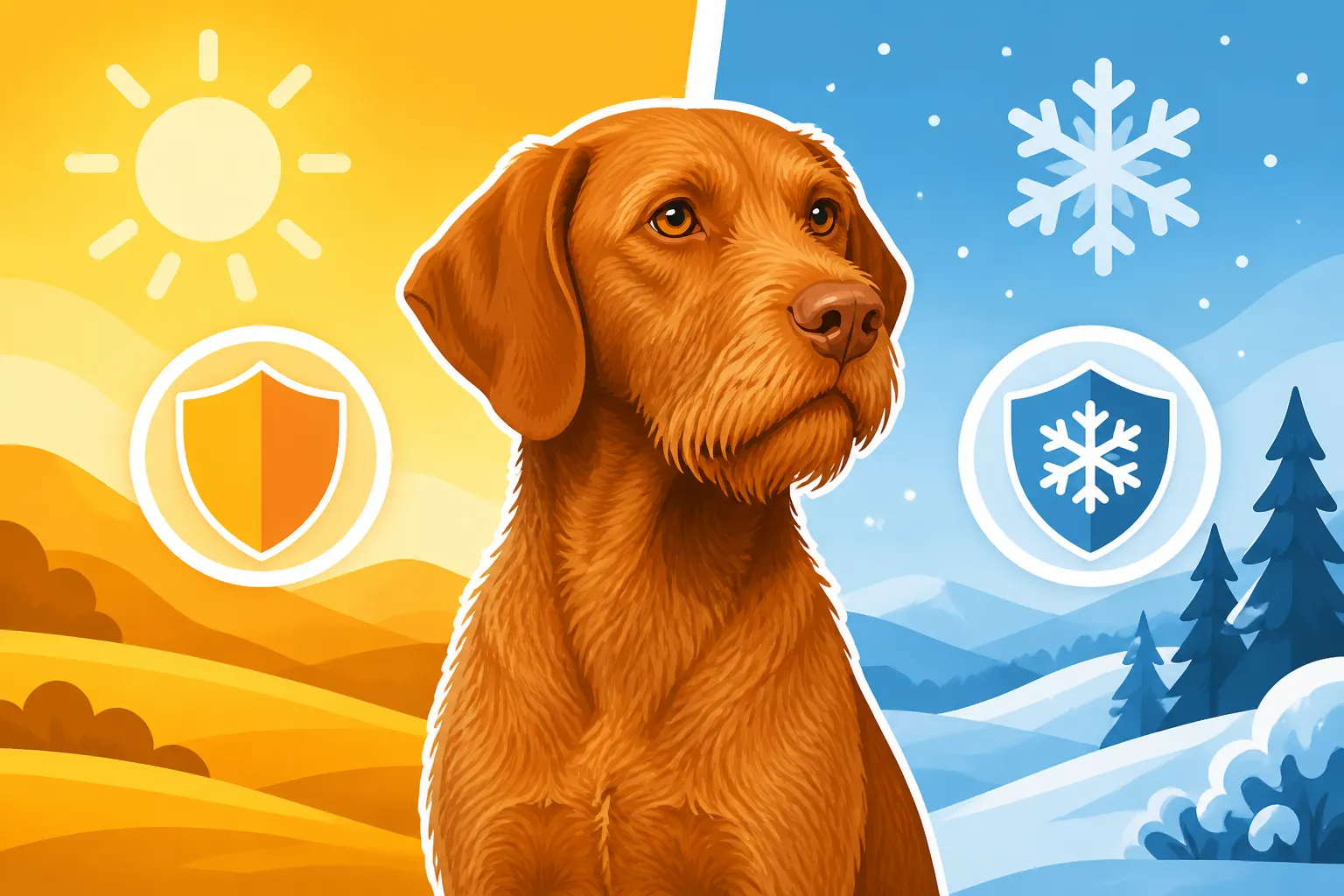
The Wirehaired Vizsla’s coat is designed to provide more protection than the smooth Vizsla’s short, close-lying coat. Its wiry outer hairs help shield the skin from brush and weather, while the coat’s denser texture can offer extra insulation. That makes a real difference on a brisk walk or an active day in the field: the dog is not as exposed as a smooth-coated Vizsla in the same conditions.
Still, “better insulated” is not the same as “built for winter.” A Wirehaired Vizsla does not have the heavy, plush coat of a breed developed for sustained work in deep snow. It may be more comfortable in cool air, but cold rain or a strong wind can still chill it—especially if it stops moving, gets wet, or has to wait outdoors.
The Wirehaired Vizsla is a distinct breed, not simply a smooth Vizsla with a longer coat. Its coat is part of a different overall type, so comparisons should account for more than appearance. For a closer look at that distinction, see The Wirehaired Vizsla Is a Different Breed and Whether a Wirehaired Vizsla Is the Same Breed.
The smooth Vizsla is more exposed
A smooth Vizsla’s short coat offers little protection from wind and cold. Many owners notice that their dog is eager to get outside for a run but much less enthusiastic about standing still on a cold morning. Once exercise stops, a smooth-coated dog may start shivering or trying to head back indoors sooner than its Wirehaired cousin.
That does not mean every Wirehaired Vizsla will tolerate the cold well, or that every smooth Vizsla will struggle at the same temperature. Coat condition, body condition, fitness, age, health, and previous experience with cold all play a part. A lean dog that has spent most of its life in a warm home may feel the chill quickly, regardless of its breed variety.
| Weather or activity | Wirehaired Vizsla | Smooth Vizsla |
|---|---|---|
| Cool weather during steady exercise | Often more comfortable, though it still needs monitoring | May be comfortable while moving, but can chill sooner |
| Cold wind or a long wait outdoors | Coat offers some help, but wind can still cut through | More exposed and more likely to need an extra layer |
| Wet, cold weather | The coat helps, but a soaked dog can become chilled | Short coat offers limited protection once wet |
| Cold-water work | Not automatically safe; time in the water matters | Greater risk of becoming cold quickly |
| Resting indoors or in a vehicle | Needs a warm, dry place like any dog | Often benefits from extra bedding or a coat |
The table is a general comparison, not a temperature chart. Weather conditions can change quickly, and a dog that seems fine while running may be uncomfortable when it stops. For context on how both varieties respond to chilly conditions, read Whether a Vizsla Feels the Cold and The Temperature a Vizsla Needs a Coat At.
Where the Coat’s Protection Has Limits
Wind, rain, and stillness can erase the advantage
Cold is not just about the number on a thermometer. A damp coat, a biting breeze, and a dog standing still can be harder to tolerate than a colder but calm day spent moving. A Wirehaired Vizsla hunting through cover may stay warm while it works, then cool down during a long break beside the vehicle. That transition is easy to overlook, especially when the dog seems energetic and focused.
Wet weather is a particular concern. A denser coat can slow the effects of light moisture, but it cannot keep a dog warm indefinitely once the coat is soaked through. After a rainy walk, swimming session, or hunt in wet grass, dry the dog and give it a sheltered place to rest. A warm towel, dry bedding, and a quiet indoor recovery spot can be more useful than assuming the coat will take care of everything.
A coat or fleece may help during breaks, travel, or short walks in unpleasant weather. The right choice depends on the dog and the conditions: a snug layer should allow free movement and should not stay wet against the skin. If you are shopping for a warm layer, Chewy can be one place to compare coat styles and sizing; measure your dog carefully and check that the garment does not restrict the shoulders or chest.
Cold water calls for extra caution
A Wirehaired Vizsla’s coat does not make cold-water work risk-free. Swimming uses energy, water draws heat away from the body, and the dog may keep retrieving because it is keen to work. That enthusiasm can hide discomfort. Watch for slowing down, reluctance to re-enter the water, persistent shivering, or difficulty moving normally once the dog is back on shore.
Keep water sessions controlled when conditions are cold. Give the dog a way to exit easily, avoid repeated long retrieves in icy water, and dry it promptly afterward. If the dog seems weak, confused, unusually quiet, or unable to warm up, stop the activity and contact a veterinarian. Cold-water risks apply to both coat types, though a smooth-coated Vizsla has less insulation to begin with. See Whether Cold Water Is Dangerous for a Vizsla for more on this specific concern.
Cold-weather hunting also depends on the setting. A dog actively moving across a field may stay warm, while a dog waiting in a damp blind, truck, or open field can lose heat. If your plans involve freezing conditions, read Whether a Vizsla Hunts in Freezing Weather and Whether a Vizsla Needs Two Coats for Wet Cold for related considerations.
Keeping a Wirehaired Vizsla Comfortable Outdoors
Match clothing and activity to the conditions
There is no single temperature that determines when every Wirehaired Vizsla needs a coat. Start with the full picture: wind, rain, time outside, whether the dog will be moving continuously, and whether it can return to shelter. A short, active walk in crisp weather may be comfortable without extra clothing. A long wait in cold rain is a different situation, even if the air itself does not feel especially cold.
Look for your dog’s individual signals rather than relying on the breed label. Shivering, repeatedly lifting paws, hunching, seeking shelter, slowing down, or trying to turn home are reasons to pause and reassess. Some dogs also become unusually quiet when they are cold, rather than making a fuss. If you are unsure whether a jacket is useful, try it during a short outing and observe whether your dog moves comfortably and behaves normally.
A practical cold-weather routine might look like this:
- Check the forecast for wind, precipitation, and temperature before heading out.
- Choose a route with shelter or an easy way to return home.
- Bring a dry towel and a suitable layer if the outing includes waiting or wet conditions.
- Check your dog’s paws and coat during breaks, especially after snow or wet grass.
- Dry the dog and offer a warm resting place once you are back indoors.
Chewy may be useful for comparing dog coats, but fit matters more than the label on the garment. A coat that twists, rubs, or restricts movement can cause a new problem instead of solving one. If you are considering boots for snow or salted sidewalks, check that your dog can walk naturally in them and remove them if they cause discomfort.
Protect the dog at home and after exercise
Outdoor cold is only part of the picture. A Wirehaired Vizsla that has been running in chilly weather may cool down quickly once it comes inside, particularly if it is wet or tired. Give it a dry bed away from drafts, and avoid leaving it to sleep outdoors simply because its coat is denser than that of a smooth Vizsla. A coat is not a substitute for a safe, warm place to rest.
Pay extra attention to puppies, older dogs, and dogs with health conditions. Young dogs may not regulate temperature as reliably as healthy adults, while older dogs can be less tolerant of cold and may have joint discomfort that makes movement harder. A dog recovering from illness or surgery may also need shorter outings and more protection than it used to.
If your Wirehaired Vizsla is trembling persistently, weak, confused, unusually drowsy, or having trouble walking after cold exposure, treat the situation seriously. Move the dog to a warm, dry place, wrap it in dry blankets, and contact a veterinarian for advice. Do not use intense direct heat, such as placing a heating pad against the skin, unless a veterinary professional directs you to do so. For signs that cold exposure may have become dangerous, see Whether a Vizsla Gets Hypothermia.
Chewy can also be a convenient place to compare dry bedding or outdoor layers, but watch your dog rather than expecting any piece of equipment to guarantee comfort. The best setup is the one that keeps the dog dry, lets it move freely, and gives it an easy route back to warmth.
What to Expect From a Wirehaired Vizsla in Winter
A Wirehaired Vizsla generally has an advantage over a smooth Vizsla in cool weather because its coat provides more protection. That advantage is most useful during active outdoor time and less reassuring in cold rain, strong wind, icy water, or extended periods of inactivity. The coat improves comfort; it does not remove the need to monitor your dog.
Think of the Wirehaired Vizsla as more cold-tolerant than its smooth-coated counterpart, not as a dog that can be left out in winter conditions without care. Adjust outings to the weather, dry the dog after wet activity, offer warm shelter, and use a coat when the conditions or your dog’s behavior call for one. If your dog’s tolerance seems to change suddenly or it reacts strongly to cold, discuss it with a veterinarian rather than assuming the coat explains everything.
Disclaimer
This article is for general informational purposes only and does not constitute professional advice. Laws, prices and regulations vary by location and change over time. Consult a qualified professional for guidance on your specific situation.