Whether the Magyars Brought the Vizsla to Hungary
For anyone fascinated by the Vizsla, it's natural to wonder about their origins. Many of us see our dogs as extensions of ancient history, and for the Vizsla, a breed so deeply intertwined with Hungarian identity, the question of whether the Magyars originally brought them to the region is a common one. It speaks to a desire to understand the very roots of our cherished companions, especially when tracing their lineage involves such a rich, historical tapestry. This guide will explore the historical and genetic evidence surrounding the Vizsla's arrival and evolution in Hungary, shedding light on their journey from ancient times to the modern day.
Tracing the Ancient Roots of the Vizsla
The story of the Vizsla is a captivating journey through time, deeply entwined with the history of the Hungarian people. When we talk about ancient origins, it's rarely a straightforward tale of one group bringing one specific dog breed. History, especially ancient history, is far more complex, a rich tapestry woven from migrations, cultural exchanges, and the evolving needs of people and their canine companions. For the Vizsla, the question of whether they were "brought" by the Magyars is less about a single event and more about a long, continuous process of adaptation and development within a specific cultural context.
The Magyar Migration and Their Dogs
The Magyars, an equestrian people, migrated into the Carpathian Basin in the late 9th century, settling in the region that would become Hungary. They weren't alone; they brought with them their horses, their way of life, and, of course, their dogs. These dogs were crucial to their survival and lifestyle, aiding in hunting, herding, and guarding. It's a romantic notion to imagine these early Magyar dogs as fully formed Vizslas, instantly recognizable to us today. However, it's far more likely that they were a diverse group of adaptable hunting and herding dogs, ancestral types that would eventually contribute to the Vizsla's genetic makeup. Think of it like a foundational layer, a rich soil from which the distinctive Vizsla would later sprout.
These early dogs would have been hardy, intelligent, and capable of working alongside their nomadic owners in various capacities. They needed to track game, protect livestock, and travel long distances. The environment they encountered in the Carpathian Basin was rich with game, which would have further refined the hunting instincts of these dogs over generations. The Magyars prized keen senses, stamina, and a cooperative nature, traits that are still hallmarks of the modern Vizsla. It's not a direct lineage in the way we think of modern breeding, but rather a gradual shaping of characteristics that proved most useful to the Magyar way of life. For more on their distant ancestors, consider reading The Magyar Hunting Dogs Behind the Vizsla.
Evidence from Early Art and Texts
While we don't have photographs or detailed breed standards from a thousand years ago, we can glean insights from historical artifacts and written records. Early depictions, such as etchings and paintings, show dogs accompanying Magyar warriors and hunters. These images often portray medium-sized, short-coated dogs with upright ears and a lean, athletic build – remarkably similar in silhouette to what we might recognize as an early Vizsla type. These early "prototypes" weren't necessarily solid golden-rust, as that distinctive color would take time to stabilize through selective breeding. However, the functional form was clearly present.
Written accounts, although scarce and often allegorical, occasionally mention specific types of hunting dogs used by the Hungarian nobility. These dogs were praised for their keen scenting abilities, their agility, and their loyalty. Over time, as the Magyars settled and formed a more organized society, the importance of specialized hunting dogs grew, particularly for the aristocracy. This increased focus on specific hunting attributes would naturally lead to a more deliberate selection process, favoring dogs that excelled in pointing and retrieving, laying the groundwork for the breed we adore today. These historical hints, while not definitive proof of a fully developed Vizsla, strongly suggest a continuous presence and evolution of a specific type of hunting dog within the Hungarian lands.
The Blend of Bloodlines: Was It a Pure Lineage?
The idea of a "pure lineage" when discussing ancient dog breeds is often a romanticized one that doesn't quite hold up to historical scrutiny. Dogs, much like people, have always been influenced by external factors, including trade, conquest, and the introduction of new populations. The Vizsla's story is no different, being a product of both indigenous development and the careful integration of other bloodlines over centuries. This blending was not random but often purposeful, aimed at enhancing specific traits deemed valuable for hunting.
Local Breeds and Introduced Genes
When the Magyars arrived in the Carpathian Basin, they didn't land on an empty canvas. The region was already home to various indigenous dog populations, likely descendants of earlier human migrations. It's highly probable that the dogs accompanying the Magyars interbred with these local dogs, absorbing their genetic strengths and adapting to the local environment. This natural cross-pollination would have enriched the gene pool, potentially introducing resilience, new hunting instincts, or adaptations to the specific terrain and climate.
Later, as Hungary developed and interacted with neighboring cultures through trade and warfare, other dog breeds or types would inevitably have been introduced. Pointers from other European regions, for example, might have been brought in to refine specific hunting aptitudes, such as a more refined point or a softer mouth for retrieving. This wasn't about diluting the emerging Vizsla type but enhancing it. The goal was always to create the ultimate all-around gun dog, capable of working various types of game across diverse landscapes. This blend of local stock, original Magyar dogs, and judiciously introduced outside bloodlines created a robust and versatile foundation for the Vizsla. It reminds us that even our "purebred" dogs have a complex, mixed heritage.
The Importance of Selective Breeding
Despite the influences of various bloodlines, the consistent presence of the Hungarian nobility was crucial in shaping the Vizsla into a distinct breed. These aristocratic hunters had the resources and the motivation to engage in selective breeding practices, long before modern genetics were understood. They sought dogs with a very specific set of characteristics: a keen nose, a natural point, a reliable retrieve, stamina, and a strong bond with their handler. The golden-rust color, while beautiful, was likely a secondary consideration that became a hallmark over time as other desirable traits were solidified.
This intentional selection process, spanning centuries, gradually refined the "Magyar hunting dog" into the recognizable Vizsla. Dogs that didn't meet the high standards for hunting prowess or temperament would not have been bred, ensuring that only the most desirable traits were passed down. This is where the Vizsla's reputation as a "velcro" dog, intensely bonded and sensitive, likely began to solidify, as hunters favored dogs that were eager to please and worked in close cooperation. Their temperament was as important as their physical attributes. The breed nearly died out multiple times, and the efforts of dedicated breeders were essential in preserving it. You can learn more about this in The Vizsla Came Back From Extinction Twice.
The Vizsla's Evolution Through Hungarian History
The Vizsla's journey through history is not merely a tale of genetic development; it's a living reflection of Hungary itself. The ebb and flow of political power, societal changes, and even global conflicts have all played a role in shaping this breed, almost as much as careful breeding choices. To understand the Vizsla fully, we must appreciate the historical context in which they flourished, struggled, and were ultimately preserved.
The Role of the Hungarian Nobility
For centuries, the Vizsla was almost exclusively the companion of the Hungarian aristocracy and landowning classes. These were not dogs for the common farmer or peasant; they were prized possessions, symbols of status, and invaluable partners in the noble pursuit of game. This exclusive patronage was both a blessing and a curse. On one hand, it ensured meticulous record-keeping (for the time) and dedicated breeding efforts, focused on maintaining and enhancing the breed's exceptional hunting abilities. The nobility had the leisure, resources, and vast hunting estates to truly put these dogs through their paces, selecting only the best for breeding.
The Vizsla was essential for hunting upland birds and small game in the extensive Hungarian plains and forests. Their quiet nature, keen scent, and ability to work effectively in dense cover made them ideal for a hunter who wanted an efficient, close-working partner. This close working relationship forged a profound bond between dog and handler, emphasizing the intelligent, biddable, and devoted temperament we still see in Vizslas today. This period saw the solidification of many of the breed's defining characteristics, from its hunting style to its affectionate nature. For further reading, check out Whether the Vizsla Was a Nobleman's Dog.
Times of Turmoil and Near Extinction
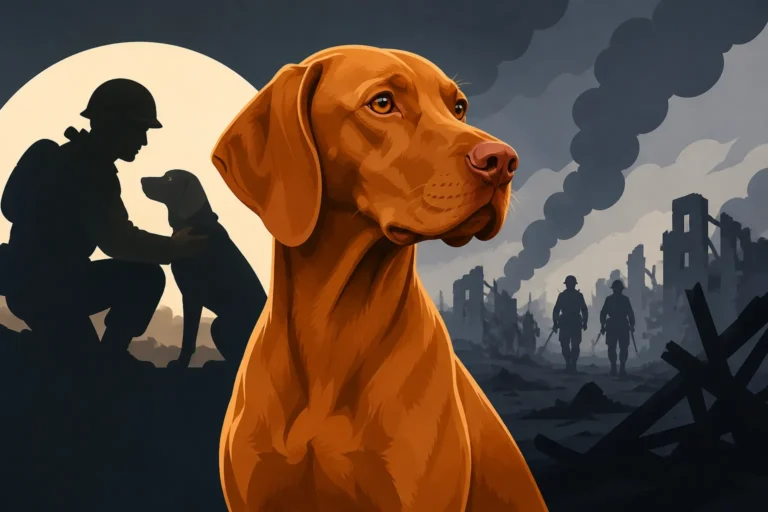
Despite the dedication of the nobility, the Vizsla's existence was precarious. Hungary's tumultuous history, marked by invasions, wars, and political upheavals, took a heavy toll on its people and its dogs. During times of conflict, the practicalities of survival often overshadowed the preservation of dog breeds. Breeding efforts ceased, kennels were dispersed, and many dogs were lost. The breed faced several periods of near extinction, notably around the turn of the 20th century, following the decline of the Austro-Hungarian Empire and the devastation of the World Wars.
It was during these critical moments that the true resilience of the breed, and the dedication of a few passionate individuals, truly shone. Imagine the challenge: with war raging, food scarce, and society in chaos, deliberately preserving a dog breed would have seemed an impossible task to many. Yet, a few dedicated breeders and fanciers risked everything to keep the Vizsla alive, often smuggling dogs out of war-torn regions to ensure their survival. These heroic efforts, sometimes involving just a handful of dogs, formed the foundation for the modern Vizsla population. Without these individuals, the breed would almost certainly have vanished entirely. Their stories are a testament to the enduring love between humans and these special dogs, and how the breed was nearly lost by 1900.
Distinguishing the Vizsla from Other Pointers
When you look at a Vizsla, you see more than just a beautiful dog; you see centuries of purposeful breeding reflected in their elegant form and energetic spirit. While they share characteristics with other pointing breeds, the Vizsla possesses a unique blend of traits that set them apart, especially their temperament and their working style. This distinctiveness isn't accidental; it's the result of specific needs and environments in their Hungarian homeland.
Unique Traits Shaped by Purpose
The Vizsla was bred to be an all-around hunting dog, a "versatile" pointer, as the Hungarians call it. This meant they needed to excel in pointing, retrieving, and tracking, often in varied terrain and weather conditions. Unlike some pointers bred for vast, open fields, the Vizsla was often expected to work closer to the hunter, meticulously covering ground in more diverse landscapes, from dense cover to marshy areas. This close-working style fostered an intense bond with their handler, leading to the highly biddable and sensitive nature they are known for today. They are not independent rangers; they are partners.
Their single, short coat is another defining characteristic, influencing their care and how they handle the elements. While excellent for navigating thorny cover without collecting burrs, it also means they are more sensitive to cold than double-coated breeds. This sensitivity is often reflected in their desire to be indoors, close to their human family, burrowing under blankets – a trait that endeared them to their aristocratic owners, who kept them in their homes, not kennels. This intimate living situation further reinforced their "velcro" personality. If you're looking for gear to keep them warm, a brand like Chewy often has a great selection of coats and beds. This isn't just a quirk; it's a deeply ingrained part of their design. Check out The Single Coat a Vizsla Has and Why It Changes Everything for more insight.
Here's a quick comparison of some key characteristics:
| Characteristic | Vizsla | German Shorthaired Pointer | Weimaraner |
|---|---|---|---|
| Origin | Hungary | Germany | Germany |
| Coat Type | Short, smooth, single coat | Short, dense, sometimes wiry | Short, smooth, silvery-grey |
| Color | Golden-rust | Liver, liver & white, black | Silvery-grey, mouse-grey |
| Temperament | Sensitive, "velcro", biddable | Energetic, independent, bold | Loyal, intense, sometimes stubborn |
| Working Style | Close-working, versatile | Wide-ranging, powerful | Close-working, strong retrieve |
| Cold Tolerance | Low (needs protection) | Moderate | Moderate (can shiver easily) |
| Affection Level | Very High | High | High |
How the Vizsla Differs from its Cousins
When comparing the Vizsla to other popular pointing breeds like the German Shorthaired Pointer (GSP) or the Weimaraner, their unique traits become even clearer. GSPs, for example, are often bred for a wider range and more independent hunting style, covering vast amounts of ground with incredible speed. While a Vizsla certainly has speed and stamina, their historical role often called for a closer working dog, one that could be managed more easily in varied terrain or by a walking hunter. This difference in purpose led to subtle but significant divergences in temperament and training approach.
Weimaraners, while also known for their affectionate nature and intense loyalty, often possess a more robust build and a slightly different drive, frequently excelling in tracking wounded game with tenacity. The Vizsla, with its finer bone structure and sleek athleticism, is built for endurance and agility in the field. These distinctions highlight the careful selection pressures that molded each breed to suit the specific hunting traditions and environments of their respective countries. While all are incredible gun dogs, the Vizsla's particular blend of sensitivity, athleticism, and intense desire to please makes them truly unique among the sporting group, leading many to describe them as the ultimate canine partner. The question of The Vizsla Against the Weimaraner and the Shorthair is a common one.
Modern Interpretations and Genetic Insights
In today's world, our understanding of dog breeds goes far beyond historical texts and anecdotal evidence. Advances in genetic science have opened new windows into the past, allowing us to trace lineage and understand relationships between breeds with unprecedented clarity. For the Vizsla, these modern tools continue to inform and sometimes challenge our traditional narratives about their origins, adding fascinating layers to their already rich history.
Genetic Studies and Ancestral Links
Modern genetic studies, often using DNA analysis from a wide array of dog breeds, have provided compelling insights into the Vizsla's ancestral links. These studies generally support the idea that the Vizsla is indeed an ancient breed, with a genetic signature that distinguishes it from many other European pointers. While they show some distant connections to other continental pointing breeds, their genetic markers suggest a relatively isolated development within the Carpathian Basin, reinforcing the narrative of a breed closely tied to Hungarian history and its people.
These genetic analyses help to confirm that the Vizsla isn't simply a recent creation or a direct cross of existing breeds. Instead, they point to a long period of independent evolution and selection within the Hungarian context, solidifying the claim that while the Magyars may not have "created" the Vizsla overnight, their arrival and subsequent cultural development provided the crucible in which the breed was forged. Furthermore, these studies can sometimes reveal bottlenecks in the breed's history, confirming the periods of near extinction and the dedicated efforts to rebuild the population from a relatively small number of survivors, highlighting why The Twelve Dogs the Vizsla Was Rebuilt From in 1900 is such an important topic.
The Ongoing Debate Among Enthusiasts
Despite scientific advancements, the precise origins of any ancient breed remain a subject of passionate debate among historians, breeders, and enthusiasts. Was the Vizsla truly "brought" by the Magyars, or did they evolve from indigenous dogs in the region, merely refined by Magyar hunting practices? The truth, as is often the case, probably lies somewhere in the middle, a complex interplay of migration, adaptation, and dedicated breeding. Most agree that the Magyar people and their culture were instrumental in shaping the Vizsla into the dog we know and love today, regardless of the precise genetic starting point.
This ongoing discussion isn't just about historical accuracy; it's about appreciating the deep connection between a breed and its cultural heritage. It sparks a healthy curiosity that drives people to learn more about the breed's vulnerabilities, like Why a Vizsla's Immune System Is the Breed's Weak Point. Whether you believe the Magyars arrived with fully-formed Vizslas or merely the genetic precursors, the undeniable fact is that the breed's unique qualities are a direct reflection of centuries of life alongside the Hungarian people. The Vizsla's golden-rust coat, its intelligent eyes, and its boundless energy tell a story of partnership, resilience, and an unwavering devotion that continues to captivate hearts around the world. For current Vizsla owners, understanding this history deepens their appreciation for their beloved companions and guides them in their care, from finding the right food on Chewy to securing appropriate health insurance.
Disclaimer
This article is for general informational purposes only and does not constitute professional advice. Laws, prices and regulations vary by location and change over time. Consult a qualified professional for guidance on your specific situation.