Whether a Vizsla Fills Out After Two
A Vizsla can look leggy and lean well into adulthood, which can leave owners wondering whether their dog is underweight or simply not finished developing. Many continue to gain muscle and mature in shape after age two, but healthy “filling out” is different from putting on excess fat. This guide explains what may change, how to assess body condition, and when a vet check is sensible.
What “filling out” means in a Vizsla
Height growth is not the same as adult shape
Most of a Vizsla’s height growth happens while the dog is young. By around two, many have reached close to their adult height, though individual development varies. That does not mean the dog has its final adult outline. A young Vizsla may still look narrow through the chest, lightly muscled, and a little awkward beside the more mature adults of the same breed.
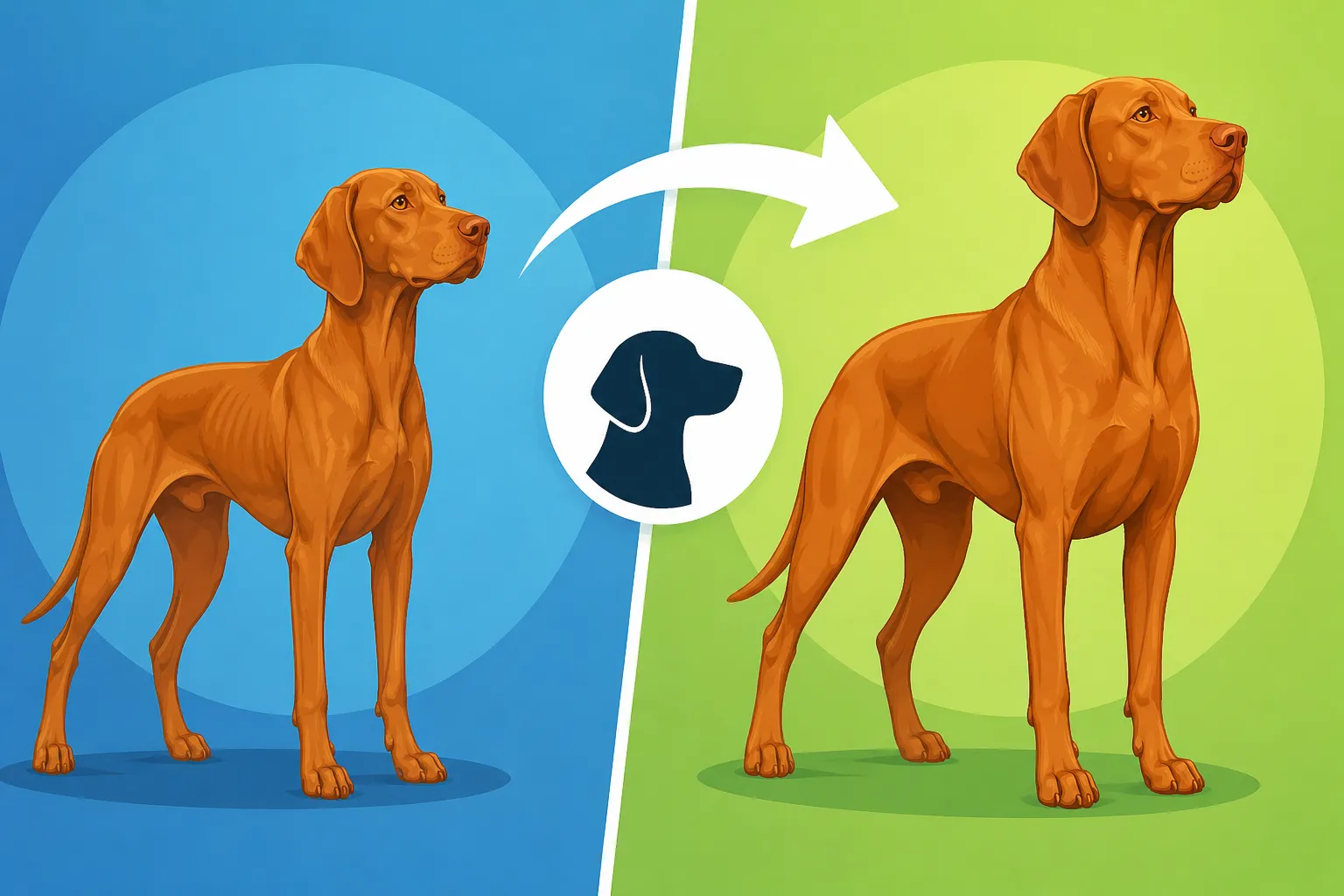
After the main height growth slows, changes are often subtler. The chest may deepen, the shoulders and thighs may become more defined, and the dog may gain muscle as it builds strength through normal activity. These changes can continue into the third year for some dogs, especially when they are active and have had time to mature. It is not a guaranteed transformation, though: some adult Vizslas remain naturally fine-boned and athletic.
That distinction matters when you are deciding whether to increase food. A dog that is still growing in muscle does not automatically need a much larger meal. Feeding more than the dog needs can add body fat rather than the lean strength you hoped to see. For a broader look at how this breed’s frame can appear lean even at a healthy weight, see What a Vizsla Actually Weighs and Whether a Vizsla Looks Underweight When It Is Not.
Why two Vizslas the same age can look different
Age alone does not determine when a Vizsla looks mature. Sex, genetics, build, activity, health, and the dog’s individual growth pattern all play a part. One two-year-old may look solid and well muscled, while another of the same age looks narrow and youthful without being unwell.
Line and family differences can be noticeable, too. Some dogs are naturally rangier, while others have a broader-looking chest or more substance. Comparing your dog with a photo of a different Vizsla can be misleading, especially if you do not know that dog’s age, condition, or activity level. A more useful comparison is how your own dog’s shape changes over time.
Take a side and overhead photo every few weeks in similar lighting and from a similar angle. A gradual change in muscle definition may be hard to spot from memory, while a simple photo record can show whether the dog is steadily maturing, holding a consistent shape, or losing condition. Pair those observations with regular weighing and a hands-on body-condition check rather than relying on appearance alone.
How to tell whether your Vizsla is lean or underweight
Use body condition, not the scale by itself
A scale gives you a number, not a complete picture. Two Vizslas can weigh the same and have different body conditions because their frames and muscle mass differ. Likewise, a dog may gain a little weight as it matures without becoming overweight, or stay at a similar weight while becoming more muscular.
When you look at your Vizsla from above, you should generally be able to see a waist behind the ribs. From the side, the abdomen usually tucks up toward the hind legs. You should be able to feel the ribs with light pressure, but they should not feel sharply prominent under a thin layer of tissue. These are practical clues, not a diagnosis; your veterinarian can help you assess your individual dog and explain what is appropriate for its build.
A lean outline is common in this athletic breed, but a visibly bony spine, hips, or ribs deserve attention, especially if the dog is losing weight or acting differently. If you are unsure, take a short video or photos and note the dog’s recent food intake, activity, stools, and weight changes before the appointment. That information can make a veterinary conversation more useful than saying only, “He seems too thin.”
Look for a trend, not a single week
Weight can move slightly with changes in exercise, appetite, hydration, and routine. A single weighing may not tell you much. Weigh your dog consistently, such as on the same scale and at roughly the same time of day, and record the result. For a large dog, a veterinary clinic may be able to help with weighing if the home scale is impractical.
A simple record helps answer the question “Is my Vizsla filling out?” more accurately. Note age, weight, body condition, appetite, activity, and any changes in diet. If the number is stable but the dog is developing more muscle and maintaining a healthy waist, that may be ordinary maturation. If the number is dropping while the dog’s ribs and hips become increasingly visible, it is a different situation and warrants a vet’s input.
| What you notice | What it may suggest | A sensible next step |
|---|---|---|
| A defined waist, ribs easy to feel, steady energy | A naturally lean but potentially healthy condition | Track weight and ask your vet to assess body condition at a routine visit |
| Gradual muscle definition with a stable, healthy outline | Ongoing physical maturation | Keep exercise and feeding consistent while monitoring changes |
| Prominent ribs, spine, or hips, particularly with weight loss | Possible underweight condition or health issue | Arrange a veterinary assessment |
| A disappearing waist or ribs that are difficult to feel | Possible excess body fat | Review portions and activity with your veterinarian |
| Poor appetite, persistent digestive changes, low energy, or unexplained weight change | A concern beyond normal development | Contact your veterinary clinic |
Supporting healthy development after age two
Feed for body condition rather than the hope of a bigger dog
It is tempting to add an extra scoop when a young adult still looks narrow, especially if you expected a more substantial-looking dog by now. But extra food will not selectively build a deeper chest or stronger shoulders. If the dog is already getting enough nutrition, additional calories are more likely to increase fat than to improve athletic condition.
Start by checking the feeding guide on your dog’s food, then adjust with your veterinarian’s advice for the dog’s age, activity, health, and body condition. Food labels are starting points rather than personalized prescriptions. Treats, training rewards, chews, and scraps count toward daily intake too, and can quietly add up in a dog that trains often.
If you are comparing food labels in person or through a retailer such as Chewy, focus on whether the food is suitable for your dog’s life stage and whether the feeding plan is working for that individual. Do not change several things at once just to test whether a different food makes the dog “fill out.” If a diet change is appropriate, transition gradually and keep track of appetite, stools, and body condition.
Build strength with appropriate activity and recovery
Muscle develops through a combination of movement, nutrition, rest, and time. Regular exercise that suits the dog’s age and current fitness can support a strong adult body, but abruptly adding long runs or demanding field work is not a safe shortcut to a fuller appearance. Increase activity gradually, and allow recovery after harder sessions.
A varied routine can include walking, controlled off-leash movement in a safe area, training, and age-appropriate play. For dogs doing hunting or other strenuous work, the demands of the season may change their energy needs and body condition. Keep an eye on weight through periods of increased activity rather than assuming the usual meal amount will always be enough. Keeping Weight On a Working Vizsla and How Much a Working Vizsla Eats cover those practical feeding questions in more detail.
Food and equipment choices can make the routine easier to manage, but neither replaces an appropriate plan. If you use training treats from Chewy or another retailer, count them as part of the day’s food and consider reserving some of the regular meal for rewards. That can help avoid adding a large number of extra calories during frequent training sessions.
When to ask a veterinarian about a Vizsla’s size
Changes that deserve more than a food adjustment
A Vizsla that has always been lean and is eating, playing, and behaving normally may simply have a fine, athletic build. A dog that is losing weight, failing to maintain condition, or becoming less energetic is different. Do not assume that every thin-looking dog needs more food; underlying health problems can affect appetite, digestion, or weight.
Contact your veterinarian if weight loss is unexplained, appetite changes persist, stools are repeatedly abnormal, or your dog seems tired or unwell. Also seek advice if you notice a sudden change in body shape, difficulty chewing or swallowing, vomiting, or a marked decline in normal activity. These signs are not proof of a particular disease, but they are good reasons to have the dog assessed rather than trying food changes on your own.
If you are considering a supplement, high-calorie product, or major diet change, ask your vet first. A veterinarian can examine the dog, assess muscle and body condition, and decide whether further checks are appropriate. This is particularly helpful when a dog appears thin despite eating well, or when the change is recent rather than a long-standing feature of its build.
What to bring to the appointment
A little preparation can make the visit less stressful and more productive. Bring the name of the food, the amount you offer each day, and a rough count of treats and chews. If you have been weighing your dog, bring the dates and recorded weights rather than a single number. Mention changes in activity, recent illness, and whether the dog’s appetite or stools have changed.
Photos can also help. A side view and an overhead view taken consistently over time may show a gradual shift that is difficult to describe. If your dog is active in the field, explain how often and how intensely it works, and whether the body condition changes during the season. A veterinarian may suggest a feeding adjustment, a different monitoring schedule, or tests based on the full picture.
The goal is not to make every Vizsla look alike. A healthy adult may remain lean and leggy, while another develops a more muscular outline as it matures. Focus on steady health, appropriate body condition, and changes that make sense for your dog—not on achieving a particular number or matching another dog’s appearance. For further context on adult development, see The Age a Vizsla Reaches Full Size, Whether a Vizsla Fills Out After Two, and Whether a Lean Vizsla Lives Longer.
Disclaimer
This article is for general informational purposes only and does not constitute professional advice. Laws, prices and regulations vary by location and change over time. Consult a qualified professional for guidance on your specific situation.