Whether a Vizsla Gets Foxtails in Its Feet
It’s a heart-stopping moment for any Vizsla owner: you’ve been out enjoying a glorious run in the field, maybe chasing a few birds, and suddenly your energetic companion starts limping, licking incessantly at a paw, or just seems…off. You know that distinctive Vizsla drive means they’ll push through almost anything, but that also means they're constantly encountering all sorts of hidden dangers. Among the most insidious and frustrating of these are foxtails, those innocent-looking plant seeds that can cause so much trouble. This guide is here to walk you through exactly what foxtails are, why they’re such a menace for our beloved "Velcro" dogs, how to spot them, and most importantly, how to protect your Vizsla from their sneaky threat.
The Invisible Menace: Understanding Foxtails and Their Danger to Vizslas
There’s nothing quite like watching your Vizsla quarter a field, nose to the ground, working the scent, or bounding through tall grass with that unparalleled joy. But that very activity, that intense connection to nature and their hunting instincts, unfortunately exposes them to certain environmental hazards that other, less driven breeds might avoid. Foxtails are right at the top of that list, a tiny, seemingly harmless plant part that can escalate into a major medical emergency if left unchecked.
What Exactly Are Foxtails and Where Do They Lurk?
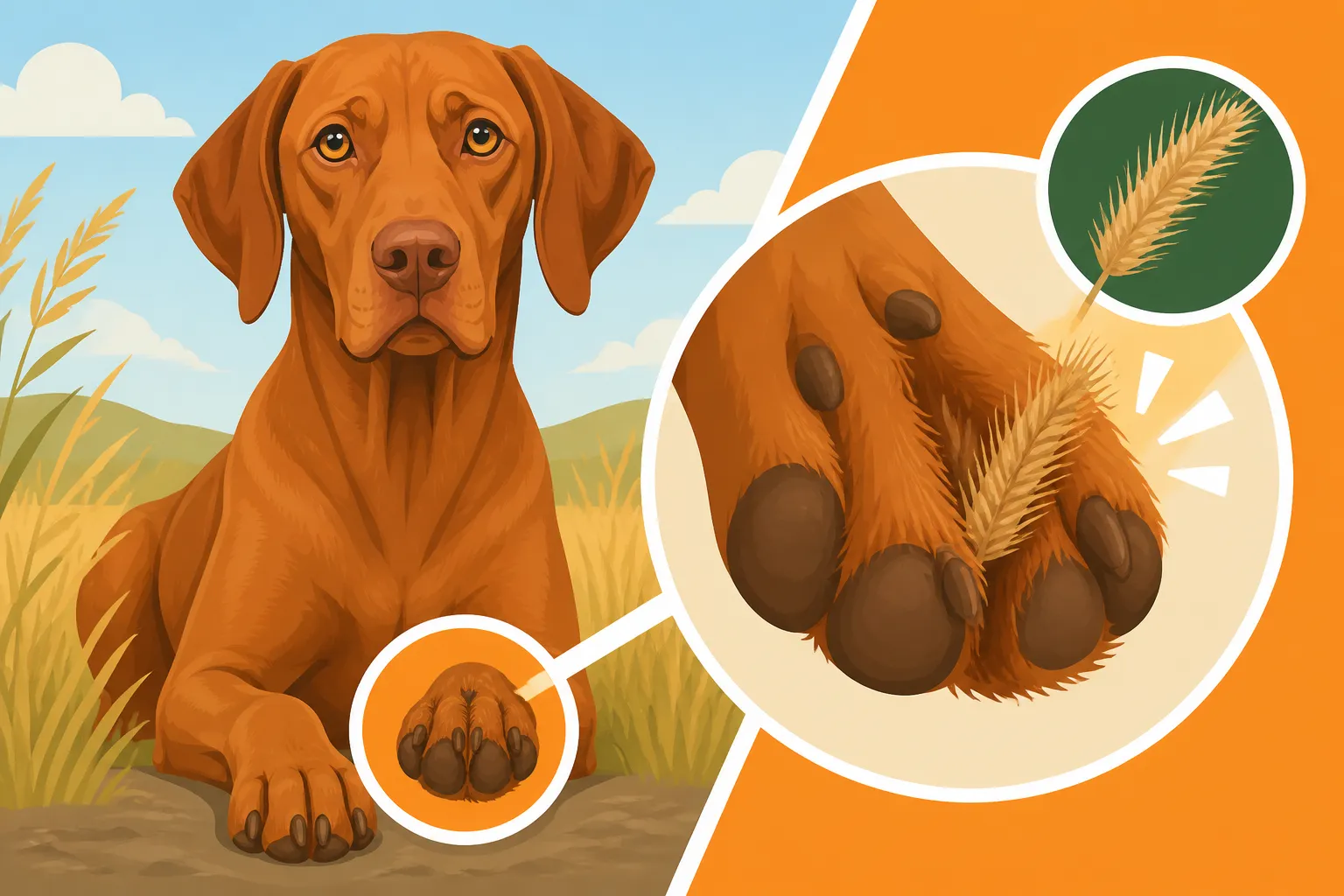
Imagine a tiny, barbed spear, designed by nature to travel in one direction only, constantly pushing forward. That's essentially what a foxtail is. These aren't just random plant bits; they are the seed heads of certain types of grasses, and they have a distinct, pointed shape with microscopic barbs that prevent them from backing out once they've started to penetrate. They vary slightly in appearance depending on the specific grass species, but generally, they look like dried-out, wheat-like awns. They detach easily from the main plant as the grasses dry out, typically during late spring, summer, and into the fall, scattering themselves across fields, hiking trails, neglected yards, and even along roadsides.
Foxtails thrive in dry, open areas, often found in abundance in regions with Mediterranean climates or anywhere you have wild, unkempt grasses. If you live in an area prone to them, you’ll start noticing them everywhere once the season hits – catching on your socks, stuck to your car mats, and inevitably, clinging to your dog. They are truly everywhere once they get going, and their prevalence is a huge headache for active dog owners. It’s not just about walking through a specific field; even a quick run by the roadside can expose your Vizsla to these persistent plant invaders.
Why Vizslas Are Particularly Vulnerable to Foxtails
Our Vizslas are built for action, lean and muscular, with an almost unstoppable drive to explore. This incredible athleticism and hunting instinct, while part of their charm, is precisely what makes them so susceptible to foxtails. They spend a lot of time with their noses to the ground, pushing through dense brush, and running at high speeds through tall grasses. This puts their paws, ears, nose, and even eyes directly in the path of these sharp, barbed seeds. Their short, fine coat, while wonderful for repelling mud and water, offers little in the way of a protective barrier against the determined penetration of a foxtail.
Think about how a Vizsla moves: they are low to the ground, stealthy, and persistent. When they encounter a thick patch of dry grass, they don’t skirt around it; they go through it, often with enthusiastic abandon. Each movement can dislodge dozens of foxtails, many of which can then catch onto their fur or directly impact their skin. Unlike some longer-haired breeds where foxtails might get tangled in a thick undercoat, a Vizsla's single, sleek coat means there's less "buffer" before the seed head makes contact with their skin and starts its insidious journey inward. They are truly at a higher risk, and it’s a constant worry for those of us who share our lives with these wonderful, driven dogs.
Spotting the Signs: How to Identify a Foxtail in Your Vizsla's Paw
Detecting a foxtail early can make a world of difference in preventing serious complications. Our Vizslas are stoic creatures, often Whether a Vizsla Hides Its Pain, especially when they're in their element, so it's up to us to be extra vigilant and know what to look for. Their boundless energy and desire to please can mask discomfort, making early identification a challenge, but not an impossible one.
Early Warning Signals and Subtle Changes in Behavior
The first signs of a foxtail in your Vizsla’s paw are often behavioral. After a walk or hunt in an area where foxtails might be present, keep a close eye on your dog. Is your typically bouncy Vizsla favoring one paw? Perhaps they’re limping subtly, or even holding a paw up intermittently. The most common giveaway is excessive licking or chewing at a specific spot on their foot or between their toes. This isn't just a casual grooming session; it will often be focused, intense, and persistent, sometimes accompanied by frantic nibbling.
You might also notice a general reluctance to put full weight on the paw, or they might become a bit withdrawn, guarding the affected foot when you approach. Sometimes, the pain can be quite acute, leading to whimpering or even yelping if the area is touched. These subtle shifts in demeanor are crucial clues. If your Vizsla is usually glued to your side and suddenly wants to be left alone or seems agitated, especially after outdoor activity, a thorough paw check should be your first course of action. It's a frustrating situation because their distress is so clear, but the cause isn't always immediately visible. For a comprehensive overview of how to monitor your dog's post-hunt condition, refer to Checking a Vizsla Over After a Hunt.
Physical Clues to a Foxtail's Presence
Beyond the behavioral changes, there are definite physical signs to look for. When you examine the paw, you might see redness, swelling, or a small, irritated bump. Sometimes, if the foxtail has just started to penetrate, you might even see the tip of the barb sticking out of a tiny puncture wound. This is a rare, lucky find, however, as these insidious seeds often disappear beneath the skin's surface very quickly. If the foxtail has been present for a while, an abscess can form, appearing as a larger, painful, pus-filled swelling. This often occurs between the toes, making it harder to spot initially.
To conduct a thorough inspection, find a well-lit area and gently spread your Vizsla's toes. Feel carefully between the pads and along the top of the paw. Look for any abnormalities: discoloration, small scabs, matted fur (even on a short-coated Vizsla), or a visible entry point. Pay close attention to the webbing between the toes, as this is a common entry point. Remember that Vizslas have The Thin Skin a Vizsla Takes Into the Field, which makes them particularly vulnerable to such penetrations. The area might be warm to the touch due to inflammation. If you find any of these physical clues, it's a strong indicator that a foxtail is likely the culprit, and prompt action is necessary.
Action Plan: What to Do If You Suspect a Foxtail
Discovering a foxtail embedded in your Vizsla’s paw can be alarming, but knowing the right steps to take can minimize harm and stress for both of you. The key is acting quickly and understanding when a home remedy is appropriate versus when professional veterinary care is absolutely essential. Most of the time, due to the nature of these barbs, a vet visit is going to be the safest bet.
Immediate Steps for Home Inspection and Removal (When Safe)
If you suspect a foxtail, your first move should be a careful, calm examination. Get your Vizsla comfortable, perhaps with a favorite chew toy or a spoonful of their favorite (vet-approved!) treat. With good lighting, gently spread their toes and meticulously inspect every crevice of the paw, including between the pads and up the leg a bit. If you are incredibly lucky, and the foxtail has just begun to embed itself or is merely caught in the fur on the surface, you might see it. In this rare scenario, and only if the foxtail is clearly visible and loose, you can try to remove it with a pair of fine-tipped tweezers. Pull gently and steadily in the direction it entered.
However, and this is a huge however, if the foxtail has already broken the skin and isn't easily accessible, or if you can't be absolutely sure you've removed the entire thing, do not dig. Trying to extract an embedded foxtail at home can push it deeper, break it apart, or cause more trauma and pain to your Vizsla. It’s far better to clean the area gently with an antiseptic wipe suitable for dogs and then proceed directly to professional help. Remember, these seeds are designed to migrate, and any pushing or prodding can accelerate that process, turning a minor issue into a much more serious one. For other general outdoor first aid, it's wise to have What a First Aid Kit for a Hunting Vizsla Holds readily available.
When It's Time for Professional Veterinary Intervention
For the vast majority of suspected foxtail cases, a visit to the veterinarian is non-negotiable. The moment you see swelling, redness, a limping Vizsla, or intense licking and chewing, and you can't easily remove a visible foxtail from the surface, it's time to call your vet. These seeds are a veterinary emergency because of their migratory nature. Once under the skin, they can travel through tissues, causing infections, abscesses, and in extreme cases, reaching internal organs. Delaying treatment only increases the risk and complexity of removal.
Your vet will likely sedate your Vizsla to thoroughly explore the paw and find the foxtail. This often involves careful probing and sometimes even a small incision to retrieve the offending plant material. They will then clean the wound thoroughly and usually prescribe antibiotics to combat any infection. Because Vizslas are so active and often used for hunting, they are unfortunately prone to various field injuries, and your vet understands the unique challenges their lifestyle presents. This is also why having a good understanding of What a Vizsla's Emergency Field Injury Costs is important. Remember, your vet has specialized tools and expertise to ensure the entire foxtail is removed safely, preventing ongoing pain and more severe health issues for your cherished companion.
Prevention is Key: Protecting Your Vizsla from Foxtail Encounters
As much as we love to see our Vizslas running free, the threat of foxtails means we have to be proactive in protecting them. A little bit of prevention and a consistent post-outing routine can save a lot of heartache (and vet bills!). It’s about being mindful of their environment and understanding the specific vulnerabilities of our energetic dogs.
Pre-Emptive Measures and Field Hygiene
The most effective way to prevent foxtail issues is to avoid them altogether. While that's easier said than done for a hunting dog or one with an intense exercise regimen, you can certainly minimize exposure. Try to avoid walking or hunting in areas known to have high concentrations of foxtails, especially when they are dry and ready to disperse. If you're exploring new areas, keep your Vizsla on a leash initially and check the vegetation. Mown grass is generally safer than tall, untamed fields.
For serious hunters or those in very high-risk areas, consider protective gear. Paw boots, while sometimes a bit cumbersome for a Vizsla to get used to, can offer a physical barrier against foxtails penetrating the delicate skin between their pads. You can find a range of options on sites like Amazon, from lightweight disposable boots to more robust, reusable designs. While Vizslas have naturally short coats, keeping the hair between their paw pads trimmed very short can also help reduce the surface area where foxtails can cling and begin to burrow. This seemingly small grooming step can be surprisingly effective in an area where foxtails are rife.
Post-Outdoor Routine and Regular Checks
After every single outdoor adventure, especially those involving tall grass or brush, implement a mandatory "foxtail check" routine. This needs to be as ingrained as clipping on the leash. Systematically inspect your Vizsla from nose to tail, paying extra close attention to their paws. Spread each toe, look carefully at the webbing, and feel between the pads. Don't forget their ears – foxtails can easily work their way into the ear canal, causing irritation and infection. Check their armpits, belly, and even their eyelids.
A fine-toothed comb can be incredibly useful for brushing through their short coat, helping to dislodge any foxtails that might be clinging to the surface before they have a chance to embed. Many owners find a good quality dog brush or grooming mitt from Chewy helps with this daily routine. For added paw protection, especially if your Vizsla is running on rough terrain or in areas where foxtails are a concern, regularly applying paw balm can create a protective layer. Some brands, like those found on Ollie, also offer balms that can soothe and protect pads. Remember, vigilance is your best defense against these tricky plant invaders. A quick, thorough check now can save your Vizsla from significant pain and you from an unexpected trip to the emergency vet.
Foxtail Management Checklist
Here's a quick reference for managing the foxtail threat:
| Action Category | Specific Task | Why It Matters |
|---|---|---|
| Prevention | Avoid high-risk areas (dry, tall grasses) | Reduces primary exposure to foxtail seeds. |
| Use protective paw boots | Creates a physical barrier against penetration. | |
| Keep paw pad hair trimmed | Less surface area for foxtails to cling and embed. | |
| Inspection | Conduct thorough full-body check after every outing | Catches foxtails before they can embed deeply or migrate. |
| Pay special attention to paws, ears, nose, armpits | Common entry points for foxtails. | |
| Look for redness, swelling, limping, excessive licking | Key indicators of a potential problem. | |
| Response | Gently remove visible, loose foxtails with tweezers | Prevents deeper embedding if caught early. |
| DO NOT DIG for embedded foxtails | Risks pushing the foxtail deeper, breaking it, or causing further trauma. | |
| Contact vet immediately for any embedded/suspected cases | Essential for safe and complete removal, preventing complications. | |
| Follow vet's instructions (antibiotics, wound care) | Ensures proper healing and prevents secondary infections. |
Disclaimer
This article is for general informational purposes only and does not constitute professional advice. Laws, prices and regulations vary by location and change over time. Consult a qualified professional for guidance on your specific situation.