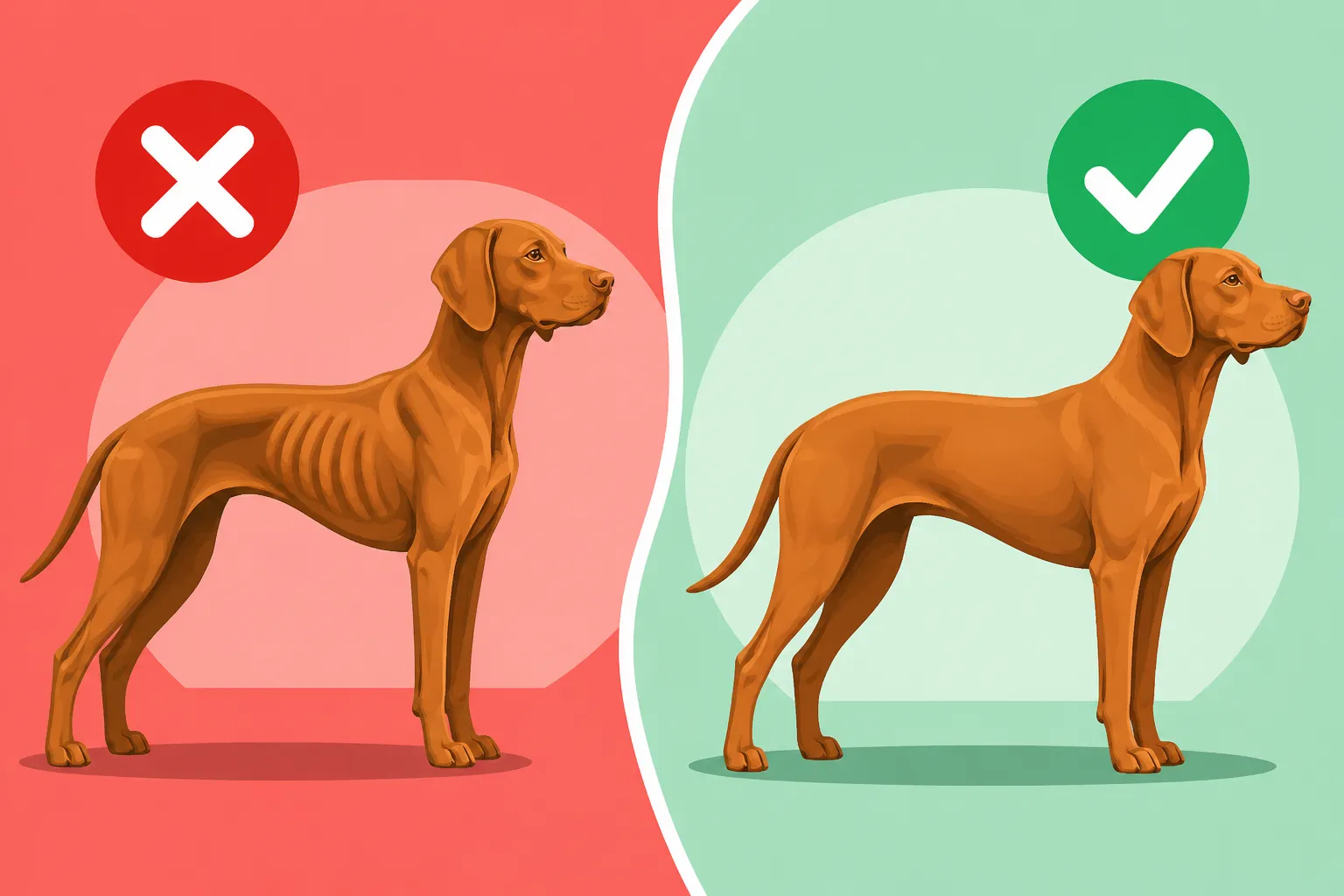
Whether Ribs Should Show on a Vizsla
As a Vizsla owner, you've probably heard it all: "Your dog looks so thin!", "Are you feeding that poor thing enough?", or even "I can see their ribs, that's not right!" It's a common worry, seeing those prominent ribs and hip bones, especially when you're trying your best to keep your energetic companion healthy. This guide will cut through the noise and clarify exactly what a healthy Vizsla physique looks like, helping you understand when those visible ribs are perfectly normal and when they might signal a need for closer attention.
Understanding the Vizsla Physique: Built for Work, Not Bulk
Vizslas are not built like many other breeds; they're not meant to carry extra weight. Their entire heritage points to a lean, athletic build designed for endurance and agility in the field. This means their body condition, including the visibility of their ribs, is often different from what many people consider "normal" for a dog.
The Vizsla Standard and Ideal Body Condition
When you look at the official breed standard for a Vizsla, terms like "medium-sized," "lightly built," and "well-muscled but not bulky" appear again and again. These aren't just pretty words; they describe a dog engineered for a very specific job: hunting all day in varied terrain. They need to be agile, quick, and possess incredible stamina. Any excess weight would hinder their performance, making them less efficient in the field and putting undue strain on their joints. Think of them as canine endurance athletes. Their frame is fine-boned, their muscles are lean and long, and their body is streamlined. This inherent build means that a certain degree of leanness is not just acceptable, but desirable. It’s part of what makes a Vizsla a Vizsla.
This emphasis on a lean, fit body directly translates to what you should expect to see and feel on your dog. A healthy Vizsla should have clearly defined musculature, a deep chest, and a noticeable "tuck-up" where the abdomen tapers upwards towards the hindquarters. Their coat, The Single Coat a Vizsla Has and Why It Changes Everything, is naturally short and close, offering no extra fluff to hide their true physique. This lack of a thick undercoat further accentuates their streamlined form, making ribs and hip bones more apparent than they might be on a double-coated breed.
Why Lean is Not Necessarily Mean
The common perception of a healthy dog often involves a slightly softer, rounder appearance. Many people equate visible ribs with starvation or neglect, and for some breeds, they would be right to worry. However, for a Vizsla, this simply isn't the case. Their metabolism is incredibly high, especially if they are regularly exercising. They burn through calories at an impressive rate, often leading to a naturally lean physique. A well-conditioned Vizsla, one that is getting regular, vigorous exercise, will typically have the last two or three ribs visible when standing. You should also be able to easily feel all their ribs, spine, and hip bones without pressing hard, but there should still be a thin layer of muscle and fat covering them.
It's similar to how human athletes often have very low body fat percentages and visible musculature; it’s a sign of fitness, not malnourishment. If your Vizsla is active, playful, has bright eyes, a glossy coat, and good energy levels, then those visible ribs are usually nothing to worry about. In fact, many veterinary professionals agree that keeping a Vizsla on the leaner side of healthy is beneficial for their long-term joint health and overall well-being, especially given how much How Far a Vizsla Should Run Daily. It reduces stress on their hips and elbows, which can be prone to issues in active breeds, helping them to maintain their active lifestyle for longer. Whether a Vizsla Stays Too Lean is a question many owners ponder, and the answer often lies in understanding this inherent leanness.
How to Assess Your Vizsla's Body Condition
While seeing a few ribs is normal, it's crucial to know how to properly assess your Vizsla's overall body condition. This goes beyond just a visual check and involves a hands-on approach to feel for muscle and fat distribution. Learning to do this regularly will give you a much more accurate picture of their health than relying on sight alone.
The Rib Test and Other Key Indicators
The "rib test" is a simple, effective way to gauge your Vizsla's weight. Gently run your hands along their sides. You should be able to easily feel their ribs, almost like feeling the knuckles on the back of your hand. If the ribs are sharp, prominent, and have no discernable fat or muscle covering, your Vizsla might be too thin. If you have to press firmly to feel them, or can't feel them at all, they might be overweight. The ideal is somewhere in between – easily felt, but not excessively bony.
Beyond the ribs, look at their waist and abdominal tuck. When viewed from above, your Vizsla should have a distinct waist that narrows behind the rib cage. From the side, their abdomen should tuck up nicely from the bottom of their chest towards their hind legs. There shouldn't be any sag or flatness in the belly area. Also, feel along their spine and hip bones. You should be able to feel the individual vertebrae and hip bones without them protruding sharply. They should feel palpable but not overly angular or devoid of soft tissue. If you're concerned about what you're feeling, your vet can use a Body Condition Score (BCS) chart, which is a standardized tool ranging from 1 (emaciated) to 9 (obese), with 4 or 5 being ideal for a Vizsla. This objective measure can help remove some of the guesswork.
Factors Influencing a Vizsla's Weight and Appearance
A Vizsla's weight and the visibility of their ribs aren't static; they can fluctuate based on several dynamic factors. Understanding these can help you manage their condition effectively.
- Activity Level: This is perhaps the biggest factor. A Vizsla that is actively hunting, training for field trials, competing in agility, or running miles with you daily will naturally be leaner than a Vizsla whose primary exercise is a leisurely walk around the block. Their caloric expenditure is immense. Keeping Weight On a Working Vizsla is a constant challenge for many owners.
- Age: Puppies often go through gangly phases where they look quite lean, while senior Vizslas might lose muscle mass or, conversely, gain weight if their activity decreases without a corresponding diet adjustment. Feeding an Old Vizsla requires careful consideration.
- Metabolism: Just like people, some Vizslas are simply metabolic furnaces, burning through food at an incredible rate. You might find you're feeding them a surprising amount for their size, yet they remain lean.
- Diet Quality and Quantity: The type and amount of food play a critical role. High-quality dog food provides dense nutrition, but even the best food needs to be fed in appropriate quantities for a Vizsla's energy demands. If your Vizsla is very active, they might need more calories than the general guidelines on a food bag suggest.
- Health Conditions: Underlying health issues can also cause unexplained weight loss or difficulty maintaining weight. Parasites, dental problems, thyroid issues, or gastrointestinal sensitivities can all impact nutrient absorption and overall body condition. If you notice a sudden, unexplained change in weight, it's always wise to consult your veterinarian. Whether a Vizsla Needs a Yearly Blood Panel is a great way to monitor for underlying issues, particularly as they age.
When Visible Ribs Are a Concern (And When They're Not)
The difference between a "healthy lean" Vizsla and an "underweight" Vizsla can sometimes be subtle, especially to the untrained eye. It’s important to understand the distinctions so you can respond appropriately and ensure your dog is thriving.
Signs of Underweight vs. Healthy Leanness
A healthy lean Vizsla will have visible ribs, a tucked-up waist, and a noticeable but not extreme prominence of their hip bones and spine. Crucially, they should also have good muscle tone. You should be able to feel a thin layer of muscle and skin over their ribs, spine, and hips. Their coat should be glossy, their eyes bright and clear, and their energy levels high and appropriate for their age. They should be eager to eat and drink normally.
However, if your Vizsla is genuinely underweight, you'll likely see more pronounced signs beyond just visible ribs. Their ribs, spine, and hip bones will not only be visible but will feel sharp and extremely prominent, almost like there’s no padding at all. There might be a noticeable lack of muscle mass, particularly across their shoulders, hindquarters, and along their back. Their coat might appear dull or dry, they could have less energy than usual, seem lethargic, or show changes in their behavior. You might also notice poor digestion, such as chronic diarrhea or vomiting, or a decreased appetite. If your Vizsla is showing several of these signs, it's not just a matter of their natural lean build; it's a strong indication that a veterinary visit is needed to rule out any underlying health issues or to adjust their diet and care plan. What Vizslas Are Most Often Treated For can sometimes involve issues that lead to weight loss.
Feeding for Optimal Vizsla Health and Weight
Given their high energy levels and lean build, feeding a Vizsla correctly is paramount. It’s not just about quantity, but quality, and ensuring their nutritional needs are met, whether they're a competitive athlete or a very active family companion.
First and foremost, choose a high-quality dog food. Look for foods with real meat as the first ingredient and a good balance of protein, fat, and carbohydrates. For highly active Vizslas, a "performance" or "active" formula might be beneficial, as these often contain higher fat and protein content to support their energy demands. Brands like Ollie offer fresh food options tailored to a dog's specific needs, which can be great for picky eaters or those who need extra calories. Many owners find success with trusted kibble brands available through retailers like Chewy or Amazon, but always read labels carefully.
It’s often recommended to feed highly active Vizslas two or even three smaller meals a day rather than one large one. This can aid digestion and ensure a steady supply of energy throughout the day, preventing extreme hunger or rapid weight loss. How Much a Working Vizsla Eats can be astounding, sometimes double what a less active dog of the same size would consume. Monitor your Vizsla's weight and body condition regularly, especially during periods of increased activity. You might need to adjust their food intake seasonally or based on their training schedule. A good rule of thumb is to weigh them at least once a month, especially if they are working dogs, as detailed in Whether a Vizsla Should Be Weighed Through the Season. If you’re introducing new foods or supplements, do so gradually to avoid digestive upset.
Maintaining a Vizsla's Peak Physical Condition
Achieving and maintaining a healthy body condition in a Vizsla isn't a one-time fix; it's an ongoing commitment that involves appropriate exercise, careful nutrition, and consistent preventative health care. It's a holistic approach to their well-being.
Exercise and Muscle Development
Vizslas are not content to be couch potatoes. They need a significant amount of vigorous exercise every single day to stay physically and mentally healthy. This isn't just about burning calories; it's about building and maintaining the lean muscle mass that is characteristic of the breed. Activities like running, biking, hiking, swimming, and of course, field work, are ideal. These types of exercises engage their large muscle groups, build endurance, and help them develop that beautiful, athletic physique. Simply walking on a leash, while important for potty breaks and enrichment, typically isn't enough to satisfy a Vizsla's physical needs or build adequate muscle.
When a Vizsla is getting the right kind and amount of exercise, you'll notice their muscles are firm and well-defined, particularly across their shoulders, thighs, and hindquarters. This muscle mass contributes to their overall weight in a healthy way, providing power and protection for their joints. It’s this combination of leanness and strong musculature that defines a truly fit Vizsla, not just a bare framework of bones. Even as they age, maintaining muscle mass is critical for their mobility and quality of life, which is a major focus for Keeping an Old Vizsla's Muscle On. Regular, varied exercise prevents muscle atrophy and supports a strong metabolism.
Regular Health Checks and Preventative Care
Consistent veterinary care is fundamental to ensuring your Vizsla stays in peak condition. Regular check-ups allow your vet to monitor their weight, assess their overall health, and catch any potential issues early. These visits are a great opportunity to discuss any concerns you have about your Vizsla's weight, energy levels, appetite, or any other changes you've noticed.
Beyond annual physicals, stay on top of preventative care like deworming and flea/tick prevention. Internal parasites can steal nutrients and lead to weight loss, even in well-fed dogs. Dental health is also surprisingly important; painful teeth or gum disease can make eating difficult, leading to a decreased appetite and subsequent weight loss. Your vet can perform regular dental checks and recommend appropriate care. Discuss The Health Tests Both Vizsla Parents Should Have with your breeder when acquiring a puppy, as a strong foundation of genetic health can reduce the likelihood of certain conditions that might impact weight or overall vitality. Being proactive with your Vizsla's health, from diet and exercise to regular vet visits, is the best way to ensure they remain that beautifully lean, energetic companion for as many years as possible.
Disclaimer
This article is for general informational purposes only and does not constitute professional advice. Laws, prices and regulations vary by location and change over time. Consult a qualified professional for guidance on your specific situation.