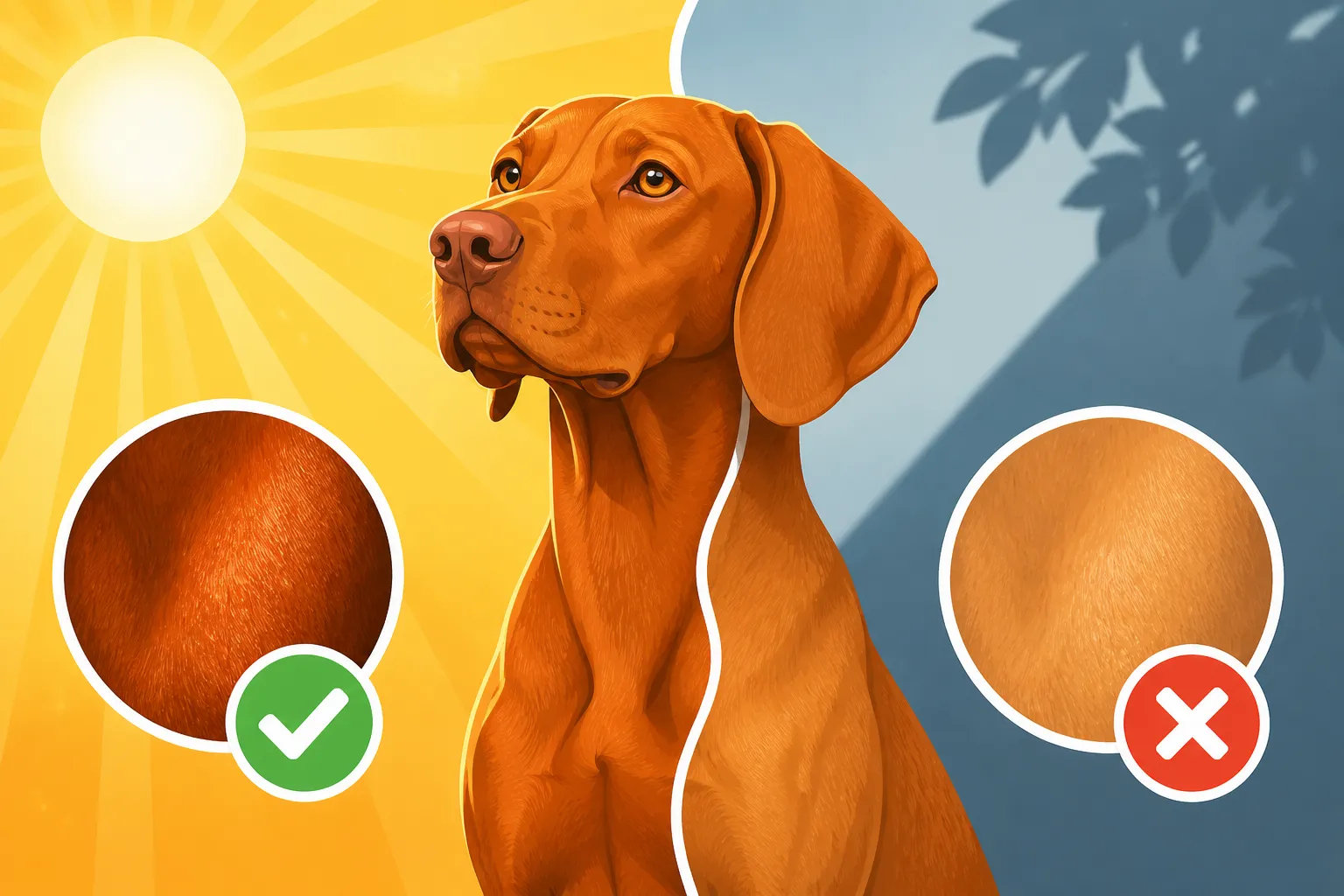
Whether a Vizsla’s Coat Fades in the Sun
It's a question many of us Vizsla parents ponder, often with a little pang of anxiety: is my beautiful copper dog's coat looking a bit less vibrant than it used to? That stunning, golden-rust color is one of the most defining features of our beloved breed, and seeing it dull or fade, especially after a long summer of outdoor adventures, can be truly disheartening. This guide dives deep into why your Vizsla's coat might change color, specifically addressing the impact of sun exposure, and what practical steps you can take to help maintain that glorious hue.
Understanding the Vizsla Coat: A Primer
Our Vizslas are undeniably striking, aren't they? From their elegant build to those soulful eyes, every part of them is designed for beauty and function. But perhaps nothing captures attention quite like that distinctive coat.
The Signature "Golden Rust" Hue
The Vizsla's coat is often described as "golden rust," a shade that is truly unique in the canine world. It's not red, not brown, but this incredible, shimmering, burnished gold that catches the light and seems to glow. For many of us, it's what drew us to the breed in the first place, a vibrant indicator of their lively spirit. This color is genetically determined by a specific type of pigment called phaeomelanin, which produces red and yellow tones. The intensity and richness of this phaeomelanin are what give the Vizsla their signature look.
Because this color is so cherished and such a hallmark of the breed, owners naturally become very attuned to any changes. We want our Vizslas to look their best, reflecting the vitality we know they possess. A bright, lustrous coat isn't just about aesthetics; it’s often a visible sign of good health and proper care. So, when that vibrancy seems to lessen, it's completely understandable to wonder what's going on and if there's anything you can do about it.
The Single-Layered Coat's Vulnerabilities
Unlike many breeds built for colder climates, Vizslas have a distinctive single-layered coat. This means they lack the thick, insulating undercoat that breeds like Labradors or German Shepherds possess. Their coat is short, dense, and smooth, lying close to the body, and its primary function is protection from brambles and light rain in the field, allowing for quick drying. While this makes them wonderfully low-maintenance in terms of grooming—no heavy shedding, no mats, and a surprisingly minimal "doggy smell"—it also means they're more vulnerable to environmental factors.
This thin skin and lack of insulation make them susceptible to cold weather, as any Vizsla owner who’s had to bundle their dog in a coat for a chilly morning walk can attest. But it also impacts their sensitivity to the sun. Without that dense undercoat acting as an extra layer of protection, UV rays have a more direct path to the hair shafts and the skin beneath. This inherent characteristic of their coat, while practical for hunting in milder conditions, means we as owners need to be a bit more mindful when they're enjoying extended periods outdoors, especially during peak sunny hours. You can read more about how their unique coat impacts their care in The Single Coat a Vizsla Has and Why It Changes Everything.
The Science of Sun Fading in Vizslas
It's not just your imagination; the sun really can affect your Vizsla's coat color. The same powerful UV rays that can give us a sunburn or lighten our own hair also work on our dogs, albeit in a slightly different way.
Melanin and UV Radiation
At the heart of coat color is melanin, a pigment produced by specialized cells called melanocytes. Dogs actually have two main types of melanin: eumelanin, which produces black and brown colors, and phaeomelanin, which is responsible for red and yellow hues. Our Vizslas are rich in phaeomelanin, giving them their characteristic golden-rust. When a Vizsla’s hair is exposed to ultraviolet (UV) radiation from the sun, these powerful rays can actually break down the phaeomelanin molecules within the hair shaft.
Think of it like leaving a brightly colored piece of fabric in a sunny window for weeks. Over time, the color starts to look bleached or faded. The same process happens with your Vizsla's coat. The UV radiation essentially "oxidizes" the pigment, changing its chemical structure and making it appear lighter and less vibrant. This isn't necessarily a sign of a health problem, but rather a natural chemical reaction that occurs when their pigment-rich hairs are exposed to prolonged sunlight.
Why Fading is More Noticeable on a Vizsla
While all dogs can experience some degree of sun-induced coat fading, it's often far more apparent and, let's be honest, often more upsetting, for Vizsla owners. Why? Because that golden-rust color is built on phaeomelanin, which is notoriously more susceptible to UV degradation than eumelanin. Black or dark brown coats might also fade, but they tend to take on a reddish or brownish tint, which can be less visually striking than the desaturation of a vibrant red coat.
For a Vizsla, the fading doesn't just make the coat dull; it can sometimes shift the color towards a paler, straw-like yellow or an almost washed-out peach. You'll typically notice this most on the areas that get the most sun exposure: across their back, the tops of their ears, and sometimes even their muzzle. This is different from the natural process of Whether a Vizsla's Coat Dulls With Age due to aging, though sun exposure can certainly accelerate the perceived "dullness." It's a natural phenomenon, and while it might not be ideal for their show ring appearance, it generally doesn't impact their health, provided they're not actually getting sunburned.
Practical Steps to Protect Your Vizsla's Coat
While sun fading is a natural process, there are definitely things we can do as conscientious Vizsla owners to help maintain that glorious coat color and, more importantly, protect their sensitive skin. It’s all about smart management and proactive care.
Smart Sun Exposure Habits
The simplest and most effective way to prevent sun fading and protect your Vizsla's skin is to be mindful of when and how long they're exposed to direct sunlight. Just like us, dogs are most susceptible to the sun's strongest UV rays during the midday hours, typically between 10 AM and 4 PM. If your Vizsla spends a lot of time outdoors, especially if they have access to a yard all day, try to encourage them to seek shade during these peak times. This might mean making sure there's a shady spot under a tree, an awning, or even a dog house that provides relief.
For those long walks, runs, or field training sessions, consider scheduling them for early mornings or late afternoons when the sun is less intense. If you absolutely have to be out during the peak hours, ensure your Vizsla has plenty of opportunities for rest in shaded areas. Hydration is also key; the sun can quickly dehydrate an active dog. Always carry fresh water and offer it frequently. By making small adjustments to your routine, you can significantly reduce the cumulative sun exposure on their coat and skin.
Nutritional Support for Coat Health
What goes into your Vizsla's body can have a profound impact on the health and vibrancy of their coat. A diet rich in essential nutrients, particularly healthy fats, can help maintain skin integrity and coat luster, making it more resilient. Look for high-quality dog foods that list animal protein as the first ingredient and contain omega-3 and omega-6 fatty acids. These fatty acids, often derived from fish oil, flaxseed, or specific plant oils, are crucial for a healthy skin barrier and a shiny, supple coat.
Many owners find adding a fish oil supplement to their Vizsla's diet can work wonders. You can find reputable brands on sites like Chewy or look into fresh food options such as Ollie, which often provide balanced nutrition with these beneficial oils already incorporated. Antioxidants, like vitamins E and C, are also important for cellular health, which includes healthy skin and hair follicles. While these won't stop the sun from breaking down melanin, a healthy, well-nourished coat is often more vibrant to begin with and may appear to resist fading better. Understanding Whether a Vizsla Needs Fish Oil for Its Skin can be very helpful for this. You can also gain insight into general feeding costs from What Kibble Costs for a Vizsla.
Topical Protections and Grooming
Beyond diet and smart scheduling, there are topical solutions and grooming practices that can offer an extra layer of defense. For highly exposed, sensitive areas like your Vizsla's nose, ear tips, or any area with particularly thin hair or even scarring, consider using a dog-specific sunscreen. Never use human sunscreen, as many contain ingredients toxic to dogs if licked. Brands like Epi-Pet or Snout Soother offer safe, pet-friendly options you might find readily available on Amazon. This is especially important for Whether a Vizsla Needs Sunscreen on pale or pink noses.
For longer outdoor excursions, particularly in open fields with intense sun, a lightweight, breathable dog vest or coat in a light color can provide physical shade for their back and sides. These aren't just for cold weather; some are designed for sun protection and can help reflect heat. Regular, gentle grooming, even just a quick wipe-down with a damp cloth or a brush, helps distribute natural oils, remove loose hairs, and stimulate circulation, all contributing to a healthy, vibrant coat. You don't need excessive brushing, as described in How Often a Vizsla Needs Brushing, but consistent, gentle care is beneficial.
Distinguishing Sun Fading from Other Coat Changes
It’s important not to jump to conclusions if you notice a change in your Vizsla’s coat color. While sun fading is common, there are other reasons why their beautiful rust might seem to shift, and some of these warrant a closer look.
Age-Related Lightening and Graying
Just like us, Vizslas don’t stay youthful forever. As they mature, it’s completely normal for their coat to undergo natural changes. The most common and easily recognizable sign of aging is the appearance of gray hairs, especially around the muzzle, eyes, and sometimes even the eyebrows. This graying is simply a reduction in pigment production as the dog ages. While it might look like a fading effect, it’s a distinct process from sun damage.
You might also notice a general lightening or dulling of the overall coat as they get older, even without direct sun exposure. This is just part of the aging process, and it usually happens uniformly across the dog rather than concentrated on sun-exposed areas. A Vizsla's coat may naturally become a bit less vivid over time, separate from the bleaching effect of UV rays. You can learn more about this in Whether a Vizsla Goes Gray on the Muzzle. It’s a gentle reminder that our energetic companions are growing older, but their spirit remains.
Health-Related Coat Issues
While sun fading and aging are generally benign, significant or sudden changes in your Vizsla’s coat color or quality can sometimes be indicators of underlying health issues. For example, conditions like hypothyroidism, a common endocrine disorder in Vizslas, can lead to a dull, dry, brittle coat, and sometimes even symmetrical hair loss or a change in color. This isn't fading in the traditional sense, but a sign of systemic imbalance. Thyroid Failure and the Vizsla's Coat is a crucial read if you suspect this.
Similarly, various skin conditions or allergies can affect coat health, making it appear less vibrant, flaky, or even leading to patchy discoloration. Whether a Vizsla's Skin Flakes Badly can offer more insights into this specific concern. If you notice accompanying symptoms such as excessive itching, redness, lesions, hair loss, or a dramatic change in coat texture, it’s always best to consult your veterinarian. They can perform diagnostic tests to rule out medical causes and ensure your Vizsla is healthy from the inside out. A healthy Vizsla usually has a healthy, glowing coat, so any marked deviation should prompt a professional check-up.
| Factor Affecting Coat Color/Health | Typical Appearance Change | Primary Cause(s) | Management/Prevention |
|---|---|---|---|
| Sun Fading | Lightening, dulling, shift to yellow/peach, especially on back, ears, muzzle. | UV radiation breaking down phaeomelanin. | Limit peak sun exposure, seek shade, dog-specific sunscreen, protective vests, omega-rich diet. |
| Aging | Graying around muzzle/eyes, general dulling, overall lightening. | Natural reduction in pigment production over time. | High-quality diet, regular vet checks, gentle grooming. |
| Hypothyroidism | Dry, brittle, dull coat, symmetrical hair loss, sometimes color change. | Underactive thyroid gland. | Veterinary diagnosis and lifelong medication. |
| Nutritional Deficiency | Dull, coarse, sparse coat. | Lack of essential fatty acids, vitamins, or protein. | Balanced, high-quality diet, supplements (e.g., fish oil). |
| Skin Conditions/Allergies | Redness, itching, flaking, hair loss, secondary infections, dullness. | Allergic reactions, parasites, bacterial/fungal infections. | Vet diagnosis, specific treatments (medication, special shampoos, diet changes). |
Ultimately, seeing your Vizsla's coat fade a little in the sun is a fairly common and natural occurrence, especially for our active, outdoor-loving companions. It's a testament to all those wonderful adventures you share! While a certain degree of fading is to be expected over a lifetime, by understanding the reasons behind it and taking proactive steps with smart sun habits, excellent nutrition, and a little topical protection, you can absolutely help maintain the incredible vibrancy of your Vizsla's iconic golden-rust coat for as long as possible. Enjoy those sunny days, but do so wisely!
Disclaimer
This article is for general informational purposes only and does not constitute professional advice. Laws, prices and regulations vary by location and change over time. Consult a qualified professional for guidance on your specific situation.