Whether a Vizsla’s Tail Should Be Docked by Law
A Vizsla owner may hear that a puppy’s tail should be docked to prevent injuries, meet a breed standard, or satisfy local law—and it is hard to know which advice is actually correct. There is no universal legal requirement to dock Vizsla tails. This guide explains how laws, show standards, working-dog arguments, and veterinary decisions differ, and what to check before making a choice.
Is tail docking legally required for a Vizsla?
There is no single law for every Vizsla
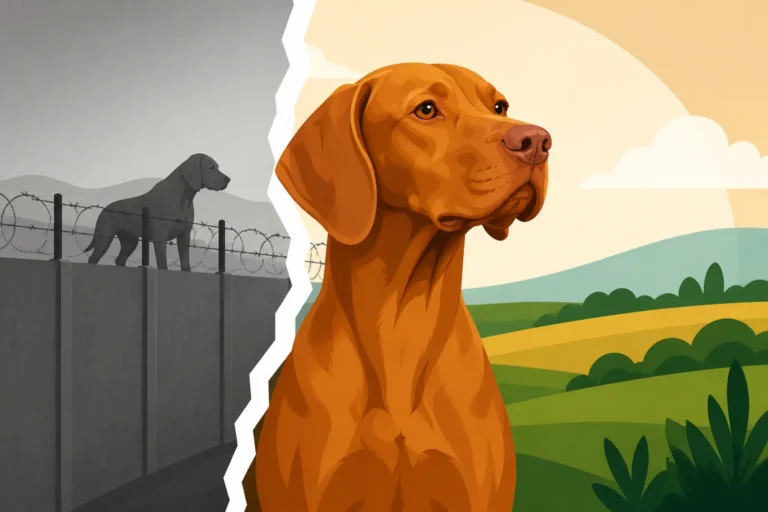
Whether tail docking is legal depends on where the dog lives, where the procedure would take place, and sometimes why it is being done. Rules can differ between countries and between regions within a country. Some places restrict or prohibit routine docking, while others allow it under particular conditions. A veterinary procedure to treat a serious tail injury may also be treated differently from docking a healthy puppy’s tail for appearance or anticipated work.
For an owner, the practical takeaway is simple: do not assume a Vizsla must be docked because the breed has traditionally been shown or hunted with a shortened tail. Nor should you assume that a practice permitted in one region is allowed where you live. If a breeder, trainer, or club member tells you docking is compulsory, ask which specific law requires it and who is authorized to perform the procedure.
Before making arrangements, check with a local veterinarian and the relevant animal-welfare or veterinary regulator. If you are buying a puppy from another region or country, ask about the rules that applied where the puppy was born as well as the rules where you live. The puppy’s paperwork may describe its tail, but paperwork alone does not establish that a procedure was lawful.
Breed standards and show rules are not the same as law
People sometimes confuse a breed standard with a legal requirement. A standard describes the features expected or preferred in a particular show system; it does not automatically authorize a surgical procedure. The standards and practices associated with Vizslas have varied across places and over time. If you are considering showing a dog, check the rules of the specific organization and event rather than relying on something a breeder heard years ago. Whether the Vizsla Standard Has Changed
A dog can also be a healthy, recognizable Vizsla with a natural tail, even if some people are more accustomed to seeing the breed with a docked one. Tail length does not, on its own, tell you whether the dog can hunt, train, or live comfortably as a companion. For context on the history and appearance of the breed, see Whether a Vizsla's Tail Is Docked.
If someone says a docked tail is required “for the breed,” separate the questions. Is the claim about the law, a registry’s paperwork, eligibility for a particular event, a breeder’s preference, or an older tradition? Those are different matters, and a confident-sounding answer may refer to only one of them.
Why some people dock Vizsla tails
The concern about tail injuries in the field
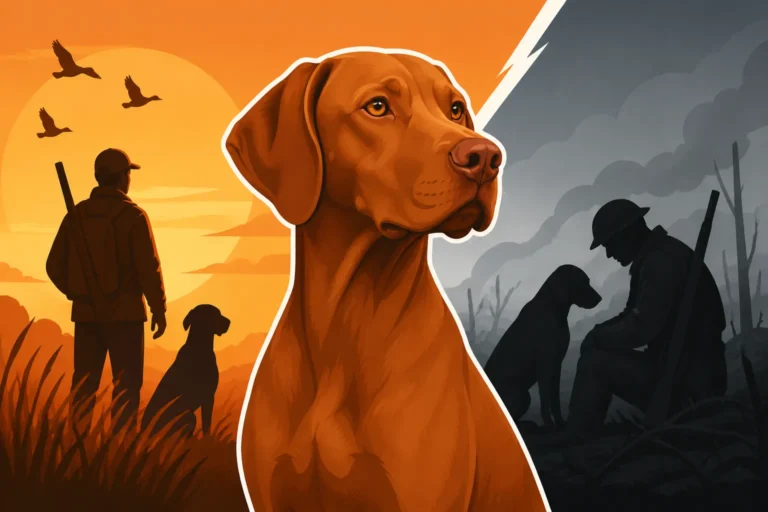
Vizslas are active, athletic hunting dogs. Their tails may strike brush, fences, or other obstacles when they move quickly through cover, and a bleeding tail injury can be messy and frustrating to manage. This is why some working-dog owners believe shortening a puppy’s tail will prevent future injuries. The concern is understandable, especially for someone whose dog works in thick vegetation or has had repeated tail injuries.
But the possibility of injury does not mean every Vizsla will suffer one, or that routine docking is the only way to reduce risk. Field conditions, the dog’s work, and its individual history matter. A dog that hunts regularly in dense cover may need practical protection and careful checks after outings, just as it may need attention to its feet and skin. See The Thin Skin a Vizsla Takes Into the Field and Whether a Vizsla Cuts Itself Hunting for related field-care concerns.
It is worth asking for specifics rather than relying on a general warning. Has this particular dog had a serious or repeated tail injury? Is there a recurring problem that a veterinarian has assessed? Or is the recommendation based on a possibility that might never occur? Those details help distinguish an individual medical concern from a routine procedure suggested for all puppies.
Tradition, appearance, and working expectations
A shortened tail may look familiar to people who know a particular line or hunting community. Familiarity, however, is not proof that docking is legally necessary or medically beneficial for every dog. A natural tail is a normal part of a Vizsla’s body, and keeping it does not make the dog less of a Vizsla or automatically rule out an active life.
Some owners may also worry that a natural tail will affect work in the field. A dog’s suitability for hunting depends on many things—including training, temperament, fitness, and the type of work—not simply whether its tail has been shortened. If you are choosing a puppy for hunting, discuss the dog’s likely work and the breeder’s experience with natural-tailed dogs rather than treating docking as a substitute for evaluating the whole dog. Whether a Vizsla Works Close Enough for a Walking Hunter
A useful distinction is whether the choice is being made for a documented medical reason or for appearance, tradition, or a predicted future risk. Those reasons are not interchangeable. If you are unsure which one is driving the recommendation, ask the person recommending docking to explain the expected benefit for your specific puppy and what alternatives have been considered.
Docking, injury treatment, and what the terms mean
Routine puppy docking is different from treating an injured tail
Routine docking shortens a healthy puppy’s tail for a non-medical reason. Depending on local rules, that may be prohibited, restricted, or allowed only when specified conditions are met. Do not arrange the procedure based on advice from a seller or an informal online discussion; confirm what is lawful locally and speak with a veterinarian who can explain the welfare considerations.
An amputation later in life is different. A veterinarian may recommend removing part or all of a tail to treat a severe injury or disease, depending on the circumstances. That is a medical decision about an existing problem, not a preventive choice made simply because a dog might someday get hurt. If your Vizsla has a tail wound, do not try to decide at home whether it needs surgery. A veterinarian can assess the injury, pain, bleeding, and risk of complications. Whether a Vizsla Needs Stitches After a Hunt
The following table shows why it helps to be precise when discussing the issue:
| Situation | What it means | What to do |
|---|---|---|
| Routine docking | Shortening a healthy puppy’s tail for a non-medical reason | Check local law and discuss welfare and alternatives with a veterinarian |
| Treatment of a tail injury | Veterinary care for a specific wound or damaged tail | Arrange a veterinary assessment, especially for significant bleeding, pain, or an open wound |
| Medical amputation | Removal of part or all of a tail when a veterinarian considers it necessary to treat a problem | Ask the veterinarian to explain the diagnosis, options, recovery, and follow-up care |
| Breed or show preference | A rule or custom connected to a registry, club, or event | Confirm the exact organization’s rules; do not assume they are law |
Questions to ask before agreeing to a procedure
Start by asking, “Is this legally required where the puppy was born, where the procedure would happen, or where I live?” Then ask who is permitted to perform it and whether there are conditions or deadlines. If the answer is simply “that’s what Vizslas have,” request a more specific explanation. A breeder’s usual practice may not tell you what is legally required or medically appropriate for your puppy.
Next, ask what the benefit is expected to be for this individual dog. If the reason is injury prevention, ask what evidence or experience supports that recommendation and what practical precautions might help instead. If the concern is an existing injury or health problem, ask the veterinarian to explain the diagnosis and the available treatment options. You can also ask what discomfort, aftercare, and possible complications to consider.
Finally, take time to understand the paperwork. Check that any record accurately describes what was done, when, where, and for what stated reason. If the puppy is moving across a border or joining a show or working program, confirm the relevant requirements with the appropriate authority or organization before travel or entry. A vague assurance from a third party is not a substitute for checking the rules that apply to your situation.
Caring for a Vizsla with a natural or injured tail
Everyday checks for a working dog
A natural tail does not need special treatment simply because it is long. After a hunt or a run through rough cover, though, it makes sense to check the whole dog—including the tail—for cuts, swelling, tenderness, or blood. Keep the check gentle. If your Vizsla pulls away, seems painful, or has an injury you cannot assess confidently, stop and call your veterinarian rather than repeatedly handling the area.
If your dog has had a tail wound, follow the veterinarian’s instructions about cleaning, activity, and follow-up. A wound may need more than a quick rinse, and repeated licking or wagging against surfaces can make healing harder. Avoid applying human medications or improvising a tight bandage unless your veterinarian has specifically advised you how to do it. For related guidance on field injuries, see Whether a Vizsla Needs Stitches After a Hunt.
Some owners keep basic, non-medical recovery comforts ready, such as clean washable bedding and a quiet place for a dog to rest. If you need to source ordinary supplies, a retailer such as Chewy may be one option for bedding or washable covers; ask your veterinary team before buying anything intended to cover, medicate, or protect a wound. The right setup is the one that follows the clinician’s instructions and keeps your dog comfortable without interfering with treatment.
Recovery and return to activity
If a tail injury requires surgery, recovery depends on the injury and the procedure. Your veterinarian should explain how to protect the surgical site, what signs need prompt attention, and when your dog can gradually return to normal activity. A Vizsla may seem eager to run before the wound is ready; enthusiasm is not a reliable measure of healing.
Prepare a calm resting area and plan for the practical details, such as keeping the dog away from rough play or muddy cover while the veterinarian recommends restricted activity. If you need routine items for a clean resting space, Chewy may carry options such as washable bedding, but confirm any recovery-product choices with your veterinarian. Do not use a product or dressing that could rub the site, trap moisture, or prevent you from checking it.
A return to hunting or other strenuous work should be guided by the veterinarian, not by a calendar or the dog’s apparent energy. Ask what signs show that healing is progressing and whether a recheck is needed before activity resumes. For more on that transition, see Whether a Vizsla Returns to the Field After Surgery. Chewy can be a source for general pet-care supplies during a recovery period, but it cannot assess a wound or determine when a dog is ready to work again.
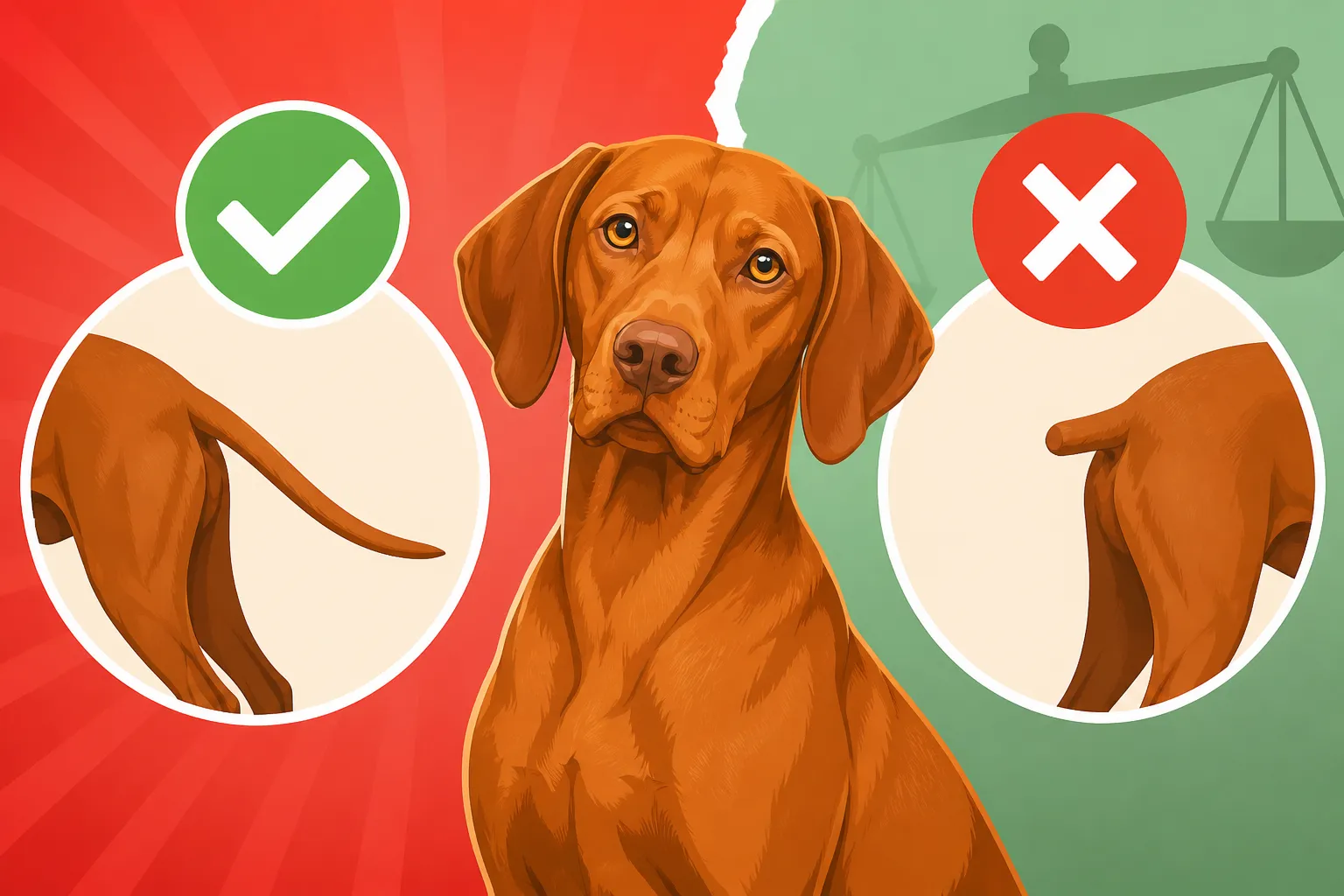
The clearest answer is that Vizslas do not have one universal legal requirement to have their tails docked. The law depends on location, and a breed tradition or show preference is not the same as a legal mandate. Confirm local rules, ask a veterinarian about the welfare and medical questions, and treat a specific injury as a veterinary matter rather than a reason to assume every puppy needs routine docking.
Disclaimer
This article is for general informational purposes only and does not constitute professional advice. Laws, prices and regulations vary by location and change over time. Consult a qualified professional for guidance on your specific situation.