How Much of a Vizsla’s Tail Is Removed
A Vizsla’s tail is often docked by about one-third of its original length in places where the procedure is permitted, but the exact amount depends on the breed standard, local law, and the individual dog. That can be confusing when you see Vizslas with different tail lengths. Here’s what “one-third” means, when docking is done, and how to think about an undocked or medically treated tail.
How much of a Vizsla’s tail is usually removed
The common one-third guideline
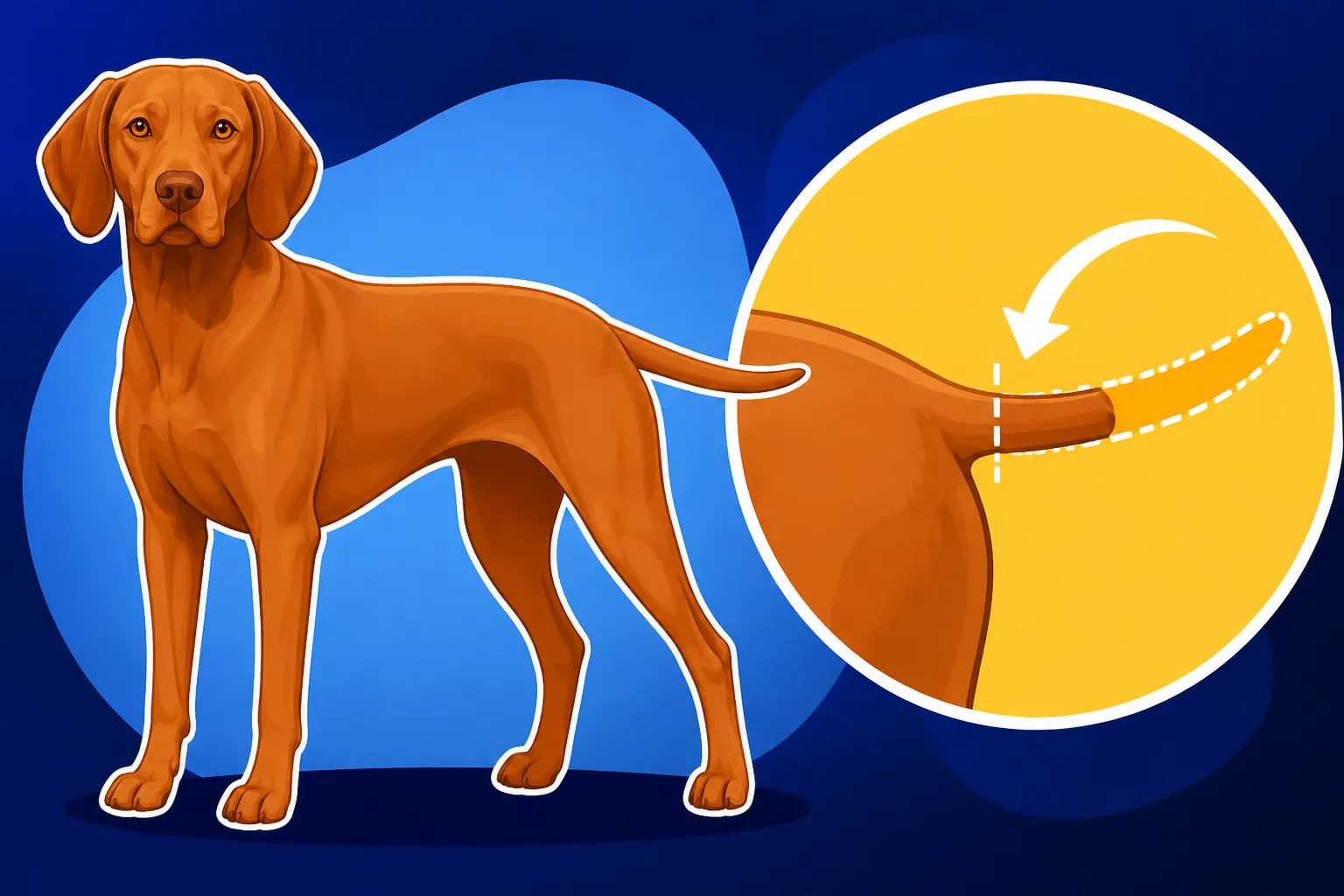
In the United States, Vizslas are traditionally shown with a docked tail shortened by roughly one-third. Put another way, about two-thirds of the natural tail remains. The aim is a shorter tail that still looks balanced with the dog’s body—not a very short stump.
That guideline describes a customary appearance, not a perfectly identical measurement for every puppy. Tails differ in length and shape, and the amount removed can vary with the breeder’s practice and the applicable breed standard. A description such as “one-third docked” is therefore an approximation rather than a promise that every dog will have exactly the same length.
The convention applies to both smooth- and wirehaired Vizslas where docking is practiced. It does not mean every Vizsla is docked. Many Vizslas keep their full, natural tails, particularly in places where non-medical docking is prohibited or restricted. For a closer look at the practice and how it varies, see Whether a Vizsla's Tail Is Docked.
How to picture the amount
Imagine a natural tail as three equal sections. With a one-third dock, the section nearest the tip is removed and roughly two sections remain attached. That is a useful mental picture, but it is not a measurement to use for making a decision about a puppy. A veterinarian and the breeder should discuss any procedure and explain what is allowed where the puppy is born and will live.
A docked Vizsla’s tail should still be long enough to be recognizable as a tail. It can move and communicate, although its reach and appearance differ from those of an undocked tail. If you meet two Vizslas side by side, their tails may look noticeably different because of natural variation, docking practices, or the country where they were bred.
| Tail description | What it generally means | What to keep in mind |
|---|---|---|
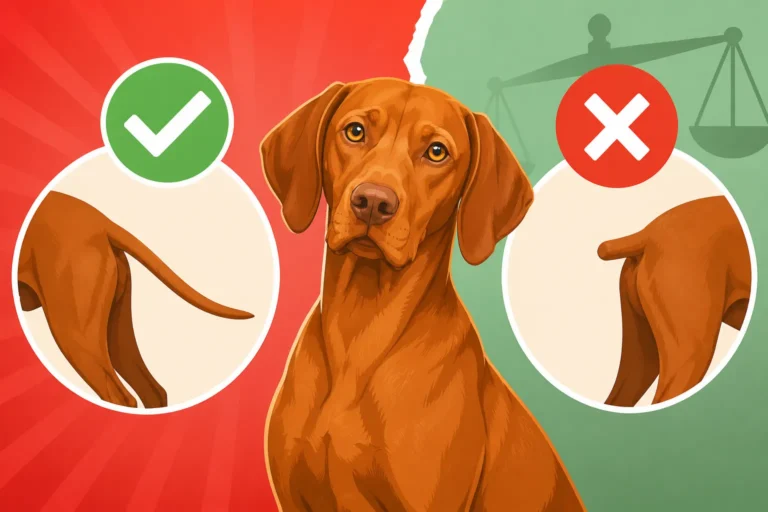
| Docked by about one-third | Roughly two-thirds of the natural tail remains | A common US show convention, not an exact measurement for every dog |
| Natural or undocked | The tail has not been shortened | Common where docking is restricted or prohibited, and increasingly familiar to many owners |
| Shortened for medical reasons | A veterinarian removes part or all of the tail to treat a condition or injury | This is a medical procedure, separate from elective puppy docking |
Why descriptions can differ
Breed standards and docking customs are not the same thing as a universal rule. A standard may describe the traditional appearance expected in a particular show system, while national or local laws determine whether cosmetic docking can legally be performed. The wording and conventions can also differ between organizations and countries.
That is why you may hear different fractions discussed, including one-quarter or one-third. When comparing descriptions, check which country and breed standard the person is referring to. The practical answer for a specific puppy is not simply “the Vizsla amount”; it is the amount permitted by local rules and the decision made by the responsible veterinarian and breeder.
When Vizsla puppies are docked
Timing and the people involved
Where elective docking is permitted and chosen, it is generally done when puppies are very young, often within the first few days after birth. The breeder and veterinarian coordinate the decision and care. Owners considering a puppy should ask plainly whether the litter’s tails were docked, how the decision was made, and whether the procedure complied with local requirements.
If you are already bringing home a puppy, the breeder should be able to tell you whether the tail was docked and when. A veterinary record or direct conversation with the clinic can help clarify what was done. If anything looks swollen, persistently sore, or slow to heal, arrange a veterinary check rather than relying on photographs or advice from a breeder alone.
It is also fair to ask a breeder why they dock. Some follow a longstanding show or working tradition; others leave tails natural. A clear, thoughtful explanation is more useful than pressure to accept a particular choice without discussion. If you are weighing the broader question of legality and ethics, Whether a Vizsla's Tail Should Be Docked by Law explores that separate issue.
Why working tradition is part of the conversation
Vizslas were developed as active hunting dogs, and docking has historically been defended by some owners as a way to reduce tail injuries in cover. A dog moving through dense brush can hit or cut its tail, and a hard-working dog may get cuts elsewhere too. But the possibility of injury is not proof that every Vizsla needs a docked tail, and it does not settle the ethical or legal question.
An undocked tail may be entirely suitable for an active dog. Owners can check it after field work, just as they check paws, ears, and skin. For practical field-care context, see Checking a Vizsla Over After a Hunt and The Thin Skin a Vizsla Takes Into the Field. If a tail is cut or repeatedly injured, a veterinarian can assess the actual problem and recommend treatment.
Docking, where it is legally allowed, is not a substitute for handling a dog carefully or checking it after activity. The choice also cannot guarantee that a dog will never injure its tail. A puppy buyer should consider the dog in front of them, local law, and the welfare issues involved—not assume that a shorter tail is automatically safer for every household or hunting situation.
Choosing a puppy with a natural tail
An undocked Vizsla is not a different breed or a sign that something is wrong. The tail may be long, tapering, and carried in different positions as the dog moves. Its shape and carriage are part of the individual dog’s natural appearance.
If a breeder has an undocked litter, ask how the puppies are registered and whether you can enter the events you care about with a natural-tailed dog. Show eligibility depends on the rules of the specific organization and location, so confirm those details directly rather than assuming the answer. You can read more at Whether an Undocked Vizsla Can Be Shown.
For a family choosing a companion, the puppy’s health, temperament, and fit with the home matter more than whether its tail matches a traditional docked silhouette. It’s reasonable to ask about the parents, health testing, and the breeder’s care practices alongside the tail question. The topic is one useful part of choosing responsibly, not the only measure of a good breeder or a good dog.
Natural tails, injuries, and medical amputation
A tail injury is not the same as elective docking
A veterinarian may recommend removing part of a tail if it has been badly injured, has persistent disease, or cannot heal adequately. That decision is made to address a specific medical problem. It is different from shortening a healthy puppy’s tail for appearance or tradition.
If a Vizsla injures its tail, look for bleeding, an open wound, swelling, unusual sensitivity, or a change in how the dog holds or moves it. Some tail injuries can look small on the surface but be painful or difficult to keep clean. Don’t wrap or medicate the area without veterinary advice, especially if the wound is deep, continues bleeding, or the dog is distressed. For related guidance on field cuts, see Whether a Vizsla Needs Stitches After a Hunt.
A veterinarian can examine the injury, clean it appropriately, and decide whether it needs medication, protection, or further treatment. Amputation is not the automatic outcome of a tail cut. The right plan depends on the location and severity of the injury, how the tissue is healing, and the dog’s overall condition.
Caring for a recently docked or injured tail
After any tail procedure, follow the treating clinic’s instructions about keeping the area clean and watching for changes. Contact the clinic if you notice worsening redness or swelling, discharge, an unpleasant odor, persistent bleeding, or increasing discomfort. The vet should also tell you what level of licking or activity is acceptable and when a follow-up examination is needed.
Avoid improvising with creams, antiseptics, or tight bandages. Dogs can lick or chew an area quickly, and a dressing that seems protective can cause problems if it is too tight, gets wet, or hides changes in the wound. If the clinic recommends a recovery collar or other supplies, ask which type is appropriate. Some owners look at Chewy for basic recovery items after getting the veterinary team’s guidance; the clinic’s instructions should determine what is suitable. Chewy may also be an option for washable bedding that can be kept clean while a dog rests.
If you are preparing a supply list, keep the focus on items the veterinarian has actually recommended rather than buying a product in hopes it will treat the wound. Chewy carries general pet-care supplies, but a store-bought product is not a replacement for an examination when the tail appears painful or infected. If you have questions about fit or safe use, call the clinic before using a collar or covering.
What to ask a breeder or veterinarian
A few direct questions can make a confusing conversation much easier. Ask whether the puppy’s tail is natural or docked, approximately how much was removed if it was docked, who performed the procedure, and what documentation is available. If you are buying across borders or moving between countries, ask which rules apply both where the procedure took place and where the dog will live or compete.
You can also ask whether the breeder has chosen to leave tails natural in other litters and why. A responsible discussion should allow room for questions about welfare, tradition, injury risk, and local regulations. For broader background on breed history and established appearance, The Golden Rust Color Only a Vizsla Wears is one part of understanding the breed’s traditional presentation, while tail rules deserve their own careful check.
If the question comes up because your adult Vizsla has a short tail, don’t assume it was docked for one particular reason. It may reflect a puppy procedure, an old injury, or a later medical treatment. Ask the previous owner or breeder if that history is available, and have your veterinarian examine any current concern.
Disclaimer
This article is for general informational purposes only and does not constitute professional advice. Laws, prices and regulations vary by location and change over time. Consult a qualified professional for guidance on your specific situation.