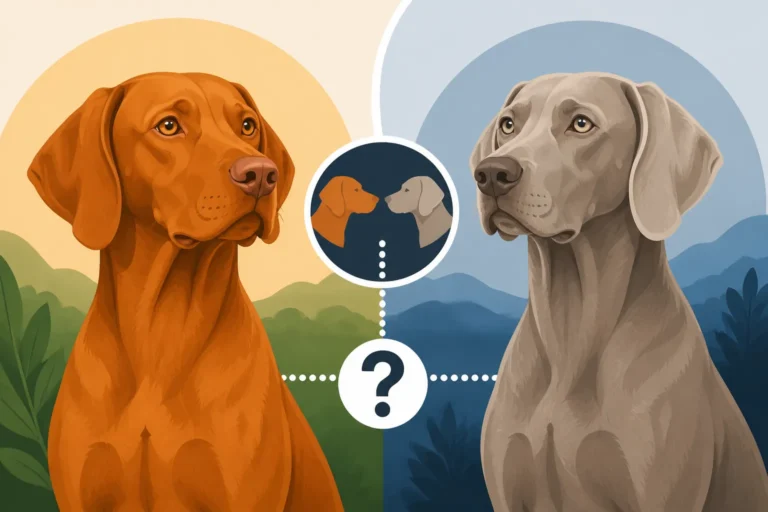
Whether a Vizsla Is More Affectionate Than a Shorthair
Choosing between a Vizsla and a German Shorthaired Pointer often comes down to what “affectionate” means in daily life. Both can be devoted, people-oriented companions, but a Vizsla is especially known for close physical contact and wanting to stay near its family. This guide explains the difference, what varies from dog to dog, and how to decide which style fits your home.
How Vizsla affection compares with a Shorthair
The Vizsla’s close-contact style
Vizslas are often described as “Velcro dogs” because many prefer to keep their people within sight and reach. That can mean following you from room to room, leaning against your leg, nudging your hand for attention, or trying to squeeze onto the sofa beside you. Some will happily curl up under a blanket or settle with their body pressed against yours.
That closeness can be lovely if you want a dog who treats togetherness as a full-time hobby. It can also be a lot when you are trying to cook, work, or simply sit down without a warm dog leaning against your knees. A Vizsla’s affection may feel less like occasional cuddling and more like a steady wish to be involved in whatever the household is doing.
A Vizsla’s need for company is not necessarily a sign of poor manners or a problem. It is part of the temperament many owners enjoy. Still, affection and comfort with being alone are separate things. A dog can adore you and also need patient practice learning to rest when you leave the room. For a closer look at that behavior, see What Velcro Behavior Looks Like in a Vizsla and Whether a Vizsla Can Ever Be Left Alone.
How a German Shorthaired Pointer may show affection
“Shorthair” usually refers to the German Shorthaired Pointer, another athletic hunting breed that can be deeply attached to its family. Many Shorthairs enjoy play, companionship, and physical affection. But an individual GSP may show devotion through shared activity and enthusiastic interaction rather than staying pressed against someone at every quiet moment.
That is a tendency, not a rule. Some GSPs are determined lap-seekers; some Vizslas are more independent. Their breeding, early experiences, age, training, and household routines all shape how a dog expresses closeness. Two dogs of the same breed can have noticeably different social styles.
| Trait | Vizsla tendency | German Shorthaired Pointer tendency |
|---|---|---|
| Physical closeness | Often seeks frequent contact and proximity | Can be affectionate, sometimes more focused on activity |
| Following people | Common in many individuals | Also possible, but varies widely |
| Play and shared work | Often enjoys both, with strong social involvement | Often enthusiastic about active work and play |
| Alone-time needs | May need gradual practice and a predictable routine | Also needs training and suitable activity |
| Best fit | A home that welcomes a close-contact companion | A home ready for an energetic, engaged sporting dog |
The practical question is not simply which breed is “more affectionate.” Ask what kind of affection you enjoy. If you love a dog that wants to share your chair, your blanket, and the space at your feet, the Vizsla’s reputation may sound appealing. If you prefer a dog who is loving but also content to engage through exercise and training, a Shorthair might suit you—depending on the individual dog.
What “more affectionate” looks like at home
Affection is more than cuddling
A dog’s attachment can show up in quieter ways than climbing onto your lap. A Vizsla may check where you are, choose to nap in the same room, bring you a toy, or look to you for reassurance in an unfamiliar place. A Shorthair may show the same bond by eagerly joining a walk, responding to a training session, or relaxing nearby after a busy outing.
This matters because people sometimes expect a cuddly dog to enjoy being handled at every moment. Even affectionate dogs have preferences. One may love being stroked on the chest but dislike a tight hug; another may come looking for contact only when it is ready. Letting the dog choose whether to approach helps keep affection comfortable for both of you.
If you are considering a Vizsla, think about the everyday version of closeness, not only the charming photograph of a dog curled up on a lap. You may have a shadow while you fold laundry, a nose appearing beside your desk, or a dog settling against your legs while you watch television. For many owners, that is the appeal. For others, it can feel crowded.
One-person devotion or affection for everyone
Some Vizslas form an especially intense connection with one person, while others spread their attention across the household. Family routines make a difference: a dog may naturally seek out whoever feeds, trains, walks, or spends the most quiet time with them. A close bond with one person does not necessarily mean the dog dislikes everyone else.
A Shorthair can also have a favorite person. Breed alone cannot tell you whether a dog will be equally affectionate with each family member. If you have children, visitors, or multiple adults at home, introduce the dog to people calmly and give it chances to build trust without forcing interaction. For more on how attachment varies, read Whether a Vizsla Bonds to One Person and Whether a Vizsla Attaches to the Whole Family.
When meeting a puppy or adult dog, notice how it behaves after the excitement of greeting fades. Does it settle near people? Does it seek contact and then move away comfortably? Is it able to engage with more than one person? A single meeting cannot predict everything, but these observations are more useful than assuming every dog of a breed will behave alike.
If you already have a Vizsla who seems especially attached to one person, invite other household members to take part in enjoyable routines. They can offer meals, short training games, walks, or calm time together. The aim is not to reduce the dog’s bond with its favorite person; it is to help the dog feel secure with the whole household.
The trade-offs behind a very affectionate Vizsla
Closeness does not automatically mean easy independence
A dog who loves being near you may find departures difficult unless alone-time skills are taught gradually. This is not unique to Vizslas, and it does not mean every Vizsla will develop separation-related distress. But it is wise to make short, calm absences part of normal life rather than assuming an affectionate puppy will simply adjust.
Start with manageable steps. Let the dog relax behind a gate while you move briefly out of sight, then return before it becomes upset. Build up slowly, keeping departures and reunions low-key. A comfortable bed, a safe chew, or a food puzzle may help some dogs settle, though enrichment is not a replacement for a gradual training plan.
If you are gathering basic supplies, Chewy may be one place to look for a washable bed or food puzzle that suits your dog’s size and chewing habits. Choose items for safety and fit, and supervise anything new until you know how your dog uses it. For a broader understanding of this challenge, see Signs a Vizsla Is Suffering Alone.
A close companion still needs exercise and boundaries
Affection should not be confused with calmness. Vizslas and German Shorthaired Pointers are energetic sporting dogs, and companionship alone will not meet all of their needs. A dog may want to be beside you and still need appropriate exercise, training, sniffing, and rest. Without enough useful outlets, a young dog can turn its energy toward household mischief, even while remaining loving and social.
Build a routine that includes more than a long walk. Short training sessions, scent games, retrieving games, and safe opportunities to explore can give an active dog something to think about. A predictable rest area is useful too: affection does not require the dog to be in your lap every waking minute. Rewarding calm settling teaches the dog that being near you can mean relaxing, not constantly seeking attention.
Helpful gear can support a routine, but it cannot replace time and training. If you shop at Chewy for a long-lasting chew or enrichment toy, check that it is appropriate for your dog’s age, size, and chewing style. Rotate activities rather than leaving a dog alone with an unfamiliar item, and remove anything that becomes damaged.
Choosing the breed and the individual dog
Questions to ask before bringing one home
Before choosing a Vizsla or Shorthair, be honest about how much contact you want. Would you enjoy a dog who follows you around the house? Can you plan for exercise, training, and gradual alone-time practice? Are you comfortable setting gentle boundaries, such as asking the dog to settle on its own bed while you work?
Ask breeders or rescue staff how the particular dog behaves, not just what the breed is “usually like.” Questions might include: Does the dog settle after activity? How does it respond when a person leaves the room? Does it seek attention from several people? Has it spent time around children or other dogs? A thoughtful answer will include the dog’s actual behavior and its limits, rather than promising that every individual is perfect for every home.
If you are deciding between sporting breeds more broadly, The Vizsla Against the German Shorthaired Pointer offers another comparison. You may also find What Vizsla Owners Wish They Had Known helpful for considering the day-to-day realities beyond affection.
Match the dog’s needs to your household
A Vizsla may be a wonderful match for someone who wants a highly involved companion and has the time to build both connection and independence. A German Shorthaired Pointer may fit someone who wants an active partner and is prepared for the breed’s exercise and training needs. Neither option is automatically better for a family, a first-time owner, or a busy household; the fit depends on the dog and the people who will care for it.
When you meet a dog, look for comfortable social behavior rather than constant contact. A dog that can approach, enjoy attention, and then relax nearby may be easier to live with than one whose affection feels frantic or who cannot settle. Take time to observe the dog in more than one setting when possible, and remember that puppies change as they mature.
In the end, Vizslas are often more physically demonstrative and persistently close than people expect, but there is no dependable breed-wide ranking that makes every Vizsla more affectionate than every Shorthair. Both can be devoted. Focus on the kind of companionship you want, the amount of activity you can provide, and the temperament of the individual dog. If you welcome a warm, nearby presence and are ready to teach independence alongside affection, a Vizsla’s closeness may be exactly what you love.
Disclaimer
This article is for general informational purposes only and does not constitute professional advice. Laws, prices and regulations vary by location and change over time. Consult a qualified professional for guidance on your specific situation.