Whether a Deep Chested Vizsla Bloats
It's a terrifying thought for any Vizsla owner: bloat. That sudden, often agonizing swelling in your dog's abdomen, which can escalate from a mere discomfort to a life-threatening emergency in what feels like moments. Many of us worry constantly, especially with our breed's famously deep-chested build, wondering if every gurgle or missed meal could be the start of something catastrophic. This guide is here to shed light on what bloat truly is, why Vizslas are indeed at a higher risk, and most importantly, what you can do to protect your beloved companion.
Understanding Bloat in Dogs: More Than Just a Belly Ache
The term "bloat" is often used casually, but in veterinary terms, it usually refers to something far more sinister: Gastric Dilatation-Volvulus, or GDV. It's not just a bit of gas or an upset stomach; it's a rapid, severe condition that demands immediate veterinary attention. Understanding the mechanics of GDV is the first step in recognizing and preventing it.
What Exactly is GDV? Gastric Dilatation-Volvulus
GDV happens in two stages, and both are dangerous. First, the stomach fills with gas, food, or fluid, causing it to dilate or expand dramatically – this is the "gastric dilatation" part. This distension alone is painful and puts immense pressure on surrounding organs, including the diaphragm, making it hard for your dog to breathe. It also compresses major blood vessels, impairing blood flow back to the heart.
The second, and often more critical, stage is "volvulus," where the distended stomach twists on its axis. This twisting completely cuts off blood supply to the stomach and often the spleen, leading to tissue death. It also traps gas and fluids, preventing them from escaping and exacerbating the distension. This combination of distension, twisting, lack of blood flow, and shock can lead to organ failure and death extremely rapidly if not treated.
Why Deep-Chested Breeds Are at Higher Risk
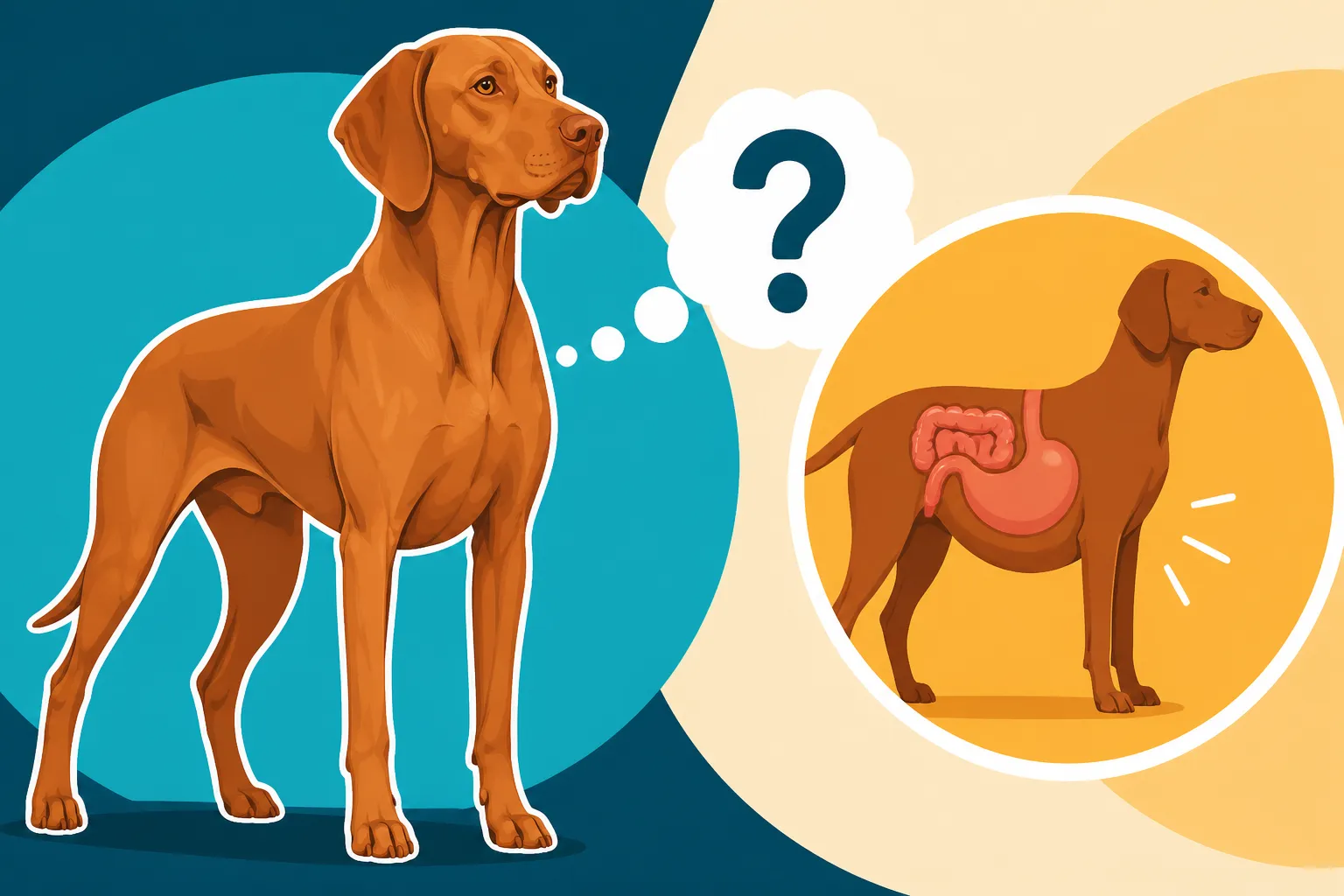
This is where our beautiful Vizslas unfortunately enter the high-risk category. Breeds with deep, narrow chests are anatomically predisposed to GDV. Think of it like a pendulum – a long, narrow stomach suspended within a large chest cavity has more room and a greater tendency to swing and twist when it's full. Compare this to a broad-chested dog with a wider, shorter stomach, which is less likely to undergo rotation.
The Vizsla's elegant, athletic build, characterized by that distinctive deep chest and tucked-up abdomen, is precisely what makes them more vulnerable. It’s a sad irony that a feature contributing to their grace and speed also increases their risk for such a devastating condition. This predisposition is why it's so vital for Vizsla owners to be hyper-aware of the risks and preventative measures.
The Silent Killer: Why Bloat is a Medical Emergency
Bloat is often called the "silent killer" because it can progress so quickly and unexpectedly. What might seem like mild discomfort can turn into a full-blown emergency within an hour or two. The pressure on the diaphragm makes breathing difficult, while the restricted blood flow leads to shock. The stomach tissue, deprived of oxygen, begins to die, and toxins can be released into the bloodstream.
If the spleen is caught in the twist, it too can be severely damaged, leading to internal bleeding. The speed at which this happens means that delaying veterinary care, even for what seems like a short time, can dramatically reduce your Vizsla's chances of survival. This isn't a wait-and-see situation; it's an "act now" situation.
The Vizsla's Anatomy and Bloat Risk
Our beloved copper dogs are truly magnificent athletes, built for speed and endurance in the field. But that very design, while perfect for their hunting heritage, carries an inherent vulnerability when it comes to GDV. It’s crucial to understand these specific anatomical and physiological factors.
Why the Vizsla's Build Predisposes Them
As mentioned, the Vizsla's deep, narrow chest is a primary risk factor. Imagine their stomach as a hammock suspended within that ample rib cage. When it fills with food, gas, or water, it becomes heavier and more prone to swinging, especially during activity. This instability, combined with ligaments that might stretch over time, allows the stomach to rotate more easily. It's not about being overweight or unfit; it's simply the way they are built.
Many Vizsla owners observe that their dogs appear quite lean, almost underweight at times, even when perfectly healthy. This lean body condition can sometimes make the deep chest even more prominent, potentially increasing the relative "play" the stomach has within the abdominal cavity. Furthermore, their high energy levels and propensity for intense exercise, especially after meals or drinking, contribute significantly to the risk.
Age and Gender Considerations
While any dog can bloat, certain demographics within the Vizsla population appear to be at greater risk. Generally, older Vizslas (typically those over 5-7 years of age) seem to have a higher incidence of GDV. This might be due to the stretching of supportive ligaments around the stomach over time, making it easier for the stomach to twist. Think of it like an old hammock whose ropes have loosened.
When it comes to gender, some studies suggest that male dogs might be slightly more prone to bloat than females, though the difference isn't always significant enough to be conclusive across all breeds. However, for Vizslas, the overall deep-chested build is the dominant risk factor, regardless of whether they are male or female. Vizsla puppies rarely experience GDV, but the risk steadily increases as they mature into adulthood and senior years.
Genetics and Family History
The role of genetics in GDV for Vizslas is significant. It's often observed that bloat can run in families, meaning if a Vizsla's parent or siblings have experienced GDV, that dog may be at an elevated risk. This highlights the importance of asking breeders about the incidence of bloat in their lines when considering a puppy. While no breeder can guarantee a bloat-free dog, responsible breeders often track these health issues and may even consider prophylactic gastropexy for breeding animals in lines with a history of GDV. It's a sad reality that diseases like this, and others such as The Cancers That Take a Vizsla Early or Why Vizslas Carry So Much Immune Disease, can have a genetic component.
Recognizing the Signs of Bloat in Your Vizsla
Spotting bloat early is absolutely critical. Our Vizslas are stoic creatures, often hiding pain until it's severe, which can make early detection challenging. However, knowing what to look for, both subtle and obvious, can be the difference between life and death.
Early, Subtle Indicators You Might Miss
Before the full-blown emergency, your Vizsla might show more subtle signs that are easy to dismiss as just an upset stomach or general discomfort. These can include:
- Restlessness and Pacing: Your normally calm Vizsla might be unable to settle, constantly moving, trying to get comfortable. They might get up and lie down repeatedly.
- Drooling or Foaming at the Mouth: Increased salivation can be a sign of nausea or pain.
- Attempting to Vomit (without success): This is a classic, but often early, sign. Your dog will dry heave or retch, but nothing comes up. This is because the twisted stomach prevents anything from passing.
- Abdominal Discomfort: They might look at their flank, stand in a "praying" position (front paws down, rear end up, trying to stretch their abdomen), or appear hesitant to move.
- Distended or Taut Abdomen: In the very early stages, this might be subtle. You might just notice their belly looks a bit fuller than usual, or feels tighter when you gently press it.
It's these early signs, often vague, that can trick us. If your Vizsla is acting "off" and displays even one of these symptoms, it's worth being on high alert, especially if they have just eaten or exercised.
Classic, Urgent Symptoms Requiring Immediate Action
These are the signs that scream "emergency!" If you see any of these, do not hesitate – get to the vet immediately.
- Rapidly Expanding Abdomen: This is the hallmark. The stomach will visibly swell, becoming very firm and drum-like to the touch. It might look lopsided.
- Persistent Dry Heaving/Retching: As mentioned, this is a strong indicator, differentiating bloat from regular vomiting.
- Weakness and Collapse: As shock sets in, your Vizsla might become very weak, unable to stand, or collapse.
- Rapid, Shallow Breathing: The distended stomach puts extreme pressure on the diaphragm, making it very hard for them to take deep breaths. Their gums might appear pale or bluish.
- Increased Heart Rate: Their heart will race as their body goes into shock.
- Pale Gums: A sign of poor circulation and shock.
When you see these urgent symptoms, every second counts. Don't wait to call your regular vet; head straight to the nearest emergency veterinary hospital. Even a 30-minute delay can impact the outcome significantly.
Differentiating Bloat from Other Ailments
This is perhaps one of the trickiest parts. Many conditions can cause stomach upset, vomiting, and discomfort. How do you know it's bloat and not just a sensitive stomach or something they ate?
- Regular Vomiting vs. Dry Heaving: If your Vizsla is actually bringing up food or bile, it's less likely to be bloat (though still warrants attention). Persistent, unproductive retching is the key bloat indicator.
- Diarrhea: Bloat typically does not involve diarrhea. If your dog has diarrhea alongside stomach upset, it points away from GDV.
- General Lethargy vs. Pacing/Restlessness: A generally lethargic dog might be sick, but a dog that cannot get comfortable and is constantly pacing, trying to vomit, or looking at their side, points more strongly towards bloat.
- Abdominal Tenderness vs. Drum-like Hardness: While any stomach issue can cause tenderness, a truly distended, hard, drum-like abdomen is highly characteristic of GDV.
When in doubt, always err on the side of caution. A trip to the emergency vet for a false alarm is far better than waiting too long for a true bloat case. Especially with a deep-chested breed like the Vizsla, it's wise to be overly cautious rather than regretful.
Proactive Steps to Minimize Bloat Risk in Vizslas
While GDV can never be entirely eliminated in high-risk breeds, there are many practical and effective strategies we as Vizsla owners can implement to significantly reduce the chances of this life-threatening event. These preventative measures focus on how and when we feed our dogs, and what activities they engage in around mealtimes.
Feeding Strategies to Reduce Risk
The way your Vizsla eats can play a huge role in preventing bloat. Think about slowing them down and reducing gas intake.
- Multiple Small Meals: Instead of one large meal, break your Vizsla's daily food allowance into two or three smaller meals. This prevents the stomach from becoming overly distended at any one time. For an active Vizsla who needs a lot of calories, like those discussed in Feeding a Vizsla That Burns Everything It Eats, this is especially important to manage volume.
- Slow Feeder Bowls: These specially designed bowls have obstacles or ridges that force your dog to eat around them, significantly slowing down their ingestion. This reduces the amount of air they gulp down with their food, and prevents rapid stomach filling.
- Avoid Elevated Bowls: This is a surprisingly controversial topic, but recent research suggests that elevated bowls may increase the risk of bloat in large, deep-chested breeds, rather than decreasing it as was once thought. While there are still proponents, most current veterinary recommendations advise feeding dogs at ground level.
- Moisten Dry Kibble: Adding water to dry kibble to create a gruel-like consistency can slow down eating and potentially reduce gas. However, be cautious not to add too much water if your dog tends to gulp it down quickly.
- Limit Water Before and After Meals: Restrict large amounts of water intake for an hour before and after meals. A small amount is fine, but excessive drinking combined with food can add to stomach volume.
- High-Quality Food: While not a direct prevention for bloat, feeding a highly digestible, good-quality food that contains whole meat and avoids overly fermentable ingredients can contribute to overall gut health and potentially reduce gas production. Be mindful of ingredients that might trigger sensitivities, as Vizslas can sometimes have a sensitive stomach.
Managing Exercise Around Mealtimes
This is another critical area where Vizsla owners need to be diligent. Our dogs are bundles of energy, but intense activity around mealtime is a major bloat trigger.
- Strict Rest Period: Enforce a strict rest period of at least one hour before and two hours after meals. This means no vigorous play, running, training, or exciting walks. A short, calm potty break is usually fine.
- Avoid Stress or Excitement: Try to feed your Vizsla in a calm, quiet environment. Stress or excitement can lead to gulping food and air, and increase stomach contractions.
- Supervise Water Intake After Exercise: If your Vizsla has just had a vigorous run, don't let them gulp down a whole bowl of water immediately. Offer small amounts frequently until they've cooled down and regulated their breathing. This also applies to water work, which needs careful management to prevent ear infections.
- Recognize the "Zoomies": Vizslas, especially younger ones, can get "zoomies" after eating. Try to anticipate this and engage them in a calming activity or provide a quiet space for them to settle.
Considering a Prophylactic Gastropexy
For many Vizsla owners, especially those with dogs from lines with a history of bloat, or simply due to the breed's inherent risk, a prophylactic gastropexy is a serious consideration.
- What is a Gastropexy? This is a surgical procedure where the stomach is permanently attached to the abdominal wall. It doesn't prevent the stomach from dilating (filling with gas), but it does prevent it from twisting (volvulus), which is the most life-threatening component of GDV.
- When is it Performed? A gastropexy can be performed as a standalone procedure, but it's often done concurrently with another abdominal surgery, most commonly spaying or neutering. This makes sense as the dog is already under anesthesia and the abdomen is open.
- Benefits: The main benefit is peace of mind. While not 100% foolproof (the stomach can still distend and cause discomfort, though rarely life-threatening), it drastically reduces the risk of fatal bloat. For dogs that are truly at risk, it can be a lifesaver.
- Risks: Like any surgery, there are risks associated with anesthesia and the procedure itself, including infection, pain, and complications. However, in the hands of an experienced veterinary surgeon, these risks are generally low, especially when compared to the risk of emergency bloat surgery.
- Discussion with Your Vet: This is a decision that should be made in close consultation with your veterinarian. They can assess your Vizsla's individual risk factors, discuss the procedure in detail, and help you weigh the pros and cons. Given the costs involved, it's something many owners consult with their pet insurance providers like Healthy Paws about, to see if the procedure is covered as a preventative measure or if costs associated with potential bloat emergencies are covered. Healthy Paws, for example, often helps with unexpected emergency vet bills, which bloat certainly falls under.
What to Do if You Suspect Bloat
Recognizing the signs is one thing, but knowing exactly what to do when you suspect bloat is equally, if not more, important. Panic is natural, but clear, decisive action is what your Vizsla needs from you in that moment.
Immediate Action: Getting to the Vet
If you see any of the urgent bloat symptoms – especially persistent unproductive retching or a rapidly distending abdomen – this is a bona fide emergency.
- Do NOT wait and watch. Do not try home remedies, walk your dog, or offer antacids. Time is critical.
- Call Ahead: As you are leaving, call the nearest emergency veterinary clinic. Tell them you suspect GDV in your Vizsla and you are on your way. This allows them to prepare their team and equipment for your arrival, saving precious minutes.
- Transport Safely: Get your Vizsla into the car as calmly and quickly as possible. Have someone else drive if possible so you can monitor your dog. Keep them comfortable but understand they will likely be in considerable pain.
- Stay Calm (as much as possible): Your dog will pick up on your stress. While it's hard, try to remain as calm as you can to avoid adding to their distress.
Remember, this is not a situation where you can afford to second-guess yourself. Getting to an emergency veterinary facility, whether it's the primary vet or one associated with Healthy Paws for claims, as quickly as possible is the single most important thing you can do.
What to Expect at the Emergency Clinic
Once you arrive at the clinic, the veterinary team will jump into action.
- Triage and Assessment: Your Vizsla will be immediately assessed. The vet will quickly confirm suspicion of bloat through a physical exam, possibly listening for a "ping" sound over the distended abdomen, and very likely take X-rays to confirm if the stomach is twisted.
- Stabilization: This is concurrent with diagnosis. They will place IV catheters to administer fluids and medications for shock and pain. They may also attempt to decompress the stomach by passing a tube down the esophagus or using a large needle (trocarization) to relieve gas.
- Emergency Surgery: If GDV is confirmed, surgery is almost always required. The goal of surgery is to untwist the stomach, assess for and remove any dead tissue (which can involve parts of the stomach or spleen), and then perform a gastropexy to prevent future twists. The cost of such emergency surgery can be substantial, which is where having pet insurance like Healthy Paws can truly alleviate the financial burden during an already stressful time.
- Prognosis: The prognosis for GDV varies depending on how quickly the dog receives treatment, the extent of tissue damage, and whether complications arise. With prompt treatment, the survival rate for GDV is generally good, but without intervention, it is almost always fatal.
Post-Operative Care and Recovery
After a successful surgery, your Vizsla will require intensive post-operative care.
- Hospitalization: Your dog will likely remain hospitalized for several days for pain management, fluid therapy, monitoring for arrhythmias (heart rhythm abnormalities are common after bloat), and observation for any other complications.
- Restricted Activity: Upon returning home, strict rest will be crucial for several weeks. This means no running, jumping, or strenuous activity to allow the surgical site to heal fully. This is similar to recovery from other serious injuries, like a Cruciate Tear in a Working Vizsla.
- Dietary Adjustments: Your vet will recommend a specific feeding plan, likely involving small, frequent meals of easily digestible food.
- Medication: Pain relievers and possibly antibiotics will be prescribed to ensure a comfortable recovery and prevent infection.
- Monitoring: You'll need to closely monitor your Vizsla for any signs of discomfort, infection, or recurrence of bloat symptoms (even with gastropexy, distension can still occur).
While recovery from bloat surgery can be challenging, with proper care and vigilance, many Vizslas go on to live full, happy lives. The gastropexy dramatically reduces the risk of recurrence, offering peace of mind for the future.
Bloat Symptoms and Preventative Measures
| Symptom Category | Key Indicators | Preventative Measures |
|---|---|---|
| Early/Subtle | Restlessness, pacing, drooling, lip-licking, attempts to vomit (unsuccessful), looking at flank, mild abdominal discomfort. | Feed 2-3 small meals daily, use slow feeder bowls, avoid elevated bowls, moisten kibble, limit water around meals. |
| Urgent/Severe | Rapidly expanding hard abdomen, persistent unproductive retching/dry heaving, weakness, collapse, rapid shallow breathing, pale gums. | Enforce 1-2 hours rest before meals & 2-3 hours after. Avoid strenuous exercise or stress around feeding. Consider prophylactic gastropexy. |
| Emergency Action | Immediate trip to emergency vet. Call ahead! | Don't delay! Know your emergency vet's number and route. |
Disclaimer
The information provided in this article is for general educational purposes only and is not intended to be a substitute for professional veterinary advice, diagnosis, or treatment. Always seek the advice of your veterinarian or other qualified health provider with any questions you may have regarding a medical condition. Never disregard professional veterinary advice or delay in seeking it because of something you have read in this article.