The Age a Vizsla Can Have Hips Scored
It’s a heart-wrenching worry for any Vizsla owner: the thought of our beloved, active companions suffering from joint issues, especially something as debilitating as hip dysplasia. You want to do everything right, from finding a responsible breeder to providing the best care, and that often means navigating the world of health certifications. One of the most common questions that comes up is exactly when you can officially get your Vizsla’s hips scored to assess their joint health. This guide will walk you through the timing, the different methods, and why this process is so crucial for our high-energy, sensitive red dogs.
Understanding the Optimal Age for Vizsla Hip Scoring
When you're deeply invested in your Vizsla's health, getting their hips scored can feel like a big milestone. It's a proactive step, especially for those considering breeding or simply wanting to understand their dog's predispositions. But it's not a "one size fits all" situation, and the recommended age can vary slightly depending on the method you choose and the specific registry.
Minimum Age Requirements for Official Scoring
The most widely recognized organizations for hip evaluations in dogs are the Orthopedic Foundation for Animals (OFA) and PennHIP. Both have strict minimum age requirements, and for good reason. A puppy's bones and joints are still developing rapidly, and assessing them too early wouldn't give an accurate picture of their mature joint structure.
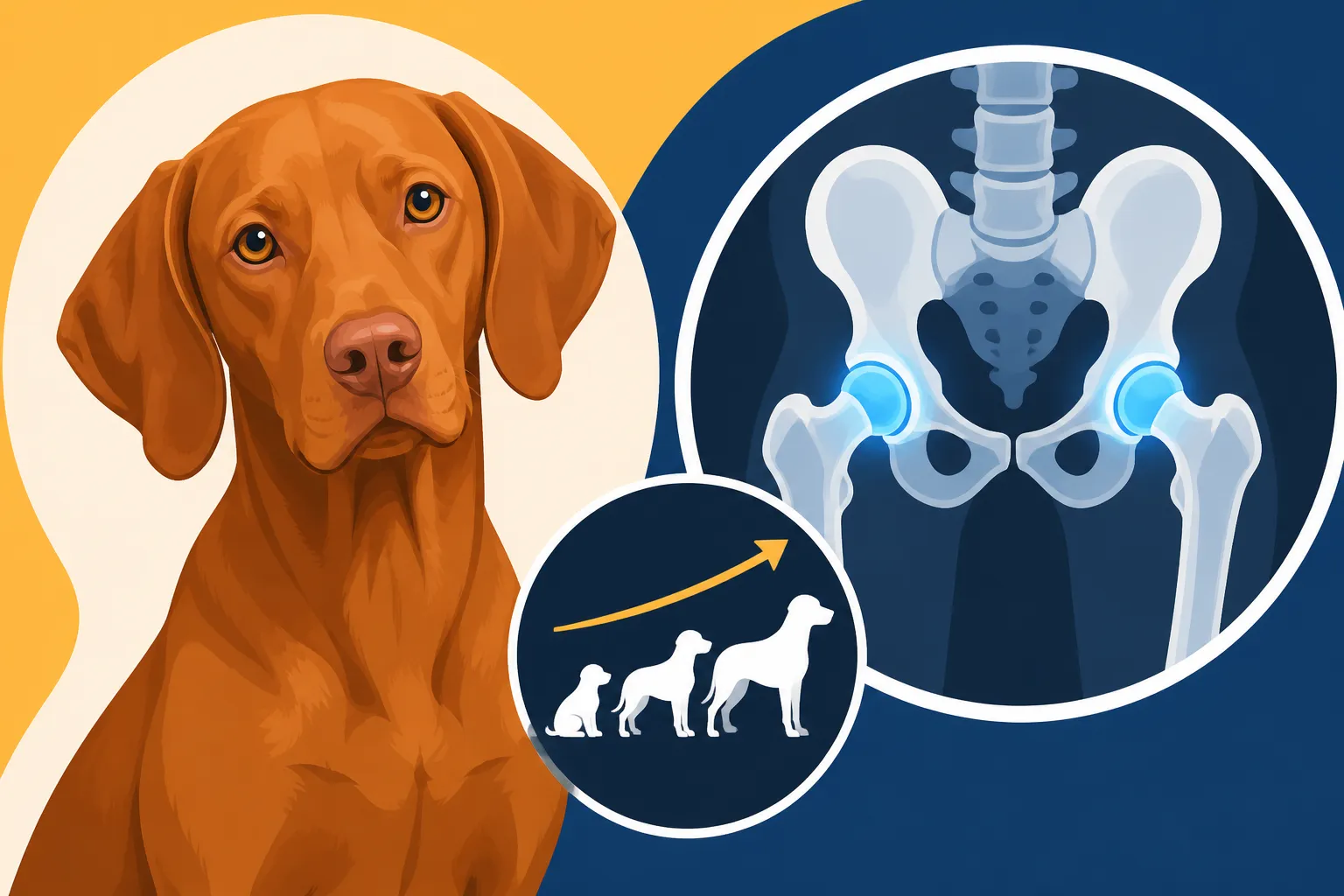
For OFA certification, your Vizsla must be at least 24 months (two years) of age to receive a final, official hip rating. This is a hard-and-fast rule. While preliminary evaluations can sometimes be done earlier, typically after four months of age, these are not considered final and can change significantly as the dog matures. Many breeders choose to do these preliminary X-rays, but they understand the results are just a snapshot. The definitive rating that goes into the public database, like those available through the Orthopedic Foundation for Animals' public registry, must come from X-rays taken after the dog’s second birthday.
PennHIP evaluation offers a bit more flexibility regarding age. A Vizsla can undergo PennHIP evaluation as early as 16 weeks (four months) of age. This earlier assessment is possible because PennHIP focuses on measuring hip laxity – how loose the joint is – which is a primary indicator of a dog’s susceptibility to hip dysplasia. This laxity can be measured much earlier than the morphological changes that OFA primarily assesses. However, while 16 weeks is the minimum, many veterinarians and breeders prefer to wait until a Vizsla is closer to one year of age for PennHIP, or even older, to ensure better muscle development that can sometimes influence the positioning for the X-rays. Both methods are valuable, but they measure different aspects of hip health and thus have different optimal windows.
Why Waiting Until Two Years is Often Recommended
Even with PennHIP offering earlier evaluations, there's a strong consensus among many Vizsla enthusiasts and veterinary professionals that waiting until a Vizsla is at least two years old for definitive hip evaluations provides the most accurate and reliable results. Why is this the case?
Firstly, a dog’s skeletal system, particularly their hip joints, isn't fully mature until around two years of age. Before this point, growth plates are still open, and the bones are still forming and settling into their final structure. An X-ray taken at, say, 12 or 18 months, might show hips that appear perfectly normal, but as the dog continues to grow and develop, subtle changes can occur that might lead to a less favorable rating later. The OFA's 24-month requirement is specifically designed to capture the mature state of the hips. This waiting period helps ensure that any genetic predispositions or developmental issues have had time to manifest, giving a true representation of the dog's joint health for breeding purposes or long-term health planning.
Secondly, a Vizsla is a high-energy, athletic breed. Their bodies are constantly under stress from running, jumping, and their intense desire to work and play. This continuous activity can influence joint development. By two years, their musculoskeletal system has typically solidified, making the assessment of joint integrity more precise. For a serious working dog, like many Vizslas are bred to be, this maturity is critical. It’s not just about what the bones look like, but how the entire joint system, including ligaments and cartilage, has developed under the strain of their active lifestyle. This comprehensive view helps ensure that a dog given a "good" rating is truly sound and ready for a lifetime of activity, be it in the field, agility course, or simply as a beloved family companion. It’s also worth considering that some pet insurance providers, like Healthy Paws, may look at these certifications when assessing coverage for certain conditions, emphasizing their importance for a dog’s overall well-being.
The Importance of Hip Scoring for Vizsla Health
Hip scoring isn't just a bureaucratic step for breeders; it's a vital tool in safeguarding the long-term health and well-being of the Vizsla breed. Given their athletic nature and the genetic prevalence of certain conditions, understanding your dog's hip status is paramount.
Addressing Hip Dysplasia in the Vizsla Breed
Hip dysplasia is a polygenic condition, meaning it's influenced by multiple genes, and environmental factors can also play a role. For Vizslas, while not as prevalent as in some larger breeds, it's still a significant concern. This condition involves the abnormal formation of the hip socket, leading to looseness in the joint, and over time, painful degenerative joint disease or osteoarthritis. Knowing whether a Vizsla has healthy hips through official scoring allows owners to make informed decisions.
For breeders, hip scoring is an ethical responsibility. By only breeding Vizslas with excellent or good hip scores, they actively work to reduce the incidence of this painful condition in future generations. This is a cornerstone of responsible breeding practices and helps ensure the genetic health of the breed. Without widespread screening, the prevalence of hip dysplasia could rise, leading to more suffering dogs and heart-broken owners. Moreover, understanding if a Vizsla has healthy hips at a young age can help tailor their exercise regimen, potentially mitigating the progression of any mild laxity before it becomes a significant problem. Early detection, or rather early certification of soundness, gives owners peace of mind and a roadmap for their dog's active life. If you're looking for a puppy, always ask the breeder about The Health Tests Both Vizsla Parents Should Have and ensure hip scoring is on that list. A breeder willing to show a Whether a Vizsla Breeder Should Show a CHIC Number is a good sign, as this indicates comprehensive health testing.
Impact on a Vizsla's Active Lifestyle
Vizslas are renowned for their boundless energy, athleticism, and drive. They are hunters, runners, and often excel in dog sports like agility, flyball, and obedience. Their very identity is tied to their ability to move gracefully and powerfully. Hip dysplasia can severely compromise this.
A Vizsla suffering from hip dysplasia may experience pain, lameness, and a reduced ability to engage in the activities they love. Imagine a dog that lives to run, suddenly struggling to get up, limping after a short walk, or showing reluctance to jump. It’s a devastating scenario for both dog and owner. Early signs can sometimes be subtle, a slight change in gait or a reluctance to climb stairs. Over time, as arthritis sets in, the pain can become constant, severely impacting their quality of life. This is why official hip scoring is not just about identifying a problem, but about protecting their future athleticism. Knowing your Vizsla's hip status allows you to work with your vet to create a tailored exercise and management plan, perhaps including joint supplements like glucosamine and chondroitin, to help maintain their mobility and comfort throughout their lives. You can also explore options for Whether Joint Supplements Help a Vizsla to support their joint health proactively, regardless of their hip score.
Understanding the Hip Scoring Methods
When it comes to getting your Vizsla's hips evaluated, there are primarily two widely accepted methods in North America: OFA and PennHIP. While both aim to assess hip health, they approach the evaluation with different methodologies and provide distinct types of information. It's crucial for Vizsla owners, especially those interested in responsible breeding, to understand the differences.
Orthopedic Foundation for Animals (OFA) Evaluation
The OFA method is perhaps the most traditional and widely recognized certification for canine hips in the United States. It involves a single, specific radiographic view of the hips, with the dog positioned on its back, hind legs extended and rotated inward. This "VD-extended" view allows veterinary radiologists to assess the conformity and fit of the femoral heads within the acetabulum (hip sockets).
The Process:
- Sedation/Anesthesia: Your Vizsla will need to be sedated or anesthetized to ensure proper muscle relaxation and positioning for the X-rays. This is crucial for accurate imaging and to prevent discomfort.
- Radiographs: The veterinarian will take an X-ray of your dog's hips in the required position.
- Submission: The X-ray images are then submitted to the OFA.
- Evaluation: Three independent, board-certified veterinary radiologists review the X-rays. They look for signs of hip dysplasia, such as shallow sockets, poor coverage of the femoral head, and degenerative joint disease.
- Grading: Based on the consensus of the radiologists, the hips are graded on a seven-point scale: Excellent, Good, Fair (all considered "passing" or non-dysplastic), Borderline, Mild, Moderate, or Severe.
- Certification: Only Vizslas graded Excellent, Good, or Fair at 24 months of age or older receive an OFA certification number and are listed in the public database.
The OFA system primarily evaluates the "conformation" or structural integrity of the hip joint. While it has been instrumental in reducing hip dysplasia, critics sometimes point out that a dog can have good conformation in the extended view but still have significant hip laxity that could predispose them to dysplasia. However, its long history and extensive database make it a valuable tool.
PennHIP Evaluation
PennHIP (developed at the University of Pennsylvania Hip Improvement Program) takes a different approach by focusing on measuring hip laxity, which is often a strong predictor of hip dysplasia susceptibility, regardless of apparent conformation. It’s considered a more objective and quantitative method by many.
The Process:
- Training and Certification: PennHIP evaluations can only be performed by veterinarians who have undergone specific training and certification from PennHIP.
- Sedation/Anesthesia: As with OFA, your Vizsla will require sedation or anesthesia for proper positioning and comfort.
- Three Radiographic Views: Instead of one, three specific X-ray views are taken:
- Distraction View: This view gently pushes the femoral heads out of the hip sockets to measure the maximum amount of hip laxity. This is the core of the PennHIP method.
- Compression View: This view pushes the femoral heads into the sockets to assess the "best fit" or congruity of the joint.
- Hip Extended View: Similar to the OFA view, this assesses the traditional conformation.
- Measurement and Analysis: The images are sent to PennHIP for analysis. Specialized software precisely measures the amount of laxity in the distraction view, expressed as a "Distraction Index" (DI).
- DI Interpretation: The DI is a number between 0 and 1. A DI closer to 0 indicates very tight hips (less laxity, lower risk of dysplasia), while a DI closer to 1 indicates very loose hips (high laxity, higher risk).
- Breed Comparison: Your Vizsla's DI is compared to the DI of other Vizslas in the PennHIP database, providing a percentile ranking. For example, a dog in the 70th percentile is tighter than 70% of Vizslas in the database.
PennHIP offers a more predictive assessment, meaning it can identify dogs at risk for hip dysplasia earlier in life. This allows breeders to make breeding decisions based on objective measurements and helps owners understand their dog's risk profile from a younger age. While often more expensive than OFA, many consider its objective, quantitative data to be a worthwhile investment in the genetic future of the breed. For an active Vizsla, knowing their joint laxity can be incredibly valuable for long-term care, and services like Healthy Paws can provide support if issues arise.
Here's a quick comparison of the two main hip scoring methods:
| Feature | OFA Evaluation | PennHIP Evaluation |
|---|---|---|
| Minimum Age for Final Score | 24 months (2 years) | 16 weeks (4 months) |
| Primary Focus | Hip joint conformation and structural integrity | Hip joint laxity (looseness) |
| Number of X-rays | 1 (VD-extended) | 3 (Distraction, Compression, Extended) |
| Requires Sedation | Yes | Yes |
| Results Provided | Qualitative Grade (Excellent, Good, Fair, etc.) | Quantitative Distraction Index (DI) & Breed Percentile |
| Predictive Value | Less predictive in young dogs | More predictive in young dogs |
| Veterinarian Training | Any licensed vet can take X-rays | Only PennHIP certified vets can perform evaluation |
Managing Joint Health Beyond Scoring
Getting your Vizsla's hips scored is a fantastic proactive step, but it's just one part of a comprehensive approach to joint health. Our Vizslas are built for activity, and supporting their joints throughout their lives, regardless of their hip scores, is essential for their overall well-being and longevity.
Proactive Care and Prevention Strategies
Even if your Vizsla comes back with excellent hip scores, proactive care is still incredibly important. Think of it as investing in their future mobility.
One of the biggest factors is weight management. An overweight Vizsla puts undue stress on all their joints, including hips and elbows, accelerating wear and tear and potentially exacerbating any underlying joint issues. Keeping your Vizsla at a lean, healthy weight, where you can easily feel their ribs but not see them prominently, is paramount. This aligns with the breed standard for a lean, athletic build. Ensuring your Vizsla is kept lean and fit can also contribute to The Twelve to Fourteen Years a Vizsla Lives in comfort.
Appropriate exercise is another cornerstone. While Vizslas need a lot of physical activity, especially The Two Hours a Vizsla Needs Before It Will Settle, too much high-impact, repetitive activity on hard surfaces, particularly during puppyhood, can be detrimental to developing joints. Avoid excessive jumping, long runs on pavement, or intense agility work before their growth plates have closed, usually around 12-18 months. Instead, focus on softer surfaces, swimming, and controlled play. Puppy-specific exercise guidelines are crucial. For more on this, check out Whether a Vizsla Puppy Should Run on Hard Ground. As they mature, ensure their exercise is varied and includes activities that build strong supporting muscles without overstressing joints.
Finally, nutritional support can play a role. Many owners opt for joint supplements containing ingredients like glucosamine, chondroitin, and MSM, even in healthy, young Vizslas. While the efficacy can vary, these supplements are thought to support cartilage health and reduce inflammation. Omega-3 fatty acids, often found in fish oil, are also beneficial for their anti-inflammatory properties. Discussing these options with your veterinarian is always the best approach to tailor a supplement regimen that suits your individual Vizsla's needs.
Recognizing and Addressing Joint Issues
Despite our best efforts, joint problems can still arise. Vizslas are notoriously stoic and may hide pain, which can make early detection a challenge. Being vigilant and knowing the signs of trouble is critical.
Keep a close eye on your Vizsla's gait and behavior. Any subtle lameness, stiffness, reluctance to jump, climb stairs, or even a change in how they lie down could indicate discomfort. Whether a Limping Vizsla Has a Cruciate Tear is a common concern for active dogs, and signs of pain should always be investigated. Pay attention if your dog is less enthusiastic about their usual activities, lags behind on walks, or experiences difficulty getting up after rest. Some dogs may even start licking or chewing at a particular joint area.
Regular veterinary check-ups are vital, especially as your Vizsla ages. Your vet can perform orthopedic examinations, assess joint range of motion, and recommend further diagnostics like X-rays if they suspect an issue. Early intervention is key for managing conditions like hip dysplasia or even the onset of arthritis. This could involve pain management, anti-inflammatory medications, physical therapy, or even surgery in some cases. Services like Healthy Paws can be invaluable here, helping to cover the costs of diagnostics and ongoing treatments for chronic conditions, allowing you to focus on your Vizsla's comfort and recovery without added financial stress. For older Vizslas, understanding Arthritis in a Vizsla at Ten can help you provide the best comfort and support as they age. Similarly, being aware of The Old Vizsla That Still Wants to Hunt and how their body might be changing helps manage expectations and adapt activities appropriately.
Other Common Vizsla Joint Concerns
While hip dysplasia often takes center stage in discussions about Vizsla joint health due to its prevalence and the emphasis on hip scoring, it's important to remember that our active companions can be susceptible to other joint-related issues as well. A holistic view of their musculoskeletal system is key to keeping them sound and happy.
Elbow Dysplasia and Cruciate Ligament Tears
Just like hips, elbows can also be prone to dysplasia in Vizslas. Elbow Dysplasia in a Vizsla is a complex condition involving multiple developmental abnormalities of the elbow joint. It can manifest as pain, lameness (often in the front legs), stiffness, and reluctance to exercise. Like hip dysplasia, it has a genetic component, and responsible breeders will also have their breeding stock's elbows screened and certified, typically by OFA, at the same minimum age of 24 months. While PennHIP doesn't have an elbow component, the OFA elbow evaluation uses a similar grading system to hips, with grades of Normal (Grade I, II, or III) or Dysplastic. Vigilance for signs of front limb lameness is crucial, especially in growing Vizslas.
Another common and often sudden injury for active Vizslas is a cruciate ligament tear. The cranial cruciate ligament (CCL) in a dog's knee (stifle) is analogous to the ACL in humans. Cruciate Tears in a Working Vizsla can occur during intense activity, sudden twists, or even from chronic degeneration over time. You might hear a pop, or your Vizsla might suddenly become very lame, refusing to put weight on the affected leg. This is a painful injury that often requires surgical intervention to stabilize the knee joint, followed by extensive rehabilitation. Recovery can be long and challenging, and it's a significant financial and emotional undertaking. This type of injury is a prime example of why considering pet insurance early in your Vizsla's life, with a provider like Healthy Paws, can offer peace of mind.
The Impact of an Active Life and Aging
Vizslas are not just active; they are relentless. Their high drive and endurance mean they often push themselves to the limit, day in and day out. This constant exertion, while fulfilling their breed purpose, inevitably puts significant stress on their joints over a lifetime. This is why many owners wonder Whether a Working Vizsla Wears Its Joints Out.
As Vizslas age, even those with excellent joint health in their prime, they will eventually face the natural process of arthritis. The cartilage in their joints begins to thin, and the bones start to rub, leading to pain, stiffness, and reduced mobility. The Age a Vizsla Counts as Senior is typically around 7-8 years, and this is when many owners start noticing the subtle signs of aging joints. They might be slower to get up, less enthusiastic about long walks, or struggle with stairs.
Managing an aging Vizsla's joint health involves a multi-faceted approach. This includes:
- Pain management: Your vet can prescribe anti-inflammatory drugs (NSAIDs) or other pain relievers.
- Joint supplements: Continuing or starting supplements can help maintain joint lubrication and reduce inflammation.
- Physical therapy: Targeted exercises, hydrotherapy, or therapeutic massage can help maintain muscle mass, flexibility, and improve comfort.
- Environmental modifications: Soft, supportive beds, ramps for cars or stairs, and non-slip mats on floors can make a huge difference in an older Vizsla's quality of life.
- Consistent, moderate exercise: While their intensity might decrease, regular, gentle exercise like swimming or short walks is still important to keep joints moving and muscles strong.
- Regular vet check-ups: These become even more crucial as they age to monitor their overall health and adjust pain management as needed.
Understanding and addressing all these aspects of joint health, from early screening to lifelong management, is part of being a responsible and loving Vizsla owner. It's about ensuring our spirited companions can enjoy their active lives for as long as possible, comfortably and happily.
Disclaimer
Please remember that the information provided in this article is for educational purposes only and should not be considered a substitute for professional veterinary advice. Always consult with a qualified veterinarian for any health concerns or before making any decisions related to your Vizsla's health and treatment.