Whether a Vizsla’s Nails Wear Down Working
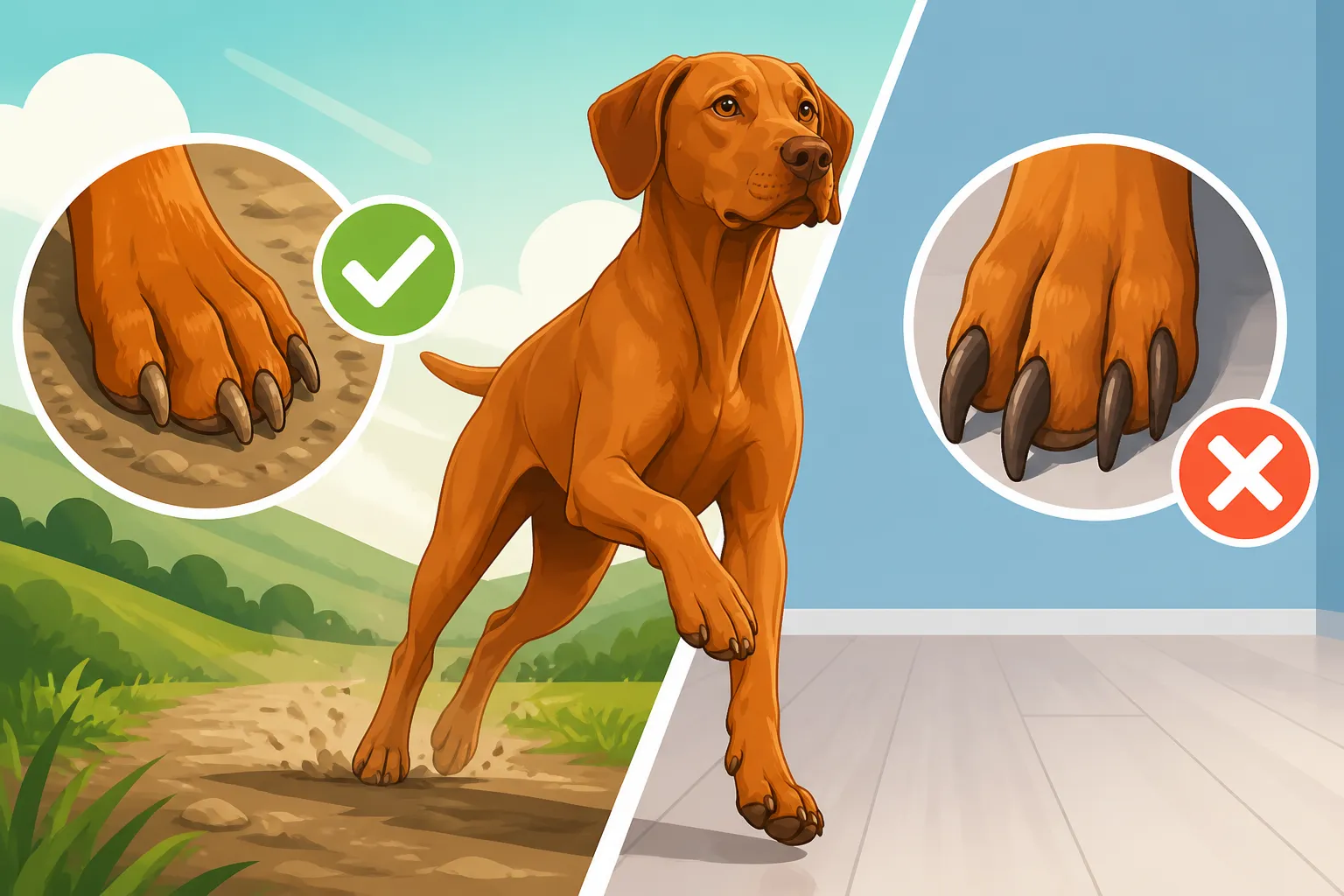
It's a common thought among Vizsla owners, especially those whose dogs spend a lot of time out in the field: "Surely all that running and working means their nails just wear down naturally, right?" The truth is, while field work certainly helps keep those nails shorter than if your Vizsla were a couch potato, it's rarely enough to completely negate the need for regular nail care. If you’ve been hoping to skip the nail clippers forever, this guide will walk you through the real picture of Vizsla nail health in working dogs and what you actually need to do to keep their paws in top condition.
The Reality of Working Dog Nails vs. Domestic Life
We often romanticize the idea of our dogs living a purely "natural" existence, where their bodies are perfectly adapted to their environment without human intervention. For a Vizsla, a breed designed for hard work in diverse terrains, it feels like their nails should wear down on their own. And to some extent, they do! But the modern world, even for a working dog, isn't always the rugged wilderness that shaped these breeds. Our dogs often spend significant time on softer surfaces, both indoors and out, and even the "field" can vary dramatically in its abrasive qualities.
Natural Abrasion in the Field: What Actually Happens
When your Vizsla is tearing through a stubble field, galloping across a sandy track, or navigating rocky terrain in pursuit of game, their nails are making contact with the ground. This friction does indeed act like a natural file, slowly grinding down the tips of their claws. Think of it like walking barefoot on pavement versus walking on carpet; the hard, rough surfaces naturally buff your toenails. For a Vizsla with its powerful, athletic stride, there's a good deal of impact and scuffing.
However, the efficacy of this natural wear depends heavily on a few factors. Firstly, the actual type of terrain. Hard, abrasive surfaces like gravel paths, concrete, or rocky ground are far more effective at wearing down nails than soft earth, tall grass, or muddy fields. If your hunting grounds are predominantly soft and yielding, the nails won't experience enough friction to wear significantly. Secondly, the gait of the dog plays a role. A dog that is primarily trotting or walking might have decent nail wear, especially if their nails are already long enough to touch the ground. A dog at a full gallop, however, might have less consistent ground contact with its nails, as its pads take the brunt of the impact. It's a complex dance between foot placement, speed, and surface texture.
The Hidden Truth About Field Work and Nail Length
Here’s where the reality often hits: even with regular field work, many Vizslas still end up with nails that are too long. Why? Because the nail itself grows continuously from the quick, much like our fingernails. Unless the very tip of the nail is constantly being worn down, the quick, which contains blood vessels and nerves, will grow longer with the nail. If the quick extends too far, even when the dog is standing, the nail will touch the ground before the paw pad does. This isn't just an aesthetic issue; it can cause real problems.
Imagine a Vizsla whose nails are just a bit too long. When they stand, the nails push up into their toes, forcing the foot to splay and altering their natural stance. This small change in foot mechanics can put strain on their joints, especially in their pasterns, wrists, and even shoulders. Over time, this constant subtle pressure can contribute to discomfort or even exacerbate existing joint issues. Furthermore, long nails are far more prone to snagging, tearing, or breaking, especially when a Vizsla is moving at speed through dense cover. A torn nail is incredibly painful, often bleeds profusely, and usually requires a vet visit, which is not something you want when you're miles from civilization in the middle of a hunt. So while field work offers some benefit, it's rarely a complete solution to nail maintenance.
Factors That Influence Nail Wear in a Working Vizsla
Understanding that field work isn't a magic bullet for nail care means digging into what does genuinely impact nail wear. It's not just about how active your Vizsla is, but the specific conditions of that activity, and even their individual biology.
Terrain Matters More Than Just Activity
This is perhaps the most significant factor. Think about the difference between a Vizsla working pheasants in a cultivated cornfield versus one chasing quail through rocky desert scrubland.
- Hard, Abrasive Surfaces: Concrete, asphalt, gravel roads, rocky trails, or even well-packed dirt paths are excellent for wearing down nails. If your Vizsla regularly walks or runs on these surfaces, you'll notice a much better natural wear. Even short walks around the neighborhood on pavement can contribute more to nail wear than hours spent in soft grass.
- Soft, Yielding Surfaces: Grass, mud, soft soil, forest floors covered in leaf litter, or sandy beaches do very little to wear down nails. These surfaces cushion the impact, allowing the paw pads to do their job without much nail friction. Many prime hunting areas fall into this category, meaning your hard-working Vizsla might still come home with nails barely scuffed.
- Dense Cover: While working through thick brush might seem abrasive, it often causes nails to snag rather than wear down evenly. This can lead to splits, tears, or even avulsions (when the nail is ripped off completely), which are incredibly painful and require immediate attention, as discussed in What a First Aid Kit for a Hunting Vizsla Holds.
Consistency and Intensity of Work
A Vizsla that gets an intense workout twice a week might have less consistent nail wear than one that has daily varied exercise. Even a dog that hunts every weekend might still have six days a week of softer activity or indoor living, allowing nails to grow.
- Frequency: Daily activity on varied surfaces is ideal. If your Vizsla only sees hard ground once a week, their nails might be growing faster than they're wearing.
- Intensity: High-speed running can actually lift the nails off the ground more, reducing wear compared to a consistent trot or walk where the nails might drag slightly. It’s counter-intuitive, but a dog moving at extreme speeds often relies more on the grip of their paw pads.
- Seasonal Changes: The type of terrain available often changes with the seasons. Muddy fields in spring, dry hard ground in summer, and snow cover in winter all present different challenges and opportunities for nail wear. For example, Whether a Vizsla Needs Boots in Winter might be a consideration if you're dealing with snow and ice that don't wear nails effectively and can cause other paw issues.
Individual Nail Strength and Growth Rate
Just like people, dogs have different nail genetics. Some Vizslas naturally have harder, tougher nails that resist wear, while others have softer nails that might wear down more easily but are also more prone to chipping or splitting.
- Genetic Predisposition: Nail growth rate and hardness can be inherited. If a Vizsla's nails grow particularly fast, even consistent activity might not keep them in check.
- Diet and Overall Health: A well-balanced diet, rich in essential nutrients, contributes to healthy nail growth. Deficiencies, though rare in well-fed dogs, can sometimes affect nail quality, making them brittle or weak. If you're feeding a high-quality food, perhaps from a brand like Ollie, you're likely supporting good general nail health, but it won't stop them from growing.
- Age: Younger Vizslas often have faster growing nails, while older dogs might experience slower growth. An old Vizsla that has started to slow down, as discussed in Caring for an Old Vizsla That Has Stopped Hunting, will definitely require more attentive nail care as their natural wear decreases.
Recognizing When Your Working Vizsla's Nails Need Attention
It’s easy to overlook nail length until there’s a problem, especially with a busy, active Vizsla. But being proactive can save you a lot of trouble and pain for your dog. Learning the signs of overgrown nails is crucial for any Vizsla owner.
The Tell-Tale Signs of Overgrown Nails
Don't wait until your Vizsla is limping or has a torn nail to realize they need a trim. There are clear indicators:
- The Click-Clack Sound: This is the most obvious sign. If you can hear your Vizsla's nails clicking or clacking on hard indoor surfaces (wood, tile, concrete) as they walk, they are definitely too long. When standing still, their nails should not touch the ground. You should be able to slide a piece of paper under them.
- Splayed Toes: Overgrown nails push up into the nail bed, forcing the toes to spread wider than natural. This can make the paw look flatter and less compact. In the long term, this can affect the structural integrity of the foot.
- Foot Rolling Inward: When nails are too long, they can act like brakes, causing the foot to roll inward slightly. This changes the way your Vizsla distributes its weight, impacting their gait and potentially causing strain higher up in their legs and joints.
- Difficulty Gripping: Long nails can reduce the traction of the paw pads, especially on slippery surfaces. Your Vizsla might seem less confident on smooth floors, slipping more often. This is a big deal for a working dog that needs solid footing in varied terrain.
- Snagging and Breaking: While working, if your Vizsla frequently snags or breaks nails, it's a huge red flag that they are too long. A well-maintained nail will be short enough to avoid most snags. This goes hand-in-hand with The Thin Skin a Vizsla Takes Into the Field, as field injuries are a common concern.
- Reluctance to Walk or Run: In severe cases, overly long nails can be genuinely painful. The constant pressure on the toe joints can make walking uncomfortable, and your Vizsla might show a reluctance to engage in their usual enthusiastic running.
Why Long Nails Are a Problem for an Active Dog
For a Vizsla, whose life revolves around movement, agility, and powerful bursts of speed, long nails are more than just an inconvenience. They are a serious detriment to their health, comfort, and performance.
- Pain and Discomfort: As mentioned, long nails push back into the toe joints, causing chronic low-grade pain. This is akin to wearing shoes that are too small all the time. Imagine trying to run a marathon like that! This constant discomfort can lead to changes in gait, muscle soreness, and a general decrease in enthusiasm for activity.
- Joint and Posture Issues: The altered foot mechanics from long nails can lead to improper weight distribution, stressing the joints in the toes, pasterns, hocks, and even hips. Over time, this can contribute to or worsen conditions like arthritis, making life much harder for an active dog. It's a silent stressor on their musculoskeletal system.
- Increased Risk of Injury: A long nail is a weak nail. It’s more likely to catch on something and tear or rip off entirely. These injuries are incredibly painful, bleed a lot, and often get infected, requiring veterinary attention. A torn nail can sideline a working Vizsla for weeks, interrupting training and hunting seasons. You'll definitely want to remember to be Checking a Vizsla Over After a Hunt for this and other injuries.
- Reduced Performance: A Vizsla with long nails can't perform at its peak. Their stride might be shortened, their grip compromised, and their overall balance affected. They simply won't be as efficient or as fast in the field, which defeats the purpose of having such an athletic breed.
- Infection Risk: When nails are too long, they can sometimes curl under and grow into the paw pad, or collect dirt and debris around the quick, leading to infections. This is especially true for the dewclaws, which don't make ground contact and can become ingrown if not trimmed.
Practical Strategies for Maintaining Your Vizsla's Paws and Nails
Given all of this, it's clear that even a hard-working Vizsla needs dedicated nail care. This isn't just about aesthetics; it's fundamental to their comfort, health, and ability to do what they love.
Essential Grooming Tools for the Active Vizsla
Having the right tools makes the job easier and less stressful for both you and your Vizsla. Don't skimp on quality here.
- Good Quality Nail Clippers: There are two main types: scissor-style and guillotine-style. Many Vizsla owners prefer scissor-style clippers for their strength and precision. Invest in a sharp pair that feels comfortable in your hand. Dull clippers crush the nail rather than cut it cleanly, which can be painful and lead to splits. Brands like Millers Forge or Safari make widely available and effective clippers. You can find a good selection on Chewy or Amazon.
- Nail Grinder (Dremel-style): For many Vizslas, especially those with dark nails where the quick is hard to see, a grinder is a safer and often more effective option. It allows you to gradually wear down the nail, smoothing the edges and slowly pushing the quick back over time. This can be less stressful for dogs sensitive to the snap of clippers. Look for a quiet, cordless model with adjustable speeds.
- Styptic Powder: This is an absolute must-have. Accidents happen, and even the most careful owner can occasionally nick the quick. Styptic powder (like Kwik Stop) immediately stops bleeding and provides some pain relief. Keep it close by every time you do nail care. It's a non-negotiable part of What a First Aid Kit for a Hunting Vizsla Holds too.
- Paw Balm or Wax: For Vizslas working in harsh conditions, a good paw balm or wax (such as Musher's Secret or any quality paw wax found on Chewy) can help protect their pads from cracks, dryness, and abrasions, especially important as discussed in Whether a Vizsla Needs Paw Wax. While not directly for nails, healthy pads are part of overall paw health.
- Treats: High-value treats are your best friend during nail care. Positive reinforcement makes the experience much more pleasant and builds a positive association.
Regular Maintenance for Healthy Paws
Consistency is key when it comes to Vizsla nail care. Don't wait until the nails are overgrown; incorporate it into your routine.
- Establish a Routine: For most active Vizslas, a nail trim or grind every 2-4 weeks is appropriate, depending on their individual nail growth and activity. Some might need it more frequently, others slightly less. Find what works for your dog and stick to it. Mark it on your calendar!
- Start Early (Puppies): If you have a Vizsla puppy, start handling their paws and introducing them to clippers or a grinder from day one. Make it a positive experience with lots of praise and treats. This will make adult grooming much easier.
- Short, Frequent Sessions: If your Vizsla is sensitive, do very short sessions. Just clip one nail, give a treat, then move on. You can do a few nails at a time over several days until they become more comfortable.
- Know Your Quick: If your Vizsla has clear nails, you'll see the pink quick. Always cut below the quick. For dark nails, it's harder. Look for the hollow center of the nail, or use a grinder to slowly reveal the quick. When in doubt, take off tiny amounts at a time.
- Don't Forget Dewclaws: Dewclaws don't touch the ground, so they don't wear naturally at all. They are notorious for growing into a painful circle and embedding in the leg if neglected. Always check and trim them.
- Professional Help: If you're truly uncomfortable or your Vizsla is exceptionally resistant, don't hesitate to seek help from a professional groomer or your veterinarian. They can show you proper technique and even do the trims for you. Remember, nail trimming is an essential part of What a Vizsla Costs a Year to Keep and good health.
The Role of Diet and Supplements in Nail Health
While nail care is mostly mechanical, what goes into your Vizsla can also play a supporting role in the quality of their nails.
- Balanced Nutrition: A high-quality dog food provides the foundational nutrients for healthy skin, coat, and nails. Look for foods with good protein sources and essential fatty acids. If your Vizsla works hard, they might need specific nutritional considerations, as covered in Feeding a Vizsla That Burns Everything It Eats.
- Omega Fatty Acids: Omega-3 and Omega-6 fatty acids are fantastic for skin and coat health, which in turn supports healthy nails. Many premium dog foods include these, or you can add supplements like fish oil. Brands like Nordic Naturals offer pet-specific omega-3 supplements that can be easily added to food.
- Biotin and Zinc: These nutrients are sometimes highlighted for their role in nail and hoof health. While typically sufficient in a complete dog food, some owners of dogs with chronically brittle or weak nails might discuss specific supplements with their vet. However, always consult with your vet before adding any new supplements to your dog's diet.
- Hydration: Just like the rest of their body, proper hydration is important for healthy nails. Ensure your Vizsla always has access to fresh, clean water. This is a basic but often overlooked aspect of What a Vizsla Needs Every Day.
In conclusion, while your working Vizsla’s nails might get some natural wear from their adventures in the field, it's rarely enough to keep them perfectly maintained. Consistent, proactive nail care is a critical part of owning an active Vizsla, ensuring their comfort, preventing painful injuries, and supporting their overall health and performance.
Disclaimer
This article is for general informational purposes only and does not constitute professional advice. Laws, prices and regulations vary by location and change over time. Consult a qualified professional for guidance on your specific situation.