Whether a Vizsla Gets Yeast in Its Ears
It's incredibly frustrating, not to mention heartbreaking, when you notice your active, loving Vizsla constantly shaking their head, pawing at an ear, or just generally seeming uncomfortable. You just want them to be their happy, energetic selves, but that persistent itch can really dampen their spirits and yours. This guide will walk you through whether Vizslas are prone to ear yeast infections, what those look and smell like, and how you can tackle them to bring your beloved companion some much-needed relief.
Understanding Yeast Infections in Vizsla Ears
When your Vizsla is shaking their head and scratching, it's natural to jump to conclusions, and often, yeast is a prime suspect. But what exactly is a yeast infection in a dog's ear, and why does it seem to be such a common culprit? Let's break down the basics of this pesky problem.
What is Yeast and Why Does it Cause Problems?
Think of yeast as a tiny, microscopic fungus that actually lives naturally on your dog's skin and in their ears. The most common culprit is Malassezia pachydermatis, and in small, balanced numbers, it's totally harmless. It's just part of the normal flora. The problem starts when something throws that balance out of whack. When conditions become favorable – usually warm, moist, and dark – this yeast goes from a benign resident to an opportunistic invader, multiplying rapidly and causing an uncomfortable infection. It’s like a party guest that suddenly brings a hundred more friends and takes over the whole house!
For Vizslas, with their floppy ears that often hang close to the side of their heads, the ear canal can become a perfect little incubator. The lack of airflow means moisture and warmth are easily trapped, creating that ideal environment for yeast to thrive. It’s not necessarily that Vizslas are inherently 'yest-prone' in a genetic sense more than other breeds, but their ear structure certainly presents a challenge.
Common Causes of Yeast Overgrowth in Vizslas
While floppy ears are a big contributing factor, they’re rarely the only reason a yeast infection flares up. Often, there’s an underlying issue that compromises the ear's natural defenses, allowing the yeast to take hold. It's crucial to get to the root of the problem, otherwise, you'll be fighting a never-ending battle with recurring infections.
One of the most frequent culprits is allergies. Just like us, dogs can suffer from environmental allergies (pollen, dust mites, mold) or food allergies. When a Vizsla's immune system reacts to an allergen, it can cause inflammation and irritation throughout their body, including the ears. This inflammation changes the microenvironment in the ear canal, making it more welcoming for yeast. You might find that your Vizsla's skin issues and ear problems seem to go hand-in-hand. Whether a Vizsla Gets Atopic Dermatitis is a good read if you suspect environmental allergies, and Whether a Vizsla Reacts to Its Food delves into dietary sensitivities. Sometimes, switching to a high-quality, limited-ingredient diet, perhaps even a fresh food option like those offered by Ollie, can make a surprising difference in overall skin and ear health by reducing inflammatory triggers.
Another common factor, especially for active Vizslas who love water, is moisture. Whether it's after a swim in the lake, a romp through dew-laden grass during an early morning hunt, or even just a particularly humid day, water trapped deep in the ear canal can be a breeding ground for yeast. This is why thorough drying of the ears after any water exposure is absolutely critical for our water-loving companions. Keeping a Vizsla's Ears Clear After Water Work offers more tips on this. Foreign bodies, like grass seeds—which Vizslas are unfortunately prone to picking up in their delicate ears—can also cause irritation and inflammation, paving the way for yeast. Even excessive wax buildup, though less common than other factors, can create a rich food source for yeast.
Spotting the Signs of a Yeast Infection
Catching a yeast infection early can save your Vizsla a lot of discomfort and you a lot of worry (and potentially vet bills!). Our Vizslas are stoic creatures, often trying to hide their pain or discomfort, but with ear issues, the signs are usually quite clear if you know what to look for.
What to Look For: Visual Clues
The first thing most Vizsla owners notice isn't necessarily seeing the yeast itself, but observing their dog's behavior. Constant scratching at the ears with a hind leg or rubbing their head along the carpet or furniture is a dead giveaway that something is amiss. Head shaking, sometimes so vigorous their floppy ears flap wildly, is another common symptom. If you see them doing this more than usual, it's time for a closer inspection.
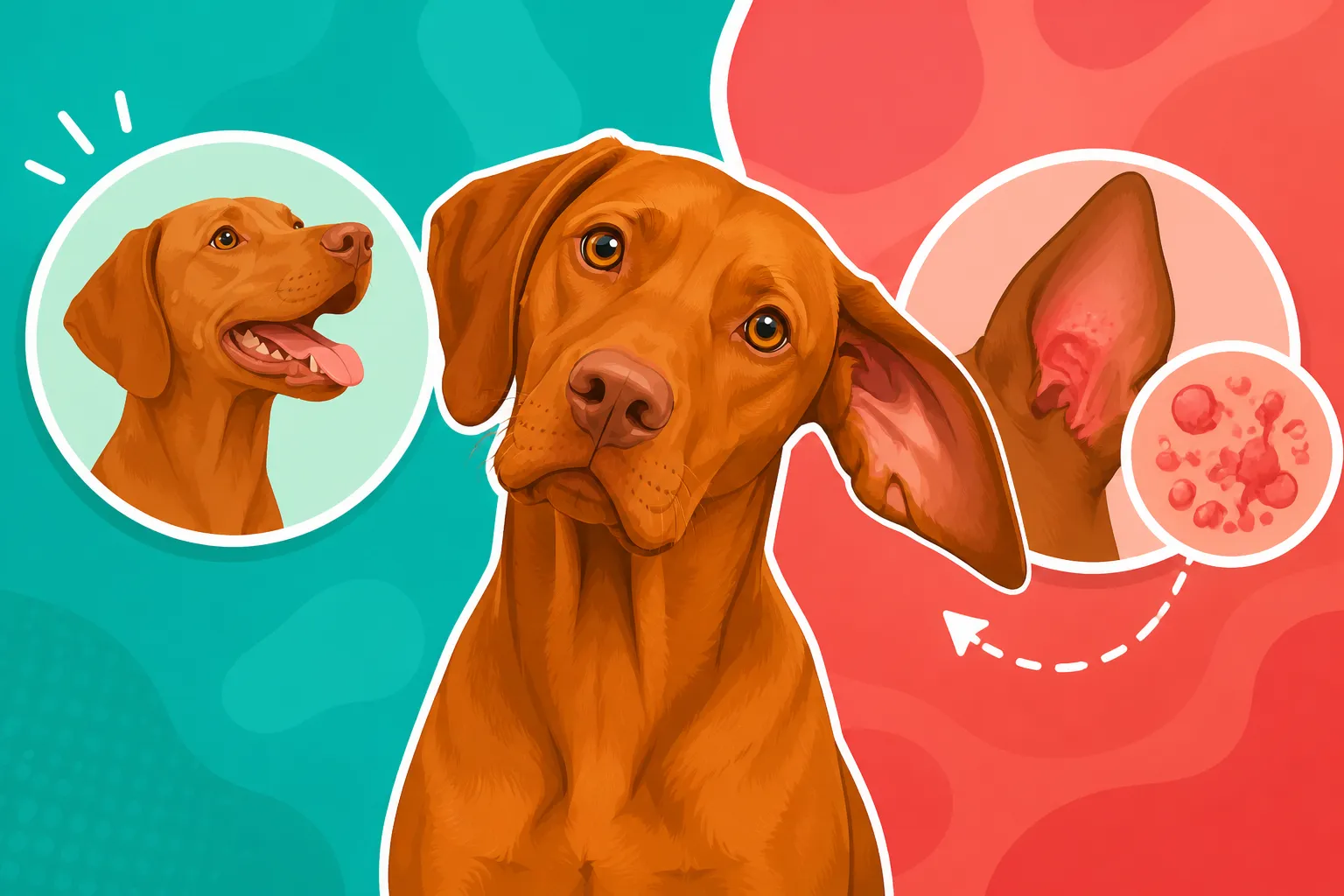
When you gently lift your Vizsla's ear flap, you'll likely notice some distinct changes inside the ear canal. The skin might appear red and inflamed, rather than its usual healthy pale pink. You might see a dark, reddish-brown, waxy discharge, sometimes appearing crumbly or greasy. This discharge is often a hallmark of yeast. In more severe or chronic cases, the skin around the ear canal entrance can become thickened, leathery, and even develop dark pigmentation, a condition called lichenification. This is a sign of long-term irritation.
| Symptom | Description | What to Observe |
|---|---|---|
| Itching | Persistent scratching with hind leg, rubbing ear on surfaces. | How often your Vizsla is pawing at its ear or shaking its head. |
| Redness | Inflammation of the skin inside the ear canal and outer flap. | Compare the affected ear to the healthy one, or to its normal color. |
| Discharge | Dark, reddish-brown, waxy, sometimes greasy or crumbly substance. | Amount, color, and texture of discharge. |
| Smell | Distinctive "yeasty" or "corn chip" odor. | Get close and take a sniff! |
| Swelling | The ear canal may appear narrowed or puffy. | Visual inspection of the ear canal opening. |
| Pain/Sensitivity | Vizsla may resist ear touching, whine, or pull away. | Observe their reaction when you attempt to examine their ear. |
| Hair Loss | Patchy hair loss around the ear due to excessive scratching. | Check the fur on and around the ear flap. |
| Thickened Skin | Chronic inflammation can lead to dark, thickened skin (lichenification). | Feel the texture of the skin inside and around the ear canal. |
What to Smell For: The "Corn Chip" Odor
This might sound strange, but one of the most distinctive and tell-tale signs of a yeast infection is the smell. Many Vizsla owners describe it as a sweet, pungent, somewhat musty odor, often likened to "corn chips," "Fritos," or even stale bread. Once you've smelled it, you'll recognize it every time. This smell comes directly from the yeast itself, and it can be quite strong, especially if the infection has been brewing for a while.
Don't be shy about gently lifting your Vizsla's ear flap and giving it a sniff. If you detect that unmistakable yeasty aroma along with any of the visual signs, it's a strong indication that you're dealing with a yeast overgrowth. This smell can sometimes be the very first clue, even before severe scratching begins, especially if your Vizsla is good at hiding their discomfort. It's an important part of your routine checks after they've been out and about, especially after a swim or a wet hunt. Whether a Vizsla Smells After Swimming can give you more insight into common post-water odors.
Getting a Diagnosis and Treatment Plan
While you might be able to spot the signs and smell the tell-tale odor, a definitive diagnosis and the right treatment plan really require a visit to your veterinarian. Self-diagnosing and trying over-the-counter remedies without a professional opinion can delay proper treatment and even worsen the problem.
Why a Vet Visit is Essential
It's easy to assume "it's just yeast," but without a vet's examination, you can't be entirely sure. Bacterial infections often present with similar symptoms, and sometimes, a Vizsla might have both a yeast and a bacterial infection simultaneously. The treatments for these are different, and using the wrong medication could make a bacterial infection worse or just fail to resolve the yeast. Your vet will perform an otoscopic exam, looking deep into the ear canal with a special tool, to check for foreign bodies, ruptured eardrums, or other issues that aren't visible from the outside.
Crucially, your vet will also take a sample of the ear discharge for cytology. This involves swabbing the ear, smearing the discharge on a slide, staining it, and examining it under a microscope. This simple, quick test allows them to see exactly what's lurking in there: yeast, different types of bacteria, or even mites. This step is non-negotiable for an accurate diagnosis and ensures your Vizsla gets precisely the medication they need to clear up the infection. Trying to treat what you think is yeast with a bacterial medication (or vice-versa) is not only ineffective but can lead to resistant bacteria or chronic problems.
Treatment Options for Yeast Infections
Once your vet has confirmed a yeast infection, they'll prescribe an appropriate course of treatment. This typically involves a combination of ear cleaning and antifungal medication. Medicated ear cleaners are often the first line of defense. These cleaners are specifically formulated to help break down wax and debris, as well as contain ingredients that kill yeast. They might advise you to clean your Vizsla's ears several times a week, or even daily, depending on the severity. Products available on Chewy or Amazon, such as specific veterinary-recommended ear rinses, might be part of your prescribed regimen. Always ensure you're using products recommended by your vet, as some over-the-counter options can be irritating or ineffective.
Alongside cleaning, your vet will likely prescribe topical antifungal drops or ointment to be applied directly into the ear canal. These usually contain ingredients like miconazole or ketoconazole, which are highly effective against yeast. It's vital to follow the dosage and duration instructions exactly, even if your Vizsla's ears seem better before the course is finished. Stopping treatment too early is a common reason for recurrence. In severe or chronic cases, or if there's significant inflammation, oral antifungal medications or even a short course of steroids might be prescribed to get the infection under control. Remember, treating the underlying cause, whether it's allergies, moisture issues, or something else, is key to preventing future flare-ups.
Preventing Future Yeast Infections in Vizslas
Nobody wants to deal with a recurring ear infection, especially not our sensitive Vizslas. Prevention is always better than cure, and by understanding your Vizsla's predispositions and implementing a proactive care routine, you can significantly reduce the chances of yeast taking hold again.
Regular Ear Cleaning and Drying
Consistency is key when it comes to ear health, especially for a breed like the Vizsla. Establish a routine for checking and, if necessary, cleaning your Vizsla's ears. How often depends on your dog's individual needs – some might need weekly cleaning, others only monthly, or after specific activities. Use a vet-approved ear cleaning solution and cotton balls or gauze pads. Never use cotton swabs (Q-tips) deep inside the ear canal, as these can push debris further in or damage the eardrum. Gently wipe the visible parts of the ear and squeeze the cleaner into the ear canal, massaging the base of the ear to help loosen debris. Let your Vizsla shake their head, then wipe away any excess.
Crucially, always ensure your Vizsla's ears are thoroughly dried after any water exposure. Whether they've been swimming, had a bath, or been out in the rain, take the time to gently dry the inside of their ear flaps and the opening of the ear canal. You can use a soft towel, or even a low-setting hairdryer (held at a safe distance) if your Vizsla tolerates it. This simple step of removing moisture can make a huge difference in preventing yeast from flourishing in that warm, dark environment. Whether a Vizsla Gets Water in Its Ears Swimming offers more advice here.
Addressing Underlying Allergies
As we discussed, allergies are a major driver of yeast infections. If your Vizsla suffers from recurring ear issues, it's highly probable that allergies are playing a role. Working with your vet to identify and manage these allergies is paramount. This might involve dietary changes, exploring limited-ingredient diets, or trying hydrolyzed protein foods if food allergies are suspected. Brands like Purina Pro Plan Veterinary Diets or Royal Canin Veterinary Diet offer specialized formulas that can help. For environmental allergies, your vet might recommend antihistamines, anti-inflammatory medications, or even immunotherapy (allergy shots) to desensitize your Vizsla to specific allergens over time.
Beyond medication, there are things you can do at home. Regular bathing with a medicated or hypoallergenic shampoo can help remove allergens from the skin and coat. You can find good quality options on Chewy. Wiping down your Vizsla's paws and belly after walks can also reduce exposure to environmental allergens. Addressing the allergy doesn't just clear up the ears; it improves your Vizsla's overall comfort and quality of life. Managing a Vizsla's Skin for Life provides a broader perspective on dealing with these kinds of issues.
The Role of Diet and Supplements
A well-balanced, high-quality diet provides the foundation for a strong immune system and healthy skin, which in turn can help prevent yeast overgrowth. While there's no magic bullet diet to cure all ear infections, ensuring your Vizsla is getting appropriate nutrition can certainly help. Some owners find that reducing carbohydrate intake or choosing foods with novel proteins (like venison or duck) can sometimes help dogs with chronic yeast issues, especially if they have underlying food sensitivities. Fresh food options, such as those from Ollie, focus on whole, minimally processed ingredients which can be beneficial for some dogs struggling with sensitivities.
Additionally, certain supplements can support skin and ear health. Omega-3 fatty acids, found in fish oil, have anti-inflammatory properties that can benefit dogs with allergies and chronic skin issues. Probiotics might also play a role by supporting a healthy gut microbiome, which is intrinsically linked to immune function and overall skin health. Before adding any supplements to your Vizsla's diet, always consult with your veterinarian to ensure they are safe and appropriate for your dog's specific needs. A holistic approach that includes diet, supplements, and diligent ear care gives your Vizsla the best chance at a happy, itch-free life.
Disclaimer
This article is for general informational purposes only and does not constitute professional advice. Laws, prices and regulations vary by location and change over time. Consult a qualified professional for guidance on your specific situation.