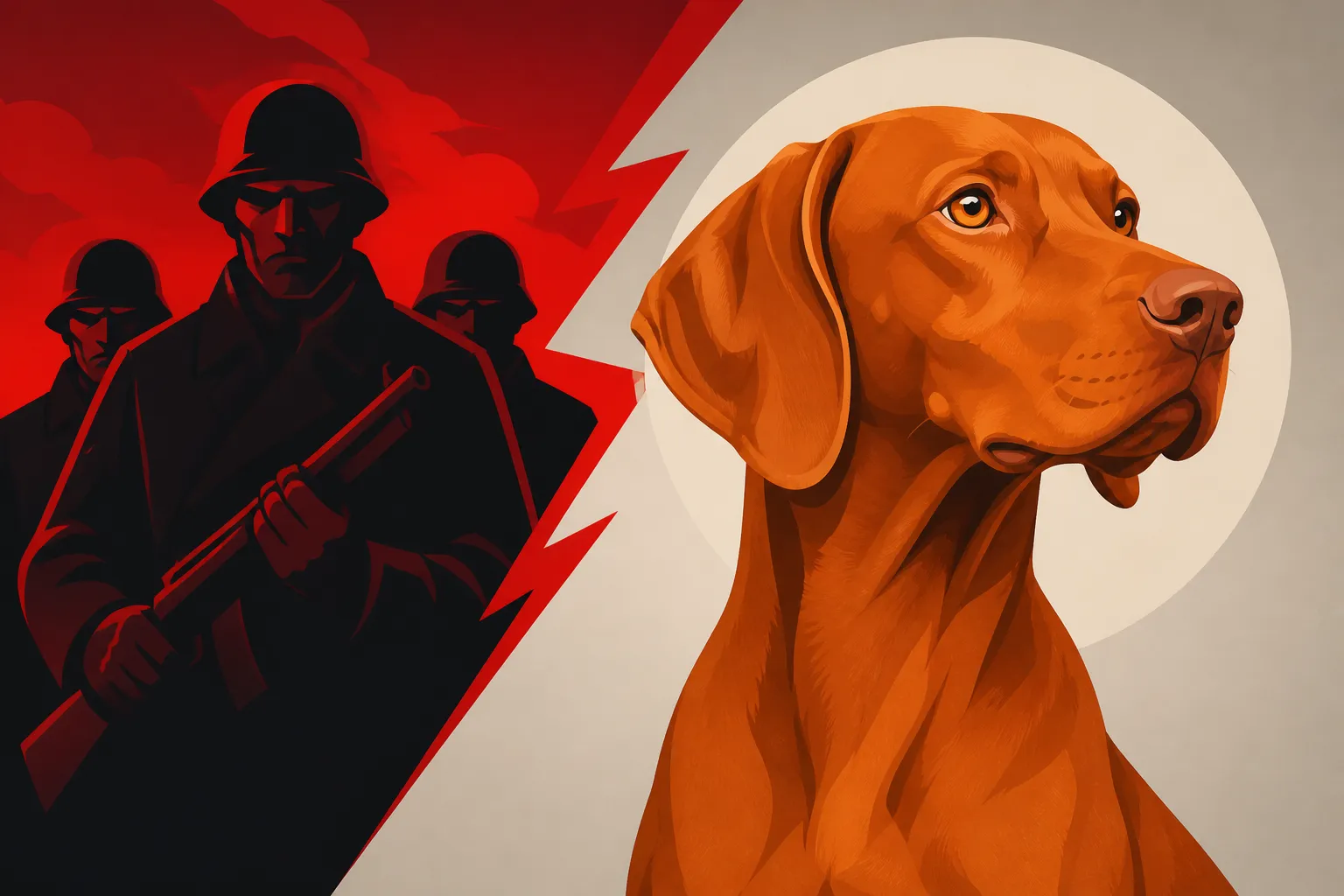
Why the Soviets Were a Problem for the Vizsla
For Vizsla enthusiasts and prospective owners, it’s easy to look at this magnificent, affectionate breed today and forget that its very existence has hung by a thread more than once throughout history. The Soviet occupation of Hungary, following the devastation of World War II, presented one of the most critical and challenging periods for the survival of the Vizsla, pushing an already fragile breed to the brink of true extinction. This guide will delve into the unique circumstances that made this era so perilous for the Hungarian Pointer and how its survival became a testament to human dedication and the enduring spirit of the dogs themselves.
The Vizsla's Precarious Foothold Before the Storm
Before the ominous clouds of the Soviet era gathered, the Vizsla was already a breed acquainted with adversity. Its history, dating back centuries to the Magyar tribes, had been punctuated by periods of decline where its numbers dwindled to alarmingly low levels. By the turn of the 20th century, the breed faced its second major crisis, teetering on the edge of oblivion. It took the dedicated efforts of a handful of Hungarian fanciers, gathering the last few remaining purebred Vizslas, to initiate a painstaking revival.
This meant that the Vizsla that entered the 20th century was already genetically vulnerable. The breed was essentially rebuilt from a very small gene pool, a handful of dogs that carried the torch for future generations. While these efforts were heroic and successful in preventing immediate extinction, they left the breed with a relatively narrow genetic foundation. This inherent fragility meant that any significant external pressure could easily push them back into a critical state, making them particularly susceptible to the widespread disruption and hardship that the coming decades would bring. They were a breed defined by their unique "golden rust" color and exceptional hunting ability, but their numbers were still recovering, and their geographic distribution was almost exclusively within Hungary.
Rebuilding From the Brink of Extinction
The concerted efforts of breeders in the early 1900s managed to pull the Vizsla back from its first modern brush with extinction. They scoured the Hungarian countryside, seeking out any remaining examples of the purebred pointer, often finding them in remote villages where traditional hunting methods preserved the old lines. These dedicated individuals understood the cultural and historical significance of the Vizsla, not just as a hunting companion, but as a living symbol of Hungarian heritage.
The commitment was immense, involving meticulous record-keeping and careful breeding to slowly increase the population while trying to maintain breed type and working ability. We even know that The Twelve Dogs the Vizsla Was Rebuilt From in 1900 formed the foundation of the modern Vizsla. This period saw the formalization of the breed standard and the establishment of the first breed clubs, all working towards securing the Vizsla's future. However, this success was hard-won and still tentative, meaning the Vizsla entered the mid-20th century without the robust, widespread numbers that more popular breeds enjoyed. They were still, in many ways, a hidden gem, cherished by a devoted few but unknown to most of the world.
Geographical Isolation and Limited Numbers
Hungary, being the ancestral home of the Vizsla, was naturally where the vast majority of the breed resided. This geographical concentration, while fostering a strong connection to their roots, also made them incredibly vulnerable to localized disasters. Without populations spread across different countries, any major upheaval within Hungary itself posed an existential threat to the entire breed. There simply wasn't a robust "backup" population elsewhere in the world to ensure continuity.
This isolation compounded the genetic bottleneck. With limited opportunities for outcrossing, even within Hungary, the breed's gene pool remained relatively closed. While this helped preserve their distinctive traits, it also meant less genetic diversity, which can be a double-edged sword when faced with environmental changes, disease, or, in this case, political and social turmoil. When the Iron Curtain descended, this geographical isolation would become a cruel barrier, trapping the precious few Vizslas within the very country that was about to experience profound hardship.
The Devastation of World War II
World War II swept across Europe like a destructive wildfire, leaving widespread devastation in its wake. For Hungary, strategically located and caught between warring factions, the impact was catastrophic. The war brought not only immense human suffering but also decimated animal populations, including beloved pets and working dogs like the Vizsla. The chaos, famine, and displacement of people directly translated into the loss of countless dogs.
As cities were bombed and rural areas became battlegrounds, the very infrastructure supporting dog breeding and ownership collapsed. Food became incredibly scarce, making it nearly impossible to sustain large, active dogs. Many Vizslas were killed during bombings, starved, or simply lost amidst the mass exodus of people fleeing danger. Breeders, struggling to keep their families alive, often had no choice but to let their dogs go or face the agonizing decision of euthanasia. This era set a grim stage for the subsequent Soviet occupation, further reducing the Vizsla population and making their survival even more uncertain.
Loss of Breeding Stock and Records
The systematic breeding programs that had painstakingly rebuilt the Vizsla population in the early 20th century were shattered by the war. Kennels were destroyed, vital breeding records were lost, and experienced breeders themselves were displaced, imprisoned, or killed. This loss of institutional knowledge and physical assets was a devastating blow to the breed's continuity. It wasn't just about losing individual dogs; it was about losing entire lines, the careful genetic planning, and the collective memory of generations of dedicated fanciers.
Imagine trying to restart a complex project from scratch, but all your notes, your equipment, and many of your team members are gone. That was the challenge facing the Vizsla. The remaining dogs, scattered and often unregistered, became even more precious. Identifying purebred animals, let alone finding suitable mates, became an immense task in the post-war chaos. The future of the Vizsla hung by a thread, precariously dependent on the few individuals who retained fragments of the breed's legacy and harbored a desperate hope for its future.
Widespread Famine and Displacement
The post-war landscape under Soviet influence was marked by severe economic hardship and widespread famine. Food was rationed for humans, and feeding a large, active dog like a Vizsla became an unsustainable luxury for many. Starvation claimed many dogs, or owners were forced to abandon them as they migrated in search of food and safety. The traditional role of the Vizsla as a hunting companion also diminished as hunting grounds were affected by war, and sustenance became the primary focus.
Moreover, the mass displacement of people meant that many Vizslas were separated from their families. A dog accustomed to a close bond with its owner, as Why They Call It a Velcro Vizsla explains, would have suffered immensely from this separation. Dogs wandered the ruined landscapes, often falling victim to disease, accidents, or the harsh realities of survival without human care. The notion of careful breeding and planned matings became an impossible dream amidst the desperate struggle for daily existence, further depleting the breed's numbers and threatening its genetic future.
The Iron Curtain and Political Suppression
With the end of World War II, Hungary fell under Soviet influence, eventually becoming part of the Eastern Bloc. The establishment of the Iron Curtain cut off Eastern European countries from the West, profoundly impacting every aspect of life, including dog breeding. For the Vizsla, a breed deeply intertwined with Hungarian aristocracy and hunting traditions, this new political landscape presented unique and formidable challenges.
The communist regime often viewed "luxury" breeds, or those associated with the old aristocracy, with suspicion. Owning such a dog could be seen as a symbol of dissent or a tie to the past that the new government sought to erase. This made open breeding and showing of Vizslas dangerous and discouraged. Travel restrictions made it virtually impossible to export or import dogs, effectively isolating the remaining Hungarian Vizslas from any potential new bloodlines that might have existed in Western Europe or America. The breed, already weakened, was now effectively imprisoned within its own homeland, facing systemic suppression.
Declining Interest and Economic Hardship
Under Soviet rule, the priorities of the state shifted dramatically. Dog breeding, especially for non-utility breeds, was not supported and often viewed as a frivolous pursuit. Economic hardships meant that few people had the resources, time, or inclination to maintain a breeding program. The idea of keeping an active hunting dog for sport was often discouraged when food production and basic survival were paramount.
This resulted in a steep decline in interest in the Vizsla within Hungary. Without a vibrant community of breeders and enthusiasts, the knowledge and dedication needed to sustain the breed began to erode. Puppies were harder to sell, and maintaining a kennel became an economic burden rather than a passion. The official narrative promoted practical, working-class values, and a dog synonymous with noble hunting traditions simply didn't fit that mold. This systemic discouragement chipped away at the breed's foundation, making its survival a quiet, underground act of resistance.
The Vizsla as a Symbol of the Past
For centuries, the Vizsla had been the cherished companion of Hungarian nobility, a symbol of status and a testament to the country's rich hunting heritage. Under the communist regime, anything associated with the aristocracy or the pre-socialist era was often suppressed or actively dismantled. The Vizsla, with its regal bearing and historical ties, inadvertently became a symbol of the very past the new government sought to distance itself from.
This perception meant that owning and especially breeding Vizslas could draw unwanted attention. Fanciers often had to carry out their breeding activities discreetly, almost in secret, to avoid official scrutiny or punitive measures. The cultural significance that once protected the breed now, paradoxically, endangered it. This shift in perception added another layer of difficulty to an already challenging environment, forcing those who loved the Vizsla to become clandestine guardians of their national treasure.
Heroic Efforts to Save the Breed: The Smugglers
Amidst the darkness and suppression, glimmers of hope emerged through the extraordinary courage of individuals. Recognizing the dire threat to the Vizsla, a brave few risked everything to smuggle dogs out of Hungary, ensuring that the breed's genetic material survived beyond the Iron Curtain. These were not casual acts; they were dangerous undertakings, often involving clandestine border crossings and ingenious methods to conceal the precious cargo.
These individuals understood that if the Vizsla was to survive, it needed to establish footholds in countries where political freedom and economic stability allowed for dedicated breeding programs. Each smuggled dog represented a lifeline, a chance for the breed to flourish anew in a safer haven. Their actions, often driven by pure love for the breed and a profound sense of historical responsibility, laid the groundwork for the Vizsla's global presence today. Without these selfless acts, the vibrant Vizsla community we know now would likely not exist.
Panni XV and the Escape to America
One of the most famous and crucial stories of Vizsla rescue during this period centers around a female Vizsla named Panni XV. Her journey represents the harrowing plight and miraculous survival of the breed. Smuggled out of Hungary in 1950, Panni XV made her way to America, where she became a pivotal figure in establishing the Vizsla in North America. Her story is legendary, a testament to the risks taken and the determination of those involved. The Vizsla Named Panni XV Carried Out of Hungary wasn't just a dog; she was a vessel of hope, carrying the future of her kind.
Her arrival in the United States, facilitated by dedicated individuals, sparked renewed interest and provided much-needed new blood for the nascent American Vizsla population. Imagine the immense challenge: transporting a sensitive, active dog across borders, through war-torn regions, and eventually across an ocean, all while trying to avoid detection. These journeys were fraught with danger for both the humans and the dogs, but the reward – the preservation of a national treasure – was deemed worth every risk. Her descendants and the lines she helped establish form a significant part of the Vizsla ancestry in the West.
Establishing New Bloodlines Abroad
The dogs that were successfully smuggled out of Hungary, like Panni XV, became the foundation stock for Vizslas in Western Europe and North America. These émigré dogs were meticulously sought out and bred, forming the core of new populations. Breeders in free countries, often Hungarian ex-pats who understood the breed's plight, took on the responsibility of not just propagating the Vizsla but also preserving its unique characteristics and working abilities.
This period was critical for the breed's genetic diversity, albeit from a small starting point. While the gene pool initially remained narrow, the establishment of separate breeding populations outside of Hungary meant that if disaster struck again in the homeland, the breed would not be lost entirely. This was a monumental effort, requiring careful planning, collaboration, and a deep understanding of genetics to ensure healthy, typey puppies. Products like specialized puppy food available from retailers such as Chewy would have been unimaginable luxuries for these early breeders, who often relied on basic, homemade rations to nourish their precious stock.
The Vizsla Finds Sanctuary: North America and Western Europe
As the Iron Curtain solidified its grip on Eastern Europe, the West became the refuge for the Vizsla. North America, in particular, offered fertile ground for the breed to not only survive but thrive. Dedicated breeders and enthusiasts, often inspired by the stories of smuggled dogs, began to import and establish breeding programs. This marked a turning point, moving the Vizsla from an endangered national treasure in Hungary to a beloved and growing breed on the international stage.
The freedom to breed, exhibit, and enjoy dogs without political interference allowed the Vizsla to re-establish itself. Kennel clubs recognized the breed, and the numbers slowly began to climb. The breed's distinct "golden rust" color, intelligence, and affectionate nature quickly won over new admirers, ensuring a future far removed from the struggles of its homeland. This newfound sanctuary provided the stability and resources necessary for the Vizsla to recover and eventually flourish, ensuring its survival for generations to come.
Formal Recognition and Growing Popularity
The arrival of Vizslas in North America paved the way for their formal recognition by major kennel clubs. The Year the AKC Recognized the Vizsla was a significant milestone, granting the breed official status and allowing them to compete in dog shows and performance events. This recognition brought legitimacy and visibility, attracting more enthusiasts and potential owners. The breed's unique blend of hunting prowess, striking appearance, and devoted temperament quickly made it a favorite among those looking for an active family companion.
As their popularity grew, so did the number of dedicated breeders. While initially working with a limited gene pool, these breeders meticulously selected their breeding stock to ensure health and adherence to the breed standard. The ability to freely advertise and distribute puppies meant that the Vizsla could spread across the continent, finding homes with families, hunters, and competitors alike. This expansion was vital for the breed's long-term security, spreading the risk and ensuring that no single event could again threaten its existence.
Divergent Bloodlines: Hungarian vs. Western Vizslas
The period of isolation under the Iron Curtain inevitably led to a divergence in the Vizsla breed. The small populations that remained in Hungary, largely cut off from the Western dogs, continued to be bred within their own limited gene pool. Meanwhile, the Vizslas in North America and Western Europe developed their own distinct lines, often with different breeding goals emphasizing certain aspects of conformation or working ability.
This historical split sometimes leads to questions about whether Hungarian and Western Vizslas are priced differently or if there are discernible differences in temperament or appearance. While both uphold the core Vizsla standard, subtle variations can exist due to decades of separate breeding decisions and the original foundation stock. Today, with the Iron Curtain long gone, there's renewed interest in occasionally reintroducing Hungarian lines to Western ones, and vice versa, to broaden the overall gene pool and reinforce desired traits. This historical context highlights the profound impact of political borders on the very genetics of a living breed.
The Enduring Legacy and Genetic Considerations
The Soviet era's impact on the Vizsla is a stark reminder of how political events can shape the biological future of a species. While the breed ultimately survived, it did so by traversing a significant genetic bottleneck. This means that all modern Vizslas, regardless of where they live, trace their ancestry back to a relatively small number of individuals who survived the war and the subsequent period of suppression.
This history has profound implications for the breed's health and genetic diversity today. While dedicated breeders work tirelessly to mitigate these effects, the past still casts a long shadow. Understanding this difficult period is not just about historical curiosity; it's about appreciating the breed's resilience and recognizing the ongoing responsibility of current and future Vizsla owners and breeders to protect its health and genetic integrity. The fact that the Vizsla is with us today is a testament to the powerful bond between humans and their canine companions, a bond that transcended political divides and threats of extinction.
The Impact on Genetic Diversity
The significant reduction in the Vizsla population during and after World War II, coupled with the subsequent isolation under the Iron Curtain, created a severe genetic bottleneck. This means that genetic diversity within the breed is inherently more limited than in breeds with a more extensive and uninterrupted history. Such a narrow gene pool can increase the prevalence of certain inherited health conditions because there's less variety in the genetic code to buffer against recessive genes carrying diseases. This is why discussions around Why a Vizsla's Immune System Is the Breed's Weak Point or Whether Polymyopathy Runs in Vizsla Lines are so important, as such vulnerabilities can often be traced back to a restricted gene pool.
For modern breeders, understanding this genetic legacy is paramount. It necessitates careful health screening of breeding dogs and an awareness of pedigree lines to avoid inadvertently concentrating undesirable traits. Tools like genetic testing and open registries help breeders make informed decisions to preserve and, where possible, enhance the genetic health of the breed. Even something as simple as choosing a reputable source for their dog's food, like a specific brand from Chewy, takes on a deeper meaning when considering the overall well-being of a breed with such a challenging genetic past.
Learning from the Past for Future Health
The Vizsla's near-extinction during the Soviet era offers crucial lessons for responsible breeding practices today. It underscores the importance of maintaining genetic diversity and the dangers of allowing a breed to become too insular. Breeders are constantly striving to balance preserving the unique "type" and working characteristics of the Vizsla with the need to ensure robust health. This involves advocating for comprehensive health testing, participating in breed-wide health initiatives, and being transparent about health issues within their lines.
The vigilance of breeders and owners continues to be the breed's best defense against the long-term effects of its historical challenges. It’s about building on the legacy of those who risked everything to save the Vizsla, ensuring that the breed not only survives but thrives for many more centuries. The average age a Vizsla reaches, and the quality of their life, are directly influenced by these ongoing efforts to maintain a healthy and vibrant gene pool. The Average Age a Vizsla Reaches is a direct reflection of the success of these health-focused breeding programs.
Conclusion: A Testament to Resilience
The story of the Vizsla during the Soviet era is a powerful narrative of survival against overwhelming odds. It's a testament to the breed's inherent resilience, the unwavering dedication of its human champions, and the deep, intrinsic value that these magnificent dogs hold for those who know and love them. From near-extinction post-World War I, through the devastation of World War II, and then under the political oppression of Soviet occupation, the Vizsla repeatedly stared into the abyss and, through sheer force of will and human intervention, pulled back.
Today, when we see a Vizsla gracefully quartering a field, joyfully retrieving a bird, or simply snuggled lovingly on the sofa, we are witnessing the living legacy of this incredible journey. Each golden rust dog is a reminder of a time when its existence was a defiant act of hope. It calls upon us to remember their history, to cherish their unique qualities, and to continue the work of preserving their health and ensuring their future. The Vizsla, a true survivor, reminds us that beauty, loyalty, and tradition are worth fighting for, no matter the cost.
| Era | Key Challenges for Vizsla Survival | Human Response / Impact on Breed |
|---|---|---|
| Pre-Soviet (Early 1900s) | Near extinction, narrow gene pool, confined to Hungary | Dedicated breeders rebuilt the breed from few survivors. |
| World War II (1939-1945) | Widespread conflict, famine, loss of homes, destruction of kennels | Massive population decline, loss of breeding stock, shattered records. |
| Soviet Occupation (Post-1945) | Iron Curtain, political suppression, economic hardship, isolation | Clandestine breeding, smuggling efforts, breed endangered in homeland. |
| Post-Soviet (Present) | Genetic bottleneck, need for diversity, specific health concerns | International breeding programs, health testing, global appreciation. |
Disclaimer
This article is for general informational purposes only and does not constitute professional advice. Laws, prices and regulations vary by location and change over time. Consult a qualified professional for guidance on your specific situation.