Whether a Vizsla Gets Hot Spots
It’s a truly unsettling feeling to run your hand over your beloved Vizsla’s silky coat, only to discover a sudden, angry, weeping patch of skin that wasn’t there just hours before. These rapidly appearing, raw, red lesions, often called "hot spots" by dog owners, are more formally known as acute moist dermatitis, and they can cause your otherwise stoic Vizsla significant discomfort. This guide will delve into why Vizslas seem particularly prone to these frustrating skin flare-ups, how to spot them early, and what you can do to treat and prevent them, offering some peace of mind in managing your active companion's delicate skin.
Understanding Hot Spots and Why Vizslas Are Prone
Hot spots are essentially a bacterial skin infection that starts when something irritates the skin, leading your dog to lick, chew, or scratch the area excessively. This self-trauma quickly breaks the skin barrier, creating a moist, warm environment where bacteria, normally present on the skin, multiply rapidly. The result is a vicious cycle: the licking makes it worse, which makes it itchier, which leads to more licking, and so on.
Vizslas, with their unique physiology, can be particularly susceptible to hot spots for a few reasons that often catch owners by surprise.
The Vizsla's Delicate Skin and Coat
One of the defining characteristics of a Vizsla is its beautiful, short, smooth, single coat. Unlike breeds with thick undercoats, your Vizsla's skin is less protected from environmental irritants. This thin skin is actually a remarkable adaptation for their work in the field, allowing them to regulate their body temperature efficiently when running hard. However, it also means that their skin can be more vulnerable to abrasions, insect bites, and other minor traumas that could go unnoticed or cause less irritation on a dog with a denser coat. A simple scratch or an encounter with a thorny bush while hunting can easily become a starting point. Think about The Thin Skin a Vizsla Takes Into the Field – it’s a blessing for their performance but a liability for their skin integrity.
Furthermore, this single coat, while easy to maintain in terms of shedding, means moisture can sit closer to the skin, especially if they’ve been swimming or romping through wet grass. If not dried thoroughly, this dampness creates the perfect breeding ground for bacteria to take hold, turning a minor irritation into a full-blown hot spot within hours. This is why you need to be so diligent about drying them off after any water exposure. Understanding The Single Coat a Vizsla Has and Why It Changes Everything really helps you grasp these unique care needs.
Common Triggers for Vizsla Hot Spots
Beyond their skin type, several factors frequently trigger hot spots in Vizslas:
- Allergies: This is a huge one for many Vizslas. They can suffer from environmental allergies (pollen, dust mites, molds), food allergies, or even contact allergies. When an allergen causes their skin to itch, they scratch and lick, starting the hot spot cycle. If your Vizsla is constantly chewing their paws or rubbing their face, it might be an underlying allergy, and a hot spot could develop in any of those irritated areas. This is why exploring Whether a Vizsla Reacts to Its Food or other allergy sources is crucial.
- Insect Bites: A single flea bite can be enough to trigger an allergic reaction in some dogs, leading to intense itching and subsequent hot spot development. Mosquitoes, ticks, or even spider bites can also be culprits. Regular, effective parasite control is non-negotiable for Vizslas.
- Moisture Trapping: As mentioned, their short coat means water can sit right against the skin. If your Vizsla loves to swim, or you're out hunting in wet conditions, pay extra attention to thoroughly drying them afterwards. Areas like behind the ears, armpits, and under the tail are particularly prone to staying damp. This also connects to Whether a Vizsla's Ears Should Be Dried After Water as moisture in and around the ears can lead to itching and subsequent hot spots on the neck or cheek.
- Ear Infections: If your Vizsla is shaking its head or scratching its ears due to an infection, it's very easy for a hot spot to develop right behind the ear or on the side of the face. Whether a Vizsla Gets Ear Infections is a common concern for the breed, and addressing ear health proactively can prevent these secondary skin issues.
- Poor Grooming/Matted Fur (even short-haired dogs!): While Vizslas don't get traditional mats, any debris, mud, or even shedding hair that gets trapped can cause irritation. Regular brushing, even for their short coat, helps remove loose hair and allows you to inspect their skin closely.
- Stress or Boredom: Believe it or not, some Vizslas, being highly intelligent and sensitive, can develop compulsive licking behaviors when stressed, anxious, or bored. This obsessive licking can create a hot spot out of nothing. Teaching a Vizsla to Be Alone and providing ample mental and physical stimulation can help prevent this.
Recognizing Hot Spots on Your Vizsla
The key to successfully managing hot spots is early detection. They can go from a small red patch to a significant, oozing lesion in mere hours, especially on a Vizsla who is dedicated to licking.
What a Hot Spot Looks Like and Where to Find Them
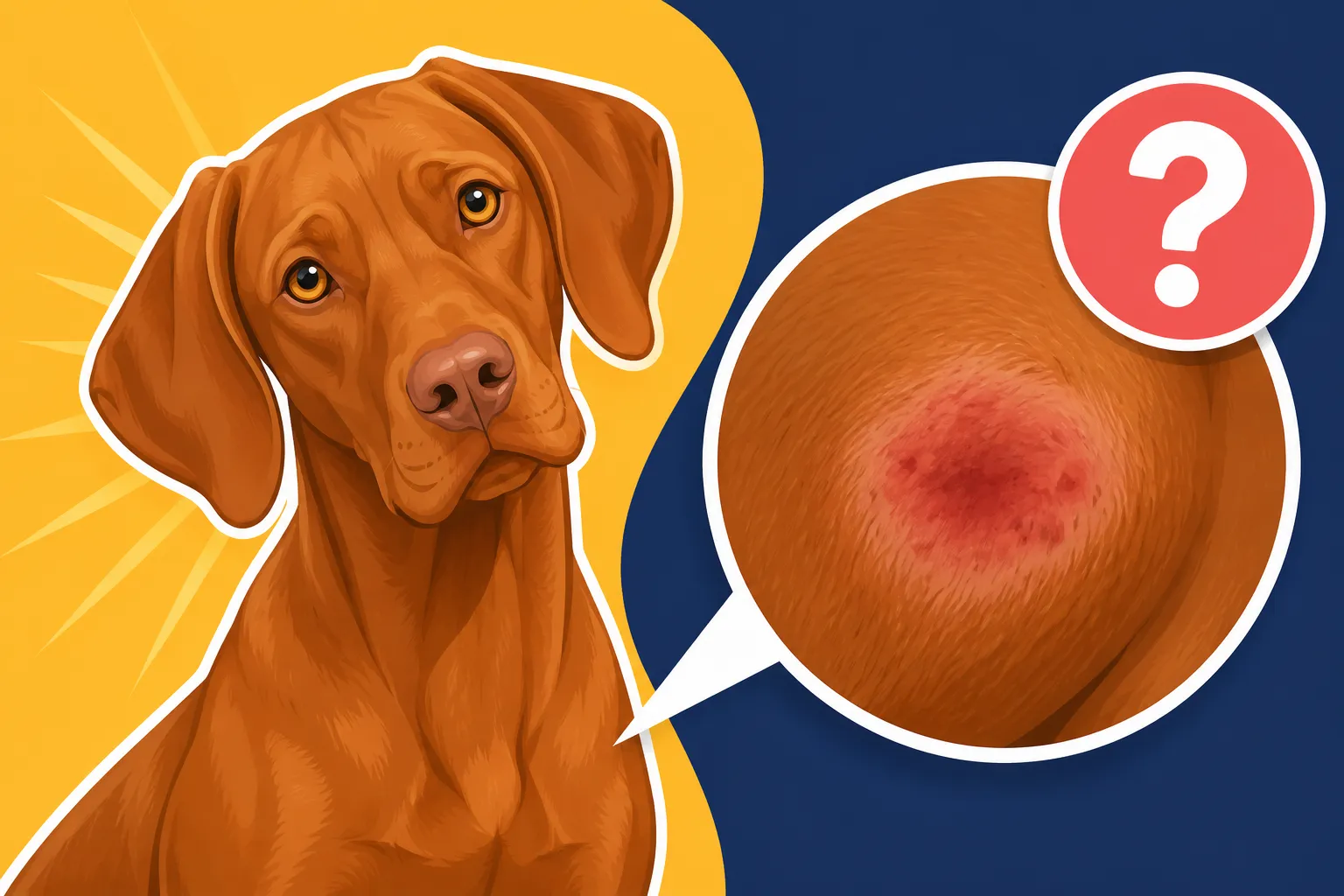
When a hot spot first appears, it might just look like a small red bump or patch of skin. But quickly, it progresses. You'll notice:
- Redness and Inflammation: The area will be noticeably redder than the surrounding skin, often appearing angry and inflamed.
- Moisture and Oozing: This is the "moist" part of acute moist dermatitis. The lesion will often be wet, sticky, and may even ooze pus or serum. The surrounding hair will be matted with this fluid.
- Hair Loss: Due to the licking and chewing, and the inflammation itself, the hair in the affected area will often be gone, revealing the raw skin underneath. The hot spot typically expands outwards, so the area of hair loss will grow larger than the initial lesion.
- Pain and Tenderness: Hot spots are incredibly painful. Your Vizsla might flinch, cry out, or even try to snap if you attempt to touch the area.
- Rapid Growth: This is perhaps the most alarming characteristic. A hot spot can literally double in size overnight if left unattended, as the dog's licking perpetuates the irritation and infection.
Common locations for hot spots on a Vizsla include:
- Neck and Chest: Often linked to collar irritation, or licking due to stress or allergies.
- Hips and Flanks: Frequently seen if your Vizsla is constantly chewing or scratching due to fleas, environmental allergies, or underlying joint pain.
- Base of the Tail: Another common spot for flea allergy dermatitis.
- Behind the Ears/Cheeks: Can be secondary to ear infections or generalized head itching.
- Paws: While not always a typical hot spot, persistent licking of paws due to allergies can lead to similar raw, inflamed areas between the toes or on the paw pads.
Behavioral Signs to Watch For
Your Vizsla might be a stoic dog, but hot spots are hard to ignore. Watch for these behavioral cues:
- Excessive Licking, Chewing, or Scratching: This is the primary indicator. If your Vizsla is suddenly fixated on a particular spot, constantly licking or chewing at it, investigate immediately.
- Reluctance to Be Touched: Even the most affectionate Vizsla might pull away, whine, or show aggression if you try to touch the affected area.
- Restlessness or Discomfort: They might struggle to settle down, constantly shifting positions to avoid putting pressure on the painful spot.
- Limping (if on a leg/paw): If the hot spot is on a leg or paw, the pain might cause them to limp or favor the limb.
First Aid and Veterinary Treatment for Hot Spots
Once you've identified a hot spot, prompt action is critical. While some minor hot spots might be managed at home, many will require veterinary intervention due to their rapid progression and pain level.
At-Home First Aid for Minor Hot Spots
If the hot spot is very small (less than an inch) and your Vizsla is not showing extreme pain, you can attempt some initial first aid:
- Prevent Further Licking: This is paramount. An Elizabethan collar (e-collar or "cone of shame") is often the most effective tool. Without stopping the licking, any treatment will be futile. You can find various types of e-collars on Amazon or Chewy.
- Gently Trim the Hair: Using blunt-nosed scissors or electric clippers, carefully trim the hair from around and just beyond the edges of the lesion. This allows air to get to the area, helps you see the true extent of the hot spot, and prevents matted hair from trapping more moisture and bacteria. Be extremely careful not to cut your Vizsla's delicate skin, especially if it's inflamed.
- Clean the Area: Gently clean the hot spot with a mild antiseptic solution, such as diluted chlorhexidine or povidone-iodine solution. Avoid harsh chemicals or alcohol, which will sting and further irritate the raw skin. Pat dry thoroughly with a clean cloth or paper towel.
- Apply a Topical Treatment: For very minor spots, a topical antiseptic spray or cream containing hydrocortisone or an antibiotic may help. However, be cautious, as some over-the-counter products can worsen the problem or be toxic if ingested. Always check with your vet first.
When to See the Veterinarian
It's always best to err on the side of caution with Vizslas and hot spots. You should definitely contact your vet if:
- The hot spot is larger than an inch or seems to be growing rapidly.
- It's deep, very red, or has significant pus/oozing.
- Your Vizsla is in obvious pain, aggressive when you try to treat it, or seems generally unwell.
- The hot spot is not improving within 24-48 hours of your at-home care.
- It's in a sensitive area like near the eye or genitals.
- This isn't the first time, suggesting an underlying chronic issue.
Your vet will likely:
- Clip and Clean: They will thoroughly clip the hair around the lesion and clean it with professional antiseptic solutions.
- Prescribe Medications:
- Antibiotics: Often oral antibiotics are prescribed to combat the bacterial infection, as topical treatments alone might not be sufficient.
- Anti-inflammatories/Steroids: Topical or oral corticosteroids can quickly reduce inflammation and itching, providing much-needed relief and breaking the lick-scratch cycle.
- Pain Relief: Because hot spots are so painful, your vet might prescribe pain medication to keep your Vizsla comfortable during healing.
- Medicated Shampoos/Sprays: For persistent or recurring issues, your vet might recommend specific medicated shampoos or sprays, which you might find on Chewy or at your local pet supply store, to help manage the skin. This ties into Whether a Vizsla Needs Medicated Baths for Life if the hot spots are chronic and widespread.
| Hot Spot Severity | At-Home Action (First 24 hrs) | Veterinary Action (Recommended) | Potential Outcomes Without Vet Care |
|---|---|---|---|
| Minor ( < 1 inch) | Trim hair, clean gently, e-collar. | May resolve with home care; vet visit if no improvement. | Can rapidly worsen, become deeply infected. |
| Moderate (1-3 inches) | E-collar immediately, gentle cleaning. | Prompt vet visit for antibiotics, anti-inflammatories. | High risk of spreading, severe pain, deeper infection. |
| Severe ( > 3 inches, deep, oozing) | E-collar immediately, prevent self-trauma. | Urgent vet visit for clipping, cleaning, oral meds, pain management. | Extreme pain, widespread infection, potentially systemic illness. |
Preventing Future Hot Spots in Vizslas
Prevention is always better than cure, especially with something as painful and fast-spreading as a hot spot. Given your Vizsla’s sensitive skin and active lifestyle, a proactive approach is essential. This is part of Managing a Vizsla's Skin for Life.
Comprehensive Skin and Coat Care
- Regular Inspections and Grooming: Even with their short coat, regular brushing (daily or every other day) is beneficial. It helps remove loose hair, distribute natural skin oils, and, most importantly, allows you to thoroughly inspect your Vizsla's skin for any redness, bumps, bites, or excessive licking. Early detection is a game-changer.
- Thorough Drying: This cannot be stressed enough. After swimming, bathing, or even a long walk in dewy grass, ensure your Vizsla is completely dry. Pay special attention to areas like behind the ears, between the toes, and under the armpits. A quick towel dry is usually sufficient, but for dogs prone to hot spots, you might consider a dog-specific blow dryer on a cool setting. Consider how this prevents issues mentioned in Keeping a Vizsla's Ears Clear After Water Work.
- Parasite Control: A robust, year-round flea, tick, and mite prevention program is absolutely critical. Discuss the best options with your vet, as different products work for different dogs and environments. One bite from a flea can be enough to trigger a severe allergic reaction in a sensitive Vizsla.
Managing Underlying Conditions
- Allergy Management: If your Vizsla suffers from allergies, addressing them is key to preventing hot spots. This might involve:
- Dietary Changes: If food allergies are suspected, your vet might recommend an elimination diet or a specialized prescription diet. Many owners explore fresh food options like Ollie for sensitive stomachs, which can sometimes reduce allergen exposure compared to some traditional kibbles. Remember to read Whether a Vizsla Has a Sensitive Stomach for more on this.
- Environmental Allergy Control: This can involve frequent bathing with hypoallergenic shampoos, wiping paws after outdoor excursions, using air purifiers, or, in severe cases, allergy medications or immunotherapy.
- Ear Health: Proactively manage any recurrent ear infections. Regular cleaning with a vet-approved ear cleaner can help, especially for active dogs who get their ears wet. Preventing ear issues directly reduces the risk of head-shaking and subsequent hot spots on the face or neck.
- Stress and Anxiety: For Vizslas prone to stress-induced licking, addressing the root cause of their anxiety is important. This might involve behavior modification, increased exercise and mental stimulation, or, in some cases, veterinary-prescribed anti-anxiety medication.
Nutritional Support for Skin Health
A well-balanced diet is the foundation of good skin health. Ensure your Vizsla is eating a high-quality dog food appropriate for their activity level.
- Omega-3 Fatty Acids: Supplements rich in Omega-3s (like fish oil) can significantly improve skin barrier function and reduce inflammation, making the skin less reactive. Many Vizsla owners swear by them for maintaining a healthy coat and skin. Whether a Vizsla Needs Fish Oil is a relevant topic for this very reason. You can find quality fish oil supplements on platforms like Chewy.
By being vigilant and proactive, you can significantly reduce the chances of your Vizsla suffering from the painful inconvenience of hot spots. It's all about understanding their unique needs and providing consistent, thoughtful care.
Disclaimer
This article is for general informational purposes only and does not constitute professional advice. Laws, prices and regulations vary by location and change over time. Consult a qualified professional for guidance on your specific situation.