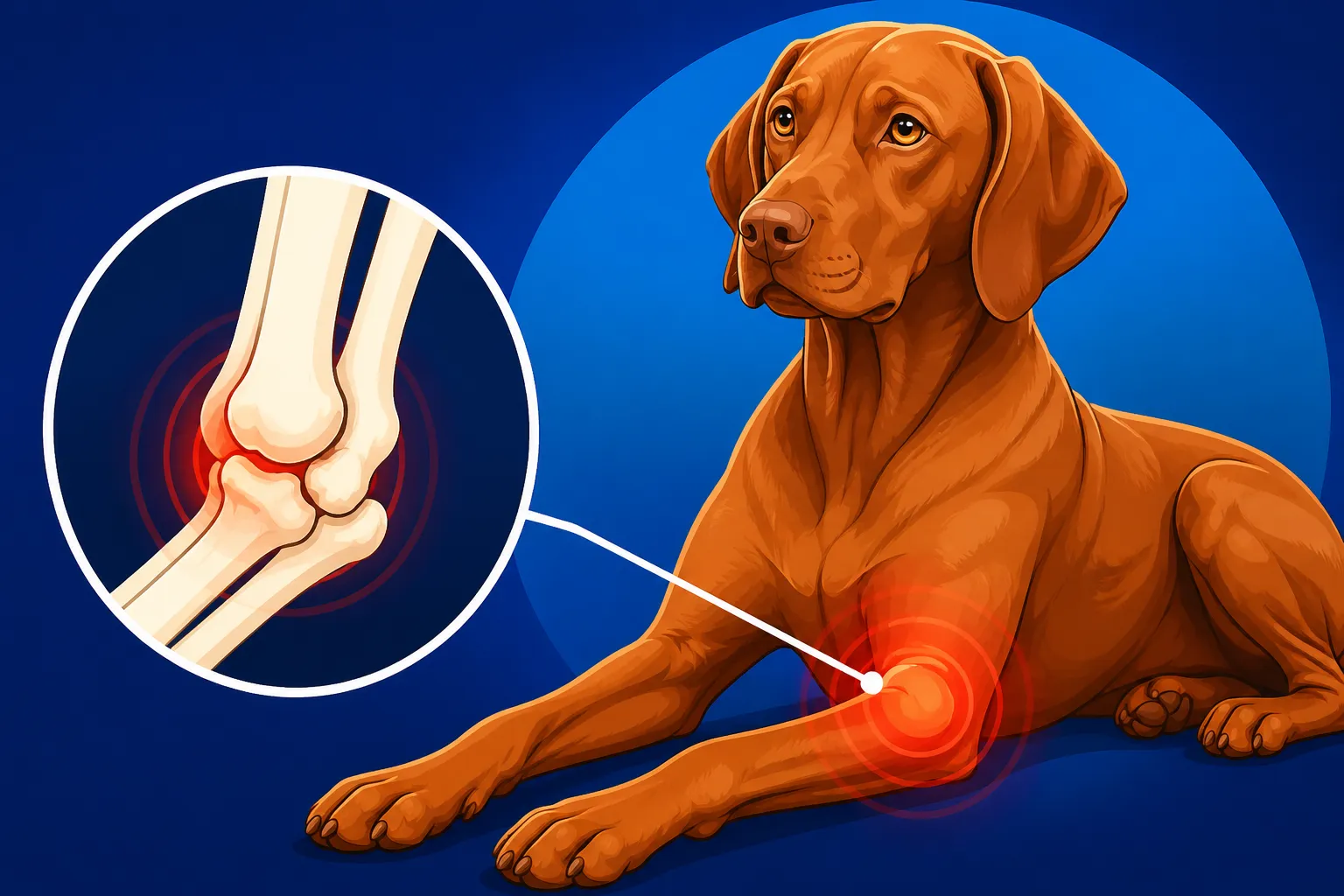
Elbow Dysplasia in a Vizsla
It's incredibly disheartening when your energetic Vizsla, known for its boundless enthusiasm and athletic prowess, starts to show signs of pain or stiffness, especially in those crucial front limbs. Many of us Vizsla owners push our dogs hard, whether in the field or on long hikes, and when a joint issue like elbow dysplasia surfaces, it can feel like a punch to the gut. This guide aims to thoroughly explore elbow dysplasia in Vizslas, covering everything from recognizing the subtle cues to understanding treatment options and long-term management, so you're equipped to give your beloved companion the best possible care.
Understanding Elbow Dysplasia in Vizslas
Elbow dysplasia (ED) is a complex and often misunderstood condition that can plague our active Vizslas. It's not a single disease, but rather a catch-all term for several developmental abnormalities that can occur in a dog's elbow joint. Given the Vizsla's high energy and active lifestyle, understanding this condition is vital for their long-term health and comfort.
What Exactly Is Elbow Dysplasia?
At its core, elbow dysplasia refers to a collection of abnormalities that occur during the growth phase of a dog, leading to improper formation of the elbow joint. This joint, located where the humerus (upper arm bone), radius, and ulna (forearm bones) meet, is incredibly intricate. When these bones don't grow at the same rate or develop correctly, it can lead to instability, pain, and eventually, debilitating arthritis.
There are four primary components that veterinary professionals commonly identify under the umbrella of elbow dysplasia. The first is an Ununited Anconeal Process (UAP), where a small bony projection on the ulna fails to fuse properly with the rest of the bone, leading to a loose piece. Then there's the Fragmented Coronoid Process (FCP), which is arguably the most common form of ED. Here, a small piece of bone or cartilage breaks off from the ulna's coronoid process, causing irritation and pain within the joint. Osteochondritis Dissecans (OCD) involves a flap of cartilage separating from the bone surface, most commonly on the end of the humerus, leading to inflammation and discomfort. Finally, Elbow Incongruity means that the three bones forming the elbow joint don't fit together perfectly, causing abnormal loading and wear and tear. All of these conditions cause friction, inflammation, and eventual degeneration of the joint cartilage, culminating in painful osteoarthritis.
Why Vizslas Are Prone to Elbow Issues
While elbow dysplasia is seen across many large and giant breeds, Vizslas, with their distinctive physiology and demanding exercise requirements, face particular risk factors. Their breed standard emphasizes an athletic build, designed for tireless work in the field. This means they are bred to be powerful runners and jumpers, putting immense strain on their joints, especially during their crucial puppy and adolescent growth stages.
The rapid growth rate that young Vizslas experience can be a significant contributing factor. During this period, their bones are developing quickly, and any imbalance in growth between the radius and ulna can lead to incongruity, even if subtle. This uneven development creates abnormal pressures within the joint, predisposing them to FCP or OCD. Furthermore, while Vizslas are perhaps more famously linked to hip dysplasia, genetic predisposition for elbow dysplasia is also a concern. Responsible breeders work hard to screen their breeding stock, but no breed is entirely immune, and the genetic complexity means environmental factors like diet and exercise during growth play a crucial role. For more on overall joint health, consider reading Hips and Elbows on a Vizsla That Runs All Day.
Spotting the Signs and Symptoms
Recognizing elbow dysplasia can be tricky, especially in a breed as stoic and energetic as the Vizsla. They are often masters at masking pain, driven by their innate desire to work and play. However, persistent observation can help you catch the early warning signs before the condition becomes severely debilitating.
Early Indicators in Puppies and Young Adults
The first signs of elbow dysplasia typically appear when your Vizsla is still a puppy or a young adult, usually between 4 and 18 months of age. You might notice a subtle, intermittent limp, often more pronounced after periods of strenuous exercise or immediately after waking up from a nap. This limping might improve after they "warm up" a bit, only to return later. Owners often describe a "head bob" when they walk, trying to shift weight off the painful limb.
Another common indicator is a reduced range of motion in the affected elbow. Your Vizsla might become reluctant to fully extend or flex their leg, leading to a stiff-legged gait. They might avoid activities like jumping into the car or onto furniture, or hesitate before going up and down stairs. Sometimes, you'll see them carrying one front leg slightly tucked in, or favoring one side when standing. If you gently palpate their elbow joint, you might notice warmth, swelling, or they may flinch in pain. Their boundless puppy energy can make these subtle changes hard to spot, as they'll often push through discomfort to continue playing. It's important to differentiate between temporary soreness and a persistent issue.
Progressive Symptoms in Mature Vizslas
As elbow dysplasia progresses and is left untreated, the symptoms tend to become more pronounced and persistent. What started as an intermittent limp can evolve into chronic lameness that is present almost constantly. The body attempts to stabilize the painful joint by laying down new bone, leading to the development of painful osteoarthritis, which further exacerbates stiffness and reduces mobility.
You might notice a visible change in your Vizsla's musculature, with muscle atrophy (wasting) occurring in the affected limb due to disuse, while the opposing limb might become overdeveloped from compensation. Stiffness will likely worsen, particularly in cold weather or after long periods of inactivity. Getting up from a lying position can become a slow, arduous process. Older Vizslas with long-standing elbow dysplasia will often lose interest in activities they once loved, such as running, fetching, or hunting, simply because the pain is too great. This can be heartbreaking for owners of such an active breed. Remember, Vizslas have a high pain threshold and can be quite stoic; for more on this, check out Whether a Vizsla Hides Its Pain. Don't wait until they are crying out in pain to seek veterinary advice, as significant damage may already be done.
Diagnosis and Veterinary Intervention
When you suspect your Vizsla might be struggling with elbow dysplasia, a prompt and thorough veterinary evaluation is essential. Early and accurate diagnosis can significantly impact the long-term prognosis and help preserve your dog's quality of life.
The Diagnostic Process
Your veterinarian will start with a comprehensive physical examination. This will involve observing your Vizsla's gait, feeling their joints, and assessing the range of motion in their elbows. They'll look for signs of pain, swelling, or crepitus (a grinding sound or sensation) during manipulation. Don't be surprised if your vet wants to see your dog walk and trot, as lameness can be more evident in motion.
The primary diagnostic tool for elbow dysplasia is radiography, commonly known as X-rays. Your vet will likely take several specific views of both elbows, as the condition often affects both sides, even if one seems worse than the other. These images allow the vet to look for bony fragments, joint incongruity, and signs of secondary osteoarthritis. In some cases, especially if the X-rays are inconclusive or a very specific lesion like FCP or OCD is suspected, your vet might recommend advanced imaging techniques such as a CT (Computed Tomography) scan or an MRI (Magnetic Resonance Imaging). These provide a much more detailed, three-dimensional view of the joint, helping to precisely identify the problem and plan the best course of action. For breeders, official screening programs like those offered by the Orthopedic Foundation for Animals (OFA) are crucial for evaluating elbow health in breeding stock. Understanding the importance of such screenings is key, and you can learn more by reading about The Health Tests Both Vizsla Parents Should Have.
Treatment Options: Surgical vs. Medical Management
Once elbow dysplasia is diagnosed, your vet will discuss a range of treatment options tailored to your Vizsla's specific condition, age, and severity of symptoms. These generally fall into two categories: surgical intervention and medical (conservative) management.
Surgical Intervention
Surgery is often recommended for younger dogs, especially when specific lesions like fragmented coronoid processes (FCP) or osteochondritis dissecans (OCD) are identified. The goal of surgery is to remove any loose cartilage or bone fragments, alleviate pain, and restore proper joint function. A common technique is arthroscopy, a minimally invasive procedure where a small camera and instruments are inserted into the joint through tiny incisions. This allows the surgeon to visualize the joint structures, remove fragments, and smooth rough surfaces with less trauma and a faster recovery than traditional open surgery. In cases of ununited anconeal process (UAP), the loose bone fragment might be reattached with a screw or, if severely degenerated, removed entirely. For severe elbow incongruity, corrective osteotomy, which involves cutting and realigning the bones, might be considered, though it's a more complex procedure. Post-surgical rehabilitation, often involving physical therapy and controlled exercise, is critical for a successful outcome.
Medical (Conservative) Management
For Vizslas with milder forms of ED, or those where surgery isn't an option (e.g., due to age, concurrent health issues, or advanced osteoarthritis), medical management focuses on pain control, inflammation reduction, and supporting joint health. Non-steroidal anti-inflammatory drugs (NSAIDs) are commonly prescribed to manage pain and inflammation. Other pain medications, like gabapentin, might be used in conjunction. Weight management is absolutely paramount; keeping your Vizsla lean dramatically reduces the load on their affected joints.
Controlled exercise, avoiding high-impact activities, and engaging in physical therapy, including hydrotherapy (swimming or underwater treadmill), can greatly improve muscle strength and joint mobility. Joint supplements containing ingredients like glucosamine, chondroitin, MSM, and omega-3 fatty acids are often recommended to support cartilage health. In some cases, your vet might suggest injections into the joint, such as corticosteroids for immediate inflammation reduction, or newer regenerative therapies like Platelet-Rich Plasma (PRP) or stem cell therapy, which aim to promote healing and reduce pain. It's important to remember that medical management often becomes a lifelong commitment, particularly as secondary osteoarthritis progresses.
Dealing with the potential costs of diagnostics, surgery, and long-term medical management can be a significant concern for pet owners. Services like Healthy Paws pet insurance can be a real lifesaver here, often covering a substantial portion of these expenses, from initial diagnostics to ongoing treatments for chronic conditions like elbow dysplasia, helping you focus on your Vizsla's recovery rather than the financial strain.
Living with Elbow Dysplasia and Prevention
Having a Vizsla with elbow dysplasia means making some adjustments to ensure their comfort and quality of life. It also highlights the crucial role of preventative measures, especially for those considering adding a Vizsla puppy to their family.
Long-Term Management and Quality of Life
Living with a Vizsla affected by elbow dysplasia requires dedication and a proactive approach. The goal is to minimize pain, slow the progression of osteoarthritis, and maintain as much mobility as possible. This often means adapting their exercise routine. High-impact activities like intense fetch, agility, or competitive field trials might need to be replaced with lower-impact options such as swimming, structured walks on soft surfaces, or even specific canine fitness exercises designed to build supporting muscle without stressing the joints.
Providing comfortable, supportive bedding is also essential. An orthopedic bed can relieve pressure on sore joints, and in colder climates, ensuring your Vizsla has a warm place to sleep, perhaps with a blanket or a dog coat, can help alleviate stiffness. For more on comfortable resting spots, you might find Beds That Suit an Arthritic Vizsla helpful. Regular vet check-ups are critical to monitor the progression of the disease and adjust medication or therapy as needed. Many owners find working with a certified canine rehabilitation specialist incredibly beneficial, as they can provide tailored exercise plans and utilize modalities like therapeutic ultrasound or laser therapy. Perhaps the most vital aspect of long-term management is maintaining your Vizsla at a lean, healthy weight. Every extra pound puts additional stress on already compromised joints. Even for a breed that burns calories like crazy, like the Vizsla, it's possible for them to carry excess weight, which you can read more about in Keeping Weight on a Vizsla That Burns Everything. This commitment allows your Vizsla to remain an active, happy member of your family for as long as possible, even if their definition of "active" changes over time.
Prevention Strategies for Vizsla Owners
While genetic factors play a significant role in elbow dysplasia, there are actionable steps owners and prospective owners can take to minimize the risk and impact of this condition.
Responsible Breeding Practices: For anyone considering a Vizsla puppy, researching the breeder thoroughly is paramount. Reputable breeders will actively screen their breeding stock for elbow dysplasia (and hip dysplasia) through programs like the OFA. They should be transparent about their dogs' health clearances and be able to provide documentation. Avoid breeders who don't perform these tests, as you could unknowingly be purchasing a puppy with a higher genetic predisposition for joint problems. This due diligence is a cornerstone of preventing inherited conditions.
Appropriate Exercise During Growth: This is a big one for Vizsla puppies! While their energy seems endless, it's crucial to avoid over-exercising them, especially high-impact activities like forced running, jumping from heights, or prolonged strenuous play on hard surfaces during their rapid growth phase (roughly up to 18 months). Their growth plates are still open and vulnerable to injury, which can contribute to the development of elbow dysplasia. Let them engage in free play on soft ground, but don't push them to exhaustion or participate in competitive activities too early. To understand more about managing exercise for young Vizslas, consider reading Whether a Vizsla Puppy Should Run on Hard Ground.
Optimal Nutrition: Feeding a high-quality, balanced diet specifically formulated for large-breed puppies can help ensure steady, controlled growth, rather than rapid growth spurts that can exacerbate joint development issues. Avoid overfeeding, which leads to excessive weight gain during growth, putting undue stress on developing joints. Always follow the guidelines provided by your breeder and veterinarian for feeding amounts.
Maintain Ideal Weight Throughout Life: As mentioned, a lean body condition is critical for joint health at any age. This is particularly true for an active breed like the Vizsla. Regular monitoring of their weight and body condition score will help ensure they aren't carrying unnecessary load on their elbows.
Early Detection and Intervention: Even with the best preventative measures, some Vizslas may still develop ED. Being vigilant about the early signs, no matter how subtle, and seeking prompt veterinary attention can make a huge difference in managing the condition and preserving your dog's long-term comfort.
The Financial and Emotional Toll of Elbow Dysplasia
Discovering your active Vizsla has elbow dysplasia can be a tough pill to swallow, not just for the emotional impact of seeing your dog in pain, but also due to the often-substantial financial implications of diagnosis and treatment.
Understanding the Costs Involved
The financial burden of elbow dysplasia can vary wildly depending on the severity of the condition, the chosen treatment path, and where you live. Initial diagnostics alone can add up; X-rays might cost a few hundred dollars, but if advanced imaging like a CT scan (often $1,500 – $3,000) is needed, the price tag jumps considerably.
If surgery is recommended, prepare for a significant investment. Arthroscopic surgery for conditions like FCP or OCD can range from $2,000 to $6,000 or more per elbow, especially if specialized equipment or extensive post-op care is required. Considering that many Vizslas might have both elbows affected, these costs can quickly double. Post-surgical rehabilitation, including physical therapy and hydrotherapy sessions, can add hundreds to thousands of dollars over several months.
Long-term medical management, while potentially less expensive than surgery upfront, accumulates over time. Monthly prescriptions for NSAIDs and other pain relievers, along with joint supplements, can cost anywhere from $50 to $200+ per month for the rest of your dog's life. Regular follow-up veterinary visits, diagnostic re-evaluations, and potential joint injections further contribute to the ongoing expenses. Comparing this to other significant orthopedic issues, the costs can be similar to or even exceed those for a condition like a What Cruciate Surgery Costs a Vizsla Owner.
This is where having robust pet insurance, such as a plan from Healthy Paws, becomes invaluable. Many owners find peace of mind knowing that a good policy can cover a large percentage of unexpected veterinary bills for chronic conditions like elbow dysplasia, helping them make treatment decisions based on their Vizsla's needs rather than their wallet. It truly changes the conversation from "Can I afford this?" to "What's best for my dog?" when faced with expensive treatments.
Navigating the Emotional Impact
Beyond the financial strain, the emotional toll of dealing with elbow dysplasia in your Vizsla can be profound. Vizslas are known for their exuberance and athleticism; watching them struggle with pain, lose their bounce, or be unable to participate in activities they once loved is heartbreaking. Many owners experience guilt, wondering if they pushed their puppy too hard, didn't feed the right diet, or if they somehow missed earlier signs. This is a common and understandable feeling, but it's important to remember that elbow dysplasia is multifactorial, with genetics often playing a significant, uncontrollable role.
The constant worry about your dog's comfort, the frustration of managing chronic pain, and the adjustment to a new normal for their activity levels can be stressful for the entire household. It can impact the bond you share, as you navigate their discomfort and adapt your routines. Patience becomes a virtue, and celebrating small victories in their mobility or comfort becomes incredibly important. Understanding that your Vizsla might not be able to hunt or run with the same intensity as before can be a difficult adjustment, for both you and them, especially as they age, as explored in The Old Vizsla That Still Wants to Hunt. Seeking support from your veterinary team, other Vizsla owners, or even a dog-specific support group can provide much-needed empathy and advice during this challenging journey.
Common Elbow Dysplasia Conditions and Treatment Approaches
| Condition | Description | Typical Age of Onset | Primary Treatment Approach |
|---|---|---|---|
| Fragmented Coronoid Process (FCP) | A small piece of the ulna's coronoid process breaks off. | 4-18 months | Arthroscopic removal of fragments, pain management |
| Osteochondritis Dissecans (OCD) | Cartilage flap detaches from the humerus, causing inflammation. | 4-18 months | Arthroscopic removal of flap, joint smoothing |
| Ununited Anconeal Process (UAP) | Bony projection on the ulna fails to fuse, creating a loose piece. | 5-12 months | Surgical reattachment or removal |
| Elbow Incongruity | Misalignment of the three elbow bones, leading to uneven joint loading. | Early growth | Corrective osteotomy (complex), medical management |
Disclaimer
This article is intended for informational purposes only and does not constitute veterinary advice. Always consult with a qualified veterinarian for any health concerns or before making any decisions about your Vizsla's care.