Whether a Vizsla Needs a Muzzle Guard in Thick Cover
It’s a familiar sight for any Vizsla owner: that beautiful, driven dog, nose to the ground, tearing through cover with an intensity that only a hunting dog can muster. But while their spirit is tough, their skin and muzzle are often surprisingly delicate, leaving them prone to nicks, scrapes, and more serious injuries when plunging into thick brush. This guide is here to help you navigate the tricky balance of protecting your Vizsla’s sensitive muzzle in dense environments without hindering their natural abilities or comfort.
Understanding the Vizsla's Vulnerability in the Field
Vizslas are magnificent athletes, bred for endurance and keen hunting instincts. They are designed to work tirelessly in various terrains, often pushing through obstacles that would deter less determined breeds. However, their physical characteristics, while contributing to their iconic look and performance, also present certain vulnerabilities, especially around their face and muzzle when encountering harsh vegetation.
The Vizsla's Unique Coat and Skin
One of the defining traits of a Vizsla is their short, sleek, "golden rust" coat. It’s undeniably handsome and contributes to their low-shedding, minimal-odor reputation. But unlike some breeds with dense double coats or coarse, wiry fur, the Vizsla's single, fine coat offers very little protection against physical abrasions. This means that thorns, sharp branches, and stiff grasses can easily penetrate their coat and scratch their skin.
Beneath that fine coat lies skin that is often described as thin and sensitive. This isn't just an aesthetic observation; it has real implications for their safety in the field. A Vizsla's skin is less resilient to cuts and punctures compared to breeds with thicker hides, making them more susceptible to injury from briars, sharp sticks, or barbed wire. The muzzle, in particular, is an area of concern because it's constantly in motion, pushing into cover as they scent and search, and is less protected by muscle and bone than other parts of the head. It's a key reason why many owners find themselves asking: The Thin Skin a Vizsla Takes Into the Field.
Common Injuries Without Protection
Without adequate protection, a Vizsla's muzzle can sustain a variety of injuries when working in thick cover. Minor abrasions are almost a given – small scratches and scrapes are part of the territory for any active hunting dog. However, these can escalate. Deep cuts from sharp branches or thorns are not uncommon and can require veterinary attention, including stitches, especially if they are actively bleeding or become infected. It's a constant worry for owners to ensure their Vizsla doesn't get a serious gash right on their delicate nose or around their lips.
Beyond cuts, the eyes are also at risk. While not directly covered by a muzzle guard, the constant pushing through dense foliage can flick debris into their eyes or cause corneal abrasions from branches springing back. Punctures around the muzzle can also lead to swelling, pain, and difficulty eating. Imagine trying to eat with a swollen, cut lip – it's no fun for a human, and certainly not for your dog. These injuries not only cause discomfort but can also sideline your dog from hunting for days or weeks, requiring rest and costly veterinary care. After every hunt, it's crucial to be diligent about Checking a Vizsla Over After a Hunt to catch any issues early.
Assessing the Need for a Muzzle Guard
Deciding whether your Vizsla truly needs a muzzle guard isn't a one-size-fits-all answer. It depends heavily on the specific environments your dog works in, their individual hunting style, and even their natural caution or lack thereof. It's about weighing the risks against the potential benefits and drawbacks of adding extra gear.
Types of Cover and Their Risks
The type of vegetation your Vizsla encounters is arguably the most significant factor. If your dog primarily hunts in open fields with short grass or light, sparse cover, a muzzle guard might be entirely unnecessary. The risk of significant injury from such environments is relatively low, and added gear could be more of a hindrance than a help. However, the scenario changes dramatically when your Vizsla is regularly pushing through truly thick cover.
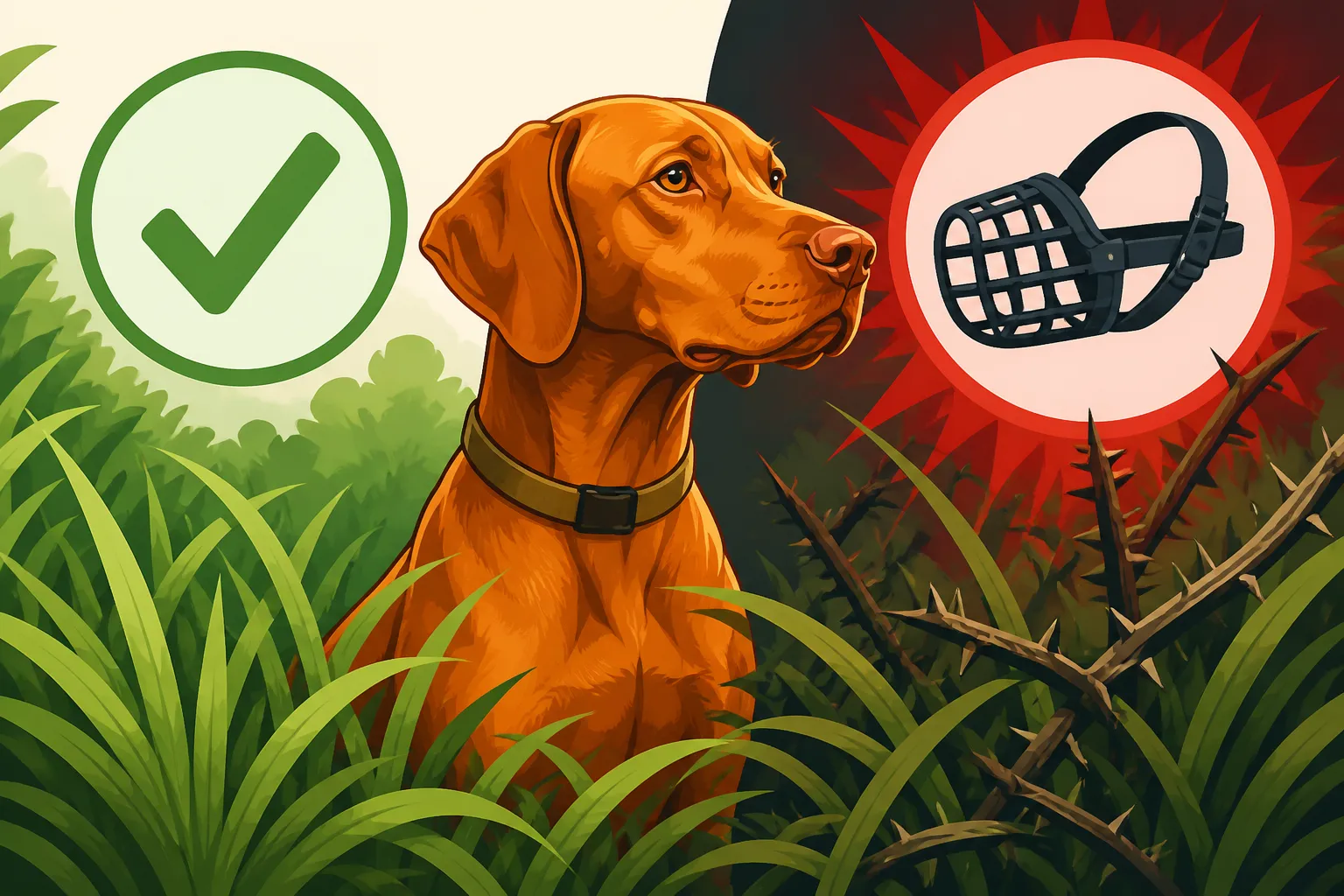
Think about dense briar patches, thorny multiflora rose, thickets of hawthorn, or even just fields full of stiff, dry corn stalks or sagebrush. These are the kinds of environments where a Vizsla's tender muzzle can take a serious beating. Each time they plunge in, their face becomes a battering ram, and those delicate areas are constantly exposed to sharp points and abrasive surfaces. Areas with heavy woody debris or fallen branches also pose a considerable threat. It's in these "impenetrable" sections where the risk of a nasty cut, puncture, or even a lacerated ear or eye injury jumps significantly. You'll want to avoid injuries like Whether a Vizsla Cuts Its Chest on Wire and focus on nose and face protection.
Factors Beyond Cover Type
While the terrain is paramount, other factors contribute to the decision. Consider your Vizsla's individual hunting style. Some Vizslas are more cautious, weaving their way through cover with a bit more finesse, while others are absolute bulldozers, charging headfirst into anything. A "dozer" Vizsla is inherently at higher risk. Their sheer enthusiasm can override any sense of self-preservation, leading to more frequent and severe injuries.
The duration and frequency of hunts also play a role. A dog that only occasionally encounters dense cover might manage without a guard, relying on your careful post-hunt inspection. But a Vizsla that hunts several times a week, consistently working challenging, thick areas, will accumulate a greater number of minor injuries, increasing the chances of a serious one or chronic skin irritation. Furthermore, some Vizslas just have naturally more sensitive skin, or perhaps a paler nose that is more prone to environmental damage like sunburn, making them more vulnerable than others. For comprehensive protection in harsh conditions, you might also consider Whether a Vizsla Needs a Vest in the Field for their body, in addition to muzzle protection.
| Type of Cover | Risk Level for Muzzle | Common Injuries | Muzzle Guard Recommendation |
|---|---|---|---|
| Open Fields/Short Grass | Low | Minor scrapes, grass seeds | Generally not needed |
| Light Brush/Sparse Wood | Moderate | Scratches, nicks, mild punctures | Consider for active pushers |
| Dense Briars/Thorns | High | Deep cuts, punctures, eye trauma | Highly recommended |
| Heavy Woody Debris | High | Lacerations, splinters | Highly recommended |
| Stiff Crops (Corn/Sage) | Moderate to High | Abrasions, scrapes, irritation | Consider, especially for tender skin |
Exploring Muzzle Guard Options for Vizslas
If you've assessed the risks and decided a muzzle guard is a good idea for your Vizsla, the next step is to choose the right one. There's a surprising variety out there, and what works for one dog might not be ideal for another. The goal is always effective protection without compromising your dog's ability to breathe, drink, or perform their hunting duties.
Material and Design Considerations
Muzzle guards come in various materials, each with its own advantages and disadvantages. The most common materials include neoprene, leather, and various types of durable mesh or synthetic fabrics. Neoprene guards are popular because they are flexible, lightweight, and often provide a good balance of protection and comfort. They can absorb some impact and are generally easy to clean. Look for models with reinforced stitching and good ventilation.
Leather guards offer robust protection and durability. They can be more rigid, but a well-designed leather guard will mold to your dog's face over time. The main considerations with leather are breathability and weight, especially in warmer weather. Synthetic mesh guards are usually the lightest and most breathable, which is great for hot days, but they might offer less impact protection against truly sharp objects. Some designs incorporate a harder plastic or silicone shield over the nose area for extra rigidity. When browsing options on platforms like Amazon or Chewy, pay close attention to customer reviews regarding durability and how well the material holds up to actual field use.
Beyond material, design is critical. You want a guard that covers the sensitive areas of the muzzle, including the top of the nose and the sides, but doesn't restrict breathing or scenting. Openings around the nostrils are essential. Adjustable straps are a must for a secure, comfortable fit. Some guards extend further back on the head to provide additional protection for the sides of the face, which can be a bonus in extremely dense cover. Make sure there are no rough edges or seams that could chafe your Vizsla's skin, especially around the eyes or under the chin. You're trying to prevent injury, not create new ones.
Proper Fit and Acclimation
Even the best muzzle guard won't work if it doesn't fit properly. A guard that's too loose can shift, rub, or even fall off, rendering it useless. One that's too tight can restrict breathing, cause chafing, or simply be uncomfortable, leading your Vizsla to try and remove it. When measuring, follow the manufacturer's guidelines precisely, typically involving measurements of the circumference and length of the muzzle. Always err on the side of slightly larger if your dog is between sizes, as you can often adjust straps to tighten, but you can't add material to a too-small guard.
Introducing a muzzle guard to your Vizsla should be a gradual, positive experience, much like introducing any new piece of gear. Start by letting them sniff and investigate the guard, offering high-value treats. Don't just strap it on and expect them to be thrilled. Practice putting it on for very short periods, rewarding them heavily for tolerating it. Build up the duration slowly, starting with just a few seconds, then minutes, then during short walks or training sessions, always associating it with positive experiences. For a "soft" breed like the Vizsla, patience and positive reinforcement are key; a harsh introduction could make them resistant to wearing it entirely. The Soft Vizsla That Shuts Down When You Raise Your Voice really highlights how important this approach is. It's often helpful to put it on right before something exciting, like a training session with birds or a run in the woods.
Balancing Protection with Performance
The ultimate goal of using a muzzle guard is to protect your Vizsla so they can continue to perform their job effectively and safely. However, it's vital to consider whether the protection might come at a cost to their comfort or ability. Finding that sweet spot where they are safe and happy in their work is the key.
Potential Downsides of Muzzle Guards
While muzzle guards offer obvious benefits, they aren't without potential drawbacks. The most immediate concern for many owners is whether the guard will interfere with their Vizsla's exceptional scenting ability. A well-designed guard should allow for full airflow to the nostrils, but any obstruction, however slight, could theoretically impact their sensitivity. However, most experienced hunters report that their dogs adapt quickly and their scenting remains largely unaffected.
Another issue can be overheating. Even breathable materials add a layer to the face, and on hot, humid days, this could contribute to your Vizsla overheating, especially if they are working hard. Always monitor your dog closely for signs of overheating, such as excessive panting, lethargy, or a bright red tongue. If the weather is warm, ensure the guard has maximum ventilation, and schedule hunts for cooler parts of the day. Hydration is always important, but particularly so when your dog is wearing extra gear. Ensuring proper nutrition and hydration is part of What a Vizsla Needs Every Day.
Comfort is also a factor. A poorly fitting guard can cause chafing or rubbing, leading to hot spots or discomfort that distracts your dog from their work. Some dogs, particularly those not properly acclimated, may try repeatedly to rub the guard off, potentially causing irritation or damage to the guard itself. It’s a trade-off; you need to ensure the protection doesn't create new problems.
Alternative and Complementary Protections
A muzzle guard isn't the only tool in your protection arsenal, and often, it works best as part of a comprehensive strategy. Regular inspection of your Vizsla after every outing is paramount. This means thoroughly checking their entire body, including their pads, ears, and, of course, their muzzle. Look for any cuts, punctures, embedded debris like grass seeds, or signs of irritation. Early detection of minor injuries can prevent them from becoming serious infections. A good quality first aid kit specifically for dogs is indispensable for field work; make sure you know What a First Aid Kit for a Hunting Vizsla Holds.
Consider the overall type of cover you're hunting. Sometimes, simply avoiding the densest, most thorny patches can prevent injuries altogether. This might mean adjusting your hunting strategy or choosing different locations. For specific environmental challenges, like cold weather, a specialized dog coat might be necessary to keep your Vizsla warm and protected from the elements.
Finally, proper conditioning and nutrition play a huge role in your Vizsla's overall resilience. A dog that is in peak physical condition, with strong muscles and healthy skin, is generally better equipped to handle the rigors of the field. Feeding a high-quality diet, perhaps from a brand like Ollie, ensures they have the energy and nutrients to maintain their health and recover quickly from minor scrapes. Similarly, ensuring their pads are conditioned and tough can prevent issues like Whether a Vizsla's Pads Split. A muzzle guard is an excellent piece of gear for specific situations, but it's one component of a holistic approach to keeping your Vizsla safe and performing at their best.
Disclaimer
This article is for general informational purposes only and does not constitute professional advice. Laws, prices and regulations vary by location and change over time. Consult a qualified professional for guidance on your specific situation.