Caring for an Old Vizsla That Has Stopped Hunting
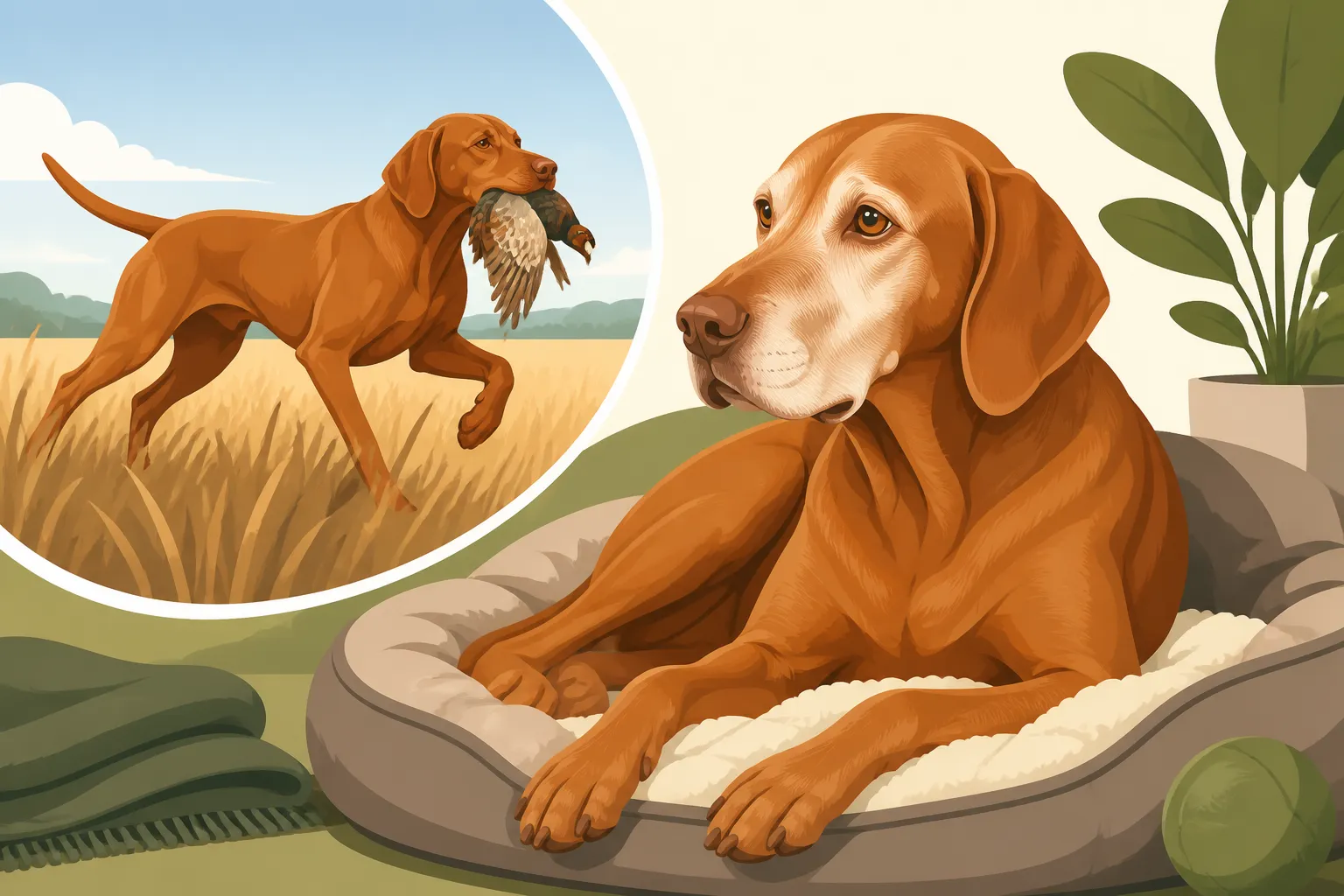
Your Vizsla used to vibrate at the sight of a blaze-orange vest. Now he watches you load the truck from his bed by the fire, and he does not get up. Whether a vet told you to stop, his hips decided for him, or you simply saw that the joy had gone out of the long days in the field, a retired hunting Vizsla needs a different kind of care. This guide shows you how to give it.
I have lived with three Vizslas through the end of their hunting careers, and each retirement taught me something new. The first one sulked for a month and paced the hallway every opening day. The second seemed relieved, as if she had been waiting for permission to rest. The third kept pointing songbirds in the garden until the week before he died, at fourteen. What they all had in common was this: a dog that was bred to run, search and work does not stop being that dog just because the hunting stops. Caring for an old Vizsla well means respecting the athlete it was while looking after the senior it has become.
Recognising the Shift From Working Dog to Senior Dog
When a Vizsla Becomes a Senior
Vizslas are a medium-sized breed with a typical lifespan in the region of twelve to fourteen years, and some live longer with good care and a bit of luck. Most vets start treating a dog of this size as a senior somewhere around eight or nine years old. That does not mean your dog suddenly changes on its eighth birthday. Ageing in a Vizsla is gradual, and in working dogs it is often hidden for a while by fitness and enthusiasm.
A hunting Vizsla can look young well past the point where its body has started to slow down. Muscle masks stiffness, and drive masks fatigue. Then one season you notice he needs two days to recover from a morning in the field instead of one, or that he stands at the bottom of the truck tailgate waiting to be lifted. Those are the first real signs. For a more detailed breakdown of the milestones, see The Age a Vizsla Counts as Senior.
The Signs That Hunting Is Over
Sometimes the decision to stop hunting is made for you: a cruciate injury, a heart murmur, a diagnosis of arthritis. More often it creeps up. Common signs that a Vizsla is ready to retire from the field include:
- Taking longer to warm up and showing stiffness in the first minutes after getting out of the truck.
- Lagging behind or hunting much closer than usual, without being asked.
- Struggling to recover, with soreness or limping the day after a hunt.
- Reluctance to jump into the truck, over logs or across ditches.
- Panting heavily long after the work has stopped.
- Losing interest partway through a hunt, or lying down in the field.
- Losing weight or muscle during the season despite eating well.
If you see several of these, it is time for an honest conversation with your vet. Many of them overlap with general ageing, so it is worth reading The Signs a Vizsla Is Getting Old to see the whole picture.
The Emotional Side of Retirement
People underestimate how much a Vizsla’s identity is tied to work. A dog that has spent ten autumns quartering through cover, holding points and retrieving birds has built its whole rhythm around that life. When the hunting stops, some dogs seem confused. They may pace, whine at the sight of hunting gear, follow you to the truck or become clingier in the house.
This is not something to feel guilty about, but it is something to plan for. Your job is to replace the purpose and stimulation of hunting with gentler activities that still feel meaningful to the dog. Owners who handle this transition well usually see a happier, calmer retired dog within a few months. For dogs that still burn to get out there, The Old Vizsla That Still Wants to Hunt looks at how to manage that frustration.
Feeding a Retired Vizsla
Adjusting Calories Without Losing Muscle
The most common mistake I see with retired hunting dogs is leaving their food bowl exactly as it was. A working Vizsla in season can burn a remarkable number of calories, and many owners feed a high-fat, high-protein performance diet to match. Once that dog is lying by the fire, the same food will put weight on quickly.
At the same time, senior Vizslas tend to lose muscle as they age. That means the goal is not simply to cut calories. It is to reduce total energy while protecting protein intake, so the dog keeps as much lean muscle as possible. Most healthy older dogs do well on a diet with good-quality protein and moderate fat, but dogs with kidney or liver disease may need specific changes your vet will advise on.
Weigh your dog regularly, ideally every couple of weeks during the first months of retirement. Use body condition rather than the number alone: you should be able to feel the ribs easily without seeing them sharply, and there should be a visible waist from above. For more on this balance, see Feeding an Old Vizsla That Has Slowed.
Choosing a Senior Diet
There is no single right food for a retired Vizsla, but there are a few things to look for. Diets labelled for senior or mature dogs often have moderated calories, added fibre and joint-supporting ingredients such as omega-3 fatty acids. Some owners switch to a lighter version of their dog’s existing food; others move to a fresh or lightly cooked diet.
Fresh food delivery services such as Ollie have become popular with owners of older dogs, partly because the food is palatable for dogs whose appetite has dulled and partly because portions are pre-measured to a calorie target. If you try Ollie or a similar service, check the provider’s own page for current recipes and pricing, and talk to your vet about whether the protein and fat levels suit your dog’s health. Introduce any new diet gradually over a week or so to avoid stomach upset.
If you prefer to stay with kibble or canned food, retailers such as Chewy make it easy to compare senior formulas from many brands and set up repeat deliveries. Whatever you choose, read the feeding guide as a starting point only, then adjust based on your own dog’s weight and condition.
| Diet factor | Working Vizsla in season | Retired senior Vizsla |
|---|---|---|
| Total calories | High to support daily work | Reduced to match lower activity |
| Protein | High for muscle repair | Kept high quality to protect muscle |
| Fat | Often high for energy | Moderate unless vet advises otherwise |
| Fibre | Standard | Often increased to support fullness |
| Omega-3 fatty acids | Helpful for recovery | Helpful for joints, skin and brain |
| Weigh-ins | During and after season | Every few weeks after retirement |
Treats, Supplements and Hydration
Treats are where weight gain sneaks in. A retired dog that used to earn a biscuit for every retrieve can easily be getting hundreds of extra calories a day from habit. Switch to small, low-calorie treats or set aside part of the daily ration to use as rewards.
Supplements can help some older dogs, but they are not magic. Omega-3 fatty acids from fish oil have reasonable evidence for supporting joints and skin. Joint products containing glucosamine and chondroitin are widely used, though results vary from dog to dog. Always discuss supplements with your vet, especially if your dog is on other medication. The debate is covered fairly in Whether Joint Supplements Help a Vizsla.
Older dogs can also become less inclined to drink. Make sure water is always available in more than one place in the house, and watch for any big changes in thirst, which can signal problems such as kidney disease or diabetes.
Handling a Fussy or Slow Eater
Some retired dogs go the other way and lose interest in food. A dull sense of smell, sore teeth, nausea from medication or simple boredom with the same bowl can all reduce appetite. Because Vizslas carry so little fat, a dog that skips meals can drop condition faster than you expect.
Start by ruling out a medical cause, especially dental pain, which is common in older dogs and often hidden. If the vet gives the all-clear, small changes can help: warming wet food slightly to release its smell, splitting the daily ration into three smaller meals, adding a spoonful of plain cooked chicken or fish, or feeding in a quiet spot away from other pets. Puzzle feeders can turn a meal into a small hunt, which many former working dogs enjoy.
Keep an eye on the scale. A gradual loss of a kilo or two over a few months in a dog that is eating less is worth a vet visit, even if the dog seems otherwise well. Unexplained weight loss in a senior Vizsla always deserves a closer look.
Exercise for a Dog That No Longer Hunts
How Much Exercise an Old Vizsla Needs
A young Vizsla needs a lot of exercise, and many owners hear that the breed needs around two hours a day. An older retired dog still needs daily activity, but the shape of that exercise changes. Instead of long, intense sessions, think in terms of several shorter outings spread through the day.
A typical routine for a healthy ten-year-old might be a twenty to thirty minute walk in the morning, a shorter stroll at midday and another walk or a gentle off-lead sniff in a safe field in the evening. The key is consistency. Regular, moderate movement keeps joints mobile and muscles working far better than one long weekend outing that leaves the dog sore for days. For a closer look at what is realistic, see Whether an Old Vizsla Still Needs Two Hours.
Low-Impact Activities That Keep Muscle On
Muscle loss is one of the biggest challenges for ageing Vizslas. Without the hill work and sprints of hunting, the back legs in particular can weaken quickly. Low-impact activities help maintain strength without stressing sore joints.
- Swimming in calm water is one of the best options for many Vizslas, provided the dog enjoys water and you watch for cold temperatures and fatigue.
- Walking on varied but gentle terrain, such as grass, sand or a woodland path, works stabilising muscles.
- Slow hill walks, rather than runs, build hindquarter strength.
- Controlled exercises such as sit-to-stand repetitions or walking over low poles can be taught at home, ideally with guidance from a canine physiotherapist.
- Hydrotherapy on an underwater treadmill, offered by many rehabilitation centres, is excellent for dogs with arthritis or after injury.
A retired dog that keeps its muscle tends to stay mobile longer and copes better with arthritis. The specific techniques are explored in Keeping an Old Vizsla’s Muscle On.
Giving the Nose a Job
What a hunting Vizsla misses most is often not the running but the searching. That nose has spent years working, and it still wants to. Scent games are the best way I know to give a retired dog a sense of purpose without physical strain.
Start simple. Hide treats around a room while the dog waits, then release it to find them. Progress to hiding a bird-scented dummy or a wing in the garden, then in a field. You can set up mini search patterns that echo the quartering of a real hunt, at a walking pace. Many dogs come back from a fifteen-minute scent session more settled than they would after an hour’s walk. Whether Scent Games Tire a Vizsla explains why mental work is so tiring for this breed.
Taking a Retired Dog Along for the Day
Retirement from hunting does not have to mean being left at home every time the truck leaves. Many retired Vizslas are happiest when they can still be part of the outing, even if they no longer do the work. A short, easy walk at the edge of the field, a turn on a check cord in light cover, or simply riding along and resting in the truck while the young dog works can keep the old dog connected to the life it loved.
The trick is to set clear limits and stick to them. Decide in advance how long the old dog will be out, keep it on a lead or within easy recall, and bring it back before it tires, not after. On cold days, make sure it has a warm, dry place to rest in the truck, with a coat and a blanket. Watch the dog closely for the rest of the day and the next morning; any stiffness or limping tells you that the outing was too much.
Some owners find that a gentle outing like this is the best medicine for an old dog that pines when the gear comes out. Others find it only winds the dog up. You know your dog best, so be honest about which group yours falls into.
Keeping an Older Vizsla Comfortable at Home
Warmth and Bedding
Vizslas have a short, single coat and very little body fat, and they feel the cold more than many breeds even when young. As they age and lose muscle, they feel it more still. A retired Vizsla that once slept in a kennel or on a cold floor will be far more comfortable indoors on a thick, supportive bed.
Look for orthopaedic or memory foam beds that are thick enough that the dog’s hips and elbows do not touch the floor. Raised edges help dogs that like to curl up. In cold weather, a fleece blanket or a heated pad designed for pets can make a real difference, though you should check that the dog can move away from the heat. When going outside in winter, a well-fitted coat helps many older dogs. Online retailers such as Amazon carry a wide range of orthopaedic beds and dog coats, but read size guides carefully, as Vizslas are deep-chested and narrow-waisted. More on this in Whether an Old Vizsla Needs More Warmth.
Making the House Easier to Navigate
Small changes around the home can prevent falls and injuries. Older dogs often struggle on slippery floors, especially if they have weakened hindquarters.
- Lay rugs or runners with non-slip backing on tiled or wooden floors, especially in hallways and near doors.
- Use a ramp or steps to help the dog get into the car, rather than lifting or letting it jump.
- Block off steep staircases if the dog is unsteady, and help it up and down when needed.
- Raise food and water bowls slightly if the dog has neck or back stiffness.
- Keep nails trimmed short, as long nails affect grip and posture.
- Trim the fur between the paw pads if it grows long, again to help grip.
Skin, Coat and Grooming
A Vizsla’s coat often changes with age. It may become thinner, especially on the chest and legs, and grey hairs often appear around the muzzle. Some thinning is normal, but patchy loss, scaly skin or a dull coat can point to problems such as hypothyroidism or skin disease, which are known concerns in the breed.
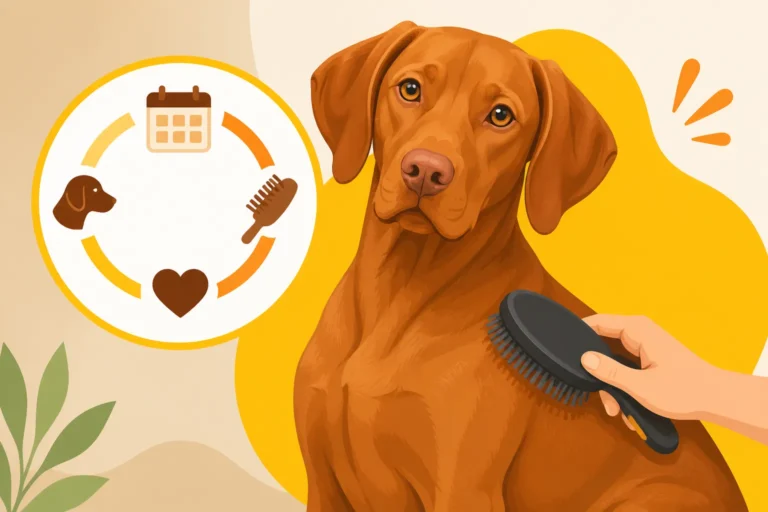
Regular grooming sessions with a rubber mitt or soft brush are a good chance to check your dog’s body for lumps, cuts and sore spots. Many owners find that their retired dog enjoys these sessions as quiet time together. If you notice any change in the coat or skin, mention it at your next vet visit. For more on what is normal, see Whether an Old Vizsla’s Coat Thins.
Routine, Company and Changes in Behaviour
Older dogs thrive on routine. Regular mealtimes, walks at familiar times and a predictable evening wind-down help a retired Vizsla feel secure, especially if its hearing or eyesight is starting to fade. Vizslas are famously attached to their people, and many become even more so in old age, following you from room to room and wanting to be close at night.
That closeness is part of the breed’s charm, but it can turn into anxiety if the dog is suddenly left alone for longer than it is used to. If your routine changes, for example because you return to an office, build up the time apart gradually and give the dog something to do while you are gone, such as a food puzzle or a chew suitable for its teeth.
Some owners wonder whether a new puppy will give the old dog a new lease of life. Sometimes it does, but a boisterous puppy can also exhaust and irritate an arthritic senior. If you bring in a youngster, make sure the old dog has a quiet place where the puppy cannot follow, and supervise play closely.
Health Monitoring for the Senior Vizsla
Common Health Problems in Older Vizslas
Vizslas are generally healthy dogs, but certain conditions become more common with age. Knowing what to watch for helps you catch problems early.
| Condition | Signs to watch for | Why it matters |
|---|---|---|
| Arthritis | Stiffness, slow to rise, reluctance to jump | Very common in former working dogs |
| Hypothyroidism | Weight gain, lethargy, coat thinning | Treatable with daily medication |
| Cancers such as lymphoma and mast cell tumours | Lumps, swollen glands, weight loss | Early detection changes options |
| Heart disease | Coughing, tiring easily, fainting | A murmur may be the first sign |
| Dental disease | Bad breath, dropping food, red gums | Pain and infection affect appetite |
| Cognitive decline | Confusion, night waking, staring | Can be managed with routine and support |
Lumps, Bumps and Regular Checks
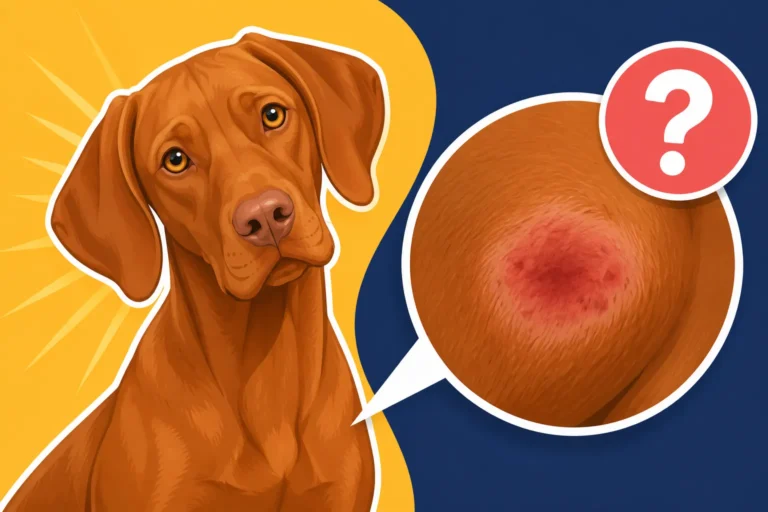
Older Vizslas commonly develop lumps under or on the skin. Many are harmless fatty lumps, but some are not, and Vizslas are known to be prone to certain cancers, including mast cell tumours. The only way to know what a lump is, is to have it checked by your vet, which usually means a quick needle sample.
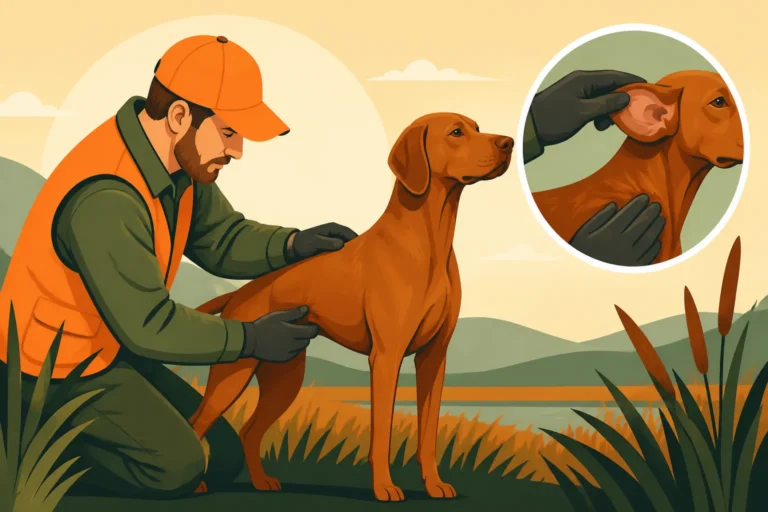
Get into the habit of a monthly hands-on check. Run your hands over the whole body, including the belly, armpits and inside the legs. Note any new lumps and their size. A simple diary or a photo on your phone with a coin for scale helps you notice changes. Lumps Worth Checking on a Vizsla has more on which lumps need urgent attention.
Managing Arthritis at Home
Arthritis is so common in former working Vizslas that it is worth planning for even before you see signs. Years of jumping out of trucks, crossing rough ground and turning hard at speed take a toll on hips, elbows, knees and the spine. The good news is that arthritis is very manageable when you combine several approaches rather than relying on one.
Medication prescribed by your vet, such as anti-inflammatory drugs or newer treatments aimed at arthritis pain, is often the foundation. Keeping the dog lean is just as important, because every extra kilo adds load to sore joints. Regular, gentle exercise keeps joints moving, while physiotherapy, hydrotherapy and massage can relieve stiffness and build supporting muscle. At home, the bedding, ramps and rugs described earlier reduce daily strain.
Keep a simple mobility diary. Note how long it takes your dog to get up in the morning, how far it walks comfortably and how it copes with stairs or the car. Bring the diary to your vet visits. It turns vague impressions into something you can track, and it helps your vet decide when to adjust treatment.
Dental Health and Comfort
Dental disease is one of the most common problems in older dogs, and it is often overlooked because dogs keep eating through considerable pain. Signs include bad breath, red or swollen gums, brown tartar on the back teeth, dropping food, chewing on one side and pawing at the mouth.
A dental cleaning under anaesthetic may be recommended for an older dog. Many owners worry about anaesthesia in seniors, which is understandable. Pre-anaesthetic blood tests and careful monitoring reduce the risk considerably, and the relief from removing a painful tooth can be dramatic. At home, regular tooth brushing with dog toothpaste remains the best way to slow plaque build-up.
Senior Vet Visits
Once your Vizsla is a senior, most vets recommend check-ups every six months rather than once a year. These visits often include blood and urine tests to catch early kidney, liver or thyroid problems, a dental check and a discussion of mobility and pain.
Pain is easy to miss in a stoic breed. Many former hunting dogs will push through discomfort without complaint. Ask your vet about pain assessment and the options available, from anti-inflammatory medications to physiotherapy and acupuncture. Treating pain can make an old dog look years younger.
Changes in the Mind
Just like people, older dogs can experience cognitive decline. Signs include getting stuck in corners, staring at walls, waking and pacing at night, forgetting house training or seeming not to recognise familiar people. These changes can be upsetting to watch, especially in a dog that was once so sharp in the field.
There is no cure, but there is a lot you can do. Keeping a steady routine, continuing gentle scent games, offering short training sessions with easy cues the dog already knows, and talking to your vet about diets and medications designed to support brain health can all help. A night light and a bed close to yours can ease night-time restlessness.
Remember that some signs that look like confusion can be caused by pain, hearing or vision loss, or other treatable conditions. Mention any change in behaviour to your vet rather than assuming it is simply old age.
Preparing for the Final Chapter
Quality of Life Checks
No one likes thinking about the end, but a retired Vizsla’s last years are much easier when you have thought ahead. Quality of life is not just about the absence of disease; it is about whether your dog can still enjoy its days.
Many owners use a simple weekly check. Ask yourself whether your dog is eating, drinking and toileting normally, whether pain is controlled, whether it can move around comfortably, and whether it still shows interest in the things it loves. When the bad days begin to outnumber the good, it is time for a serious talk with your vet.
Making the Decision
Every owner hopes their old dog will slip away peacefully in its sleep, but that rarely happens. More often you will have to make the decision. It helps to talk about it early with your vet and family, before a crisis forces it.
Some owners choose to have the vet come to the home, so the dog can be in its own bed. Others plan one last outing to a favourite field. There is no right way, only the way that respects your dog. For gentle guidance, read Knowing When an Old Vizsla Has Had Enough.
Caring for Yourself Too
Looking after a very old dog is tiring. Night waking, accidents in the house, medication schedules and vet visits add up, and it is normal to feel worn out or guilty for feeling that way. Ask family members to share the load, and do not be afraid to lean on your vet team for advice and reassurance. Many practices also have resources for owners facing the loss of a long-time companion.
Honouring a Working Life
When the time comes, many hunters keep something from their dog’s working life: a collar, a whistle, a photograph from a good season. Some scatter ashes at a favourite field. These rituals matter. A Vizsla that gave you years of points and retrieves, and then years of quiet companionship, deserves to be remembered as both.
Disclaimer
This article is for general informational purposes only and does not constitute professional advice. Laws, prices and regulations vary by location and change over time. Consult a qualified professional for guidance on your specific situation.