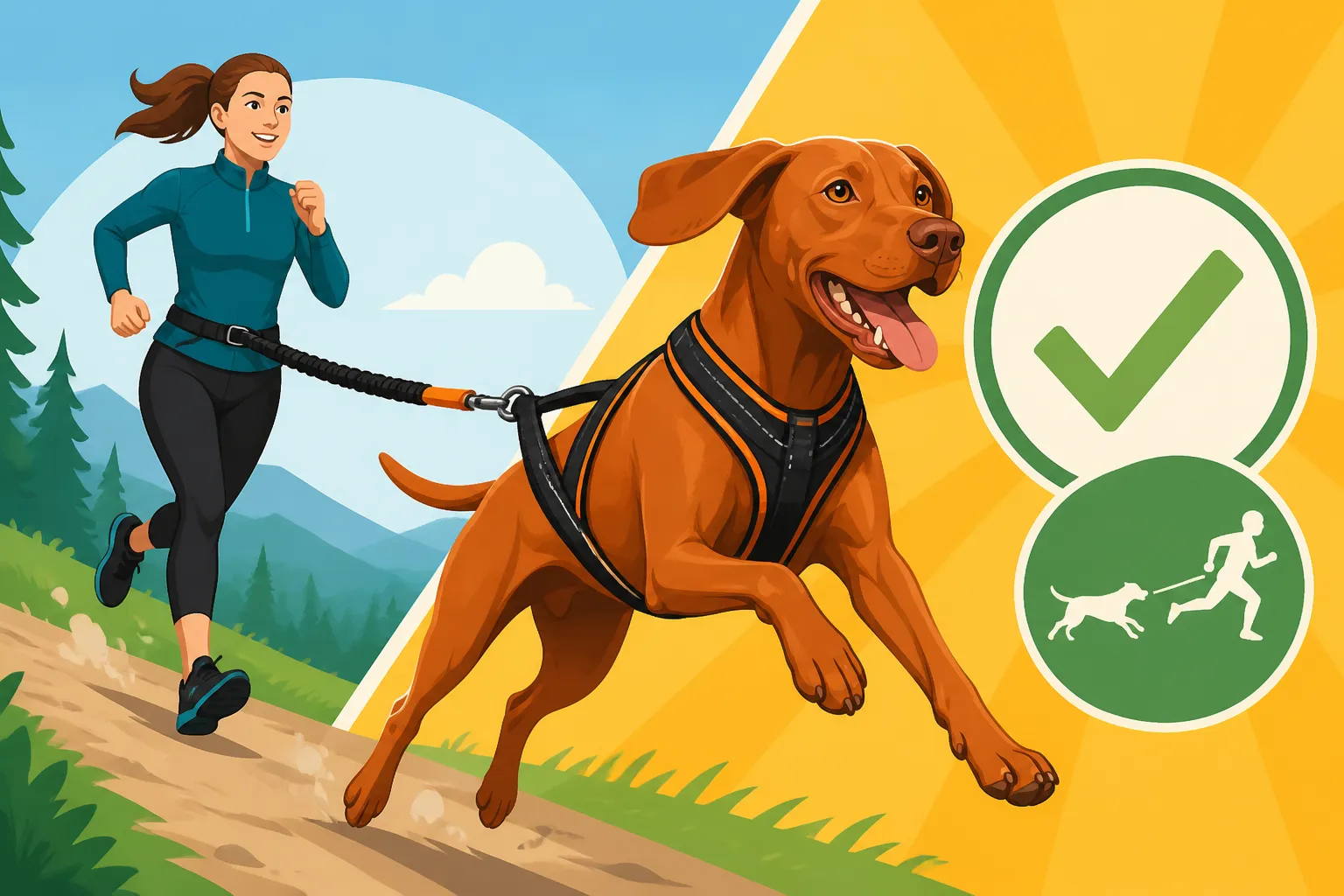
Whether a Vizsla Suits Canicross
It's completely understandable to look at your sleek, energetic Vizsla and wonder if they’re the perfect partner for something as dynamic as canicross. You see them fly across the field, pulling with enthusiasm on a walk, and you think, "Could this be our thing?" The truth is, many Vizsla owners face this exact question, juggling their dog's boundless energy with the specific demands of a sport like canicross. This guide is here to walk you through everything you need to know about whether your Vizsla is a good fit for hitting the trails with you, harness-first.
The Vizsla's Athletic Prowess and Canicross Potential
Vizslas are truly phenomenal athletes, built for endurance and speed. It's in their DNA to cover ground, to work, and to be active partners. When considering canicross, these inherent traits often make them seem like a natural fit. But let's dive into what makes them so predisposed to a sport that involves pulling a human.
Built for Speed and Stamina
If you've ever watched a Vizsla run, you'll instantly notice their elegant, ground-covering stride. They are light-footed, with a powerful hindquarters that propel them forward, and a lean, muscular build that speaks to sustained effort. This isn't a breed designed for short bursts of speed followed by long naps; they are built for hours of activity, whether it's hunting in varied terrain or exploring miles of trail. In canicross, where the goal is often to maintain a consistent, strong pull over varied distances, this natural stamina is a huge advantage. Their typical gait is efficient, minimizing wasted energy, which means they can keep going and going.
Unlike some heavier breeds, a Vizsla's light frame means less impact on their joints over long distances, which is crucial for a sport that puts consistent stress on a dog's musculoskeletal system. They don't have the bulk that might slow them down or cause them to overheat as quickly as a denser dog might. This allows them to maintain a faster pace for longer periods, often relishing the opportunity to truly stretch out and use their incredible engine. Many owners find their Vizsla truly hits their stride around two or three years old, capable of seemingly endless miles once properly conditioned. It’s not just about speed; it’s about that relentless, joyful energy they bring to every run. If you're wondering How Far a Vizsla Should Run Daily, you'll find that for many, "far" is an understatement once they're trained for a sport like canicross.
Their Drive to Work and Please
Vizslas are often described as having an intense desire to please their owners, coupled with an innate work ethic. They thrive on having a job, on being a partner in an activity. For many Vizslas, simply going for a walk, even a long one, isn't enough to satisfy their keen minds and active bodies. They need purpose, a goal, a shared endeavor. Canicross taps directly into this drive. When properly introduced, many Vizslas quickly understand that their job is to pull forward, to lead the way, and to work in tandem with their human. This isn't just physical exertion for them; it's a mental engagement, a task to be performed.
The motivation to work with you, rather than just for you, is a key differentiator in canicross. A Vizsla's sensitivity and responsiveness to their handler make them excellent candidates for learning the directional cues and pace changes required in the sport. They want to succeed, and they are usually very attuned to your encouragement and signals. This means less fighting against your dog and more harmonious movement as a team. This innate desire to participate and excel for their human is a powerful motivator, often more effective than any treat or toy once they grasp the concept of the sport. If you're thinking about What a Vizsla Will Work For, the answer often includes the joy of shared activity and the praise of their beloved human, which canicross provides in spades.
The Vizsla's Mental Stamina for Repetitive Tasks
While Vizslas are intelligent and can pick up new commands quickly, they can also get bored if the training is monotonous or lacks variety. However, canicross, while involving repetitive motion, is far from monotonous for a dog that loves to run and explore. Every trail offers new scents, new visual stimuli, and changing terrain. The "task" of pulling is engaging because it provides an outlet for their physical energy and their need for a job. It's not just running; it's a guided exploration where their speed and strength are celebrated.
For a breed that can sometimes be prone to anxiety or destructive behaviors when under-exercised or under-stimulated, canicross offers a fantastic outlet for both mind and body. The sustained effort and focused attention required can be incredibly satisfying for them, leading to a calmer, more settled dog at home. It’s less about "drilling" and more about harnessing their natural instincts into a structured, exhilarating activity. They learn to ignore distractions on the trail over time because they understand the purpose of the run. While you might wonder Whether a Vizsla Gets Bored of Drilling during obedience, canicross offers a dynamic, ever-changing environment that keeps their minds engaged without feeling like a chore.
Understanding the Specific Demands of Canicross
Canicross isn't just about putting a harness on your dog and running. It's a specific discipline with its own equipment, training methods, and demands that differ significantly from a casual jog or even a traditional dog sport. For a Vizsla owner, understanding these nuances is crucial for success and safety.
Equipment Considerations for a Vizsla
The right equipment is paramount for your Vizsla's comfort, safety, and performance in canicross. You can't just use their everyday walking harness. A proper canicross harness, often called an X-back or H-back harness, is designed to distribute the pulling pressure evenly across their chest and shoulders, allowing for full range of motion in their legs and preventing strain on their neck. The fit is critical – it should be snug but not restrictive, allowing them to breathe freely and pull efficiently. Many reputable brands offer measurement guides to help you find the perfect size.
Beyond the dog's harness, you'll need a bungee line (also called a tow line or tug line) which connects your dog's harness to your waist belt. This bungee action absorbs shocks, making the run smoother for both you and your Vizsla. Finally, a comfortable, padded waist belt for yourself is essential. This transfers the pulling power from your dog to your hips, protecting your back and allowing you to run hands-free. When looking for these items, a quick search on Amazon or specialized dog sports retailers will reveal a wide array of options, often with reviews from other canicross enthusiasts. Investing in good quality gear from the start will prevent discomfort or injury for your energetic Vizsla.
Training for Lead Pulling and Directional Cues
One of the biggest shifts in mindset for canicross is encouraging your dog to pull. For years, we train our dogs not to pull on the leash. In canicross, pulling is the job! This requires teaching specific cues. "Hike!", "Go!", or "Mush!" might be used to encourage forward momentum and pulling. Directional cues like "Gee" (right) and "Haw" (left) are vital, especially on trails with forks or turns, allowing your Vizsla to anticipate and respond without you having to drag them.
This training starts without the full canicross setup, often on a regular leash in a low-distraction environment. You reward any forward lean or slight pull, gradually building up the understanding that pulling is good in this context. Voice commands, hand signals, and lots of positive reinforcement are key. Remember, Vizslas are soft and sensitive, so harsh corrections will be counterproductive. They need clear, consistent cues and abundant praise when they get it right. It's a dance of communication, where you learn to read their body language and they learn to respond to your subtle signals, making you a truly cohesive team on the trail. And while your dog is on leash for canicross, you might consider Whether a Vizsla Should Wear a GPS Collar for added security, especially if you train on trails where they might be off-leash at other times, or if they have a tendency to range widely.
The Importance of a Solid Recall and Off-Leash Skills
Even though your Vizsla will be attached to you during canicross, having a rock-solid recall and good general off-leash skills is incredibly important. Think about it: before and after your runs, you might need them to be off-leash. There might be unexpected hazards on the trail that require you to quickly release them from the line. A strong recall ensures their safety if they somehow get detached or if you need to call them away from wildlife, other trail users, or dangerous terrain.
Moreover, a dog that is well-trained off-leash tends to be more confident and responsive on-leash. They understand boundaries and listen to cues regardless of the situation. This foundation of obedience translates directly to better focus and cooperation during canicross. You'll be asking them to ignore squirrels, other dogs, and enticing scents to stay on task and pull you. This level of self-control is often built through consistent off-leash training in varied environments. While a Vizsla's instinct is to range and hunt, dedicated training can build a recall that overrides these instincts when necessary. If you're building up their skills, check out resources like Building a Recall on a Vizsla That Ranges for tips on how to achieve this crucial command.
Potential Challenges and How to Overcome Them
While Vizslas are excellent candidates for canicross, it's not without its specific challenges. Their unique traits, while often assets, can also require careful management to ensure a successful and enjoyable experience for both dog and human.
Managing High Drive and Focus on the Trail
Vizslas are bird dogs, first and foremost. This means they possess an incredibly high prey drive and an exceptional nose. When you're out on a trail, especially one frequented by wildlife, your Vizsla's instincts will be constantly engaged. A squirrel darting across the path, a deer scent on the wind, or the flutter of a bird in the brush can all be massive distractions, potentially causing your dog to lunge, pull unexpectedly, or lose focus entirely. This isn't just annoying; it can be dangerous if you lose your footing or they pull you into an obstacle.
Overcoming this requires patience and consistent training. Start in low-distraction environments and gradually increase the challenge. Use high-value rewards to reinforce focus on you and the task at hand. Teach a "leave it" command that's strong enough to override their prey drive. Some owners even incorporate specific "focus" games into their warm-ups to get their Vizsla's head in the game before hitting the trail. Remember, your Vizsla wants to please you, but those instincts are powerful. It's about redirecting that energy and focus, not suppressing it entirely. With time, they'll learn that the most rewarding path is the one where they work with you, even with tempting distractions around.
Temperature Regulation and Their Single Coat
One of the most defining characteristics of a Vizsla is their beautiful, short, single coat. While this means minimal shedding and a generally "cleaner" dog, it also means they have very little insulation against the cold. Unlike breeds with thick double coats designed for harsh winters, a Vizsla can get cold very quickly, especially when stationary or in wet, chilly conditions. Conversely, their lean build and high metabolism mean they can also overheat easily during strenuous exercise in warmer weather.
This makes careful temperature management crucial for canicross. In colder months, you might need to invest in a well-fitting dog coat or vest to keep them warm before, during, and after runs, especially if you stop for breaks. You should always be mindful of icy conditions that could harm their paws. In warmer months, avoid running during the hottest parts of the day. Early mornings or late evenings are best. Carry plenty of water for both of you and know the signs of overheating in dogs. Their thin skin also makes them susceptible to Sunburn and the Pale Vizsla Nose, so consider dog-safe sunscreen for their nose if you're running in bright conditions. Understanding The Temperature a Vizsla Needs a Coat At is vital for their health and comfort.
The "Velcro" Aspect and Running Independently
Ah, the famous "Velcro Vizsla" phenomenon! These dogs are renowned for their intense attachment to their humans, often wanting to be in the same room, on the same sofa, or even in the same shower as you. While this deep bond is one of the most cherished aspects of owning a Vizsla, it can sometimes present an interesting challenge in a sport like canicross, which requires them to pull ahead of you, sometimes quite a distance, rather than sticking right by your side.
For some Vizslas, their natural inclination might be to check back with you frequently, or even slow their pace to stay closer, especially when first learning the sport. They might not immediately understand that in this specific activity, their job is to go forward and lead. This isn't necessarily a bad thing, as it shows their responsiveness, but it's something to be aware of. To counteract this, positive reinforcement for pulling ahead is key. Celebrate their forward motion enthusiastically. Consistency in training and allowing them to build confidence in their role as the leader will help. Over time, most Vizslas embrace the independence that canicross offers, realizing that leading the way is a highly rewarded form of bonding. While Whether Every Vizsla Is a Velcro Dog is often true to some extent, with canicross, you're teaching them a slightly different way to be "stuck" to you!
Integrating Canicross into Your Vizsla's Lifestyle
Canicross can be an incredibly rewarding activity for a Vizsla and their owner, but it's a commitment. Integrating it successfully into your lifestyle means approaching it thoughtfully, with a focus on your dog's well-being and a gradual progression.
Starting Slow and Building Endurance
Just like a human athlete, your Vizsla needs to condition their body for the demands of canicross. You can't just go out and run a 10K on day one. Start with short, easy runs, perhaps only a mile or two, on relatively flat and predictable terrain. Focus on getting them comfortable with the harness, the bungee line, and the concept of pulling. Gradually increase the distance and intensity over weeks and months, always paying close attention to your dog's energy levels, breathing, and paw condition.
It's tempting to push your Vizsla because they seem to have endless energy, but remember that their enthusiasm can sometimes mask fatigue or soreness. A good rule of thumb is to increase distance by no more than 10-15% per week. Ensure they have proper warm-ups and cool-downs, just like you would. Hydration before, during, and after runs is critical. Remember, their bodies are still developing until around two years of age, so consult your vet before starting any strenuous activity with a young Vizsla. Understanding How Far a Vizsla Should Run Daily is a journey, and with canicross, that distance can increase dramatically over time with proper conditioning.
Making it a Positive Experience
Vizslas are highly sensitive and respond best to positive reinforcement. For canicross to become a beloved activity, it must always be a positive experience. Keep training sessions fun, upbeat, and rewarding. Use praise, treats, and enthusiastic encouragement to celebrate their efforts, especially in the early stages. If your Vizsla starts to show signs of disinterest or stress, take a step back and make it easier or more fun. Perhaps a shorter route, or more frequent breaks with praise.
The goal is to associate canicross with joy, partnership, and fulfillment. Avoid any harsh corrections or making them feel pressured, as this can quickly dampen their enthusiasm and potentially ruin their confidence. Think of yourselves as a team, working together. If you're looking for structured training approaches that emphasize positive reinforcement, resources like BAXTER & Bella offer online puppy and dog training programs that lay excellent foundations for cooperation and responsiveness, which are directly applicable to canicross. Their methods often focus on building a strong bond and clear communication, which are invaluable when engaging in an active sport like canicross.
Safety First: Hydration, Paw Care, and Vet Checks
Safety should always be your top priority. Canicross takes you and your Vizsla into varied environments, which means varied risks. Always carry enough water for both of you, especially on longer runs or in warmer weather. Consider a collapsible bowl for your dog. Pay meticulous attention to their paw pads. Running on rough terrain, hot pavement, or icy surfaces can cause abrasions, cracks, or frostbite. Consider paw balm or even dog boots for extreme conditions. Regularly Checking a Vizsla Over After a Hunt or run should be standard practice, looking for cuts, thorns, ticks, or any signs of discomfort.
Regular veterinary check-ups are also non-negotiable. Ensure your Vizsla is healthy enough for the demands of canicross. Discuss their activity level with your vet and be proactive about any lameness or changes in gait. Consider joint supplements as they get older, especially if they are heavily involved in such a strenuous sport. Be aware of your surroundings on the trail: wildlife, other trail users, cyclists, and potentially dangerous plants. Always let someone know your route and expected return time. A well-prepared and cautious approach ensures that canicross remains a joyful and safe adventure for you and your beloved Vizsla.
| Vizsla Trait | Canicross Benefit / Challenge | Management Strategy |
|---|---|---|
| High Energy & Stamina | Benefit: Natural endurance for sustained pulling, covers ground efficiently. | Gradual conditioning, varied terrain, adequate rest. |
| Desire to Please & Work | Benefit: Eager to learn cues, enjoys shared activity, highly motivated by partnership. | Consistent positive reinforcement, clear cues, make it fun and rewarding. |
| Single, Short Coat | Challenge: Poor insulation against cold, susceptible to overheating in heat. | Appropriate gear (coats/cooling vests), avoid extreme temperatures, carry water, paw protection, consider dog-safe sunscreen for nose. |
| High Prey Drive | Challenge: Easily distracted by scents/wildlife, can cause sudden pulls or loss of focus. | Strong "leave it" command, high-value rewards for focus, progressive training in increasing distraction levels. |
| "Velcro" Nature | Challenge: May want to stay too close, might hesitate to pull ahead independently initially. | Reward forward pulling, encourage independence, build confidence in their role as the leader. |
| Sensitivity | Benefit: Responsive to subtle cues. Challenge: Easily discouraged by harsh handling. | Use gentle, consistent methods. Focus on building confidence and trust. Avoid any confrontational techniques. |
| Bone & Joint Health | Benefit: Generally well-structured. Challenge: Risk of injury with strenuous activity. | Vet checks, proper conditioning, soft ground running, balanced nutrition, consider joint supplements (with vet approval). |
Disclaimer
This article is for general informational purposes only and does not constitute professional advice. Laws, prices and regulations vary by location and change over time. Consult a qualified professional for guidance on your specific situation.