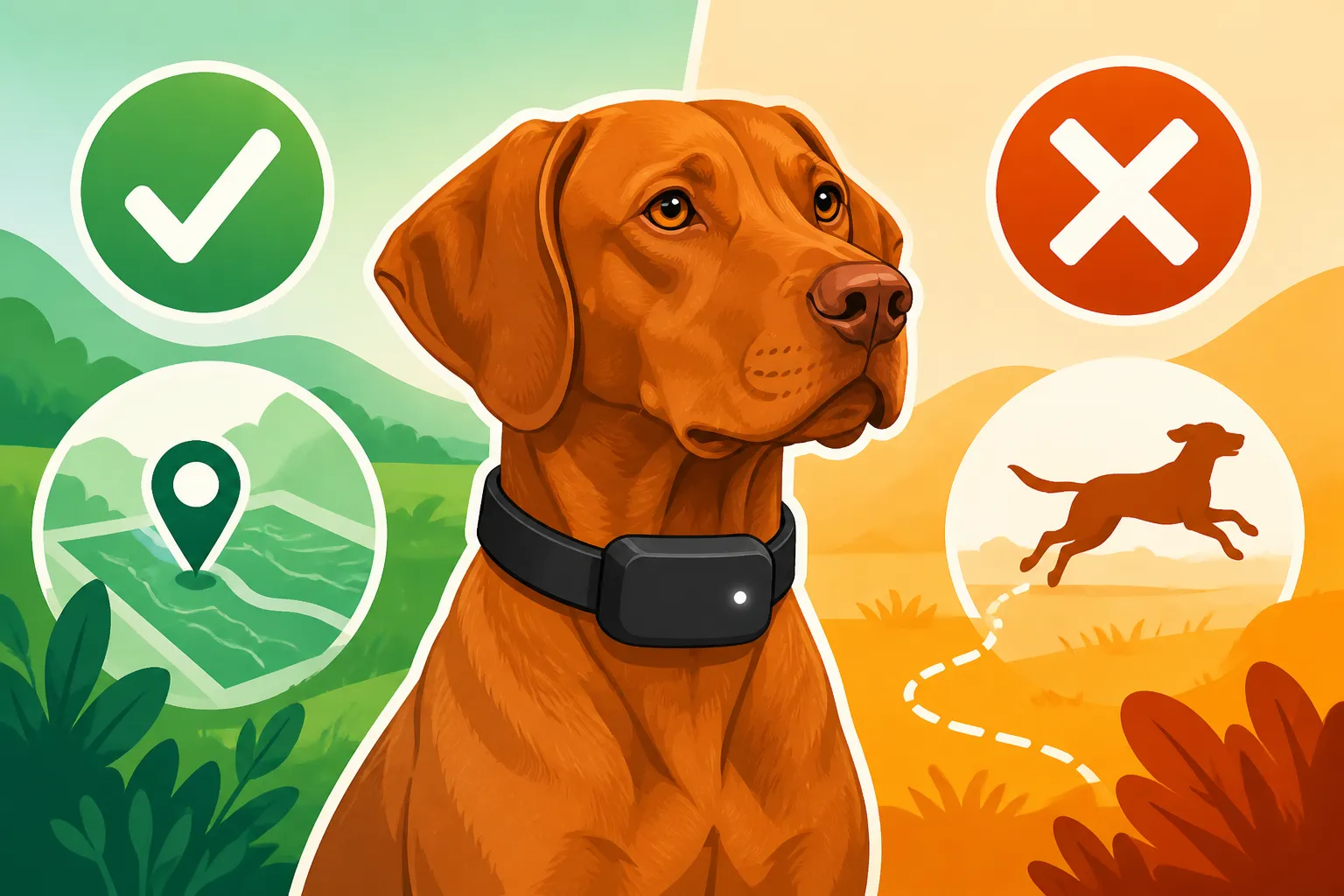
Whether a Vizsla Should Wear a GPS Collar
If you've ever owned a Vizsla, you know that their boundless energy and incredible prey drive mean they can disappear over the horizon in a blink. It’s a heart-stopping moment when you call and there’s no immediate response, leaving you to wonder if they’ve simply found an interesting scent trail or if they’re truly lost. This guide is dedicated to exploring whether a GPS collar is a worthwhile investment for Vizsla owners, examining how these devices work, their benefits, and the important considerations before you rely on one.
Understanding the Vizsla's Instinct to Range
Vizslas were bred for the field, designed to cover vast expanses of ground quickly and efficiently, seeking out game birds. This means they have an innate instinct to range widely, an urge that can sometimes put them out of sight and earshot faster than you can react. It's not defiance; it's deeply ingrained in their genetic makeup.
The Hunter's Drive: Why They Roam
Imagine a dog engineered to hunt all day, tirelessly quartering fields and forests, following scent with intense focus. That's your Vizsla. They aren't content to simply trot beside you; they want to explore, to follow that tantalizing rabbit scent, or to chase a pheasant flushing from the brush. This incredible drive means they often put distance between themselves and their handler. One moment they're there, the next they've crested a hill or plunged into a dense thicket, completely absorbed by their mission. For a breed that thrives on covering ground, a simple walk around the block hardly scratches the surface of their physical and mental needs. For many, taking a Vizsla out means going to places where they can truly run, and that often means open spaces where they can easily get out of sight. How Far a Vizsla Should Run Daily explores just how much ground they need to cover.
The Softness of the Breed and Its Impact on Recall
Despite their powerful hunting instincts, Vizslas are also famously "soft" dogs. They are highly sensitive to tone and can shut down if handled too harshly. This sensitivity extends to their training. While they are intelligent and eager to please, a harsh correction or a panicked yell when they've ranged too far can actually make them less likely to come back to you, associating your call with an unpleasant experience. This means that Building a Recall on a Vizsla That Ranges requires a patient, positive approach that can take time to solidify. Even the best-trained Vizsla can have an "off" day, or encounter a distraction so overwhelming that their instincts briefly override their training. It’s this combination of powerful instinct and sensitive temperament that makes the idea of a safety net like a GPS collar so appealing.
When Training Alone Isn't Enough
Let's be realistic: no matter how much effort you put into training, there are always variables outside your control. A sudden loud noise, a deer bursting from cover, or even another dog can trigger your Vizsla's instincts to bolt. They can be exceptional at recall 99% of the time, but that one percent can be devastating. Whether a Vizsla Chases Deer is a question many owners grapple with, and the answer is almost always a resounding "yes" if given the chance. In an unfamiliar area, or during a particularly engaging hunt, a Vizsla might extend their range beyond where they've been trained to check in. This isn't a failure of training, but an acknowledgment of the breed's deep-seated purpose.
How GPS Collars Work for Active Dogs
A GPS collar isn't just a fancy tracker; it's a piece of technology designed to leverage satellite signals to pinpoint your dog's location, often in real-time. For a high-energy, wide-ranging breed like the Vizsla, understanding how these devices function is key to appreciating their potential value.
The Technology Behind the Tracker
At its core, a GPS collar contains a small receiver that picks up signals from satellites orbiting the Earth. These signals allow the device to calculate its precise coordinates. That location data is then transmitted to your smartphone, computer, or a dedicated handheld receiver, typically via cellular networks, Bluetooth, or sometimes a proprietary radio frequency for specialized hunting systems. Most modern GPS collars integrate with user-friendly apps that display your dog's location on a map, often showing their movement history, speed, and even activity levels.
For Vizsla owners who take their dogs into remote areas, it's important to consider models that don't solely rely on cellular coverage, as cell service can be spotty in wilderness settings. Some advanced hunting-specific GPS systems create their own local network between the handheld device and the dog's collar, offering tracking even when off the grid. You can find a wide variety of GPS collars on platforms like Amazon, reading reviews and comparing features to find one that fits your Vizsla's needs and your budget, paying close attention to their stated range and network requirements.
Key Features to Look For
When considering a GPS collar for your Vizsla, several features stand out as particularly useful:
- Real-time Tracking: This is paramount. You want to see where your dog is right now, not just where they were five minutes ago. This is crucial for quickly intercepting them if they're heading towards a road or disappearing into dense cover.
- Geofencing: Many collars allow you to set virtual boundaries on a map. If your Vizsla crosses these boundaries, you receive an instant alert. This can be invaluable for containing them within a safe hunting area or a large, unfenced yard.
- Activity Monitoring: Some collars double as fitness trackers, logging your Vizsla's activity levels, distance covered, and even sleep patterns. This can be helpful for ensuring your energetic Vizsla is getting The Exercise a Vizsla Needs Every Day and isn't becoming An Under Exercised Vizsla Becomes Destructive.
- Durability and Waterproofing: Vizslas are active dogs that love to run through brush, swim, and get muddy. A collar needs to withstand these conditions. Look for devices that are rugged, impact-resistant, and fully waterproof, not just water-resistant.
- Long Battery Life: Tracking drains batteries. For long days in the field or multi-day trips, you'll want a collar that can last. Many offer different tracking modes (e.g., more frequent updates for shorter battery life, less frequent for longer).
Different Types of GPS Collars
The market offers a range of GPS collars, each with slightly different applications:
- Pet Trackers: These are generally more compact and designed for everyday use, often relying on cellular networks. They are great for monitoring your Vizsla in your local park or neighborhood.
- Hunting/Sporting Dog Trackers: These systems are built for the rigors of the field. They often have longer battery life, more robust construction, and may use proprietary radio frequencies in addition to GPS/cellular for better signal in remote areas. Some even combine GPS tracking with remote training collar (e-collar) functions, allowing you to use tone, vibration, or static stimulation to redirect your dog from a distance.
- Activity Trackers with GPS: While not always offering real-time, pinpoint accuracy for recovery, these devices focus on tracking your dog's daily movement and can provide general location data if they wander.
Understanding these distinctions helps you choose the right tool for your specific needs, whether it's for casual off-leash walks or serious hunting expeditions.
The Undeniable Benefits of a GPS Collar for Vizsla Owners
For a breed as active and predisposed to wander as the Vizsla, a GPS collar can transform outdoor adventures from potentially stressful experiences into genuinely enjoyable ones, offering peace of mind that's hard to put a price on.
Peace of Mind During Off-Leash Adventures
Every Vizsla owner knows the internal debate: do I let them off-leash and risk them disappearing, or do I keep them tethered and deny them the joy of truly running? With a GPS collar, that anxiety significantly diminishes. You can watch their icon on your phone, knowing exactly where they are, even when they're out of sight. This allows your Vizsla to truly stretch their legs and satisfy their need to run, which is absolutely vital for their physical and mental well-being. The Two Hours a Vizsla Needs Before It Will Settle is a very real requirement for these dogs, and often, that exercise needs to be off-leash.
Consider a scenario where you're at a large, unfenced park or a private hunting ground. Your Vizsla is doing what they do best – quartering the field, sniffing out every interesting scent. Suddenly, they get wind of something compelling and take off faster than you thought possible. Instead of panicking and blindly calling their name, you can glance at your device, see their trajectory, and calmly head in their direction, perhaps cutting them off or intercepting them before they get into trouble. This feeling of control and immediate knowledge is incredibly empowering.
Enhanced Safety and Rapid Recovery of a Lost Dog
The most obvious and perhaps most critical benefit is the ability to quickly locate a lost Vizsla. Whether they’ve slipped out an open gate, darted into unfamiliar territory during a hike, or simply gotten disoriented in thick cover, a GPS collar drastically reduces the time it takes to find them. This is especially important for a breed that can cover ground so quickly. The longer a dog is lost, the greater the risk of injury, traffic accidents, or encounters with wildlife.
Imagine your Vizsla, typically a pro at Whether a Vizsla Comes Back Off Game, suddenly decides today is the day they're going to chase that deer, not just point it. Or perhaps they've encountered a particularly fascinating scent and have followed it far off the beaten path. Instead of spending hours frantically searching and calling their name, you can follow a clear, precise map directly to their location. This rapid recovery minimizes distress for both you and your dog.
Geofencing for Boundary Training and Security
Geofencing is a powerful feature that turns your GPS collar into a virtual fence. You can draw custom boundaries on a map (e.g., your property line, the perimeter of a camping spot, or a designated off-leash area). If your Vizsla steps outside this digital fence, you receive an immediate alert on your phone.
This can be incredibly useful for:
- Reinforcing boundaries: It provides an early warning system if your Vizsla is pushing the limits of their recall or wandering too far.
- Temporary containment: If you're staying somewhere without a physical fence, a geofence can offer an extra layer of security, alerting you before your dog truly gets lost.
- Monitoring range: For hunting dogs, it helps you understand how wide your Vizsla is ranging and if they're staying within an acceptable area. Whether a Vizsla Ranges Wider Than a Shorthair is a common question, and a GPS collar can give you objective data on your specific dog's habits.
Activity Tracking and Health Monitoring
Many GPS collars offer more than just location. They can track your Vizsla's activity levels, including distance traveled, calories burned, and even sleep patterns. This data can be invaluable for monitoring your dog's health and ensuring they're getting adequate exercise.
For a Vizsla, who can be prone to certain health issues or simply needs a lot of exercise to stay balanced, this information is particularly helpful. You can see if they're having a lazy day or if they've been exceptionally active. It can help you notice subtle changes in their behavior or energy levels that might indicate a health concern. It's a way to keep a finger on the pulse of their well-being, complementing regular vet check-ups and observations.
Important Considerations Before Relying on a GPS Collar
While GPS collars offer a fantastic layer of security and peace of mind, they are not a magic bullet. It’s crucial to understand their limitations and how to integrate them responsibly into your Vizsla’s care and training regimen.
Cost and Ongoing Subscription Fees
GPS collars come with an initial purchase price, which can vary significantly depending on the features and brand. Beyond that, most real-time tracking collars require a subscription fee to cover the cellular data network usage that transmits your dog's location to your device. This can be a monthly or annual cost, and it's essential to factor it into your budget.
Before buying, compare different providers and their pricing structures. Some offer basic tracking with higher-tier plans for additional features like extended history or more frequent updates. Remember, this isn't a one-time expense, but an ongoing commitment. You might think, What a GPS Collar Costs for a Vizsla is a lot, but it pales in comparison to the emotional and potential financial cost of a truly lost dog.
Battery Life and Charging Habits
Just like your smartphone, a GPS collar needs to be charged. Battery life varies widely between models, with some lasting a few days and others only a few hours of continuous, real-time tracking. For a Vizsla who might be out in the field for extended periods, or if you simply forget to charge it regularly, a dead battery renders the device useless.
It's critical to establish a charging routine. Charge the collar overnight, or after every significant outing. Consider models with power-saving modes or those that allow for less frequent location updates to extend battery life if you know you'll be in an area without easy access to charging. Always carry a portable power bank if you're on a multi-day trip or deep in the wilderness.
Signal Reliability in Diverse Environments
GPS technology relies on satellites, and while generally robust, signal reliability can be impacted by several factors:
- Dense Cover: Thick forests, deep ravines, or heavily built-up urban areas can obstruct satellite signals, leading to reduced accuracy or temporary loss of signal.
- Cellular Coverage: Many collars use cellular networks to transmit data. If you're in an area with poor or no cell service, the collar might still know your dog's location via GPS, but it won't be able to send that data to your phone until it's back in range. This is where dedicated hunting systems with their own local radio frequency networks can have an advantage.
- Interference: While less common, certain types of electronic interference can also affect signal quality.
Always test your GPS collar in the types of environments where you typically take your Vizsla. Understand its limitations before you fully rely on it. A good quality collar will usually perform well, but it's important to be aware that no technology is 100% foolproof.
Not a Substitute for Training
This is perhaps the most crucial point: a GPS collar is a valuable tool, but it is never a substitute for solid obedience training, especially a reliable recall. Think of it as a safety net, not a primary method of control. If your Vizsla doesn't have a strong recall, they might still get into dangerous situations before you can even locate them and reach them.
A GPS collar helps you find your dog, but it doesn't teach them to stay close, avoid hazards, or return when called. Resources like BAXTER & Bella emphasize positive reinforcement methods that build a strong bond and reliable obedience, ensuring your Vizsla wants to come back to you, even if the tech fails. Continue to practice your recall in various environments, gradually increasing distractions and distance. The combination of excellent training and a reliable GPS collar offers the ultimate peace of mind.
| Feature | Benefit for Vizsla Owners | Potential Drawback |
|---|---|---|
| Real-time Tracking | Immediate location updates for quick recovery. | Can drain battery quickly; requires cellular/network. |
| Geofencing | Virtual boundaries alert you if your Vizsla strays. | Can create a false sense of security; not a physical barrier. |
| Durability | Withstands rugged outdoor adventures. | Can add to cost; heavier/bulkier. |
| Waterproofing | Protection from rain, mud, and swimming. | Varies by rating; not all are fully submersible. |
| Long Battery Life | Ideal for extended hunts or busy days. | Often means less frequent updates or larger size. |
| Activity Tracking | Monitors exercise levels and health trends. | May require additional subscription; data interpretation. |
| Integrated E-collar | Combines tracking with remote training functions. | Can be misused if not properly trained; adds complexity. |
In conclusion, for a Vizsla owner, a GPS collar is more than just a gadget; it's an investment in safety and freedom. It allows your magnificent, energetic dog to be the wide-ranging hunter they were born to be, while giving you the confidence that you can always bring them home. Just remember to pair that technology with consistent training and an understanding of its capabilities and limitations.
Disclaimer
This article is for general informational purposes only and does not constitute professional advice. Laws, prices and regulations vary by location and change over time. Consult a qualified professional for guidance on your specific situation.