Whether a Vizsla Gets Panosteitis
There's nothing quite as heartbreaking as seeing your vibrant, energetic Vizsla puppy suddenly limping, especially when they're still in that gangly, fast-growing stage. One minute they're tearing across the yard, the next they're favoring a leg, and you're left wondering if they've had a nasty fall or if something more insidious is at play. This guide aims to thoroughly demystify panosteitis, a common 'growing pain' condition in young, rapidly developing breeds like our beloved Vizslas, helping you understand, recognize, and manage it with confidence and compassion.
What Exactly is Panosteitis and Why Vizslas Are Susceptible
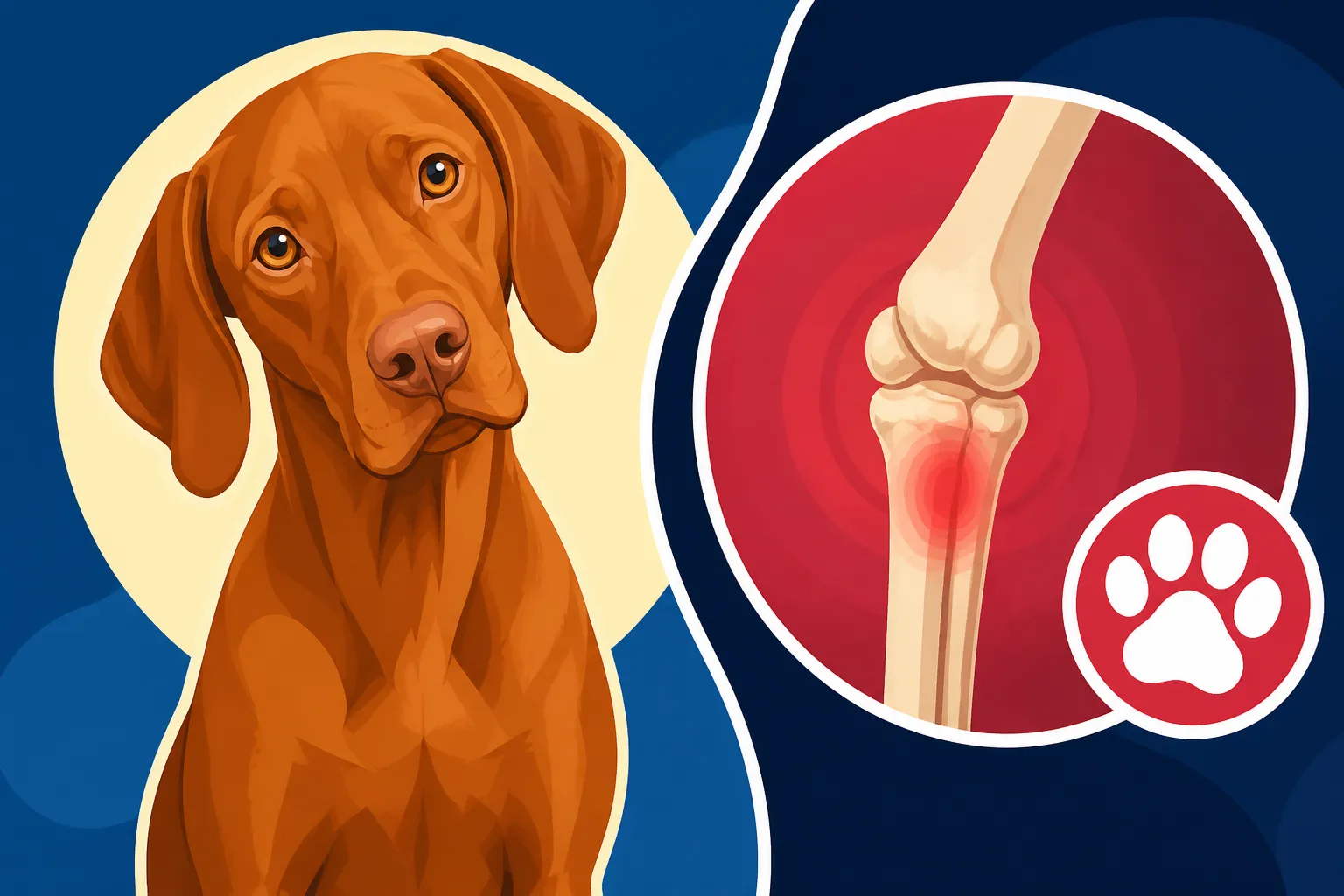
Panosteitis, often affectionately (or perhaps, exasperatedly) referred to as "pano" or "growing pains," is an inflammatory condition that affects the long bones of growing dogs. It's not an infection, nor is it related to injury in the traditional sense. Instead, it’s characterized by inflammation of the outer surface (periosteum) and inner marrow of the long bones, most commonly in the legs. Imagine the growth plates and bone marrow experiencing a sudden, often intense, burst of internal discomfort as the bones rapidly extend.
Vizslas, with their active lifestyles and characteristic rapid growth spurts, are indeed susceptible to panosteitis. While it's not a genetic disease in the same vein as Whether VIP Is Inherited in the Vizsla or Whether a Vizsla Gets Hip Dysplasia, it tends to affect large and giant breed puppies that grow very quickly. Vizslas fit this bill perfectly; they often shoot up in height and put on muscle at an astonishing rate during their first year. This rapid growth can sometimes outpace the development of supporting structures, leading to the inflammation that defines panosteitis. It typically manifests between 5 and 18 months of age, though it can appear as early as 2 months or as late as 2 years, often coinciding with peak growth periods. It's a condition rooted in the very nature of their accelerated development, a temporary hurdle in their journey to becoming magnificent adults.
Understanding the Bone Inflammation
At its core, panosteitis is an inflammatory response within the long bones. The long bones, like the radius, ulna, humerus (front legs), tibia, and femur (hind legs), are crucial for movement and support. During a puppy's intense growth phase, the cells within these bones are working overtime. For reasons not fully understood, sometimes this process becomes inflamed. This inflammation can affect the tough, fibrous outer layer of the bone (the periosteum), which is rich in nerve endings, causing significant pain. It can also involve the bone marrow itself, adding to the discomfort.
Because it's an inflammatory process rather than a structural defect, panosteitis typically resolves on its own once the dog reaches maturity and its growth plates close, usually by the time they are The Age a Vizsla Reaches Full Size around 18-24 months. However, during the active phase, it can be quite painful and certainly alarming for an owner who just wants their puppy to be happy and healthy. It's a challenging period for both dog and owner, as the invisible nature of the problem can make you feel helpless.
Why Fast-Growing Breeds Are More Prone
The correlation between rapid growth and panosteitis is undeniable. Breeds like Vizslas, German Shepherds, Great Danes, and Basset Hounds (yes, even Basset Hounds!) are commonly affected. The sheer speed at which their skeletal system develops seems to be a key factor. When a puppy grows very quickly, the various components of the bone might not develop in perfect synchronicity. The periosteum might experience tension or irritation from the rapidly expanding bone beneath it, leading to the inflammatory changes seen in panosteitis.
While specific genetic markers haven't been identified, a general predisposition within large breeds suggests there might be complex genetic factors influencing bone development rate. It's not about a "faulty" gene causing the disease directly, but rather a genetic blueprint that encourages rapid growth, which, in some individuals, triggers this temporary inflammatory response. This is why good breeding practices, focusing on overall health and temperament, are always paramount, though even the most well-bred Vizsla can experience pano. Owners often find themselves questioning every aspect of their puppy's care, from diet to exercise, desperate to pinpoint a cause, when in reality, it's often just an unfortunate byproduct of their spectacular growth.
Recognizing the Signs of Panosteitis in Your Vizsla
Spotting panosteitis can be tricky because its symptoms often mimic other, more serious conditions, and they tend to come and go. The hallmark sign is a sudden, unexplained lameness that can shift from one leg to another, or even affect multiple legs simultaneously. One day your Vizsla might be limping on its front left leg, and a few days later, it's the back right. This "shifting lameness" is a key indicator, but it’s crucial to observe your dog closely for other subtle clues that point towards this particular growing pain.
Shifting Lameness and Pain on Touch
The most common symptom you’ll notice is the limping. It can range from a mild stiffness to a severe, non-weight-bearing lameness. Your puppy might hop on three legs, or simply be reluctant to put full weight on an affected limb. What makes panosteitis particularly confusing for owners is its transient nature. The lameness might last for a few days, disappear completely, and then reappear in a different leg a week later. This waxing and waning pattern, combined with the shifting location of the pain, is often the strongest clue for pano.
When you gently palpate (feel) your Vizsla’s long bones—the upper arm (humerus), forearm (radius and ulna), thigh (femur), and shin (tibia)—you might notice they react with pain. The puppy may flinch, whine, or pull away, especially when you apply firm but gentle pressure along the shaft of the bone, rather than directly on a joint. This tenderness along the bone itself, rather than within the joint capsule, is another important diagnostic hint that differentiates it from conditions like Elbow Dysplasia in a Vizsla.
Other Accompanying Symptoms
Beyond the direct lameness and pain, Vizslas experiencing panosteitis can display a range of other symptoms that indicate they're generally feeling unwell. These might include:
- Lethargy and Decreased Activity: Your usually boisterous Vizsla puppy might be unusually subdued, unwilling to play, run, or engage in their usual energetic activities. They might sleep more or seem generally "off." This can be particularly noticeable in a breed known for its boundless energy, making their lethargy even more concerning.
- Loss of Appetite: In more severe cases, the constant discomfort can lead to a decrease in appetite. While a Vizsla is rarely one to turn down a meal, persistent pain might make them pickier or eat less than usual.
- Fever: Some puppies with panosteitis might develop a low-grade fever, further contributing to their general malaise. This isn't always present, but if observed alongside other symptoms, it adds to the picture of systemic inflammation.
- Muscle Atrophy: If a leg is severely painful and goes unused for an extended period, you might notice some muscle loss around that limb. However, because the lameness often shifts, severe, long-term atrophy is less common than with chronic joint conditions.
- General Malaise: Just like humans with growing pains or a nagging ache, a puppy with pano might just seem generally miserable. They might seek more comfort, be less tolerant of handling, or simply seem withdrawn.
It’s easy to jump to conclusions when your puppy is limping. Is it a sprain? A fracture? Could it be something serious like The Muscle Disease Named After the Vizsla? Because the signs can be so varied and confusing, documenting what you observe—when the lameness started, which leg was affected, how long it lasted, and any other symptoms—can be incredibly helpful for your veterinarian.
Here's a quick comparison of panosteitis versus other common limping causes in Vizsla puppies:
| Symptom / Condition | Panosteitis | Minor Injury (Sprain/Strain) | Hip/Elbow Dysplasia (Early Onset) | Osteochondritis Dissecans (OCD) |
|---|---|---|---|---|
| Onset Age | 2-24 months (peak 5-18 months) | Any age (often sudden after specific event) | 4-12 months (can be subtle, progressive) | 4-12 months (often specific joints) |
| Lameness Pattern | Shifting, intermittent, one or multiple limbs | Consistent in one limb, often improves with rest | Persistent, often bilateral, worsens with exercise | Consistent in one joint, worsens with exercise |
| Pain Location | Along the shaft of long bones | Specific joint or muscle group | Hip or elbow joint | Specific joint (shoulder, elbow, stifle) |
| Swelling/Heat | Rare, subtle | Often localized swelling and heat | Rare in early stages | Sometimes localized joint swelling |
| General Malaise | Possible (lethargy, decreased appetite, fever) | Usually localized, dog otherwise energetic | Less common initially | Less common, focus on joint discomfort |
| Radiographic Signs | Medullary opacities, periosteal reaction (may be absent early) | Soft tissue swelling, no bone changes initially | Joint malformation, subluxation | Cartilage flap, joint mice, subchondral bone defect |
| Prognosis | Excellent, self-limiting by maturity | Good with rest/supportive care | Guarded, often requires management/surgery | Fair to guarded, often requires surgery |
Diagnosing and Managing Panosteitis
When your Vizsla puppy starts limping, your first call should always be to your veterinarian. While panosteitis is generally benign, it’s critical to rule out other potentially serious conditions that can cause similar symptoms, such as fractures, ligament tears (like Cruciate Tears in a Working Vizsla), or developmental orthopedic diseases like hip and elbow dysplasia. A professional diagnosis provides peace of mind and ensures your Vizsla gets the appropriate care.
The Diagnostic Process at the Vet
Your vet will start with a thorough physical examination. They’ll observe your Vizsla's gait, feel each limb carefully, and gently palpate the long bones for signs of pain and swelling. They'll ask detailed questions about the onset of lameness, its pattern (shifting or consistent), and any other symptoms you’ve noticed. This history is invaluable, as the intermittent and shifting nature of the pain is a strong clue for panosteitis.
The definitive diagnostic tool for panosteitis is usually X-rays (radiographs) of the affected limbs. However, this is where it gets a little tricky. In the early stages of panosteitis, X-rays might appear completely normal, even if your puppy is in significant pain. It can take several weeks for the characteristic changes to become visible, which include increased density (sclerosis) in the bone marrow cavity and sometimes a fuzzy or thickened appearance of the periosteum. If the initial X-rays are inconclusive but the clinical signs strongly suggest pano, your vet might recommend a follow-up X-ray a few weeks later. This can be frustrating, as you want answers immediately, but patience is often required.
It's also essential that your vet rules out other possibilities. For instance, a condition called The Muscle Disease Named After the Vizsla (Vizsla Inflammatory Polymyopathy) can cause lameness and muscle wasting, especially around the head and neck, but is quite distinct from pano. Other growth-related issues, like Osteochondritis Dissecans (OCD), might involve specific joints and often require surgical intervention, unlike panosteitis. A comprehensive veterinary exam helps ensure the correct diagnosis.
Supportive Care and Pain Management
Fortunately, panosteitis is a self-limiting condition, meaning it resolves on its own as your Vizsla matures. There's no cure in the traditional sense, but management focuses entirely on supportive care and keeping your puppy comfortable during episodes of pain.
- Rest and Controlled Exercise: This is paramount. During painful flare-ups, restrict strenuous activity. This doesn't mean absolute crate rest in most cases, but rather avoiding running, jumping, and rough play. Leashed walks for potty breaks are usually fine, but listen to your puppy. If they're limping, they need a break. It can be hard to keep a high-energy Vizsla calm, but it's essential for their comfort.
- Pain Relief: Your vet will likely prescribe Non-Steroidal Anti-Inflammatory Drugs (NSAIDs) such as carprofen (Rimadyl), meloxicam (Metacam), or firocoxib (Previcox). These medications help reduce inflammation and pain, making your puppy much more comfortable. Always use pain medications exactly as prescribed by your vet, as improper use can lead to serious side effects.
- Warm Compresses: Applying warm compresses to the painful areas can provide some soothing relief. Just ensure the temperature is comfortable and doesn't burn their skin.
- Gentle Massage: Some owners find that gentle massage over the affected bones can help, but if your puppy is highly sensitive, it's best to avoid it. Always follow your dog's cues; if they show signs of discomfort, stop immediately.
- Dietary Review: While diet isn't a direct cause of panosteitis, ensuring your Vizsla is on a high-quality, balanced large-breed puppy food is important for overall healthy growth. Avoid over-supplementation with calcium or vitamins, as this can sometimes exacerbate growth disorders. Consult your vet before making any significant dietary changes or adding supplements. For instance, if you're wondering Whether Joint Supplements Help a Vizsla, it's best to discuss it with your vet in the context of panosteitis.
The goal is to manage each flare-up as it occurs, knowing that each one is temporary. This period can be emotionally taxing, but remember that you're helping your puppy navigate a tough but temporary phase. Pet insurance plans, such as those offered by Healthy Paws, can be incredibly helpful during this time, covering a significant portion of diagnostic tests and medication costs, alleviating some financial stress while you focus on your pup's comfort.
Living Through It: Management and Long-Term Outlook
Navigating panosteitis can feel like a marathon, not a sprint. The intermittent nature of the lameness, combined with the energetic demands of a Vizsla puppy, can test any owner's patience. However, understanding the long-term outlook and how to best manage your puppy's care during this period can make all the difference. The good news is that panosteitis is a temporary condition with an excellent prognosis for full recovery.
The Temporary Nature and Full Recovery
This is the most reassuring aspect of panosteitis: it is almost always a self-limiting condition. This means it will resolve on its own, typically by the time your Vizsla reaches skeletal maturity, usually between 18 and 24 months of age. Once growth plates close and the rapid growth phase is over, the inflammation subsides, and the pain disappears. There are generally no lasting effects or chronic issues associated with panosteitis itself. Your Vizsla will go on to be a healthy, active adult, free from the "growing pains" that plagued their puppyhood.
It’s easy to feel disheartened during a flare-up, especially when your puppy seems miserable. Remind yourself that this is a phase. While it can be tough to endure, the pain is temporary, and your Vizsla isn't experiencing permanent damage. This perspective helps in managing expectations and staying positive, even when you're dealing with a limping, sad-eyed puppy. This also means that panosteitis is quite different from more serious and persistent conditions that can affect a Vizsla’s joints, which might require ongoing treatment or even surgery.
Impact on Training and Activity During Growth
During periods of active panosteitis, it’s crucial to modify your Vizsla's activity level. This can be particularly challenging with a breed that, by nature, needs a lot of exercise and mental stimulation. Full rest during acute painful episodes is essential, but for milder or resolving lameness, controlled exercise is key. Short, leashed walks on soft surfaces are preferable to strenuous running or jumping. Avoid activities that put excessive stress on their growing bones, such as long-distance running, agility, or intense retrieving sessions.
Mental stimulation becomes incredibly important when physical activity is restricted. Puzzle toys, scent games, short training sessions focused on obedience cues, and even gentle massage can help keep your Vizsla engaged and prevent boredom-induced destructive behaviors. Remember, Whether an Under Exercised Vizsla Becomes Destructive is a real concern, so finding ways to channel their energy safely is vital. This period of limited activity is also a good opportunity to reinforce calm behaviors and practice Teaching a Vizsla to Be Alone in a positive way.
It's natural to worry about "losing" valuable training time, especially if you have aspirations for field work or competitive sports. However, prioritizing your puppy's physical comfort and healthy development during this critical growth phase will pay dividends in the long run. A well-rested, pain-free puppy will be much more receptive to training later on.
Dietary Considerations and Veterinary Support
As mentioned earlier, while diet isn't a direct cause, proper nutrition is vital for skeletal development. Feeding a high-quality, large-breed puppy food appropriate for your Vizsla's age and anticipated adult size is essential. These formulas are specifically designed to support steady, controlled growth, which can help minimize the likelihood or severity of growth-related issues. Avoid calorie-dense foods or excessive supplementation that could promote overly rapid growth. Always discuss your Vizsla's diet with your veterinarian, especially if you're considering Whether a Vizsla Needs Performance Kibble or Whether a Vizsla Can Eat Raw during this sensitive growth period.
Regular veterinary check-ups are important throughout your Vizsla's puppyhood, but especially when dealing with panosteitis. Your vet can monitor their progress, adjust pain management as needed, and confirm the resolution of the condition. They can also provide guidance on safe exercise levels and reassure you during flare-ups. Having a strong relationship with your vet ensures you have expert support every step of the way. When considering the overall What a Vizsla Costs a Year to Keep, factor in potential vet visits and medications for conditions like pano. Having pet insurance, like a policy from Healthy Paws, can significantly offset these costs, making it easier to provide the best care without financial strain. It ensures that when your Vizsla needs diagnostic tests or medication, you can proceed without hesitation, knowing you have support.
Panosteitis is a challenging but ultimately temporary hurdle in your Vizsla's development. With patience, appropriate pain management, and consistent veterinary guidance, your energetic companion will soon be back to their full, glorious self, ready to tackle all the adventures that lie ahead.
Disclaimer
The information provided in this article is for general informational purposes only and is not a substitute for professional veterinary advice. Always consult with a qualified veterinarian for any health concerns or before making any decisions related to your pet's health and treatment.