The Old Vizsla That Still Wants to Hunt
An aging Vizsla still retains an unwavering hunting drive, letting owners support senior dogs with shorter field outings.
Know what to watch for.
Breed-specific conditions, screening and DNA tests, what surgery actually costs, and the daily habits that stretch a healthy lifespan.

An aging Vizsla still retains an unwavering hunting drive, letting owners support senior dogs with shorter field outings.

The typical lifespan of a Vizsla spans twelve to fourteen years, influenced by genetics, lifestyle, nutrition, and environment.

Vizsla eye disease symptoms, diagnosis, and management options are explained to help owners protect their dogs vision and comfort.
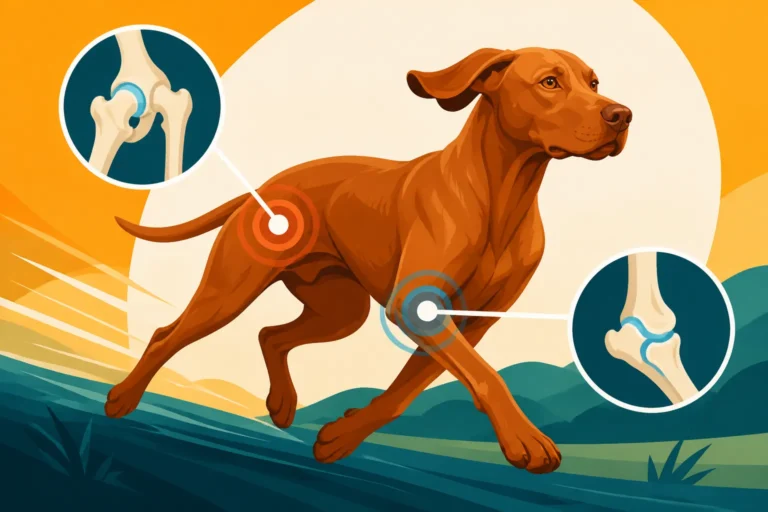
Vizsla hip and elbow dysplasia risks, joint stress, and preventative management for twelve to fourteen years of active life.

Vizsla cancer risks, genetic bottlenecks, and sensitive immune systems explain why the disease often affects these dogs early.

Canine epilepsy in Vizslas explains primary and secondary seizures, genetic predispositions, and potential underlying health problems.

Thyroid failure in Vizslas causes weight gain and coat loss, requiring proper diagnosis and long-term management strategies.

Vizsla immune system vulnerabilities stem from historical genetic bottlenecks that reduce diversity and increase autoimmune conditions.
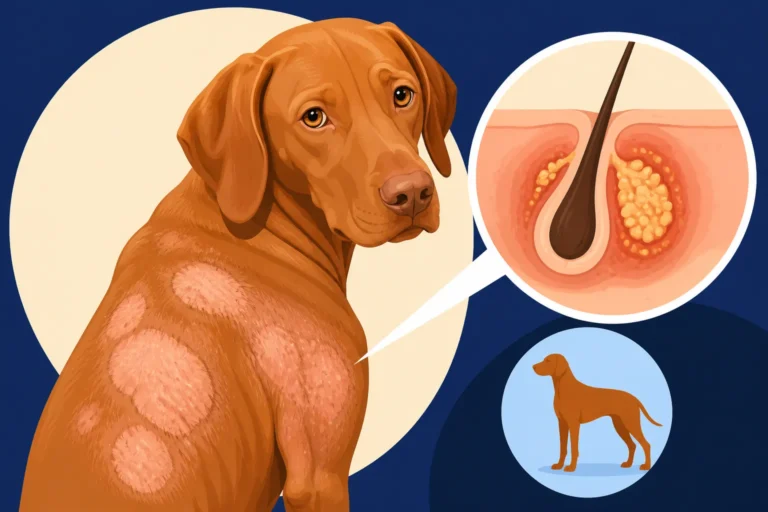
Sebaceous adenitis is an immune-mediated skin condition causing hair loss in Vizslas, explaining causes, symptoms, and management.
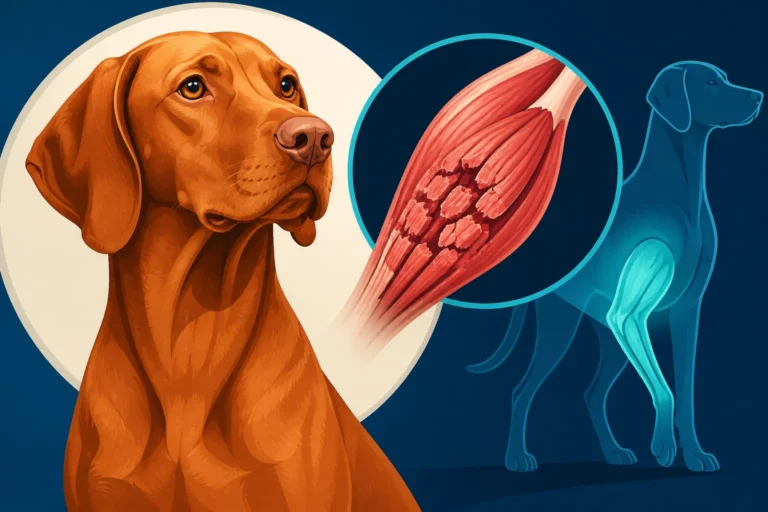
Vizsla Inflammatory Polymyopathy is an autoimmune muscle disorder affecting head, neck, and esophagus tissues in this dog breed.