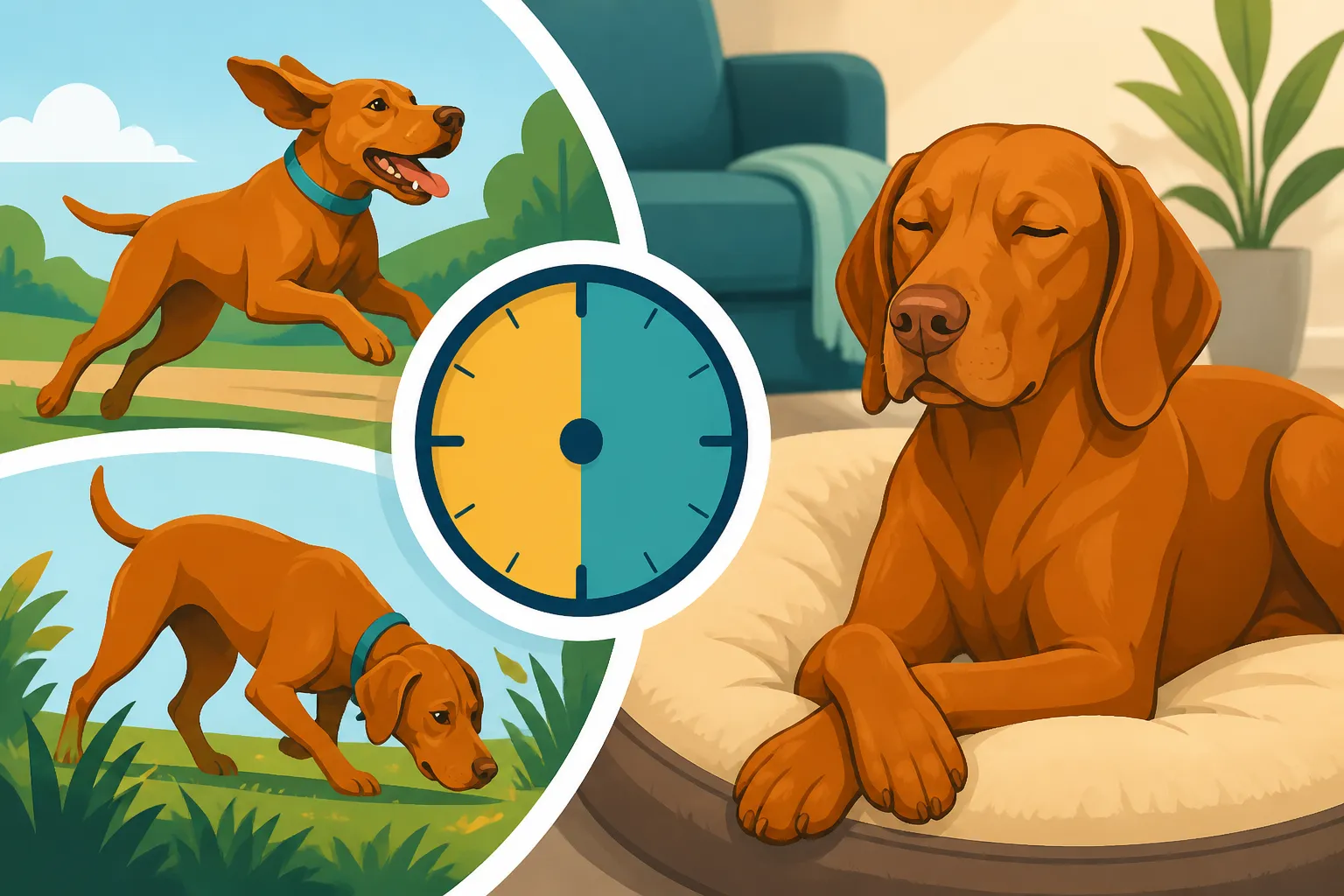
The Two Hours a Vizsla Needs Before It Will Settle
If you've ever owned a Vizsla, you know the feeling: you've just walked for an hour, thrown the ball for another 30 minutes, and still, your dog is pacing, nudging, or eyeing the door with unspent energy. It's a common frustration that leads many to wonder if their beloved copper dog will ever settle down. This comprehensive guide is here to shed light on exactly what it takes to meet your Vizsla's profound need for activity, helping you understand the "two hours" rule and, more importantly, how to achieve that blissful moment when they finally curl up and nap.
Understanding the Vizsla's Innate Drive for Activity
The Vizsla is a breed that truly embodies its working heritage, a fact that often surprises new owners. They aren't just pretty faces; they are finely tuned athletes with centuries of selective breeding behind their boundless energy and sharp minds. To truly understand why your Vizsla seems to possess a perpetual motion machine, you have to look at their history and inherent design.
The Hunter's Heritage: Built for the Field
Imagine the Hungarian plains, vast and open, where a hunter needed a dog capable of covering immense distances, pointing game, and retrieving tirelessly. That, in essence, is the blueprint for the modern Vizsla. They were developed to be versatile hunting dogs, a "pointer-retriever" that could work from dawn till dusk without flagging. This isn't just a quaint historical fact; it's etched into their very DNA. Every fiber of their being, from their lean musculature to their keen senses, is designed for sustained physical output.
Their ancestors weren't bred to be couch potatoes, even if they adore being on the couch. They needed to have incredible stamina to keep up with hunters on horseback, a desire to hunt close, and the intelligence to work cooperatively. This means that a casual stroll around the block, while pleasant for you, might barely register as exercise for a Vizsla. They crave purpose, movement, and the chance to use their bodies and minds in the way they were intended. Ignoring this deep-seated need isn't just a missed opportunity for bonding; it's a recipe for a restless, unfulfilled dog.
More Than Just Physical: The Mental Component
Here's where many well-intentioned Vizsla owners hit a wall. They spend hours throwing a ball, running miles, or even taking their dog on long hikes, only to find their Vizsla still wound up, pacing the house, or worse, starting to chew on the furniture. The mistake lies in focusing only on physical exertion. While their bodies demand intense activity, their sharp minds demand just as much.
A Vizsla's intelligence is part of their working dog charm. They are problem-solvers, keen observers, and highly trainable, but this also means they get bored easily. Imagine being an Olympic athlete confined to a treadmill, doing the same repetitive motion every day without any challenge or new skill to learn. You'd get physically tired, sure, but mentally, you'd be climbing the walls. It's the same for a Vizsla. If their brains aren't engaged, they'll find their own "work," which often manifests as destructive chewing, excessive barking, or an inability to relax indoors. Mental fatigue is just as important as physical fatigue for achieving true calm in a Vizsla.
Deconstructing the "Two Hours" — What Does It Actually Mean?
The oft-quoted "two hours of exercise a day" for a Vizsla can feel like an impossible mountain to climb for many owners. It can also be misleading if misinterpreted. It’s not simply a matter of clocking two hours of any activity; the quality, type, and age-appropriateness of that exercise are far more critical than the exact duration. Let's break down what this guideline truly means in practice.
The Quality of Exercise Over Quantity
Think of it this way: are all two-hour activities created equal for a human? A two-hour movie marathon might be relaxing, but a two-hour intense gym session would be truly tiring. The same principle applies to your Vizsla. A leisurely, on-leash sniff-walk around the neighborhood, while providing some sensory input, offers very little in the way of cardiovascular challenge or mental engagement for a high-drive Vizsla. They're still going to have plenty of zoomies left when you get home.
Contrast that with an hour of off-leash running, chasing a frisbee, or working on complex obedience commands in an open field, followed by a 30-minute training session and some puzzle toy time. While the total time might be less, the intensity and engagement are significantly higher. This kind of quality exercise, combining bursts of speed, mental puzzles, and social interaction, taps into their natural instincts and truly tires them out. It’s about meeting their physical needs for speed and stamina, their mental needs for problem-solving, and their emotional needs for interaction and purpose.
Age and Stage: Adapting Exercise Requirements
The "two hours" isn't a rigid rule that applies from puppyhood to old age. A Vizsla's exercise needs evolve significantly throughout their life. Pushing a young puppy too hard can actually be detrimental to their developing joints, leading to issues like Hip Dysplasia in a Vizsla later in life. On the other hand, under-exercising an adult Vizsla can lead to behavioral problems and an unhappy dog.
For Vizsla puppies, short, frequent play sessions are key. Think 10-15 minutes of play, three to four times a day, mixed with short training bursts. Forced running or long, sustained exercise on hard surfaces is a definite no-go until their growth plates close, usually around 12-18 months. Their energy levels might seem limitless, but their bodies are still fragile. An adult Vizsla, especially one from working lines, will indeed need significant exercise – often closer to the two-hour mark, but comprised of intense activity, not just slow walking. This is where activities like long runs, bike rides (Whether a Vizsla Runs With a Cyclist), or even dog sports come into play. Finally, senior Vizslas still need exercise, but it should be adapted to their changing bodies. Gentle walks, swimming, and mental games can help maintain mobility and cognitive function without overstraining them. The key is to be observant of your dog's individual needs and capabilities at every stage of their life.
The Pillars of Effective Vizsla Exercise
Getting your Vizsla to truly settle requires a multi-pronged approach that addresses their physical prowess, mental acuity, and social needs. Relying on just one type of activity, no matter how long, will likely leave you with a dog still buzzing with unspent energy. We need to build a comprehensive exercise regimen that targets all aspects of their well-being.
High-Intensity Physical Outlets
This is the bread and butter of Vizsla exercise, the kind of activity that truly gets their heart pumping and their muscles working. These dogs were bred for speed and endurance, so they need opportunities to stretch their legs and run, really run, at full tilt. Simply walking on a leash, no matter how long, won't cut it for these canine athletes.
Think about activities that mimic their hunting heritage. Long, off-leash runs in a safe, fenced area or expansive natural space are paramount. If you're a runner yourself, a Vizsla can be an incredible running partner, often able to keep pace for impressive distances once properly conditioned. Similarly, cycling with your Vizsla can be an excellent way to cover ground and burn energy, provided you introduce it slowly and safely. Hikes, especially those with varied terrain, offer both physical challenge and ample sniffing opportunities, satisfying their exploratory instincts. Whether a Vizsla Can Hike All Day is less about the distance and more about the type of hike – they'll generally thrive on challenging trails. Structured play, such as vigorous games of fetch with a ball or frisbee launcher, or engaging with a flirt pole, can provide intense bursts of speed and agility in a smaller space. These activities tap into their prey drive and can be incredibly tiring.
Engaging Mental Stimulation and Training
As we've discussed, a tired body doesn't necessarily mean a tired mind. Vizslas are intelligent and eager to please, making them fantastic candidates for various forms of mental stimulation. Ignoring this aspect of their needs can lead to frustration and destructive behaviors, even after a long run. Whether a Vizsla Needs Mental Work Too is a resounding yes!
Daily training sessions, even short ones, are invaluable. Working on advanced obedience commands, teaching new tricks, or practicing proofing commands in distracting environments can be incredibly brain-fatiguing. Scent work, such as nose work classes or even simple "find it" games around the house, taps into their natural tracking abilities and is wonderfully tiring. Think about hiding treats or toys and having them use their nose to locate them. Puzzle toys and feeders, which require your Vizsla to manipulate them to get food or treats, can keep their minds occupied for extended periods. Brands like KONG offer a variety of interactive feeders that can be stuffed with safe treats or kibble. For comprehensive training resources, BAXTER & Bella offers online programs that can help owners develop structured training plans, ensuring both physical and mental engagement. Remember, a mentally stimulated Vizsla is often a calmer Vizsla because their brain has been given a job to do.
Socialization and Play with Other Dogs
For many Vizslas, interacting with other dogs is not just fun; it's a vital part of their mental and physical well-being. They are generally gregarious and enjoy the rough-and-tumble play that only another dog can provide. This kind of social interaction can exhaust them in a way that human-led exercise sometimes can't.
Supervised playdates with compatible dogs can allow them to run, chase, wrestle, and engage in natural canine communication. This drains their energy while also improving their social skills. However, it's important to be selective about playmates and environments. Not all dogs are good playmates for a high-energy Vizsla, and overcrowded or chaotic dog parks can sometimes be overwhelming or even dangerous. Look for controlled environments, like doggy daycare with good supervision, or arrange playdates with friends whose dogs you know are a good match. A Vizsla might even benefit from having a companion dog if their needs align, as addressed in Whether a Second Dog Fixes a Vizsla's Anxiety. The sheer joy and effort of a good game of chase with another dog can leave your Vizsla happily panting and ready for a long nap.
Scheduling and Structuring Your Vizsla's Day
Understanding what kind of exercise your Vizsla needs is one thing; figuring out how to fit it into a busy human schedule is another. A consistent routine is paramount for Vizslas, as predictability helps them feel secure and understand what's expected of them. Without a structured day, they can become anxious and restless, constantly anticipating the next activity.
Morning Rush: Setting the Tone
The morning is arguably the most critical time for a Vizsla's exercise. They wake up with a full battery, eager to start their day. A strong morning routine that burns off this initial burst of energy can significantly impact their behavior for the rest of the day. Skimping on morning exercise often results in a restless, demanding, or destructive dog for hours afterward.
Ideally, your morning routine should involve a high-intensity activity. This could be a solid 45-60 minute off-leash run or rigorous retrieve session at a park, a brisk run with you, or a long, fast-paced walk focusing on obedience commands. The goal is to get their heart rate up, their muscles working, and their brain engaged before you head off to work or start your day's tasks. Imagine trying to concentrate at your desk when you're buzzing with unspent energy – it's no different for your Vizsla. A properly exercised Vizsla in the morning is much more likely to settle down and relax while you're busy, perhaps enjoying a chew toy or simply napping.
Mid-Day Engagement and Breaks
Not everyone has the luxury of being home all day, but for those with flexible schedules, a mid-day burst of activity can be a game-changer. Even if you work from home, it's easy to get caught up and forget your Vizsla's needs. A mid-day check-in, walk, or play session can break up their day, prevent boredom, and recharge their mental batteries.
If you can, a 30-45 minute walk, a short training session, or some interactive puzzle toy time can make a huge difference. This isn't about exhausting them again, but about providing a mental and physical break. If you're away from home, consider a professional dog walker who understands the Vizsla's energy needs, or doggy daycare, which can provide structured play and supervision. Even for those with demanding schedules, utilizing enrichment toys (like a frozen KONG) can provide mental stimulation and keep them occupied for a while. Remember, How Many Hours a Vizsla Can Be Left Alone really depends on how well their needs are met before and after that alone time. A tired Vizsla handles solitude much better than a bored, energetic one.
Evening Wind-Down: Preparing for Rest
While the morning often focuses on high-intensity activity, the evening routine should be about winding down. You want to provide enough activity to prevent restlessness but avoid over-stimulating them right before bedtime. The goal is to create a state of relaxed contentment, not wired exhaustion.
A final, moderate walk for sniffing and potty breaks, perhaps 30-45 minutes, is usually sufficient. This walk can be a good time to reinforce loose-leash walking or practice some calm heeling. Avoid intense ball-throwing or high-adrenaline games right before bed, as this can elevate their heart rate and make it harder for them to settle. Once indoors, transition to calming activities. This could include a long-lasting chew, a gentle grooming session, or simply quiet cuddle time on the sofa. Vizslas are famously affectionate and thrive on physical contact, so this bonding time is crucial for their emotional well-being and helping them feel secure enough to relax. A good routine helps them understand that after dinner and this final outing, it's time to settle, providing a clear signal for their internal clock.
| Time of Day | Recommended Activities | Type of Stimulation | Intensity | Ideal Outcome |
|---|---|---|---|---|
| Morning | 45-60 min off-leash run/fetch, bike ride, brisk hike, structured obedience | Physical, Mental, Sensory | High | Burn off initial energy, prevent restlessness, set a calm tone for the day. Vizsla settles for several hours afterwards. |
| Mid-Day | 30-45 min walk, short training, puzzle toy, supervised playdate, dog walker | Physical, Mental, Social | Moderate | Break boredom, stretch legs, mental reset. Prevents afternoon "witching hour" and destructive behaviors. |
| Evening | 30-45 min moderate walk, scent games, long-lasting chew, cuddle time | Physical (low), Mental, Emotional | Low-Medium | Final potty, reinforce calm behavior, emotional bonding. Prepares Vizsla for peaceful sleep. |
Common Mistakes and Misconceptions
Even with the best intentions, it's easy to fall into common traps when trying to manage a Vizsla's energy. These noble dogs have such specific needs that what works for other breeds often falls short for them. Understanding these pitfalls can save you a lot of frustration and help you create a more effective routine for your copper companion.
The Endless Walk Fallacy
One of the most common mistakes owners make is believing that sheer duration of walking will exhaust a Vizsla. You might proudly take your Vizsla on a two-hour walk, only to have them return home and immediately start zooming around the living room, bringing you toys, or pacing restlessly. This isn't because they're being "bad" or defiant; it's because the walk, while long, didn't adequately meet their specific needs.
A typical walk on a leash, even if it covers many miles, often lacks the elements that truly tire a Vizsla: bursts of speed, mental challenges, and off-leash freedom to explore. They need to gallop, chase, and engage their powerful hunting instincts. If they're constantly held back by a leash, or if the environment doesn't offer novel scents and varied terrain, they're only getting a fraction of the workout they require. It's like sending a marathon runner to walk for two hours – they'll be physically moving, but it won't satisfy their drive for intense exertion. A long, sniffy walk has its place for sensory enrichment, but it rarely replaces the need for high-intensity physical activity and mental work.
Underestimating the Need for Consistency
Vizslas are creatures of habit, and they thrive on routine. They are highly intelligent and quickly learn what to expect from their day. When their exercise schedule is inconsistent – perhaps a huge outing on Saturday but minimal activity on Tuesday – they can become frustrated, anxious, and generally harder to manage. This inconsistency is a prime reason Whether an Under Exercised Vizsla Becomes Destructive is a common issue.
Imagine your Vizsla waiting for their usual morning run, only to get a quick potty break instead. They won't just "deal with it"; that pent-up energy and anticipation will likely manifest in unwanted behaviors later in the day. The "weekend warrior" approach, where you try to make up for a week of insufficient exercise with one huge outing, rarely works. It can even be detrimental, potentially leading to injuries if your dog is suddenly pushed too hard after days of inactivity. Instead, aim for a consistent daily baseline of appropriate exercise, varying the type of activity if you wish, but maintaining the overall quantity and quality. This predictability helps your Vizsla relax, knowing their needs will be met regularly.
Ignoring Signs of Over-Tiredness
While it might seem counterintuitive for such an energetic breed, Vizslas can absolutely become over-tired, and it often presents not as sleepy calm, but as hyperactivity or crankiness. They are masters at pushing through fatigue, and sometimes more exercise isn't the answer. Instead of settling, an over-tired Vizsla might get nippy, bark excessively, have trouble focusing, or even become more destructive.
It's important to learn your Vizsla's individual cues for fatigue. These might include increased panting (beyond normal after exercise), a glazed look in their eyes, clumsiness, difficulty responding to commands, or a sudden surge of "zoomies" that seem out of control. Just like an over-tired toddler, they can seem to get a second wind that is actually a sign of needing to wind down. Pushing them past this point can lead to a dog who struggles to self-regulate and settle. The goal isn't to exhaust them to the point of collapse, but to provide enough quality activity so they are pleasantly tired and ready to relax willingly. Knowing when enough is enough, and transitioning to quiet, calming activities, is a crucial skill for any Vizsla owner.
Tools and Resources to Help Your Vizsla Settle
Successfully managing a Vizsla's energy isn't just about time and effort; it's also about having the right gear and knowing where to turn for help. Equipping yourself with the proper tools can make your exercise routines more efficient, safer, and more enjoyable for both you and your dog.
Essential Gear for Active Vizslas
For a dog as active and athletic as a Vizsla, having durable, well-fitting, and effective gear is non-negotiable. Investing in quality items upfront can save you headaches and money in the long run.
A reliable leash and harness are fundamental. While a flat collar might be fine for some dogs, a well-designed harness (front-clip or back-clip, depending on your dog's pulling habits) can provide better control and comfort, especially during vigorous walks or runs. Brands found on platforms like Amazon offer a wide array of options, from hands-free running leashes to padded harnesses designed for comfort during long treks. For off-leash activities, especially in expansive areas, a GPS collar can offer invaluable peace of mind. Vizslas, with their strong prey drive and wide-ranging instincts, can cover ground incredibly quickly. A GPS tracker, like those from popular canine tech brands, allows you to monitor their location in real-time and quickly locate them if they get too far ahead or become engrossed in a scent. Whether a Vizsla Should Wear a GPS Collar becomes an emphatic yes for many owners who value off-leash freedom. Don't forget durable, engaging toys! Fetch toys, tug toys, and appropriate chew items (like West Paw or Benebone) are essential for both exercise and indoor mental stimulation.
Enrichment Toys and Puzzle Feeders
Meeting a Vizsla's mental needs is just as important as their physical ones. Enrichment toys and puzzle feeders are fantastic tools for keeping their intelligent minds engaged, especially when you can't be actively training or exercising them. They provide a constructive outlet for their problem-solving instincts and can significantly contribute to their ability to settle.
Puzzle feeders come in many forms, from simple slow-feeder bowls that make mealtime last longer to complex interactive toys that require multiple steps to release treats. Stuffable toys like KONGs, filled with kibble, wet food, or dog-safe peanut butter and then frozen, can provide long-lasting mental work and a calming chew session. Snuffle mats allow your Vizsla to "hunt" for their kibble or treats, engaging their powerful sense of smell. These activities don't just kill time; they provide genuine mental fatigue, which is often key to a truly settled dog. Instead of mindless chewing on inappropriate objects, these tools redirect their energy into fulfilling, mentally stimulating tasks.
Professional Support and Training Programs
Sometimes, despite your best efforts, you might feel like you're not quite hitting the mark, or perhaps your Vizsla has developed a specific behavioral challenge. This is where professional support can be invaluable. Don't hesitate to seek help; it's a sign of a responsible owner committed to their dog's well-being.
A qualified professional dog trainer or behaviorist can assess your Vizsla's specific needs, help you fine-tune your exercise routine, and address any behavioral issues that might stem from under-stimulation or anxiety. They can teach you new training techniques and help you understand your dog's motivations better. For instance, Whether a Pro Trainer Is Worth It for a Vizsla often depends on your own experience and specific goals. Many Vizsla owners find immense benefit in joining dog sports such as agility, flyball, canicross, or scent work. These activities provide a structured outlet for their energy, build confidence, and strengthen your bond. Online platforms, like the aforementioned BAXTER & Bella, offer structured training programs that can guide you through various stages of obedience and enrichment, helping you to harness your Vizsla's intelligence effectively. Remember, training is an ongoing journey, and these resources are there to support you every step of the way.
The Payoff: A Content and Settled Vizsla
After all the planning, the runs, the training sessions, and the puzzle toys, there's a moment that every Vizsla owner dreams of: seeing their energetic, sometimes demanding, companion finally relax. Achieving a truly settled Vizsla isn't just about quiet; it's about a deep sense of contentment and fulfillment.
Recognizing a Truly Settled Vizsla
A genuinely settled Vizsla isn't just lying down; they are relaxed. Their muscles are loose, their breathing is even, and their eyes are soft, perhaps even closed in a deep slumber. You might see them sigh contentedly, shift slightly into a more comfortable position, or simply observe their surroundings with a calm demeanor rather than an anxious, watchful one. They're not pacing, whining, or bringing you every toy in the house.
Instead of trying to find things to do, they might be happily chewing on an appropriate toy, not out of boredom but out of enjoyment. Their naps are longer and deeper. The tell-tale signs of a well-exercised and mentally stimulated Vizsla are the absence of destructive chewing, excessive barking, constant nudging, or an inability to lie still. They transition smoothly from activity to rest, demonstrating that their physical and mental batteries have been adequately drained and recharged. This state of calm is a powerful indicator that you are meeting their needs effectively.
Beyond Exercise: The Role of the Human-Vizsla Bond
While proper exercise is foundational, it's not the sole ingredient for a settled Vizsla. The unique bond you share with your dog, built on trust, affection, and clear communication, plays an equally vital role. Vizslas are famously known as "Velcro Vizslas" for a reason; they thrive on companionship and being an integral part of their human family. Why They Call It a Velcro Vizsla is about their profound need for connection and proximity.
This means reinforcing calm behavior, not just ignoring it. When your Vizsla is quietly resting, offer a gentle stroke or a soft word of praise. Create a comfortable, safe space for them indoors where they can truly unwind, whether it's a cozy dog bed or their spot on the couch beside you. Consistency in expectations and a clear understanding of boundaries also contribute to their sense of security. They feel safe and understood when they know what to expect from you. Ultimately, a Vizsla that is well-exercised, mentally stimulated, and deeply connected to their human companions is a Vizsla that finds true peace and contentment in their home. It's a journey, undoubtedly, but one filled with incredible rewards as you watch your vibrant, intelligent partner truly thrive.
Disclaimer
This article is for general informational purposes only and does not constitute professional advice. Laws, prices and regulations vary by location and change over time. Consult a qualified professional for guidance on your specific situation.