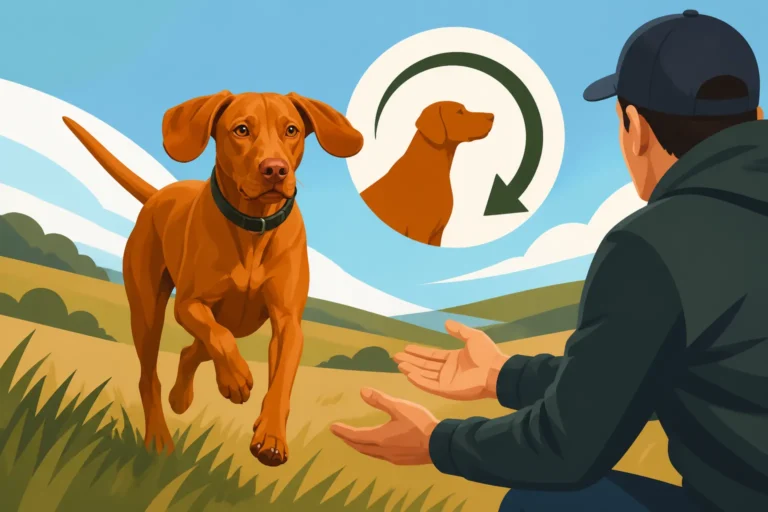
Whether a Vizsla Needs Formal Gun Dog Training
Bringing a Vizsla into your home, especially if you have dreams of hitting the field with them, often sparks a big question: is their natural hunting instinct enough, or do they truly need formal gun dog training? It's a valid concern, as these fiery red dogs are born with an incredible drive, but managing that drive and turning it into a polished, reliable hunting partner is a whole different ballgame. This guide will dive deep into whether formal training is necessary for your Vizsla, exploring the benefits, challenges, and what kind of commitment you're really looking at, whether you plan to compete or just enjoy a day out in the blinds.
Understanding the Vizsla's Natural Instincts
Vizslas are often called "Velcro dogs" for a reason – they crave connection and are incredibly intelligent. But beneath that affectionate demeanor lies centuries of selective breeding for a specific purpose: hunting. They come equipped with a suite of natural instincts that are truly impressive.
The Genetic Blueprint of a Hunter
From the moment a Vizsla puppy tumbles out of the whelping box, many of the traits that make them exceptional bird dogs are already simmering beneath the surface. These aren't just random behaviors; they are deeply ingrained genetic predispositions that have been carefully cultivated over generations. Think about their ancestors in Hungary, working vast plains and dense cover alongside hunters. This history isn't just a fun fact; it's the very foundation of your dog's being.
You’ll likely see this innate ability manifest in various ways even before any formal training begins. Puppies often show an early interest in birds, pointing instinctively at a feather blown across the yard, or trying to mouth and carry anything soft they find. Whether a Vizsla Points Naturally is a common question, and for most, the answer is a resounding yes, to some degree. They often display a natural "soft mouth" when retrieving, meaning they tend to pick up and carry game gently without damaging it. This is a huge asset, as it saves you a lot of remedial work down the line. Their incredible nose is another genetic gift, allowing them to scent birds from a remarkable distance. They also possess an intense prey drive, which fuels their desire to find and work game. These are all incredible raw materials, making the Vizsla one of the most versatile and naturally talented pointing breeds.
Why Natural Ability Isn't Always Enough
While a Vizsla's natural instincts are a phenomenal starting point, it’s crucial to understand that raw talent alone rarely translates into a truly reliable and effective gun dog in the field. Imagine a naturally gifted athlete who never coaches or practices structured drills; they might be good, but they'll never reach their full potential or perform consistently under pressure. The same applies to your Vizsla.
Their prey drive, while essential, can easily become unfocused or overwhelming without proper direction. A young Vizsla might chase every bird it sees, flushing them wild, or range so far that they become detached from you, making hunting a chaotic and frustrating experience. They might point, yes, but will they hold that point steady until you arrive? Will they retrieve to hand every time, or will they play keep-away with your hard-earned bird? Whether a Vizsla Retrieves to Hand reliably is often a learned behavior, not just an instinctive one. Formal training teaches them precision, control, and consistency, ensuring that their natural abilities are harnessed and refined for the specific demands of hunting. It’s about building a robust communication system between you and your dog, so they understand exactly what you expect, even amidst the distractions and excitement of the hunt.
The Benefits of Formal Gun Dog Training
So, if natural instinct isn't enough, what exactly does formal gun dog training bring to the table? It’s far more than just teaching a few commands; it’s about shaping a well-rounded, dependable hunting companion.
Building a Reliable, Polished Field Partner
Formal training transforms a dog with good instincts into a confident, disciplined, and predictable partner. It's about taking those inherent traits and building layers of understanding and control upon them. Think of recall, for example. Your Vizsla might come when called in the backyard, but will they come screaming back to you when they've got their nose full of pheasant scent and are thirty yards out in thick cover? Building a Recall on a Vizsla That Ranges is a monumental task that requires consistent, structured training, often with distractions.
A well-trained gun dog understands complex commands and executes them consistently, whether it’s "whoa" to stop on a point, "fetch" to retrieve a downed bird, or handling directions to find fallen game. They learn to ignore distractions, hold their points steadily, and honor another dog's point without breaking. This isn't just about showing off; it's about making your hunts more successful, enjoyable, and safe. A professional trainer, or a dedicated owner following a structured program, will introduce your Vizsla to the sights, sounds, and smells of the field in a controlled manner, slowly building their confidence and skill set. This methodical approach ensures that your Vizsla develops a solid foundation of obedience that holds up under real-world hunting conditions, making them a true asset rather than a liability.
Safety and Ethical Hunting Practices
Beyond performance, formal gun dog training plays a crucial role in ensuring safety for both your dog and everyone else in the field. An uncontrolled dog can quickly become a hazard. Imagine a dog that breaks point early, flushing birds toward another hunter, or one that runs uncontrolled through an area, potentially crossing into unsafe zones. This isn't just bad etiquette; it's dangerous.
A properly trained Vizsla understands boundaries, comes immediately when called, and remains calm and steady even when gunfire is happening around them. Introducing a Vizsla to gunfire in a controlled, positive way is a key component of formal training, preventing them from becoming Whether a Vizsla Is Gun Shy. They learn to associate the sound of a shot with the exciting prospect of retrieving a bird, rather than with fear. Furthermore, formal training instills good game manners. A dog that can reliably retrieve to hand minimizes lost birds, contributing to ethical hunting practices and reducing waste. This level of control and predictability allows you to focus on the hunt, knowing your dog will perform its role safely and efficiently, respecting both the game and fellow hunters.
DIY Training Versus Professional Guidance
Once you've decided that training is essential, the next big question is: do you tackle it yourself, or do you enlist the help of a professional? Both paths have their merits and challenges, and the right choice often depends on your experience, time, and goals.
The Realities of Self-Training a Vizsla
Many Vizsla owners, myself included, dream of personally shaping their dog into a hunting machine. It’s a deeply rewarding experience, forging an incredible bond with your dog through shared effort and success. However, it's vital to go into this with your eyes wide open about the commitment involved. Self-training a gun dog, especially a Vizsla with all their energy and intelligence, is a significant undertaking. You need time – a lot of it – for consistent daily sessions, exposure to different environments, and repeated drills.
You also need knowledge. Simply watching a few YouTube videos won't cut it. You'll need to research effective gun dog training methodologies, understand canine learning theory, and be able to troubleshoot problems as they arise. Books, online courses (like those offered by BAXTER & Bella which provide structured step-by-step guidance), and local club resources can be invaluable. You'll need access to appropriate training grounds, live birds (like pigeons or quail), and specific equipment such as check cords, whistles, and potentially a bird launcher. Many of these items can be found readily on platforms like Amazon. Moreover, you must possess patience and consistency. Vizslas are soft and sensitive; harsh handling can Whether Shouting at a Vizsla Sets It Back Weeks and erode their confidence. You need to be able to stay calm, clear, and positive, even when your dog isn't getting it right away. If you have the time, dedication, and a willingness to learn, self-training can be an incredibly fulfilling journey, but it’s far from the easy road.
When Professional Training Becomes Invaluable
For many, sending their Vizsla to a professional gun dog trainer is a wise investment. Perhaps you lack the specific expertise, the time, or the access to resources needed to develop a truly finished gun dog. Professional trainers have dedicated facilities, experienced staff, and a constant supply of training birds. They work with dogs every single day, understand how different breeds learn, and can quickly identify and address behavioral or training roadblocks.
A professional trainer can often achieve in weeks what might take a novice owner months or even years. They can introduce your Vizsla to complex scenarios, build advanced handling skills, and ensure that your dog is fully "proofed" – meaning they perform reliably under all kinds of distractions and pressures in the field. This can be particularly beneficial for Starting a Vizsla on Birds correctly or addressing specific issues like gun shyness. While the cost of professional training can be substantial, as explored in What a Professional Trainer Charges for a Vizsla, many owners find it pays dividends in the form of a reliable, enjoyable hunting partner. Even if you choose professional training, remember that you still need to learn how to handle your dog once they return home. Good trainers will work with you to ensure a smooth transition and teach you the commands and cues your dog now understands.
Here’s a quick comparison to help you weigh your options:
| Aspect | DIY Training | Professional Training |
|---|---|---|
| Cost | Lower direct costs, higher indirect (time, errors) | Higher direct costs (fees), potentially lower indirect |
| Time Commitment | Very High (daily sessions, research, problem-solving) | Lower for owner, higher for dog away from home |
| Expertise Required | Significant (owner must learn and apply) | Provided by professional, owner learns handling from them |
| Resources Needed | Access to birds, training grounds, equipment, books | Provided by trainer (birds, grounds, specialized equipment) |
| Consistency | Dependent on owner's discipline and availability | High, structured daily routine by expert |
| Bonding | Very strong through shared direct experience | Strong, but more developed post-training |
| Common Pitfalls | Inconsistency, frustration, creating bad habits | Cost, potential stress of separation for dog |
Tailoring Training to Your Vizsla's Future
The "necessity" of formal gun dog training often hinges on what you envision for your Vizsla's role in your life. A casual hunting companion has different needs than a competitive field trial dog, and a beloved family pet has different requirements altogether.
Training for the Casual Hunter vs. Competition
If your goal is simply to enjoy a few hunting trips a year, perhaps for upland birds or waterfowl, your training needs will be different than someone aiming for field trial championships. A casual hunter still needs a dog with solid foundational obedience, a reliable recall, steady points, and enthusiastic retrieves. You'll want a dog that can stay with you, respond to commands, and be safe in the field. For this, a well-structured self-training program, perhaps supplemented by weekend workshops or a short stint with a professional for specific issues, might suffice. Focus on practical skills: Whether a Vizsla Works Close Enough for a Walking Hunter or how to quarter a field efficiently.
However, if your sights are set on competition – be it hunt tests or field trials – then formal, high-level gun dog training becomes almost indispensable. Competitive events demand a level of precision, speed, and consistency that only comes from extensive, specialized training. Dogs must perform complex tasks flawlessly under pressure, demonstrating advanced marking, handling, and honoring skills. In this scenario, professional training is often the most efficient and effective route. Trainers who specialize in competition understand the nuances of the rules, the expectations of the judges, and how to bring out the absolute best in a dog for that specific environment. It's about turning a naturally gifted dog into a finely tuned, top-tier athlete.
What About the Pet Vizsla?
What if your Vizsla will never see a day of hunting? Does formal gun dog training still matter? Absolutely. While they may not need to hold a steady point on a pheasant, the underlying principles and benefits of gun dog training apply directly to making your Vizsla an outstanding companion dog. Many of the skills developed in gun dog training – such as rock-solid recall, focused obedience, impulse control, and exposure to various environments – translate directly into a well-behaved, happy, and confident family pet.
A Vizsla, by its very nature, needs a job and plenty of exercise. The Two Hours a Vizsla Needs Before It Will Settle is a common benchmark, and without appropriate outlets, their energy and intelligence can lead to destructive behaviors, anxiety, or general unruliness. Basic obedience is just the start. Engaging them in activities that tap into their natural instincts, even if not hunting, can be incredibly enriching. Scent work, agility, Canicross, or even just advanced obedience drills can provide that mental and physical stimulation. Think of a strong recall developed for the field keeping your dog safe at the dog park, or impulse control preventing them from darting after a squirrel. Even a pet Vizsla benefits immensely from structured training that respects their breed-specific needs and intelligence. Investing in good training, whether through a class or a robust online program like those from BAXTER & Bella, will yield a calm, well-adjusted companion that is a joy to live with, proving that a well-trained Vizsla is a happy Vizsla, no matter their role.
Disclaimer
This article is for general informational purposes only and does not constitute professional advice. Laws, prices and regulations vary by location and change over time. Consult a qualified professional for guidance on your specific situation.