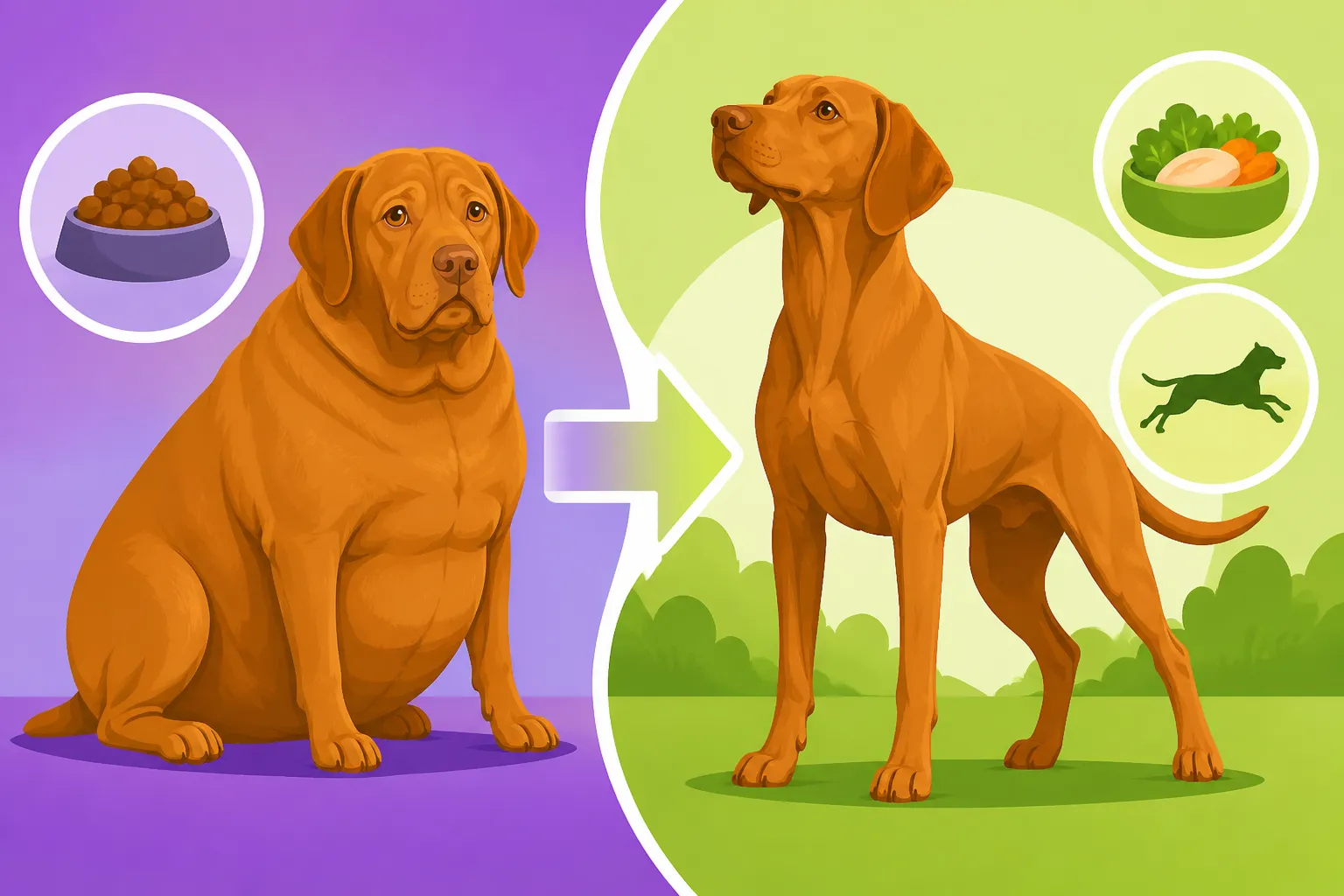
Getting Weight Off an Overweight Vizsla
It's heartbreaking to look at your beloved Vizsla and realize they're carrying more weight than they should be. We all want our active, lean, "Velcro" companions to be at their absolute best, bounding through fields or cuddling up close without any extra strain on their joints or bodies. But sometimes, despite our best intentions, those extra pounds creep on, leaving us wondering how to get them back to their healthy, athletic selves. This guide is here to walk you through understanding why your Vizsla might have gained weight, how to accurately assess their condition, and, most importantly, provide a compassionate, practical roadmap to help them shed those excess pounds safely and effectively.
Understanding Why Your Vizsla Might Be Overweight
It's a common misconception that Vizslas, with their boundless energy, are somehow immune to weight gain. Many owners are genuinely surprised when their "lean machine" starts to look a little thick around the middle. The truth is, while they are incredibly athletic, they're not immune to the simple equation of calories in versus calories out, especially as their lives and activity levels change.
The Metabolism Myth and Reality
You've probably heard it – the idea that Vizslas have such high metabolisms they can eat anything and stay lean. And for a young, actively hunting or working Vizsla, that can often be true. They burn an incredible amount of energy. However, this isn't a license to overfeed, and it certainly doesn't hold true for every Vizsla throughout their entire life. As our dogs age, just like us, their metabolism naturally slows down. A Vizsla who was once running five miles a day in the field might now only be getting brisk walks around the neighborhood, or perhaps they've transitioned from a competitive agility career to a more relaxed retirement. Their food intake often doesn't adjust accordingly, leading to a caloric surplus that slowly but surely adds to their waistline. Even a seemingly small decrease in daily activity, compounded over weeks and months, can make a significant difference.
It's also important to remember that not all Vizslas are created equal. While the breed as a whole is known for its athleticism, there can be individual variations in metabolic rates. Some Vizslas might be naturally a bit "easier keepers" than others, meaning they don't require as many calories to maintain their weight. If you've always had a Vizsla who could eat a horse and stay svelte, and your current one is gaining weight on a seemingly similar diet, it's not a reflection on you; it's just a reminder that each dog is an individual with unique needs.
Sneaky Calories: Treats and Table Scraps
This is a big one, and often where the extra pounds truly come from, usually with the best of intentions. We love our Vizslas, and showing affection through food is deeply ingrained in many of us. A little piece of cheese here, a bite of chicken there, a handful of crunchy treats during training – it all adds up. What seems like a small indulgence to us can represent a significant percentage of a dog's daily caloric intake. Think about it: a single piece of cheese for a human is negligible, but for a 50-pound Vizsla, it's proportionally much more.
The problem is compounded when multiple family members are involved. One person gives a treat, then another, then perhaps a child sneaks a bite from their plate. Before you know it, your Vizsla has consumed hundreds of extra calories without you even realizing it. It's not malicious, it's just easy to lose track. These "sneaky calories" are often high in fat and sugar, providing little nutritional value but packing a powerful caloric punch. Breaking this habit requires a conscious effort and often a family meeting to get everyone on the same page. The love we show our dogs should enhance their health, not detract from it.
Sedentary Lifestyles and Overfeeding
A Vizsla's genetics scream "active hunter." They were bred to run, to point, to retrieve, and to be constantly engaged. They are not content to be couch potatoes, and an under-exercised Vizsla is often a frustrated, and eventually, an overweight Vizsla. If your Vizsla isn't getting The Two Hours a Vizsla Needs Before It Will Settle every single day, their caloric needs drop dramatically. Many owners find themselves in a cycle where their dog is fed a standard amount of food, but their actual daily energy expenditure doesn't match it.
This mismatch is particularly common in Vizslas who transition from a high-energy youth to a more sedate adulthood, or for those who were bred with strong working lines but live in homes where hunting or competitive dog sports aren't part of the routine. A change in the home environment, like a new job for the owner that means less time for long runs, or even just bad weather keeping you indoors, can inadvertently lead to a more sedentary lifestyle. Furthermore, neutering can also play a role, as it often lowers a dog's metabolic rate and can make them prone to weight gain if their diet isn't adjusted. Understanding Whether a Neutered Vizsla Gains Weight is crucial for proactive management. It’s not about blame; it’s about recognizing the reality of their needs versus their daily routine.
Assessing Your Vizsla's Current Weight and Body Condition
Before you can start any weight loss program, you need to know where you're starting from. Simply looking at your Vizsla isn't always enough, especially with their lean build, which can sometimes mask early weight gain. You need a more objective way to assess their body condition.
The Rib Test and Tuck Test
The most reliable way to assess your Vizsla's weight is not just by looking at the number on the scale, but by performing a hands-on body condition score (BCS). Vizslas are supposed to be lean, with a visible tuck and easily palpable ribs.
To perform the Rib Test, gently run your hands along your Vizsla's sides, over their rib cage. You should be able to easily feel each rib individually, almost like feeling the knuckles on your hand, but without pressing hard. If you have to press firmly to feel the ribs, or if you can't feel them at all, your Vizsla is likely carrying too much fat. Conversely, if the ribs are prominently visible and feel like sharp ridges with no fat covering them, your Vizsla might be too thin. We often discuss Whether Ribs Should Show on a Vizsla for a healthy Vizsla, and the answer is usually 'yes', but subtly.
Next, for the Tuck Test, stand over your Vizsla and look down at them from above. You should see a distinct "waist" where their body tapers in after the rib cage, before flaring slightly out over the hips. If they look like a straight line from chest to tail, or if their middle bulges out, they're likely overweight. Then, look at them from the side. A healthy Vizsla should have an obvious "abdominal tuck" – where their belly slopes upward from their chest to their hind legs, not hanging low or looking distended. An absence of this tuck, or a very slight tuck, indicates excess fat around their abdomen. These tests provide invaluable, immediate feedback on your dog's current state.
Why the Scale Isn't the Whole Story
While weighing your Vizsla regularly is an important part of monitoring progress, the number on the scale alone doesn't tell the whole story. A Vizsla's ideal weight can vary quite a bit based on their sex, bone structure, and muscle mass. For example, a heavily muscled male Vizsla might weigh more than a lightly built female, but both could be at a healthy body condition if their fat distribution is correct. What you're really looking for is a healthy Body Condition Score, which is about the proportion of fat to muscle, rather than an arbitrary number.
Think of it like humans: two people can be the same height but have very different healthy weights based on their body composition. The same applies to your Vizsla. A slight increase on the scale might not be a huge concern if their rib and tuck tests still indicate a lean, athletic build. Conversely, a seemingly "normal" weight might still mean they're carrying too much fat if they've lost muscle mass due to inactivity. The scale is a tool for tracking trends, not a standalone indicator of health. Always use it in conjunction with your body condition assessment and a conversation with your veterinarian, who can provide a more objective, professional opinion on your Vizsla's ideal weight range and current health status. They can help distinguish between healthy muscle and excess fat.
Crafting a Weight Loss Plan: Diet Adjustments
Once you've confirmed your Vizsla is overweight, the next critical step is to tackle their diet. This is often the most impactful area for change, as even highly active dogs can gain weight if their caloric intake is too high.
Choosing the Right Food and Portions
The first place to start is with the food bowl. For many Vizslas, simply reducing their current food portion by 10-20% is a good initial step. However, it's also worth evaluating the quality and type of food you're offering. Not all dog foods are created equal, and some are much higher in calories or less nutritionally dense than others. Look for foods that are specifically formulated for weight management or lower calorie intake, if necessary. These often have a higher fiber content to help your Vizsla feel full, along with appropriate protein levels to maintain muscle mass while reducing fat.
When selecting food, whether it's What Kibble Costs for a Vizsla or considering What Fresh Food Costs for a Vizsla, always read the feeding guidelines on the package. These are typically based on the dog's ideal weight, not their current weight. So, if your Vizsla should ideally be 50 pounds but currently weighs 58, calculate the feeding amount for 50 pounds, and then reduce it by another 10-20% for weight loss. Brands like Purina Pro Plan, Royal Canin, or Hill's Science Diet often have excellent weight-management formulas readily available from retailers like Chewy or your local pet store. Some owners find that fresh food delivery services, like Ollie, allow for precise portion control and high-quality ingredients, which can also be beneficial in managing weight, though this can be a more significant cost. Remember to measure every single meal accurately with a kitchen scale or a dedicated measuring cup, not just guesstimating. Consistency is key here.
Smart Snacking and Meal Prep
As discussed, treats are a major source of hidden calories. The good news is, you don't have to eliminate treats entirely! You just need to be smarter about them. Instead of high-calorie biscuits, opt for low-calorie, healthy alternatives. Many Vizslas absolutely adore raw vegetables like baby carrots, green beans, cucumber slices, or apple slices (without seeds). These are packed with nutrients, fiber, and crunch, but very low in calories. Just be sure to introduce new veggies slowly to avoid an upset stomach. Another fantastic option is ice cubes, especially if your Vizsla enjoys crunching them.
For training, instead of extra treats, try using a portion of their daily kibble as rewards. This ensures they're still getting their allocated calories but spread throughout the day in a motivating way. If you use a lot of treats, consider pre-portioning their daily treat allowance in a separate container each morning. This helps you keep track and avoids accidental overfeeding. Meal prepping also extends to avoiding table scraps entirely. It's tough when those big amber eyes gaze up at you from under the dinner table, but human food is almost always too rich, too salty, or too fatty for dogs and can quickly derail any weight loss efforts. Make a firm rule for all family members: no human food for the dog, ever. Your Vizsla will adapt, and their health will thank you.
Slowing Down Mealtime
Vizslas are often enthusiastic eaters, sometimes inhaling their food in mere seconds. This can be problematic for weight management because it doesn't give their body enough time to register fullness before they've finished their entire portion. They might still feel hungry, leading to begging for more or feeling unsatisfied.
To combat this, consider investing in a slow feeder bowl or a puzzle toy designed to make your Vizsla work for their food. These bowls have ridges or compartments that prevent dogs from gobbling their meal, forcing them to eat more slowly. Puzzle toys, on the other hand, require your Vizsla to manipulate the toy to release small portions of kibble, turning mealtime into a mental and physical activity. Using a Kong filled with a portion of their kibble (you can even freeze it to make it last longer!) is another great way to extend mealtime enjoyment. You can find a wide variety of these products on Amazon or at your local pet supply store. Making mealtime a more engaging and protracted experience can help your Vizsla feel more satisfied on fewer calories, contributing significantly to their weight loss journey. It also provides valuable mental stimulation, which is a bonus for such an intelligent breed.
Crafting a Weight Loss Plan: Exercise and Activity
Diet is crucial, but for a Vizsla, exercise isn't just an optional extra; it's fundamental to their well-being and a key component of any successful weight loss strategy. These dogs were literally built for movement.
Tailoring Exercise to Your Vizsla's Needs
Simply saying "exercise more" isn't always enough. You need a plan tailored to your Vizsla's current fitness level and age. If your Vizsla is significantly overweight, starting with intense, long runs might be too much too soon and could lead to injury. Begin with gentle, consistent increases. If they're used to a 30-minute walk, try extending it to 45 minutes, then gradually to an hour. Build up their stamina slowly over several weeks.
Beyond walks, explore activities that truly engage their Vizsla spirit. Running is often a natural fit; many Vizslas make fantastic Whether a Vizsla Makes a Running Partner once properly conditioned. Introduce running slowly, perhaps alternating between walking and jogging intervals, and always consult your vet before starting a new strenuous exercise regimen. Swimming is another excellent, low-impact exercise that works multiple muscle groups without stressing joints, especially good for an overweight dog. Finding opportunities for Whether a Vizsla Swims Willingly in safe, supervised environments can be a game-changer. Fetch in a large, open field is also a great way to get them sprinting and burning calories. The key is variety and making exercise fun, not a chore, so your Vizsla remains enthusiastic and engaged.
Incorporating More Movement into Daily Life
Exercise doesn't have to be limited to dedicated "workout" sessions. Look for ways to weave more movement into your daily routine. Take the stairs instead of the elevator if possible, walk to the park instead of driving, or play an extra 10-15 minutes of fetch in the backyard before dinner. Even small bursts of activity throughout the day add up.
Consider joining a dog sport or a training class. Activities like agility, flyball, or even advanced obedience can provide incredible physical and mental stimulation. Many Vizslas absolutely excel at these sports. Discovering Whether a Vizsla Excels at Agility often opens up a whole new world of engagement and fitness. These structured activities not only help burn calories but also strengthen your bond with your Vizsla and provide an outlet for their intelligence. If formal classes aren't feasible, explore new walking trails or dog parks to keep things interesting. A change of scenery can make a familiar walk feel exciting, encouraging more sniffing, exploring, and moving. Even scent games or hide-and-seek with their kibble can get them moving and thinking, further contributing to their overall energy expenditure.
Monitoring Progress and Staying Motivated
Weight loss is a journey, not a sprint, especially for dogs. It requires patience, consistency, and a realistic outlook. Don't get discouraged if progress seems slow; even small, steady losses are victories.
Keeping a Log and Celebrating Small Wins
One of the most effective tools for successful weight loss is keeping a detailed log. Record everything: the amount of food you give at each meal, any treats (and what kind!), and the type and duration of exercise each day. Weigh your Vizsla once a week, at the same time of day (e.g., Friday morning before breakfast), and note it down. This record will help you identify what's working and what might need adjustment. It also makes it easy to share accurate information with your vet during check-ups.
Celebrate those small wins! Did your Vizsla lose half a pound this week? Great! Can you feel their ribs a little more easily? Fantastic! Did they run a bit further without getting tired? A huge success! Acknowledge these victories, both for yourself and your dog. It's a team effort, and positive reinforcement for your Vizsla (like an extra long belly rub or a vigorous game of fetch with a favorite toy) will keep them motivated. Getting the whole family on board with the logging and celebrating is crucial to maintaining consistency and ensuring everyone is working towards the same goal.
When to Consult Your Veterinarian Again
Your veterinarian is your most important partner in your Vizsla's weight loss journey. Before starting any significant diet or exercise program, it's always wise to have a What a Vizsla's Yearly Checkup Costs where you discuss your concerns. They can rule out any underlying medical conditions (like thyroid issues) that might be contributing to weight gain and provide personalized advice based on your Vizsla's individual health history.
Once you've started your plan, regular follow-up visits are essential. Your vet can objectively assess your Vizsla's body condition score, adjust feeding amounts or exercise levels, and ensure that the weight loss is happening at a healthy pace. Rapid weight loss can be just as detrimental as obesity. If your Vizsla isn't losing weight despite your best efforts, or if they seem lethargic or unwell, it's definitely time for another visit. Don't hesitate to reach out if you have questions or concerns at any point. They can provide professional guidance and moral support, helping you navigate any plateaus or challenges that arise.
Here's a quick guide to understanding your Vizsla's Body Condition Score:
| Characteristic | Underweight | Ideal Weight (Goal) | Overweight | Obese |
|---|---|---|---|---|
| Ribs | Easily visible, no fat cover | Easily felt without pressing hard, minimal fat cover | Hard to feel, requires pressure, moderate fat cover | Cannot be felt under thick fat layer |
| Waist (from above) | Extremely pronounced hourglass shape | Clearly visible hourglass shape | Slight or no waist visible, straight line | Broad back, no waist visible, bulges |
| Abdominal Tuck (from side) | Very pronounced tuck | Distinct abdominal tuck, belly slopes up | Slight or no tuck, belly flat or slightly rounded | Distended abdomen, no tuck, hanging belly |
| Muscle Mass | May appear wasted, prominent bony prominences | Well-developed, firm | Difficult to assess under fat, may feel soft | Difficult to assess, often poor due to inactivity |
Disclaimer
This article is for general informational purposes only and does not constitute professional advice. Laws, prices and regulations vary by location and change over time. Consult a qualified professional for guidance on your specific situation.