Whether a Vizsla Can Sleep Outdoors
It's a common question, especially for those of us new to the breed or coming from experience with more cold-hardy dogs: can a Vizsla truly sleep outside? The short answer is almost always a resounding no, and trying to make it work often leads to significant problems for this sensitive, single-coated breed. This guide will delve deep into why outdoor sleeping environments are unsuitable for Vizslas, exploring the physical and emotional vulnerabilities that make them uniquely unsuited for life outside the warmth and comfort of your home.
Understanding the Vizsla's Unique Needs for Warmth
Vizslas are not built for the cold. Their very physiology, from their sleek coat to their lean body mass, makes them particularly susceptible to even moderate drops in temperature. Many owners, especially those new to the breed, might underestimate just how profoundly different their warmth requirements are compared to, say, a Labrador Retriever or a German Shorthaired Pointer.
The Vizsla's Distinctive Single Coat
Unlike many sporting breeds that boast a thick, insulating double coat designed to protect them from harsh weather and icy water, a Vizsla possesses what we call a "single coat." This coat is short, dense, and feels almost like velvet to the touch, but it lacks the crucial insulating underlayer. Think of it like wearing a t-shirt in winter – it offers some protection, but nowhere near enough for prolonged exposure. This isn't just a matter of comfort; it's a matter of survival.
Without that dense undercoat, the Vizsla's thin skin is much more exposed to the elements. They lose body heat rapidly, especially when inactive. This is why you often see them shivering even indoors if the house is a bit cool, or burrowing deep under blankets. The Single Coat a Vizsla Has and Why It Changes Everything explains this in more detail. Their coat is fantastic for shedding water quickly during a hunt and drying fast, but it offers minimal protection against sustained cold, wind, or dampness when they're trying to sleep.
Low Body Fat and High Metabolism
Vizslas are athletes, built for speed and endurance, not for storing fat. They are characteristically lean, often with their ribs subtly visible, even when at a healthy weight. This low body fat percentage means they have less natural insulation than chunkier breeds. Fat acts as a buffer against the cold, and a Vizsla simply doesn't have much of it.
Compounding this is their naturally high metabolism. Their bodies are constantly burning calories to fuel their boundless energy, generating heat when they're active. However, when they're lying still, trying to sleep, that heat generation drops significantly, and their lean form loses warmth quickly. This combination of a thin coat and minimal body fat makes them incredibly inefficient at retaining heat in cold conditions, making outdoor sleeping a dangerous proposition.
The Harsh Realities of Outdoor Temperatures
Even what might seem like a mild evening to us can be genuinely dangerous for a Vizsla left outdoors overnight. Their capacity to cope with cold is drastically different from many other breeds, and ignoring this can lead to severe health consequences.
Susceptibility to Cold and Hypothermia
Vizslas are prone to getting cold, and not just uncomfortably chilly – we're talking about medically significant cold. Hypothermia, a condition where the body loses heat faster than it can produce it, is a very real risk for a Vizsla sleeping outdoors, even in temperatures that humans might consider merely "brisk." As the body temperature drops, vital organs begin to shut down, leading to a life-threatening emergency.
A concrete kennel floor, a wooden dog house with thin walls, or even a covered porch does little to protect against the pervasive chill, especially if there's wind or dampness in the air. Their internal thermostat is simply not equipped for it. We often talk about The Cold a Vizsla Genuinely Cannot Handle, and this really means anything below 40-50 degrees Fahrenheit, especially if they are inactive. Even if it's not freezing, prolonged exposure can be detrimental. You'll observe them shivering, hunching, and trying desperately to curl into a tight ball, which are all clear signs Whether a Vizsla Feels the Cold is not a question but a certainty.
Risk of Frostbite and Other Weather-Related Ailments
Beyond general hypothermia, specific body parts are incredibly vulnerable to frostbite, even in temperatures well above freezing if there's wind chill. The tips of their ears, their lean tail, and especially their paw pads can suffer damage from prolonged cold exposure. Frostbite can cause tissue damage, pain, and in severe cases, necessitate amputation.
Furthermore, being outside exposes them to other weather-related ailments. Damp conditions can lead to skin infections or exacerbate existing skin sensitivities. Rain, snow, or even heavy dew can soak their thin coat, accelerating heat loss. If they aren't completely dry and warm, they are at risk. They can also be exposed to environmental toxins, parasites, and even diseases carried by wildlife, which wouldn't be a concern if they were safely tucked away indoors.
The Emotional Toll of Isolation
Beyond the very real physical dangers, forcing a Vizsla to sleep outdoors inflicts a significant emotional toll. These dogs are famously affectionate, earning them the nickname "Velcro Vizslas" for a reason. Their need for companionship is deeply ingrained in their breed, and separating them from their human family, especially at night, goes against their very nature.
The 'Velcro Vizsla' and Separation Anxiety
If you've ever owned a Vizsla, you know the term "Velcro Vizsla" isn't an exaggeration. These dogs thrive on being with their people. They want to be in the same room, preferably touching you, and often even under the covers with you. This intense bond means that being left alone, particularly for an entire night, can trigger significant separation anxiety.
When a Vizsla is left outside, isolated from the sounds and smells of their family, they can experience profound stress. They might not understand why they've been relegated to the outdoors, and their anxiety can manifest in various destructive or unhealthy ways. Why They Call It a Velcro Vizsla isn't just about their endearing clinginess; it's a fundamental aspect of their emotional well-being that must be respected. Trying to "toughen them up" by making them sleep outside will often backfire spectacularly, deepening their anxiety rather than curing it.
Behavioral Issues Stemming from Stress and Loneliness
A lonely, anxious Vizsla is often a destructive Vizsla. If they're forced to sleep outside, their distress can lead to a host of undesirable behaviors. You might find them frantically barking or whining through the night, disturbing neighbors and failing to get restful sleep themselves. They may try to escape their enclosure, leading to injury or becoming lost. You could come out in the morning to find chewed siding, dug-up gardens, or worse.
This isn't malicious behavior; it's a desperate cry for help and a way to cope with overwhelming stress. Teaching a Vizsla to Be Alone is a gradual process that involves positive reinforcement and short, manageable absences, not an abrupt, hours-long separation in an unfamiliar and cold environment. Ignoring their emotional needs will only lead to a breakdown in trust and a more difficult, less happy dog. If you ever wondered Signs a Vizsla Is Suffering Alone, persistent vocalization, destructive chewing, or attempts to escape are huge indicators.
Why a Kennel or Shed is Still Not Enough
Some might think that providing a well-built dog house or a shed offers sufficient protection, but for a Vizsla, even these can fall short of their needs, both physical and emotional. It’s crucial to understand that "shelter" doesn't automatically equate to "safe and comfortable" for this breed.
Inadequate Insulation and Lack of Comfort
Even the most robustly built outdoor dog houses, unless they are specifically insulated and heated to human-comfort standards, simply cannot provide the consistent warmth a Vizsla requires. Concrete floors leach heat from their bodies, and wooden walls, while better than nothing, are often not enough to block out biting winds or freezing temperatures. Imagine trying to sleep in a small, unheated shed in the middle of winter; that's often what we're asking of them.
Moreover, these structures rarely offer the plush, soft bedding and draft-free environment that a Vizsla craves and needs. They need a soft, warm surface to protect their joints and provide comfort, especially as they age. A pile of straw or a thin blanket in an unheated space will not suffice when the mercury drops. Even if the shelter is theoretically warm enough to prevent hypothermia, it might not be warm enough for truly restorative, comfortable sleep. This is why many owners provide memory foam beds and numerous blankets for their indoor Vizslas, often purchased from retailers like Chewy or Amazon, to create a truly inviting sleep space.
Predator Risks and Environmental Dangers
Leaving a Vizsla outdoors, even in a seemingly secure kennel, exposes them to a range of environmental dangers that are absent indoors. Depending on your location, this could include everything from coyotes and foxes to raccoons or even larger predators that might be drawn by their presence. While a robust kennel might deter some, it's not foolproof, and the stress of being near such threats can be immense.
Beyond predators, there are other risks. A Vizsla left outside could accidentally ingest toxins like antifreeze, fertilizers, or pest control baits. They might injure themselves trying to escape, or get caught in fencing. Theft is also a devastating possibility for a desirable breed like the Vizsla. Indoor sleeping eliminates these risks entirely, providing peace of mind for both owner and dog.
Crafting the Perfect Indoor Sanctuary
Since outdoor sleeping is really off the table for a Vizsla, the focus shifts to creating an indoor sleeping environment that meets their unique needs for warmth, comfort, and companionship. This isn't just about being kind; it's about providing the conditions necessary for a healthy, happy Vizsla.
Warm, Draft-Free Sleeping Spaces
The first priority is warmth. Choose a sleeping spot for your Vizsla that is well away from drafts. This means avoiding areas near exterior doors, leaky windows, or uninsulated walls. Consider a corner of a living room, a bedroom, or even a quiet hallway that stays consistently warm. Somewhere warm to sleep isn't just a preference; it's a necessity.
Equip their sleeping area with a comfortable, insulated bed. Options range from plush orthopedic beds to elevated cot-style beds that keep them off cold floors. Many Vizsla owners swear by memory foam beds with washable covers, easily found on sites like Chewy or Amazon. Layering with soft blankets is also key. Vizslas love to burrow, and a pile of soft blankets allows them to create their own warm, cozy den. You might even consider a heated dog bed for colder climates or older dogs. Whether a Vizsla Burrows Under Blankets for Warmth is almost a universal Vizsla trait, so lean into it!
The Comfort of Proximity and Routine
Vizslas are pack animals to their core, and their 'pack' is their human family. The comfort of being near you is as important as physical warmth. Many Vizslas thrive sleeping in the same room as their owners, if not in the same bed (a common arrangement for many Vizsla families!). The sounds of human breathing, the familiar smells, and the sense of security are incredibly reassuring.
Establishing a consistent bedtime routine can also greatly reduce any evening anxiety. A final potty break, a quiet cuddle, and then into their designated cozy spot. This predictability helps them understand what's happening and that they are safe and not being abandoned. It reinforces their bond with you and fosters a sense of security that outdoor isolation could never provide. Providing them with a safe, predictable, and warm indoor routine ensures they get the restful sleep they need to recharge for another day of adventures.
Addressing Common Misconceptions
It's easy to fall into traps of outdated advice or apply standards from other breeds to the Vizsla. Dispelling these myths is crucial for providing appropriate care.
The Myth of 'Toughening Up' a Vizsla
Some dog owners, perhaps with a background in working breeds or older training philosophies, believe that making a dog sleep outside will "harden" them or teach them independence. For a Vizsla, this approach is not only ineffective but actively harmful. Their soft, sensitive nature means that harsh treatment, including isolation and exposure to cold, doesn't build resilience; it breaks their spirit and creates fear and anxiety.
A Vizsla needs positive reinforcement, gentle guidance, and above all, a strong, loving bond with their human. Depriving them of comfort and companionship at night will not make them a tougher hunting dog or a more independent companion; it will likely create a neurotic, insecure dog who struggles with trust and suffers from chronic stress. They aren't meant to be kennel dogs in the traditional sense; Why a Vizsla Cannot Be a Kennel Dog highlights their profound need for human interaction.
When Outdoor Time is Appropriate Supervised Play, Not Sleep
It's important to distinguish between appropriate outdoor activity and inappropriate outdoor sleeping. Vizslas are high-energy dogs that absolutely need ample exercise outdoors. They thrive on long runs, hikes, retrieving games, and of course, hunting in the field. This vigorous activity generates body heat and is vital for their physical and mental health.
However, once the activity is over, and their body temperature begins to drop, they need to return to a warm, indoor environment to recover and rest. Supervised outdoor time, even in cooler weather, is perfectly fine and encouraged when they are actively engaged and moving. But when it's time to settle down for the night, their place is with you, indoors, where they can be warm, safe, and emotionally secure.
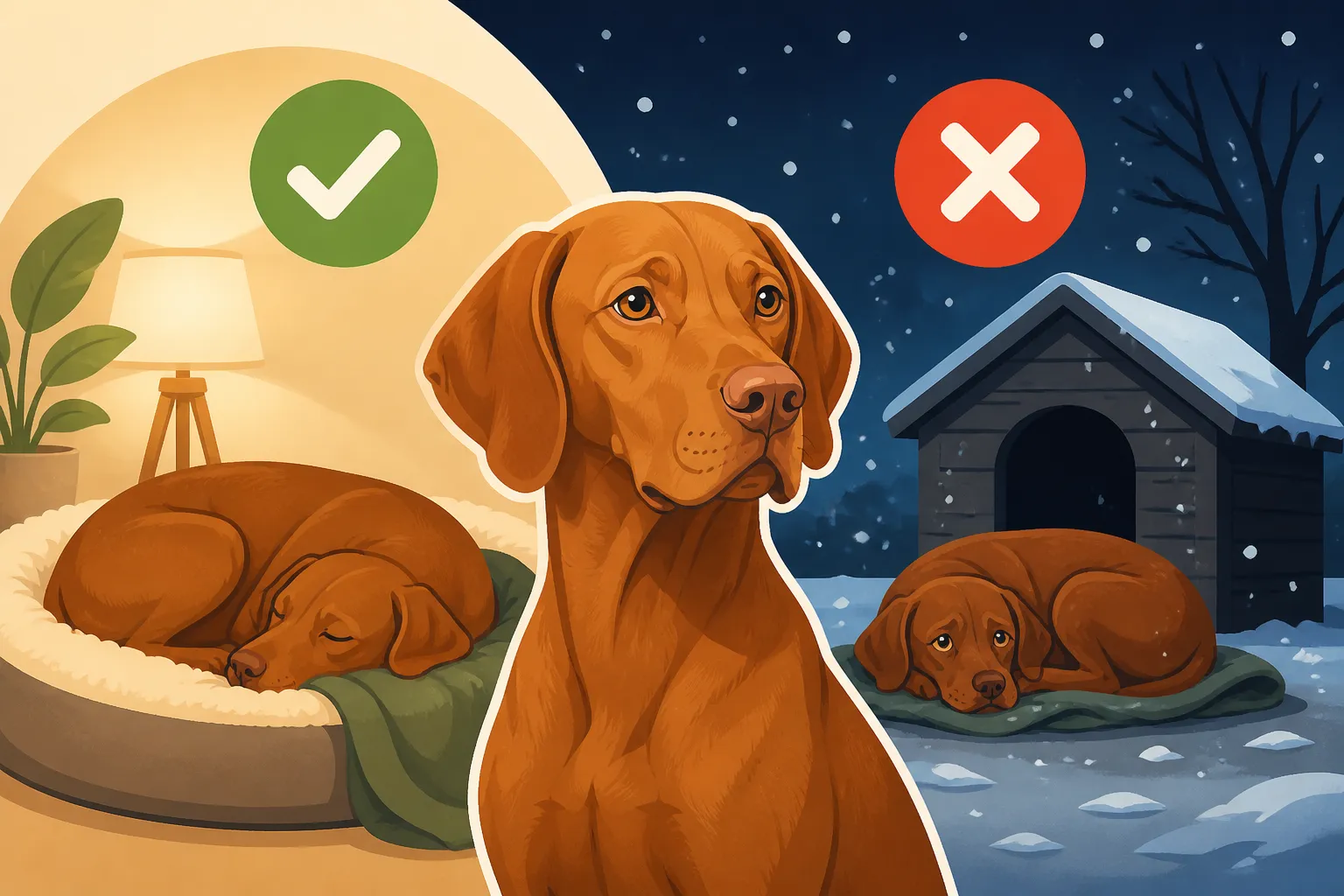
Here's a quick comparison to summarize the key differences:
| Feature | Vizsla Sleeping Indoors (Recommended) | Vizsla Sleeping Outdoors (Not Recommended) |
|---|---|---|
| Physical Warmth | Consistent warmth, draft-free, insulated bedding | High risk of hypothermia, frostbite; inconsistent warmth |
| Coat Protection | Not reliant on thin coat for warmth | Coat offers minimal protection; rapid heat loss |
| Emotional Security | Proximity to family, reduced anxiety, strong bond | Isolation, severe separation anxiety, behavioral issues |
| Comfort | Soft, orthopedic beds, blankets, familiar smells | Hard surfaces, minimal insulation, discomfort |
| Safety | Protected from predators, toxins, theft, weather | Exposure to environmental hazards, potential injury/theft |
| Health Risks | Low risk of cold-related illness | High risk of hypothermia, frostbite, infections, stress |
| Behavioral Outcome | Calm, well-adjusted, confident | Destructive, anxious, vocal, withdrawn |
| Owner Peace of Mind | High | Low |
For the health and happiness of your beloved Vizsla, bringing them inside to sleep is not just a preference, but a fundamental act of responsible ownership. They give us so much joy and loyalty; providing them with a warm, secure place to rest is the least we can do in return.
Disclaimer
This article is for general informational purposes only and does not constitute professional advice. Laws, prices and regulations vary by location and change over time. Consult a qualified professional for guidance on your specific situation.