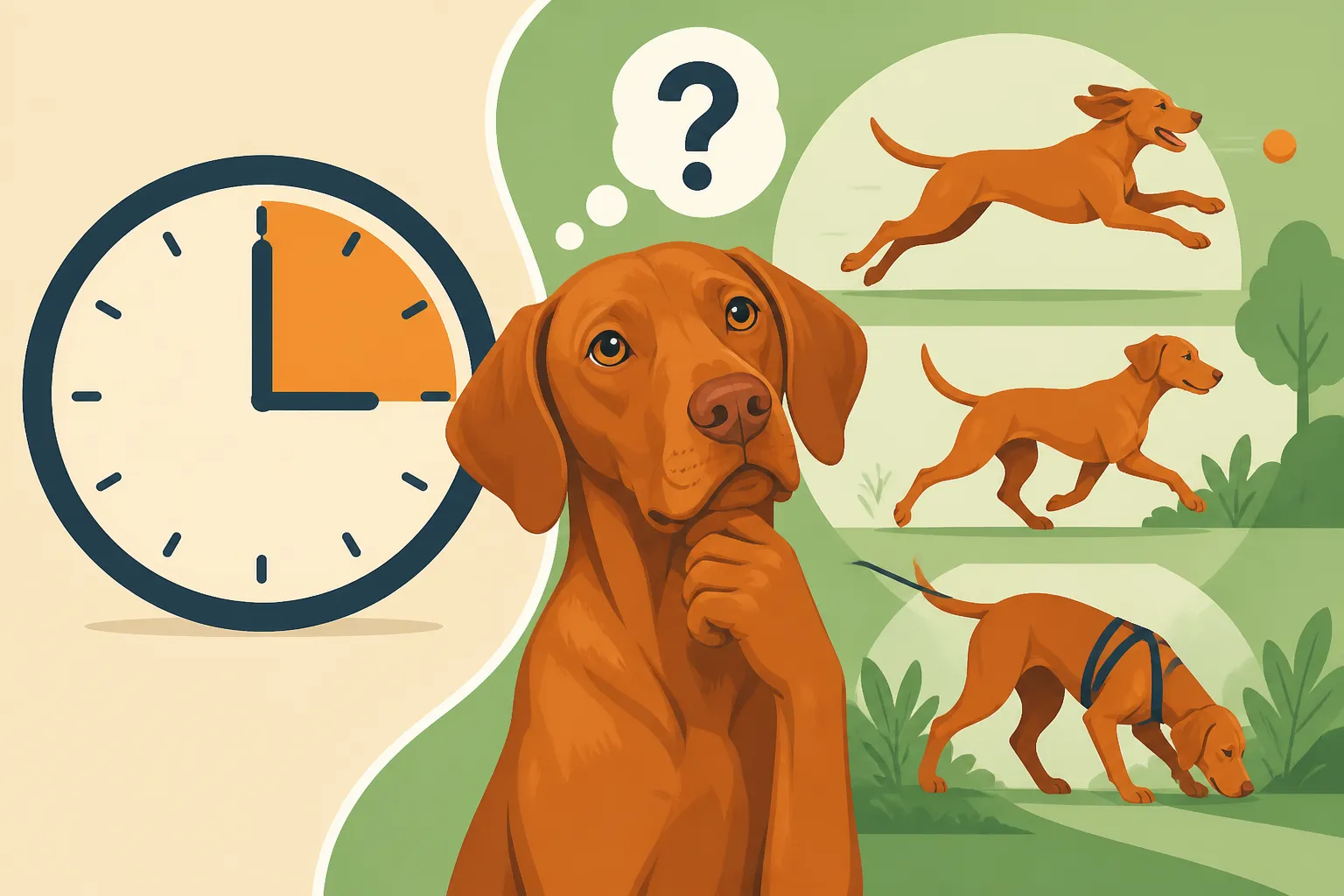
Whether Two Hours a Day Is Really Necessary for a Vizsla
One of the biggest anxieties for new Vizsla owners, and even seasoned ones, is the constant worry about whether you're providing enough exercise for your incredibly active companion. You hear whispers, maybe even firm declarations, about the "two hours a day" rule, and it can feel like a mountain to climb, especially when life gets busy. This guide aims to unpack that common benchmark, exploring what a Vizsla truly needs to thrive, not just survive, and how you can realistically meet those demands without feeling overwhelmed or falling short.
Understanding the Vizsla's Energy Reserves
Let's be real, a Vizsla isn't just a dog; it's a finely tuned athletic machine, bred for centuries to work tirelessly in the field. This isn't a breed that's content with a leisurely stroll around the block twice a day. Their energy isn't just a physical attribute; it's deeply ingrained in their genetics, their history, and their very being. Understanding this fundamental truth is the first step to truly appreciating their needs.
The Breed's Innate Drive for Activity
Vizslas were developed as Hungarian hunting dogs, specifically prized for their ability to point and retrieve, working alongside hunters for hours on end, often covering vast distances. This isn't just "playing fetch"; this is a job, a purpose that taps into deep genetic programming. That strong prey drive, the desire to range and cover ground, and the incredible stamina are all characteristics that have been selectively bred into them. When you bring a Vizsla into your home, you're not just getting a pet; you're adopting a highly motivated athlete. Ignoring this innate drive isn't just unfair to the dog; it's setting yourself up for a whirlwind of frustration and potential behavioral issues. They need to move, to explore, to use their bodies and their minds in purposeful ways.
This inherent need for activity is why the "two hours" often comes up as a general guideline. It's an attempt to quantify what it takes to tire out a dog whose ancestors could outlast a human hunter. Think of it not as a rigid rule, but as a recognition of their deep-seated requirements. A quick trot around the yard simply won't cut it for these magnificent dogs. They crave varied terrains, open spaces, and the opportunity to stretch their powerful legs and engage their keen senses.
More Than Just Physical Exercise
It's a common misconception that "exercise" for a Vizsla simply means running. While physical exertion is paramount, mental stimulation is equally, if not more, crucial. Imagine a highly intelligent person forced to do repetitive physical labor without any mental challenge – they'd become bored, frustrated, and probably start making their own "fun" in destructive ways. The same goes for your Vizsla. Their minds are as sharp as their bodies are agile.
Without adequate mental engagement, a Vizsla can easily become destructive, anxious, or develop obsessive behaviors. Think about scent games, puzzle toys, advanced obedience training, or even simple "find it" games around the house. These activities tap into their problem-solving abilities and their incredible noses, providing a different kind of "work" that can be just as tiring as a long run. A quick 15-minute training session focusing on new tricks can often leave a Vizsla more mentally satisfied than an hour of mindless running. This holistic approach to exercise is key to a well-adjusted and happy Vizsla.
What Happens Without Enough Outlets
If you consistently fall short of your Vizsla's physical and mental exercise needs, you're going to see it. It's not a matter of "if" but "when." This breed isn't known for quietly tolerating boredom or excess energy. The classic signs are often destructive chewing, whether it's your furniture, shoes, or even the door frames. They might become incessant barkers, whiners, or develop neurotic behaviors like tail chasing or obsessive licking. I've heard countless stories of owners coming home to a "redecorated" house because their Vizsla found its own way to release pent-up energy. What an Anxious Vizsla Destroys is often a sad testament to unmet needs.
Beyond the destruction, a lack of exercise can manifest as anxiety, fear, or reactivity. An under-exercised Vizsla might become jumpy, reactive on leash, or have trouble settling down, even indoors. This isn't because they're "bad" dogs; it's because they're trying desperately to tell you they need an outlet. Over time, chronic under-stimulation can even contribute to health issues, as their bodies and minds aren't kept in optimal condition. It's a downward spiral that's easily avoided by understanding and meeting their foundational needs.
Deconstructing the "Two-Hour" Rule
So, is two hours a day a hard and fast rule? The answer is both yes and no. It's a useful benchmark, a reminder of the significant commitment a Vizsla requires, but it's not a rigid mandate that applies equally to every dog every single day. Life happens, and understanding the nuances can help you adapt without guilt.
Quality Over Quantity: The Type of Exercise Matters
Two hours of simply wandering around a fenced yard is not the same as two hours of vigorous, engaging activity. For a Vizsla, quality absolutely trumps quantity. An hour of off-leash running in an open field, where they can sprint, weave, and explore with their nose, is far more effective and satisfying than two hours of slow leash walking on pavement. Consider activities like fetching, swimming, hiking rough terrain, or even jogging alongside a bicycle. Whether a Vizsla Runs With a Cyclist is a great example of how you can boost intensity. These types of high-impact, high-engagement activities tap into their natural athleticism and provide a much more thorough energy release.
Think of it this way: 30 minutes of intense, varied interval training for a human is often more beneficial than 90 minutes of low-intensity walking. The same principle applies here. If you can only manage an hour on a particular day, make it a really good hour. Incorporate bursts of speed, challenging terrain, and plenty of mental engagement through commands and scent work. This strategic approach ensures that even when time is tight, you're still hitting their core needs effectively.
Age and Individual Variation in Energy Levels
Just like people, not all Vizslas are created equal. While the breed generally boasts high energy, there can be significant individual variation. Some Vizslas are absolute rockets until well into their senior years, while others might be a touch more mellow. Age also plays a huge role. A young Vizsla puppy, say between 6 months and 2 years old, is often a boundless ball of energy that truly does need closer to two hours (or more!) of active engagement to stay sane. However, over-exercising a growing puppy can be detrimental to their developing joints, so Whether a Vizsla Puppy Should Run on Hard Ground is an important consideration. Controlled, varied exercise is key.
As they mature into adulthood, their stamina is at its peak. Then, as they approach their golden years, their energy levels will naturally start to decline. An older Vizsla might still enjoy a good run, but perhaps for shorter durations, or they might prefer long, sniffy walks over high-impact sprints. It's vital to observe your own dog, understand their unique personality, and adjust their exercise routine accordingly. Don't compare your 8-year-old Vizsla to your friend's 2-year-old; listen to your dog's cues.
Adapting to Different Lifestyles and Schedules
Life isn't always predictable, and sometimes, two hours of dedicated exercise simply isn't feasible. The good news is that Vizslas are often incredibly adaptable, as long as their core needs are consistently met over the long term. If you have a busy workday, perhaps you can do a super-charged 45-minute sprint and fetch session in the morning, followed by a dedicated training session after work, and then another shorter but vigorous walk or play before bed. Consistency throughout the week is more important than hitting a rigid daily target.
For those times when you're genuinely strapped for time, consider hiring a professional dog walker who specializes in active breeds, or even exploring doggy daycare if your Vizsla thrives in a group setting. Some owners even invest in a dog treadmill (yes, they exist!) for those rainy or icy days when outdoor activity isn't possible. The key is to be creative and proactive. A short session with a flirt pole, a vigorous game of hide-and-seek with treats, or a brain-teaser puzzle can buy you some time until you can get out for a longer, more physically demanding session. Companies like BAXTER & Bella often offer online training resources that can provide mental stimulation right in your living room, which can complement physical exercise on busy days.
Practical Strategies for Meeting Exercise Needs
So, how do you actually do this? How do you reliably provide enough activity for a Vizsla without completely upending your own life or feeling like you're constantly failing? It's all about strategy, variety, and understanding what truly satisfies your dog.
Mixing Up Activities for Mental and Physical Engagement
Monotony is the enemy of a high-drive dog like a Vizsla. Doing the exact same walk around the block every single day will bore them to tears, even if it's technically "exercise." Instead, embrace variety. Alternate between long off-leash runs in open fields, challenging hikes on trails, swimming in lakes or rivers (many Vizslas absolutely love water!), and focused retrieval work. One day might be a high-intensity sprint session, the next a long, sniffy walk where they get to explore every scent.
Introduce new environments regularly. Visiting different parks, nature preserves, or even urban areas (if your Vizsla is well-socialized) provides fresh smells, sights, and sounds that engage their brains. Utilize natural obstacles during walks for some agility work – stepping over logs, weaving through trees, or jumping small ditches. This constant mental and physical stimulation keeps them engaged, happy, and less likely to invent their own, less desirable, forms of entertainment. Remember, The Exercise a Vizsla Needs Every Day is rarely just one type of activity.
Incorporating Training and Brain Games
Beyond physical exercise, dedicating time to structured training and brain games is non-negotiable for a Vizsla. These dogs are intelligent and eager to please, and they thrive on having a job to do. Even 15-20 minutes of focused training each day can be incredibly tiring for their minds. Work on advanced obedience cues, practice recall in distracting environments, or teach them new tricks. Scent work, like nose games or tracking, is particularly engaging for a breed with such an incredible sense of smell. You can buy commercial scent work kits or simply hide treats around the house or yard and encourage them to "find it."
Puzzle toys, especially those that dispense treats, are fantastic for independent mental stimulation. Look for ones that are durable and offer varying levels of difficulty. Some interactive feeders, available on platforms like Amazon, require your Vizsla to solve a puzzle to get their meal, turning mealtime into a mental workout. Even something as simple as scattering their kibble in the grass and letting them "hunt" for it can provide a rewarding mental challenge. These activities are particularly valuable on days when extended outdoor exercise isn't possible.
Harnessing Tools and Resources for Active Owners
There are many tools and resources available to help you meet your Vizsla's exercise needs more efficiently and effectively. A good quality, comfortable harness and a sturdy long line (15-30 feet) can allow for more freedom to explore in areas where off-leash isn't safe or permitted. For serious training and tracking, a GPS collar can provide peace of mind when your Vizsla is ranging wide, allowing you to track their location without fear. Whether a Vizsla Should Wear a GPS Collar is a common question, and for a wide-ranging breed, it's often a smart investment.
For owners who enjoy running or cycling, specialized hands-free leashes can make those activities safer and more enjoyable for both of you. Flirt poles are excellent for burning off bursts of energy in a small space, mimicking prey movement and engaging their chase drive. And don't forget the power of professional help. A good dog trainer can offer fresh ideas for mental and physical challenges, and many group classes (like agility, rally, or even advanced obedience) provide structured outlets for their energy and intellect. Investing in your dog's activity is an investment in their happiness and your peaceful home.
The Long-Term Impact of Consistent Activity
Meeting your Vizsla's exercise needs isn't just about managing daily energy; it's about building a foundation for a happy, healthy life together. The benefits extend far beyond simply tiring them out.
Preventing Behavioral Issues and Health Problems
A consistently well-exercised Vizsla is a joy to live with. They're more likely to be calm indoors, less prone to destructive behaviors, and generally more content. When their physical and mental needs are met, they don't have the pent-up energy that drives them to chew your sofa or bark incessantly at shadows. This proactive approach is far more effective and less stressful than trying to manage problem behaviors after they've developed. Think of exercise as preventative medicine for their behavior.
Beyond behavior, regular, appropriate exercise contributes significantly to their physical health. It helps maintain a healthy weight, strengthens muscles and bones, supports cardiovascular health, and can even help prevent joint issues by keeping them supple. Hips and Elbows on a Vizsla That Runs All Day are a concern for any active breed, and maintaining good muscle tone and condition through exercise can play a role in mitigating some risks, alongside good breeding practices. A fit Vizsla is less likely to suffer from obesity-related ailments and will generally have a better quality of life.
Strengthening the Bond with Your Vizsla
There's something incredibly special about the bond forged through shared activity. When you're out hiking, running, or training together, you're not just exercising; you're communicating, building trust, and creating shared experiences. Your Vizsla looks to you for direction, for fun, and for satisfaction. This active partnership deepens your connection in ways that simply living together cannot. They learn to trust your leadership and to enjoy your company in a purposeful way.
These shared adventures are also an opportunity for you to truly appreciate your Vizsla's incredible abilities. Watching them point a bird, gracefully navigate challenging terrain, or joyfully bound through a field is a profound experience that reinforces why you chose this breed. It’s an investment of time that pays dividends in loyalty, understanding, and mutual respect, turning the "two hours a day" into cherished time together rather than a chore.
Adjusting Exercise Needs as Your Vizsla Ages
As your Vizsla moves from exuberant puppyhood to a wise senior, their exercise needs will evolve, and it's important to adjust with them. A 10-year-old Vizsla might not be able to keep up with the same intense regimen they enjoyed at two, but that doesn't mean they don't need activity. In fact, gentle, consistent exercise becomes even more critical for managing age-related issues like arthritis and maintaining muscle mass. The Old Vizsla That Still Wants to Hunt might not hunt for as long, but their spirit is still there.
Substitute high-impact activities with longer, slower walks on soft surfaces, gentle swimming, or even canine massage and stretching. Mental stimulation remains vital; puzzle toys, scent games, and short training sessions can keep their minds sharp even if their bodies are slowing down. Regular vet check-ups will help you understand any physical limitations and guide your exercise modifications. The goal is to keep them comfortable, engaged, and happy for every stage of their lives.
| Activity Type | Intensity | Mental Engagement | Time Efficiency | Notes |
|---|---|---|---|---|
| Off-Leash Running | High | High | High | Best in safe, open spaces. Allows full speed. |
| Long Line Walks | Medium | Medium | Medium | Good for areas where off-leash is unsafe. |
| Hiking | High | High | Medium | Varied terrain, new scents. Great bonding. |
| Swimming | High | Low-Medium | Medium | Low impact, great for joints. |
| Fetching/Retrieving | High | Medium | High | Can be done in smaller spaces, high bursts. |
| Scent Work/Tracking | Low-Medium | High | Medium | Excellent mental workout, uses natural drive. |
| Agility Training | High | High | Medium | Builds focus, coordination. Requires equipment. |
| Puzzle Toys/Feeders | Low | High | Low | Independent play, good for downtime. |
| Structured Training | Low-Medium | High | Low-Medium | Builds bond, reinforces commands. |
Disclaimer
This article is for general informational purposes only and does not constitute professional advice. Laws, prices and regulations vary by location and change over time. Consult a qualified professional for guidance on your specific situation.