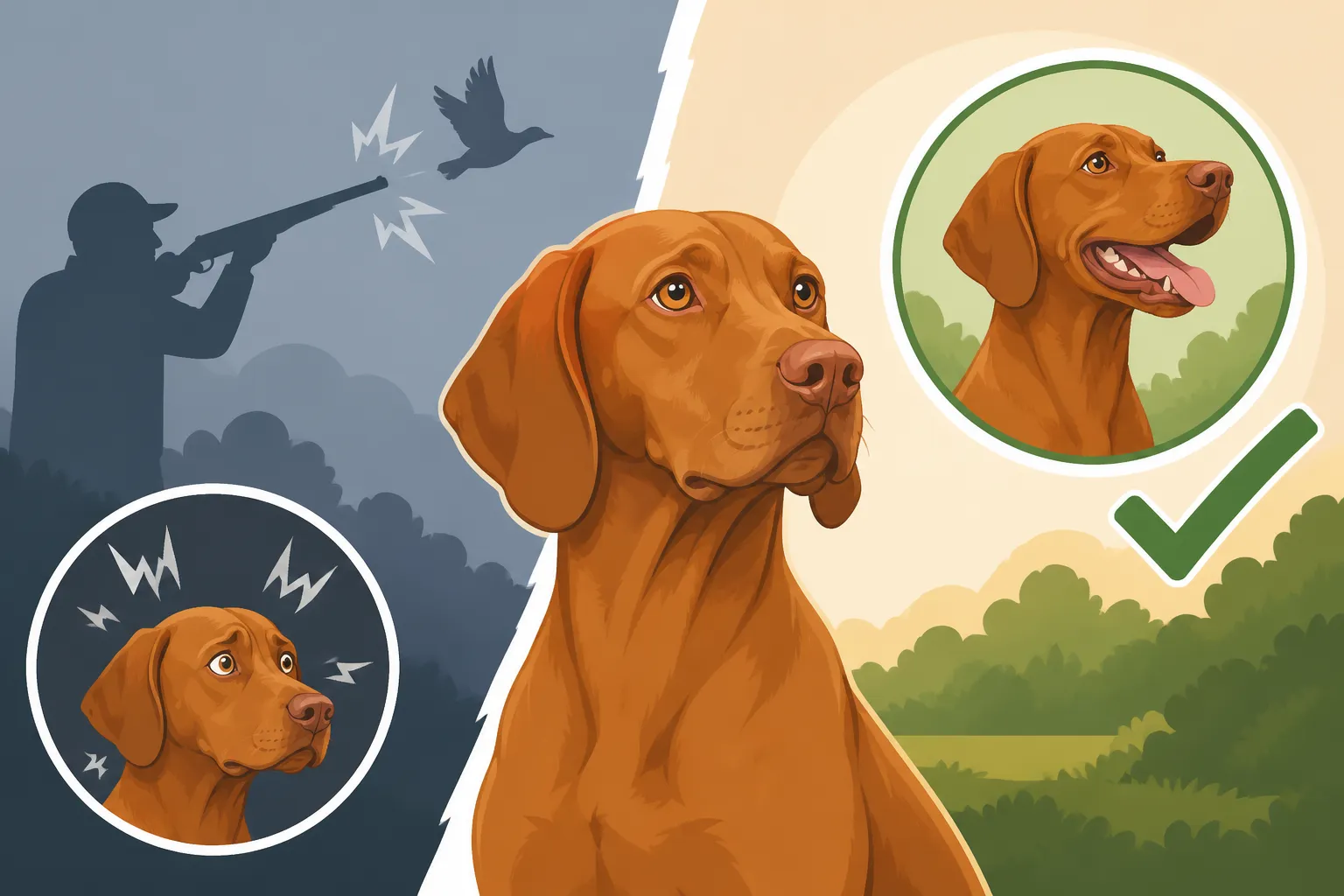
Whether a Vizsla Is Naturally Gun Shy
It’s a common worry for anyone considering a Vizsla, especially if you dream of having a field companion: "Will my Vizsla be gun shy?" The truth is, while Vizslas are known for their sensitive nature and desire to please, they aren't inherently born gun shy. However, their unique temperament means they absolutely require a thoughtful, gradual, and positive introduction to loud noises, especially gunfire, to prevent fear from developing. This guide will walk you through understanding your Vizsla's sensitivity, how to properly introduce them to sounds, and crucial steps to ensure they become a confident, steady hunting partner or simply a well-adjusted dog in a world full of unexpected noises.
Understanding Gun Shyness in Vizslas: Is It Natural?
The idea of a dog being "naturally" gun shy is a bit of a misconception, especially with a breed like the Vizsla. While individual dogs can have varying degrees of noise sensitivity, true gun shyness is almost always a learned fear, stemming from an improper or traumatic first exposure to loud noises. For a breed so keenly attuned to their handler and environment, their response to sound is heavily influenced by how we introduce it.
The Vizsla's Sensitive Nature and Breeding History
Vizslas are often described as "soft" dogs, and anyone who's ever lived with one knows exactly what that means. They are incredibly eager to please, forming deep, almost shadow-like bonds with their people. This isn't a weakness; it's part of their charm and why they are such devoted companions. However, this sensitivity also means they are highly perceptive of your emotions, your tone of voice, and sudden changes in their environment. They take cues from you constantly.
Their history as close-working hunting dogs, originating from Hungary, meant they were typically kept close to their owners, working in partnership rather than ranging far and wide. This close relationship fostered a dog that thrives on connection and can be easily unnerved by harshness or unexpected, overwhelming stimuli. If you’ve ever seen a Vizsla shut down after a sharp word, you understand their emotional depth. That's why topics like The Soft Vizsla That Shuts Down When You Raise Your Voice are so relevant to their overall training. Their predisposition isn't to be afraid of guns, but rather to be sensitive to their surroundings and the reactions within them, making them more susceptible to developing fear if not handled correctly.
What Gun Shyness Really Looks Like
Gun shyness isn't just a dog disliking loud noises; it's a profound, often debilitating fear response. A gun-shy Vizsla might cower, shake uncontrollably, tuck its tail, urinate or defecate, or try desperately to escape the perceived threat. They might vocalize with high-pitched whimpers or barks of distress. In severe cases, a dog might even injure itself trying to get away or enter a catatonic-like state of fear.
This isn't merely being startled by a sudden bang; it's a deep-seated anxiety that associates the sound with extreme danger. It means a dog that might otherwise excel in the field suddenly refuses to leave your side, hides, or becomes completely unresponsive to commands when a shot is fired. This fear can quickly generalize to other loud noises, specific locations (like the hunting blind), or even the sight of a gun. It can severely impact their quality of life, extending far beyond the hunting season, and might mean they can never truly enjoy being a working dog, as discussed in the context of other health challenges like Whether an Epileptic Vizsla Can Still Hunt.
Environmental Factors vs. Genetic Predisposition
While there's always a discussion about genetics in any breed's temperament, gun shyness in Vizslas is overwhelmingly an environmentally induced problem rather than an inherited trait. Of course, a dog can inherit a general predisposition to be more sensitive to sound than another, just as humans can be more or less sensitive to loud noises. If a puppy comes from lines known for extreme nervousness or anxiety, they might have a slightly lower threshold for developing fear. This is one of the many reasons why breeders should be transparent about their lines and conduct The Health Tests Both Vizsla Parents Should Have and other temperament assessments.
However, a well-bred Vizsla with a stable temperament is unlikely to become gun shy if introduced to gunfire correctly. The vast majority of gun shyness cases stem from a critical mistake during their formative weeks or months: a sudden, unexpected, or overly loud exposure to gunfire without positive association. Think of it like a child who develops a fear of thunder after a terrifying, close lightning strike and clap. It's the traumatic experience that creates the fear, not an inherent phobia. It's our responsibility as owners and trainers to ensure those initial experiences are positive, controlled, and confidence-building.
Safe Introduction to Gunfire: The Preventative Approach
Preventing gun shyness is infinitely easier than trying to cure it. The key lies in a systematic, gradual, and consistently positive introduction to loud noises. This isn't something you can rush; it requires patience, observation, and a deep understanding of your Vizsla's individual needs.
Starting Early and Gradually
The journey to a gun-steady Vizsla begins long before they ever see a real shotgun. It starts with general noise exposure during puppyhood. Think about exposing them to everyday household sounds – vacuum cleaners, dropping pots, children playing loudly – and making these experiences positive. When you begin with specific gunfire sounds, the principle is the same: distance and positive association are your best friends.
Start by introducing very low-level sounds, like a cap gun or even just clapping loudly, while the puppy is engaged in a highly enjoyable activity far away from the source. The dog should barely register the sound, if at all, and definitely not react negatively. As the puppy plays or eats a high-value treat, a very faint sound occurs. Your goal is for the sound to become background noise associated with good things. A useful tool here is a good treat pouch, easily found on Amazon, which allows for quick, seamless delivery of rewards the instant the sound happens, reinforcing the positive association without breaking the flow of play or training. Over days and weeks, you can very gradually decrease the distance or increase the volume of the sound, always ensuring the dog remains relaxed and happy.
Controlled Environments and Positive Reinforcement
Choosing the right environment is crucial. You want a quiet, open space where your Vizsla can freely move and feel safe, without echoes or other startling distractions. A wide-open field on a calm day is ideal, initially away from other dogs or people who might add to the chaos. Begin with a low-caliber blank pistol, or even a starter pistol, always at a significant distance from your dog.
The moment the low-level sound occurs, immediately reward your Vizsla with their favorite treat, a happy word, or a game with their most cherished toy. The sound should predict something wonderful, not something scary. Play a vigorous game of fetch, let them find hidden treats, or have a brief, enthusiastic training session immediately after the sound. The idea is to make the experience so positive that they barely notice the sound, or even start to anticipate it with excitement because it means good things are coming. Remember, you're not just exposing them to sound; you're actively shaping their emotional response. This deliberate process is paramount, and you can learn more about specific techniques in How to Introduce a Vizsla to Gunfire.
Avoiding Common Mistakes
There are several critical errors that can quickly turn a sensitive Vizsla into a gun-shy dog, and they are usually made out of ignorance, not malice. First, never surprise your dog with a loud bang. This is perhaps the most common mistake. A sudden, unexpected gunshot near an unsuspecting dog is a recipe for disaster. Their natural startle response can quickly escalate into fear if not handled carefully.
Second, never punish your dog for showing fear. If your Vizsla startles, cowers, or tries to run, that's a fear response. Punishing them will only associate the sound with pain or distress from you, compounding their fear and damaging your bond. Instead, calmly reassure them and retreat to a distance where they are comfortable. Third, do not rush the process. Every dog is an individual. What takes one Vizsla a few sessions might take another several weeks or even months. Observe their body language carefully. If they show any signs of stress – ears back, tail tucked, yawning, lip licking, freezing, or trying to escape – you've gone too far, too fast. Retreat and try again at a lower intensity or greater distance. Understanding their sensitive nature is critical, as even subtle corrections can be detrimental, linking back to ideas explored in Whether Shouting at a Vizsla Sets It Back Weeks. Your patience and gentle guidance are their greatest assets.
Training Techniques for Confidence and Desensitization
Beyond the initial introduction, ongoing training plays a massive role in building a Vizsla's overall confidence, which in turn helps them cope with potentially startling situations like gunfire. A confident dog, secure in their relationship with their handler and understanding of their job, is far less likely to crumble under pressure.
Building a Strong Foundation of Obedience
A solid foundation of basic obedience is your Vizsla's armor against fear. A dog that knows "sit," "stay," and "come" reliably, even amidst distractions, has a mental framework that can be called upon when things get intense. When a sudden sound occurs, you want your Vizsla to look to you for guidance, not to panic. If they are accustomed to focusing on you and responding to commands in various environments, that focus can be redirected during sound exposure.
Start working on obedience in increasingly distracting environments before you even think about reintroducing any loud sounds. A confident "stay" in a busy park is a precursor to a calm response near a shotgun. This builds trust and gives the dog something familiar and rewarding to do when things get a little chaotic. Programs like BAXTER & Bella offer excellent structured online puppy and dog training that can help you systematically build this foundational confidence from day one. Their approach emphasizes positive reinforcement and building a strong partnership, which is invaluable for a sensitive breed like the Vizsla. This comprehensive training helps them learn What a Vizsla Will Work For and how to remain focused on you.
Sound Desensitization and Counter-Conditioning
If your Vizsla already exhibits some nervousness around loud noises, or if you're working with an adopted dog whose history is unknown, sound desensitization and counter-conditioning are powerful tools. This involves systematically exposing your dog to the problematic sound at a level so low that it doesn't elicit a fearful response, while simultaneously pairing it with something highly positive.
You can find sound recordings of gunshots online. Start playing these recordings at an extremely low volume, almost imperceptible, while your Vizsla is happily engaged in a favorite activity, like eating dinner, playing with a toy, or getting belly rubs. The volume should be so low that they don't even twitch an ear. As they comfortably tolerate this, very, very gradually increase the volume over days, weeks, or even months. The moment the sound comes on, immediately give a high-value treat or engage in a brief, joyful play session. The goal is to change their emotional association with the sound from "scary" to "this means good things happen!" Never progress if your dog shows any signs of stress. This slow, methodical approach is key to rewiring their emotional response. It’s important to remember their sensitive nature, as discussed in The Soft Vizsla That Shuts Down When You Raise Your Voice, and ensure all interactions are positive and supportive.
Seeking Professional Help for Severe Cases
If your Vizsla is genuinely gun shy, exhibiting strong fear responses even to distant or low-volume sounds, trying to fix it on your own can inadvertently worsen the problem. In these situations, seeking help from a qualified professional is absolutely essential. Look for a certified professional gun dog trainer experienced with sensitive breeds, or even better, a veterinary behaviorist who can assess the underlying anxiety and create a comprehensive behavior modification plan.
These professionals have the expertise to implement systematic desensitization protocols, often combined with counter-conditioning, in a controlled and safe manner. They can identify subtle body language cues you might miss and guide you through the process step-by-step. In some severe cases, a veterinary behaviorist might also recommend medication to help reduce your Vizsla's baseline anxiety, making them more receptive to behavioral training. This isn't a quick fix, but it offers the best chance for your dog to overcome their fear and lead a more comfortable life. While Vizslas can handle professional training, it needs to be the right kind of trainer, as highlighted in Whether a Vizsla Handles a Professional Trainer.
The Role of the Hunting Partner and Environment
For Vizsla owners who intend to hunt with their dogs, the introduction to gunfire is just the beginning. The entire hunting experience, from the training grounds to the actual field, needs to be crafted to reinforce confidence and a love for the sport, not fear.
Creating a Positive Hunting Experience
Once your Vizsla has been properly introduced to gunfire and is comfortable with increasing volumes, their first few actual hunting experiences should be meticulously managed to be overwhelmingly positive. Start with low-pressure hunts, perhaps with just one or two birds, focusing entirely on your dog's success and enjoyment. Make sure they find the bird quickly and have a successful retrieve. The association should be: gun blast = exciting bird work and praise from you.
Avoid high-pressure situations, competitive environments, or long, frustrating hunts where birds are scarce. You want every element of the experience – the scent, the find, the retrieve, and the shot – to be linked to pure joy and accomplishment for your dog. A bad first hunt, where a dog is startled, misses the retrieve, or struggles, can indeed ruin a Vizsla for hunting, echoing the concerns in Whether a Vizsla Is Ruined by a Bad First Hunt. Keep it short, sweet, and successful.
Equipment and Best Practices in the Field
Even with the best training, it's vital to maintain best practices in the field. For yourself, always wear appropriate hearing protection. For your dog, while less common, some specialized dog ear protection is available if you find your Vizsla is still a little sensitive to close-range shots even after desensitization. However, it's crucial that this equipment doesn't interfere with their ability to hear your commands or feel comfortable.
In the field, always be aware of your surroundings and other hunters. Avoid situations where an unexpected shot from another hunter might startle your dog. Ensure your Vizsla is focused on the task at hand – quartering the field, pointing, or retrieving – so the gunshot is simply a signal of a successful find, rather than a jarring surprise. Using a high-quality GPS collar, like those found on Amazon, can be incredibly useful here. It allows you to track your dog's movements with confidence, freeing you to focus on their behavior and ensure they're staying engaged and happy, rather than constantly worrying about losing them, a concern often tied to What a GPS Collar Costs for a Vizsla.
Recognizing Limits and Adapting
It’s important to remember that not every Vizsla, despite their heritage, is destined to be a top-tier field trial champion. Some dogs, even with the most careful introduction, may simply have a higher degree of noise sensitivity or may only ever be comfortable with lower-pressure hunting scenarios. And that is perfectly okay.
Your dog's well-being and your bond are far more important than any hunting aspiration. If, after all your best efforts, your Vizsla remains anxious around gunfire, it's important to recognize their limits and adapt. There are countless other ways to enjoy your Vizsla's incredible athleticism and intelligence. They excel at agility, canicross, scent work, hiking, or simply being an active family companion. A "pet-bred" Vizsla can still be an incredible family dog, and even some "field-bred" Vizslas might prefer other activities if hunting proves too stressful, a point often considered in Whether a Pet Bred Vizsla Still Hunts. Prioritize their happiness and comfort above all else.
| Practice | Recommended Approach | Avoid At All Costs |
|---|---|---|
| Introduction | Gradual, controlled, positive association | Sudden, surprising, negative or forced exposure |
| Sound Level | Start extremely low (cap gun, distant blank) | Immediately loud (shotgun, close-range blank) |
| Environment | Calm, familiar, distraction-free outdoor space | Busy, stressful, enclosed, or echoing area |
| Association | Pair with high-value treats, favorite toys, enthusiastic praise | Pair with fear, confusion, punishment, or indifference |
| Dog's State | Relaxed, happy, engaged in play | Stressed, tired, anxious, startled, or confined |
| Progression | Increase volume/proximity incrementally over time | Rapidly escalate sound or proximity |
Disclaimer
This article is for general informational purposes only and does not constitute professional advice. Laws, prices and regulations vary by location and change over time. Consult a qualified professional for guidance on your specific situation.