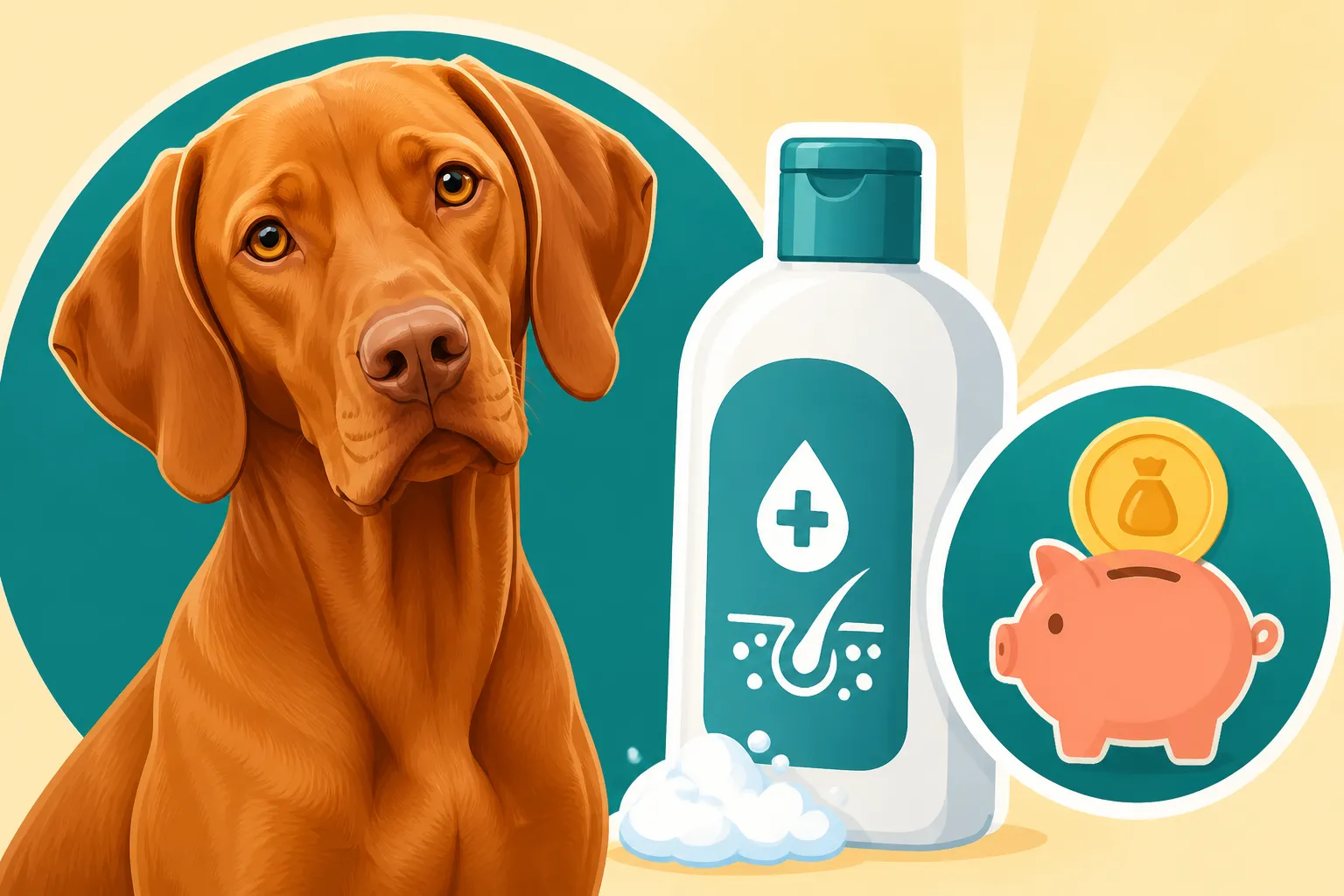
What Medicated Shampoo Costs a Vizsla Owner Yearly
If you’re a Vizsla owner, you know their beautiful, short, rust-colored coats are a dream – until they're not. So many Vizslas seem prone to frustrating skin issues, whether it's mysterious flakiness, persistent itching, or a nasty infection that just won't clear up. When your beloved companion is scratching constantly, miserable, and potentially developing hot spots or losing patches of that gorgeous fur, the vet often prescribes medicated shampoos as a vital part of the solution. But what does it truly cost you, year after year, to keep those skin issues under control with these specialized washes? This guide aims to shed some light on the yearly financial commitment for medicated shampoo for your Vizsla.
Why Medicated Shampoos Are Often a Necessity for Vizslas
It's a common misconception that because Vizslas have such short coats, they're low maintenance when it comes to skin and grooming. While they might not need professional haircuts, their unique coat and underlying genetic predispositions often make them susceptible to a host of dermatological challenges that demand more than just a regular bath. Owners often feel a deep frustration when they realize their seemingly simple-coated dog is actually quite complex when it comes to skin health.
Common Skin Conditions Requiring Medicated Baths
Vizslas, with their single, fine coat and often sensitive skin, are particularly prone to certain skin conditions that frequently necessitate the use of medicated shampoos. It's not just about getting them clean; it's about delivering therapeutic ingredients directly to the skin to combat specific problems.
One of the most common culprits is allergies. Just like people, Vizslas can suffer from environmental allergies (atopy) to things like pollen, dust mites, or molds. They can also have food allergies. These allergies manifest as intense itching, redness, ear infections, and often secondary bacterial or yeast infections due to constant scratching and irritation. Medicated shampoos containing ingredients like chlorhexidine for bacterial infections or miconazole for yeast, sometimes combined with soothing agents like oatmeal or hydrocortisone, become indispensable. Without these, the cycle of itching, scratching, and infection can become a persistent nightmare for both dog and owner.
Then there's the more specific and often heartbreaking condition like sebaceous adenitis. This is an autoimmune disease where the sebaceous glands, responsible for producing the skin's natural oils, become inflamed and eventually destroyed. The result is dry, flaky skin, dull and brittle hair, and often significant hair loss, particularly along the back and head. Owners often describe a distinct, musty odor that accompanies the flaking. While not solely treated with shampoo, specialized moisturizing and keratolytic (exfoliating) shampoos are crucial to manage the scaling and improve coat quality, preventing secondary infections that thrive on damaged skin. Trying to manage this without the right shampoo is like trying to put out a fire with a watering can. What Sebaceous Adenitis Does to a Vizsla is a truly difficult read for any Vizsla owner.
Other times, a Vizsla might simply develop a persistent bacterial folliculitis or superficial pyoderma from a minor scrape in the field or an allergic flare-up. These infections cause pustules, crusts, and sometimes small bald spots. Again, a veterinarian will almost certainly prescribe an antibacterial shampoo to help clear the infection topically, often in conjunction with oral antibiotics. It’s a multi-pronged attack to get your dog comfortable again. Many owners describe the relief of finding a shampoo that finally makes a difference after months of struggle.
The Role of Your Veterinarian in Prescription Shampoos
It’s tempting to head straight to the pet store aisle when you notice your Vizsla scratching, but with medicated shampoos, a trip to the veterinarian first is absolutely critical. Over-the-counter (OTC) shampoos, while sometimes helpful for minor issues or general maintenance, simply don't have the potency or the targeted ingredients needed for genuine dermatological conditions.
Your vet's role is not just to hand you a bottle; it's to diagnose the root cause of the skin problem. Is it bacterial? Yeast? Allergic? Parasitic? An autoimmune condition? The type of medicated shampoo prescribed will depend entirely on this diagnosis. For example, a shampoo designed for yeast infections won't do much good for a purely bacterial one, and vice-versa. Using the wrong product can not only be ineffective but could also exacerbate the problem, causing further irritation or delaying proper treatment. You might find yourself saying, "I tried everything, and nothing worked!" when in reality, you weren't using the right thing.
Prescription medicated shampoos typically contain higher concentrations of active ingredients, such as potent antifungals (like ketoconazole or miconazole), powerful antibacterials (like chlorhexidine or ethyl lactate), or specialized corticosteroids for intense inflammation. They often also have carefully balanced pH levels and specific carriers to ensure the active ingredients penetrate the skin effectively without causing further dryness or irritation. Your vet will guide you on the correct frequency of bathing, how long to leave the shampoo on, and what to watch out for. This isn’t a one-and-done solution; it’s a commitment to a specific care regimen, which often lasts for weeks, months, or even your Vizsla's entire life. Managing a Vizsla's Skin for Life can feel like a daunting prospect.
Breaking Down the Yearly Cost of Medicated Shampoo for Your Vizsla
Understanding the actual cost of medicated shampoo for your Vizsla on a yearly basis can be tricky, as it’s not a fixed price. It fluctuates based on several factors, including the specific condition being treated, the type of shampoo, how often it’s used, and even where you purchase it. It’s important to budget for this, as it can be a recurring and sometimes significant expense.
Factors Influencing the Price of Medicated Shampoos
The price tag on a bottle of medicated shampoo isn't arbitrary. Several elements contribute to its cost.
Firstly, whether it's a prescription or an over-the-counter product makes a huge difference. Prescription shampoos, due to their higher concentrations of active ingredients, research, and regulatory requirements, almost always cost more per bottle. You're paying for efficacy and veterinary-grade treatment. OTC options can range from general soothing shampoos to those with milder antimicrobial properties. Sometimes a vet might recommend an OTC shampoo for maintenance after an acute issue has been resolved with prescription products, but they are rarely the first line of defense for serious conditions.
The active ingredients themselves play a big role. Shampoos with specialized antifungals, potent antibiotics, or unique anti-inflammatory compounds will command a higher price than those with simpler, more common ingredients like colloidal oatmeal or gentle cleansers. For instance, a shampoo formulated to specifically treat demodectic mange will likely cost more than one targeting general dry skin.
Brand name recognition also influences cost. Just like human products, some veterinary pharmaceutical brands are more established and may charge a premium. However, many excellent generic or white-label versions exist, which your vet might recommend as a more cost-effective option, provided the active ingredients and concentrations are identical.
Finally, bottle size and concentration are key. A smaller bottle with a highly concentrated formula that requires less product per wash might be more expensive upfront but last longer, making its per-use cost lower. Conversely, a large bottle of a less concentrated formula might seem like a bargain but could run out faster if you need to use a lot for each bath. Given a Vizsla's sleek, short coat, you often use less product per wash than you would with a thick-coated breed, but frequency can still make it add up.
Estimating Your Annual Shampoo Budget
Let's get down to the numbers. Estimating your annual medicated shampoo budget involves considering the frequency of bathing and the typical cost of a bottle.
For a Vizsla with chronic skin issues like allergies or sebaceous adenitis, your vet might recommend bathing once or twice a week during flare-ups, and then perhaps every 1-2 weeks for maintenance. Let’s assume an average of once a week for this example, which is 52 baths a year.
A typical 8-12 oz bottle of prescription medicated shampoo might cost you anywhere from what a few bags of kibble cost to the price of a substantial veterinary consultation. Let’s imagine a bottle costs an amount similar to a routine vet visit for a checkup. Depending on the size of your Vizsla and how much lather you need, one bottle might last 4-8 baths.
| Frequency of Bathing | Bottles Needed Annually (approx.) | Estimated Annual Cost Range (approx.) |
|---|---|---|
| Once per week | 6-13 bottles | Roughly 6-13 routine vet visits |
| Twice per week | 13-26 bottles | Roughly 13-26 routine vet visits |
| Once every 2 weeks | 3-7 bottles | Roughly 3-7 routine vet visits |
These are estimates, of course. Some Vizslas might only need medicated baths during seasonal allergy flare-ups, perhaps for a month or two out of the year, significantly reducing the annual cost. Others might require consistent weekly baths indefinitely. You can usually purchase these shampoos directly from your vet's office, or through online pet pharmacies like Chewy, which can sometimes offer competitive pricing or subscription services that save a little money over time.
Remember, this is just for the shampoo itself. This doesn't account for the initial veterinary consultations and diagnostics that led to the shampoo prescription in the first place, or any other treatments needed concurrently.
Beyond the Bottle: Related Costs and Savings Tips
When you’re dealing with a Vizsla's chronic skin condition, the medicated shampoo, while essential, is rarely the only expense you’ll face. It’s important to look at the bigger picture of skin management, which can include diagnostics, other medications, and ways to make the whole process more manageable financially.
Other Expenses Associated with Skin Management
Before you even get to the shampoo, there are the initial vet visits. Your Vizsla will need a thorough examination, which comes with a consultation fee. If the issue isn't straightforward, your vet might recommend diagnostic tests. This could include skin scrapings to check for mites, cytology (looking at skin cells under a microscope) to identify bacterial or yeast infections, or even fungal cultures. These tests each have their own cost, and they are crucial for getting the right diagnosis.
For more complex cases, such as suspected allergies or autoimmune diseases like sebaceous adenitis, the vet might suggest a skin biopsy. This involves taking a small sample of skin under sedation or general anesthesia and sending it to a lab for histopathology. Whether a Skin Biopsy Confirms It in a Vizsla is a good read if you're considering this step. The cost of a biopsy, including anesthesia and lab fees, can be substantial.
Beyond diagnostics, many Vizslas with chronic skin conditions also require oral medications. For severe itching or inflammation, a course of steroids might be prescribed. For persistent allergies, drugs like cyclosporine or oclacitinib (Apoquel) are common. These medications are often prescribed long-term and can be quite expensive, sometimes costing the equivalent of a monthly car payment. What Cyclosporine Costs a Vizsla Owner Monthly can give you an idea of just how quickly these expenses add up. Don't forget, if there's a secondary bacterial infection, a course of oral antibiotics will be necessary, and those also have a price tag.
Many owners also invest in supplements to support skin health, such as omega-3 fatty acids (fish oil), which can help reduce inflammation and improve coat quality. While these are usually less expensive than prescription medications, they are an ongoing cost to factor into your budget. Given the Vizsla’s propensity for immune-mediated diseases, some owners wonder Why Vizslas Carry So Much Immune Disease, and managing skin is often part of that larger picture.
Considering the potential for these ongoing, significant health costs, pet insurance can be a real lifeline for Vizsla owners. Providers like Healthy Paws offer various plans that can help cover a percentage of unexpected veterinary bills, including those for chronic conditions once a diagnosis is established and not considered pre-existing. It might seem like an added monthly expense, but when you're facing hundreds or even thousands of dollars in vet bills for skin issues, it can offer immense peace of mind.
Smart Strategies to Manage Medicated Shampoo Costs
While you can't eliminate the need for medicated shampoo if your Vizsla genuinely requires it, there are definitely ways to be a smart consumer and manage these costs effectively.
Firstly, always ask your veterinarian if there are generic alternatives to a prescribed brand-name shampoo. Often, the active ingredients are the same, but the generic version is significantly more affordable. Just ensure your vet confirms the generic is equally effective and appropriate for your Vizsla’s specific condition.
Buying in larger bottle sizes or bulk can often lead to savings. A larger liter-sized bottle might have a higher upfront cost, but the price per ounce is typically lower than smaller bottles. If you know your Vizsla will need a particular shampoo long-term, this is a sensible strategy. Many online pet retailers, including Chewy, offer larger sizes and even recurring delivery services that can shave a few dollars off the price and ensure you never run out.
Consider subscription services for routine supplies. While not specifically for prescription shampoo, if you're buying other regular items like maintenance shampoos, dietary supplements, or even food from a service like Chewy or Ollie, you can often get discounts or free shipping, helping to offset other pet care costs.
Preventative care is also a huge money-saver in the long run. By consistently managing your Vizsla's allergies, providing a high-quality diet (some Vizslas do great on fresh food, which can be delivered by services like Ollie, though it comes with its own cost), and addressing minor skin irritations promptly, you might be able to reduce the frequency of severe flare-ups that require intensive medicated shampoo use. Regular grooming with appropriate brushes, like a rubber curry, can also help distribute natural oils and keep the skin healthy, potentially reducing the need for medicated interventions. Managing a Vizsla's Skin for Life truly boils down to this proactive approach.
Finally, discuss the bathing schedule with your vet regularly. As your Vizsla’s skin condition improves, they might be able to move from weekly baths to bi-weekly or even monthly maintenance washes, significantly reducing the amount of shampoo you go through in a year. The goal is always to use the least amount of intervention necessary to keep your dog comfortable and healthy.
Dealing with a Vizsla's skin issues and the ongoing need for medicated shampoos can certainly feel overwhelming and expensive at times. However, by understanding the reasons behind these costs, exploring different purchasing options, and being proactive with preventative care, you can manage the financial burden while ensuring your beloved companion gets the best possible care for that beautiful, sensitive skin.
Disclaimer
This article is for general informational purposes only and does not constitute professional advice. Laws, prices and regulations vary by location and change over time. Consult a qualified professional for guidance on your specific situation.