Whether a Second Dog Fixes a Vizsla’s Anxiety
Vizsla separation anxiety and whether bringing a second dog into the home solves panic caused by destructive chewing and pacing.
Work with the temperament you have.
House-training and crate work, recall, leash manners, separation anxiety, and the behaviors this breed is wired for.

Vizsla separation anxiety and whether bringing a second dog into the home solves panic caused by destructive chewing and pacing.

Crate training helps sensitive Vizslas by providing a safe den that prevents mischief and offers security during unsupervised moments.
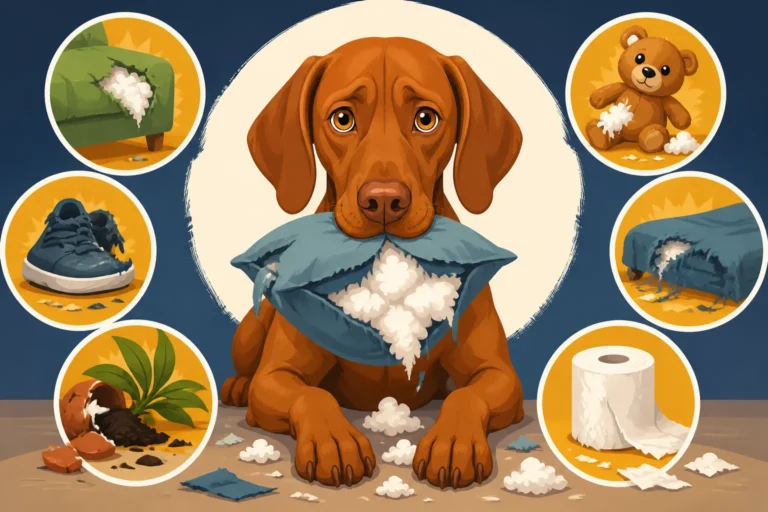
Vizsla anxiety causes destructive behaviors like chewing and scratching due to separation distress and lack of exercise.
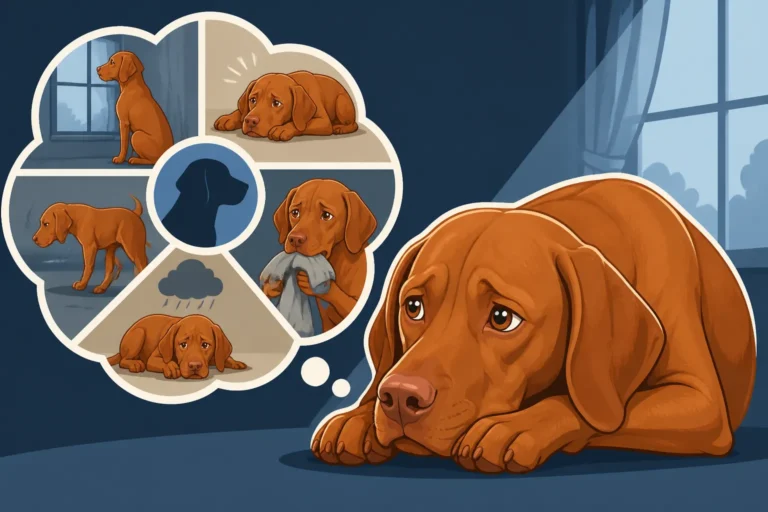
Separation anxiety in Vizslas causes subtle pre-departure cues, mounting distress after you leave, and frantic post-arrival greetings.

Vizsla separation anxiety and Velcro dog behavior explained through pack mentality, high energy needs, and solitude strategies.

Vizsla bonding patterns and the Velcro Vizsla label explain how these dogs connect with entire family packs and seek constant human companionship.

Vizsla burrowing habits and single coats explain why this breed needs blankets for warmth and security under bed covers.

Vizsla leaning behavior stems from an innate breed drive for physical proximity, affection, security, and communication.

Vizsla attachment behavior explains why this breed follows owners into bathrooms and offers practical ways to manage closeness.
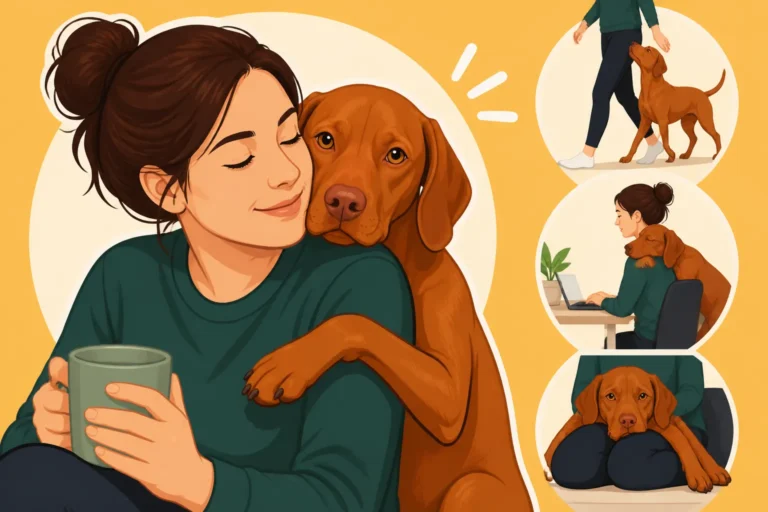
Velcro behavior in a Vizsla involves constant shadowing, sixty-pound lap sitting, and an intense desire for physical closeness.