Lumps Worth Checking on a Vizsla
Common Vizsla lumps and bumps, including benign lipomas, cysts, abscesses, and warts, and which ones need veterinary attention.
Know what to watch for.
Breed-specific conditions, screening and DNA tests, what surgery actually costs, and the daily habits that stretch a healthy lifespan.
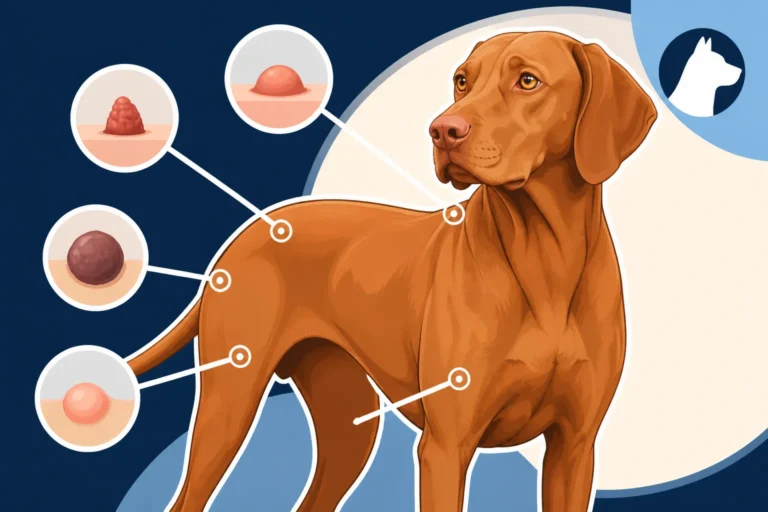
Common Vizsla lumps and bumps, including benign lipomas, cysts, abscesses, and warts, and which ones need veterinary attention.
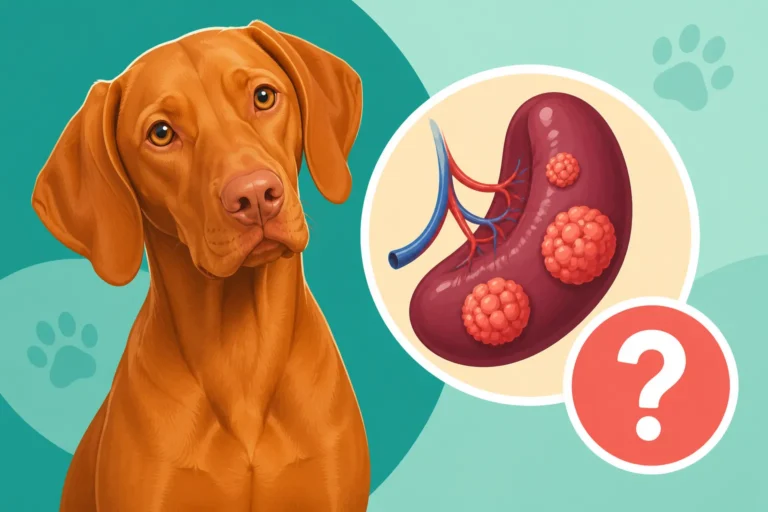
Splenic tumors in Vizslas, including benign hematomas and malignant hemangiosarcoma, carry risks, signs, and surgical removal options.

Chemotherapy for Vizslas explains success rates, side effects, and treatment realities for lymphoma, hemangiosarcoma, and mast cell tumors.

Lymphoma risk and the typical age this systemic cancer strikes Vizslas, which affect lymph nodes, spleen, liver, and bone marrow.

Vizsla cancer risk and early onset patterns explained, including breed-specific predispositions and common aggressive forms.

Epileptic Vizslas and their inherited idiopathic epilepsy explain whether these dogs should be included in a breeding program.

Seizure medication side effects and anti-epileptic drugs explain why epileptic Vizslas experience lower energy and sedation.

Epilepsy in Vizslas and how unpredictable seizures, post-ictal disorientation, and daily anti-epileptic medications impact hunting safety.

Vizsla seizures and idiopathic epilepsy are explained, detailing genetic causes, seizure types, and common environmental triggers.

Idiopathic epilepsy in Vizslas typically begins at a specific age range, helping veterinarians diagnose hereditary seizures.