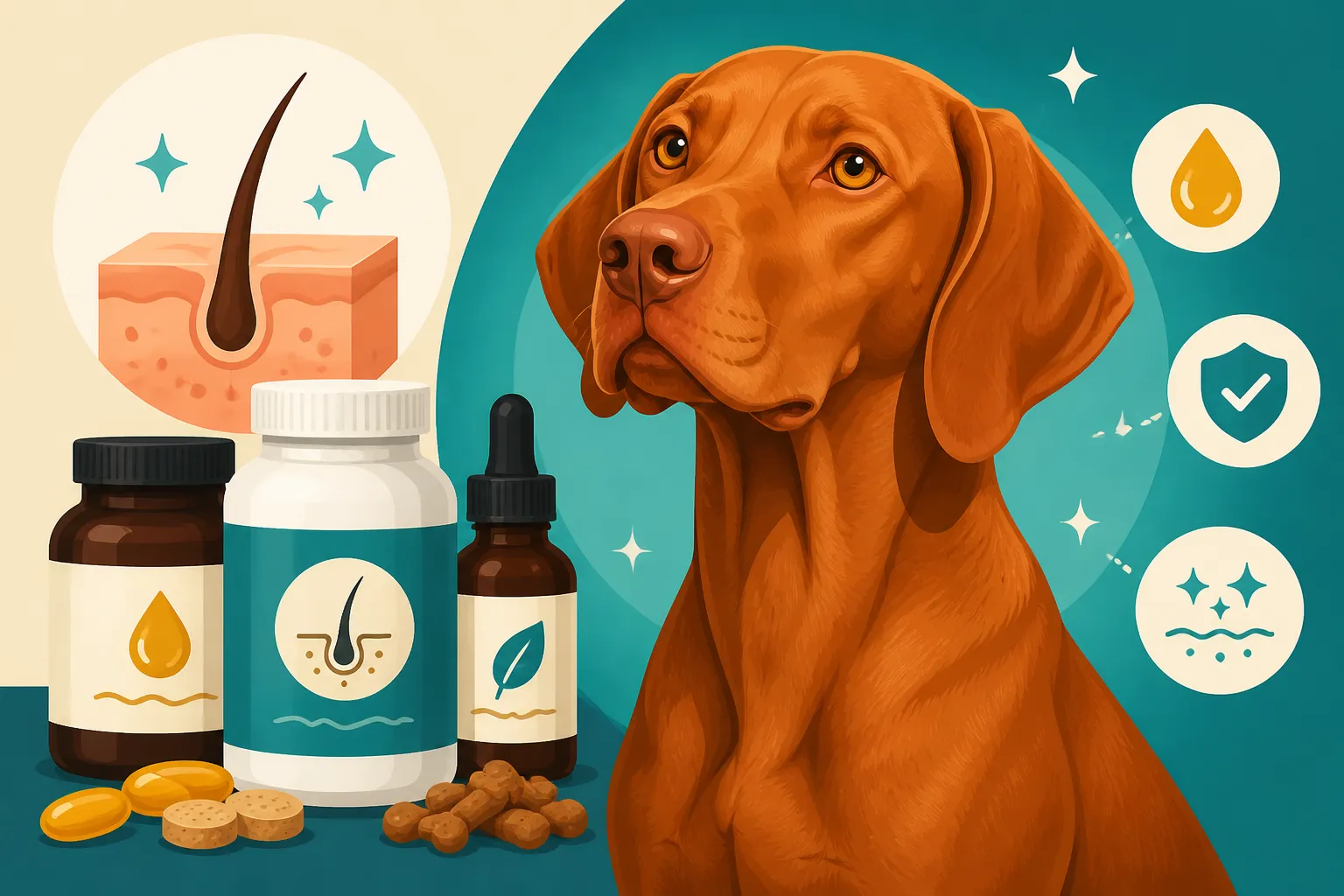
What Skin Supplements Cost a Vizsla Owner
As Vizsla owners, we know the heartbreak of seeing our beloved companions itch and scratch relentlessly, or watch their beautiful golden-rust coats become dull and flaky. It’s not just a cosmetic issue; it's a sign of discomfort, and a constant worry that we're missing something vital in their care. This guide is here to walk you through the often-confusing world of skin supplements for Vizslas, breaking down what they might cost you and how to navigate the options to bring your dog relief and a healthier coat.
Why Your Vizsla Might Need Extra Skin Support
Vizslas are truly special dogs, known for their affectionate nature, incredible energy, and that striking, distinctive coat. But that same beautiful coat, or rather, the delicate skin beneath it, can sometimes be a source of frustration for owners. Their fine, single coat, without a thick undercoat, means their skin is often more exposed and can be quite sensitive.
The Vizsla's Distinctive Coat and Skin Vulnerabilities
Unlike breeds with dense double coats, a Vizsla's short, smooth, single layer offers less insulation and, critically, less protection from environmental irritants. This means their skin is more directly exposed to everything from pollen and dust mites to harsh weather conditions. We often notice how easily their skin can get dry in winter or become irritated after a romp through rough cover. It's a constant reminder that their skin is delicate and requires thoughtful care. You might feel like you're constantly monitoring for scrapes or dry patches, and you're not wrong to be so vigilant; their physiology genuinely makes them more prone to certain issues.
Common Skin Woes That Lead Owners to Supplements
Many Vizsla owners find themselves dealing with recurring skin issues. It could be persistent itching, seemingly out of nowhere, leading to hot spots or areas where they've licked themselves raw. Perhaps you've noticed excessive flaking, a dull coat that just won't shine, or even subtle redness on their belly or paws. These are often signs of underlying inflammation or an imbalance in their skin barrier. Our Vizslas can be prone to environmental allergies, reacting to pollens and grasses, or even food sensitivities that manifest as skin problems. It’s incredibly frustrating when you’ve tried everything and your dog is still uncomfortable. Sometimes, it can be a case of Whether a Vizsla's Skin Flakes Badly or even a reaction to Whether a Vizsla Reacts to Its Food. These ongoing irritations not only cause physical discomfort but can also impact their mood and energy levels, making them less themselves.
Decoding the Different Types of Skin Supplements and Their Price Tags
When you start looking into skin supplements, the sheer volume of options can be overwhelming. It feels like everyone has a different recommendation, and the price points vary wildly. Understanding the main categories and what they aim to do can help you make a more informed decision.
Omega-3 Fatty Acids: The Gold Standard for Skin Health
If there's one category of skin supplement that consistently gets recommended, it's omega-3 fatty acids. These are essential fats, primarily EPA and DHA, that play a crucial role in reducing inflammation throughout the body, including the skin. For a Vizsla with dry, itchy skin or allergies, omega-3s can significantly improve skin barrier function and reduce redness and irritation.
You'll find omega-3s primarily from fish oil (salmon, sardine, anchovy) or sometimes from plant-based sources like algae for a vegan option. The cost here depends heavily on the source, the concentration of EPA and DHA, and the form.
- Liquid Oils: Often the most cost-effective per dose, especially if you buy larger bottles. They can be poured directly over food. However, they need to be stored properly (refrigerated, away from light) to prevent rancidity, and some dogs can be picky about the taste. A large bottle might seem like a bigger upfront cost but can last for months.
- Soft Gels/Capsules: Convenient and mess-free, these are good for picky eaters who might not like the taste of liquid oil. They tend to be more expensive per dose than liquid forms due to the encapsulation process.
- Chews/Treats: These are often the most palatable option, making administration easy. However, they can be the most expensive per dose, and sometimes the concentration of active ingredients is lower, meaning your Vizsla might need several chews a day. Look for brands that clearly state the EPA/DHA content per chew.
The quality of the oil also matters. Reputable brands will often provide third-party testing results for purity, confirming no heavy metals or toxins, and ensuring freshness. This transparency usually comes with a higher price tag, but it’s an investment in your Vizsla's health, ensuring you're getting what you pay for. Many of these options can be found easily on platforms like Chewy, offering a wide range of price points and formulations to compare.
Probiotics and the Gut-Skin Connection
More and more, we're understanding that a healthy gut often means healthy skin. If your Vizsla struggles with recurrent skin issues, especially if they also have a sensitive stomach or occasional digestive upset, probiotics might be a valuable addition. Probiotics are beneficial bacteria that help balance the gut microbiome, which in turn can influence the immune system and reduce systemic inflammation that might be showing up on the skin.
- Powders: Often mixed into food, these can be quite cost-effective. You have control over the dosage, which can be helpful if your Vizsla is particularly sensitive.
- Chews: Again, a palatable option, similar to omega-3 chews in terms of convenience and usually a higher cost per dose.
- Food Formulations: Some premium dog foods or fresh food brands, such as Ollie, incorporate probiotics or prebiotics into their recipes, which might offer a holistic approach to gut and skin health. If you're considering a diet change, this could be a factor in your decision.
The cost will depend on the number of active bacterial strains, the CFU (colony-forming units) count, and whether prebiotics (food for the good bacteria) are included. It's not uncommon for a good quality probiotic to be a moderate monthly expense, but for some Vizslas, it can make a world of difference in reducing skin flare-ups.
Vitamins, Minerals, and Other Specialty Blends
Beyond omega-3s and probiotics, a whole host of other ingredients are marketed for skin health. These often come in multi-ingredient blends that promise comprehensive support.
- Vitamin E: An antioxidant that helps protect skin cells from damage and supports a healthy coat. Often included in omega-3 supplements or available as a standalone.
- Zinc: Essential for skin repair and immune function. Deficiencies can lead to skin problems.
- Biotin: A B vitamin sometimes included for coat health, though its direct impact on canine skin health is less universally proven for all conditions.
- Proprietary Blends: Many companies create their own unique mixes, combining several of the above ingredients with things like turmeric, quercetin, or other botanicals known for anti-inflammatory properties. These blends can vary significantly in price and effectiveness.
The cost of these can range from relatively inexpensive for a single vitamin supplement to quite high for a complex proprietary blend. It's crucial to look at the active ingredients, their concentrations, and whether the claims are backed by research, rather than just impressive marketing. Sometimes, a high-cost blend might not be necessary if a single, targeted supplement addresses your Vizsla's specific deficiency.
The Ongoing Financial Commitment to Your Vizsla's Skin Health
Investing in your Vizsla's skin health isn't usually a one-time purchase; it's an ongoing commitment. Understanding the long-term financial picture, including the role of your veterinarian, is key to sustainable care.
Initial Outlay vs. Long-Term Management Costs
When you first decide to try a skin supplement, there's the initial cost of purchasing a full supply. This might feel significant, especially if you're trying a few different products or a premium brand. However, the real cost lies in the ongoing monthly or quarterly replenishment. Most skin conditions require continuous support to maintain benefits.
Think of it like this: you buy a three-month supply of an omega-3 oil. That's your initial outlay. But once those three months are up, you'll need to purchase another. If your Vizsla responds well, this becomes a regular line item in your pet care budget. It's important to factor this recurring expense into your calculations. Sometimes, an initially expensive product might be more concentrated or effective, requiring a smaller dose and thus evening out the long-term cost. Or, it might be that What Lifelong Skin Treatment Costs a Vizsla Owner really adds up.
The Role of Veterinary Consultation and Diagnostics in Cost
Before you dive headfirst into the supplement aisle, a visit to your veterinarian is invaluable. While supplements can be incredibly helpful, they are not a substitute for a proper diagnosis, especially if your Vizsla's skin issues are severe or persistent. Your vet can rule out more serious underlying conditions, such as infections (bacterial, fungal, parasitic), hormonal imbalances, or autoimmune diseases.
A vet visit itself comes with a consultation fee. If diagnostics are needed, such as skin scrapes, cytology, blood tests, or even allergy testing, these will add to the initial cost. For example, What a Vizsla's Skin Biopsy Costs can be a significant expense, but it can provide definitive answers that save you money in the long run by avoiding ineffective treatments. While these costs aren't directly for supplements, they are a critical part of a holistic approach to managing your Vizsla's skin health and ensuring you're not just masking symptoms. Investing in diagnosis first can prevent you from spending money endlessly on supplements that aren't targeting the root cause.
Evaluating Value: When Higher Price Might Mean Better Value
It's tempting to opt for the cheapest supplement, especially when faced with ongoing costs. However, with skin supplements, a lower price doesn't always mean better value. The efficacy of a supplement heavily relies on the quality and bioavailability of its ingredients.
Consider these factors:
- Ingredient Purity and Sourcing: Is the fish oil sustainably sourced and free from heavy metals? Are the probiotics viable and stored correctly? High-quality ingredients cost more to produce and source.
- Active Ingredient Concentration: Does a chew promise omega-3s but only deliver a tiny amount of EPA/DHA, meaning you have to feed multiple chews? A more concentrated product, even if more expensive per bottle, might be more cost-effective per effective dose.
- Third-Party Testing: Reputable brands often pay for independent labs to verify the contents and purity of their products. This adds to their cost but offers peace of mind.
- Brand Reputation and Reviews: While not a guarantee, brands with a long history of positive results and good customer service often indicate a commitment to quality.
Sometimes, paying a bit more upfront for a high-quality, scientifically backed supplement can lead to better results, quicker resolution of symptoms, and ultimately less money spent on ineffective products or additional vet visits down the line.
| Supplement Type | Common Forms | General Cost Factor (Relative) | Primary Benefit |
|---|---|---|---|
| Omega-3 Fatty Acids | Liquid oil, softgels, chews | Medium to High | Reduces inflammation, improves skin barrier |
| Probiotics/Prebiotics | Powder, chews, diet inclusion | Medium | Balances gut microbiome, supports immunity |
| Vitamin E | Capsules, liquid, blends | Low to Medium | Antioxidant, cell protection, coat health |
| Zinc | Tablets, chews, blends | Low | Skin repair, immune function |
| Specialty Blends | Chews, powders, liquids | High | Multi-faceted support, anti-inflammatory herbs |
Smart Strategies for Managing Your Vizsla's Supplement Budget
Managing the costs associated with your Vizsla's skin health doesn't mean cutting corners on quality. There are smart ways to approach your budget without compromising their comfort or well-being.
Bulk Purchases and Subscription Savings
One of the easiest ways to reduce the per-dose cost of regular supplements is to buy in larger quantities or sign up for subscription services. Many online retailers, including Chewy, offer discounts for subscribing to regular deliveries. This not only saves you money but also ensures you never run out, maintaining consistency in your Vizsla's regimen.
For liquid oils or powders, often the largest sizes offer the best value. Just make sure you can use the product before its expiration date and store it correctly to maintain potency. If you're using a specific brand and know it works for your Vizsla, look into buying directly from the manufacturer, as they sometimes offer loyalty programs or bulk discounts.
Exploring Pet Insurance and Its Indirect Benefits for Skin Care
While pet insurance generally doesn't cover the routine cost of supplements, it can be a vital safety net for managing the underlying conditions that lead to chronic skin issues. For example, if your Vizsla develops severe allergies requiring prescription medications, specialized diets, or extensive diagnostic testing, a good pet insurance policy could significantly offset those costs. Companies like Healthy Paws, for instance, are known for comprehensive accident and illness plans.
Understanding Insuring a Vizsla Against Immune Disease or knowing Whether Skin Disease Is Excluded on a Vizsla Policy are important questions to ask when considering a policy. Even if supplements aren't covered, having insurance for related veterinary care frees up your budget to comfortably afford the supplements that support their daily health. It’s about looking at the bigger financial picture of canine health management.
Holistic Approaches: Diet, Environment, and Grooming as Cost Savers
Sometimes, the best "supplement" for your Vizsla's skin isn't in a bottle, but in a holistic approach to their care. By optimizing their diet, managing their environment, and maintaining consistent grooming, you might reduce the severity of their skin issues, potentially lessening the need for some supplements or making the ones you use more effective.
- Diet: A high-quality, balanced diet is fundamental. Some Vizslas thrive on fresh food diets, like those offered by Ollie, which can provide highly digestible nutrients and natural anti-inflammatory ingredients, potentially reducing skin flare-ups stemming from food sensitivities. Consulting with your vet or a canine nutritionist about dietary changes could be a proactive step. You might also look into Whether a Vizsla Needs Fish Oil for Its Skin as a dietary component rather than a standalone supplement.
- Environmental Management: Reducing exposure to known allergens can be a huge cost saver. This might involve more frequent vacuuming, air purifiers, wiping your Vizsla's paws after outdoor excursions, or specific bedding choices.
- Grooming: Regular bathing with a gentle, moisturizing shampoo can help remove allergens and keep the skin hydrated. Consistent brushing can distribute natural oils and improve coat health. For issues like dry skin, you might find that Whether Oil Soaks Help a Vizsla's Skin becomes a beneficial, cost-effective addition to your routine. Managing a Vizsla's Skin for Life truly requires a multi-pronged approach.
By focusing on these foundational elements, you can create an environment where your Vizsla's skin is less stressed, potentially reducing the overall financial burden of managing their health.
Disclaimer
This article is for general informational purposes only and does not constitute professional advice. Laws, prices and regulations vary by location and change over time. Consult a qualified professional for guidance on your specific situation.