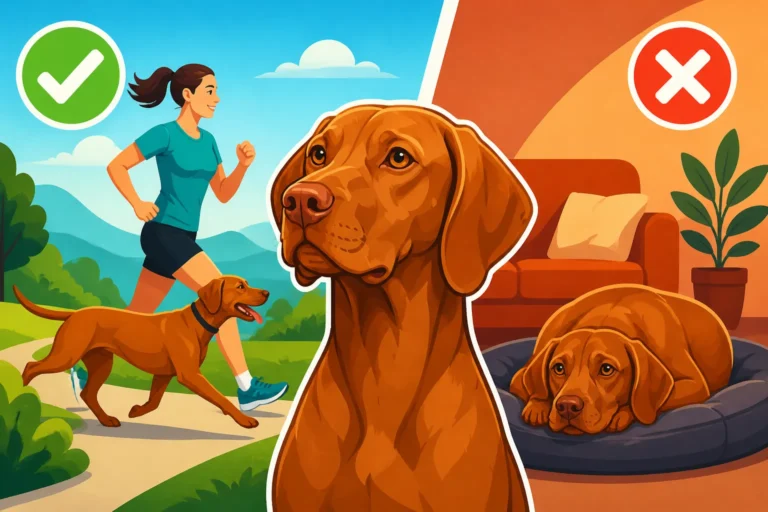
Whether a Vizsla Should Be an Only Dog
A Vizsla can live happily as an only dog, but that does not mean the arrangement will suit every household. These affectionate, energetic dogs often want to be close to their people, and a second dog is not a guaranteed fix for boredom or separation distress. This guide explains how to judge the match and help a solo Vizsla thrive.
Can a Vizsla Be Happy as an Only Dog
Being an only dog is not the same as being left alone
A Vizsla does not automatically need another dog to feel fulfilled. For many, the important part is reliable company, activity, and interaction with their human family. A dog that lives alone with an attentive person may be better matched than one sharing a home with another dog but spending long stretches without meaningful attention.
The distinction matters because people sometimes consider getting a second dog to solve a problem that actually comes from a different source. If a Vizsla cries when a door closes, chews the frame while the household is away, or becomes distressed when separated from a particular person, another dog may not ease that distress. The dog may still be upset about the people being gone. For more on the difference between normal attachment and distress, see Whether a Vizsla Can Ever Be Left Alone and Signs a Vizsla Is Suffering Alone.
A solo Vizsla can also have a full social life without a resident canine companion. Walks with familiar dogs, training classes, visits with suitable friends’ dogs, and supervised play can offer social contact. Those activities should be chosen for the individual dog, though. Not every Vizsla enjoys a busy dog park or wants to play with every dog it meets.
Why a Vizsla might prefer being the only dog
Some dogs enjoy sharing a home with other dogs; others prefer a quieter space and predictable access to their people. A Vizsla that has lived peacefully as an only dog may be unsettled by a new dog competing for resting places, toys, food, or human attention. A history of conflict, guarding, fear, or simply limited experience with other dogs can also make a one-dog home the more comfortable choice.
Household routines matter, too. An only dog can receive individual attention and training without the owner dividing time between pets. This can be especially useful with a young, excitable Vizsla that is still learning to settle, walk calmly, or respond around distractions. A second dog does not automatically teach those skills. Sometimes it gives the first dog another energetic companion to follow into trouble.
That does not mean a Vizsla should be isolated from other dogs. It means the dog’s social needs should be assessed as an individual rather than treated as a breed-wide rule. If you are weighing whether company from another dog would help, Whether a Vizsla Needs a Second Dog can help you think through the distinction between companionship and a household solution.
What a Solo Vizsla Needs From Its Household
Daily exercise and mental work
A Vizsla needs more than a quick trip around the block, and the responsibility for meeting that need rests with the household when there is no canine playmate at home. A companion dog may run around with a Vizsla, but that is not a substitute for a suitable routine. The right amount and type of activity depend on age, health, fitness, and temperament. A safe mix might include walks, training, scent games, retrieving, or other activities the dog enjoys.
Mental work matters alongside physical exercise. Short training sessions, searching for hidden treats, food puzzles, and practicing everyday skills can provide useful engagement. Rotate activities rather than relying on one repetitive game: a dog that has chased a ball for a long time may be physically tired but still need practice settling and using its nose. If you use food puzzles, introduce them gradually and choose a level your dog can solve without becoming frustrated. Chewy is one place owners may look for puzzle feeders or enrichment toys, but the most suitable choice is one the dog can use safely and comfortably.
Build a routine that fits real life rather than planning an ideal schedule that collapses after a week. For example, a morning walk and a brief training session may work on weekdays, while a longer hike or field activity fits the weekend. Adjust activity for puppies and older dogs instead of expecting every Vizsla to follow the same exercise plan. The Exercise a Vizsla Needs Every Day offers more detail on balancing movement and engagement.
Company, rest, and learning to settle
Vizslas are often described as Velcro dogs because many seek close contact with their people. That affection can be delightful, but it can also make it harder for a dog to relax when the household is busy or someone leaves the room. Teach independence in small, comfortable steps: reward the dog for resting on its bed, provide a calm activity nearby, and practice brief separations that end before the dog becomes overwhelmed. For a broader look at this close-contact tendency, see Whether Every Vizsla Is a Velcro Dog.
A solo dog also needs uninterrupted rest. It should have a comfortable place where visitors, children, and household activity do not constantly disturb it. That space should be an invitation, not a place to send the dog as punishment. A bed, crate if the dog is comfortable with one, or quiet gated area can help create a predictable retreat. Chewy may offer options such as beds, gates, and crate accessories; check that any item fits your dog’s size and does not create a chewing or entrapment risk.
Pay attention to how your dog behaves when you are home as well as when you leave. A Vizsla that follows you everywhere may still be content and able to rest independently. The concern is not affection by itself; it is persistent distress, inability to settle, or destructive behavior that appears linked to separation. If those signs are present, speak with a veterinarian or qualified behavior professional rather than assuming a second dog will resolve them.
When a Second Dog Might Help and When It Might Not
Signs a canine housemate could be a good fit
A second dog may make sense if the household genuinely wants another dog and has the time, space, and resources for both. It may also suit a Vizsla that has a history of relaxed, positive interactions with compatible dogs and enjoys sharing everyday life with them. The aim should be to add a well-matched companion, not to use one dog as a treatment plan for the other.
Consider the practicalities before deciding. Can you walk and train the dogs separately when needed? Can each have a safe feeding area and a place to rest? Would you be able to manage veterinary care, travel, and training for two dogs? A second dog can increase the household’s activity and costs, and it may create new management needs even if the dogs get along well.
Compatibility is about more than breed or size. Look at energy level, play style, age, confidence, and comfort around other dogs. A calm adult dog may be a better match for one Vizsla than a similarly energetic puppy; for another household, the reverse may be true. If you already have a dog, introductions should be planned carefully and supervised. A Vizsla Meeting the Dog You Already Have covers what to consider when bringing dogs together.
When another dog is unlikely to solve the problem
A second dog is unlikely to fix separation-related distress simply by being present. Some dogs become more relaxed with a companion, but others continue to panic when their person leaves. A new dog can even copy anxious behavior or add competition and stress. If the Vizsla is barking, pacing, drooling, destroying exits, or unable to eat when alone, start by discussing the behavior with a veterinarian or qualified professional.
It may also be the wrong choice if the current dog avoids other dogs, guards food or toys, or becomes tense in shared spaces. Those behaviors do not necessarily mean a dog can never live with another, but they deserve an honest assessment before a new pet arrives. Management and gradual introductions can help in some situations; ignoring warning signs and hoping they work themselves out can make life harder for both dogs.
Use the following table as a starting point rather than a pass-or-fail test:
| What you observe | What it may suggest | A practical next step |
|---|---|---|
| Your Vizsla relaxes around familiar dogs but is content at home | A companion could be enjoyable, but may not be necessary | Keep providing good social opportunities and decide based on your household’s wishes |
| Your Vizsla becomes distressed when you leave | The main issue may be separation, not lack of a dog | Seek professional guidance and practice an appropriate alone-time plan |
| Your Vizsla guards food, toys, or resting places | Sharing a home may require careful management | Get an individual behavior assessment before considering another dog |
| Your Vizsla enjoys play but struggles to settle afterward | More dogs may add excitement rather than balance | Work on calm routines and rewarding settled behavior |
| You want a second dog for its own sake and can meet both dogs’ needs | A multi-dog home may be realistic | Choose for temperament and plan separate resources and training |
How to Make an Only-Dog Home Work
Create a predictable routine without overloading the day
A helpful routine combines activity, interaction, and downtime. For example, a morning outing can include sniffing and a few simple training cues, while a later activity might be a food puzzle or a short search game. Then make rest part of the plan. Constantly trying to tire a Vizsla out can backfire if the dog learns that the household is always exciting and never practices switching off.
Keep enrichment manageable. Hide a few pieces of kibble for a sniffing game, practice a calm recall in a safe area, or teach the dog to settle on a mat while you make dinner. For food-based activities, account for treats in the dog’s daily meals and supervise any item that could be chewed apart or swallowed. Chewy may be useful for browsing treat-dispensing toys, but a simple box or towel game can provide enrichment too, provided it is safe for your dog.
If your schedule includes long periods away, make a realistic plan rather than hoping exercise alone will bridge the gap. A trusted dog walker, a suitable sitter, or a carefully chosen daycare arrangement may help some households. Daycare is not a universal answer: some dogs find group care tiring or stressful, so observe your dog’s response and adjust accordingly.
Build social contact and independence on purpose
Social opportunities do not need to mean uncontrolled play. Walk with a friend and their dog, attend a well-run training class, or arrange calm visits with a familiar dog if both animals are comfortable. Watch for body language that suggests either dog needs space, and allow them to disengage. A good experience is one where both dogs can relax, not simply one where they spend the most time playing.
At the same time, practice ordinary independence at home. Give your Vizsla a comfortable resting spot and reward it for choosing to settle there. Step into another room for a short period while the dog has a safe activity, then return calmly. Increase the challenge gradually. If the dog shows escalating distress, reduce the difficulty and seek professional advice rather than forcing longer separations.
A household with children or other pets needs additional planning. Dogs should have a child-free retreat, and interactions with young children should be actively supervised. A resident cat or small pet should have secure areas the dog cannot access. For guidance on one common household pairing, see Whether a Vizsla Lives With Cats. A solo Vizsla can do very well in a busy family home, but it still needs boundaries, rest, and protected space.
Reassess as your dog and circumstances change
The right setup can change over a Vizsla’s lifetime. A puppy may need close supervision and frequent training, while an adult may have a more settled routine. An older dog may prefer quieter social contact and a gentler pace. A change in work schedule, a move, a new baby, or the loss of a familiar companion can also affect how well the dog copes.
Keep notes on the practical signs that matter: whether the dog can rest, how it behaves during absences, how it responds to other dogs, and whether its exercise routine seems to leave it calm rather than wound up. If the dog’s behavior changes suddenly, check for health issues with a veterinarian instead of assuming it is simply boredom or loneliness.
An only-dog home can be a thoughtful choice when it offers reliable companionship, activity, training, and rest. A second dog can also be a good addition when the people want one and the dogs are a suitable match. The key is to decide based on the individual Vizsla and the life you can realistically provide, not on the belief that every dog needs a dog.
Disclaimer
This article is for general informational purposes only and does not constitute professional advice. Laws, prices and regulations vary by location and change over time. Consult a qualified professional for guidance on your specific situation.