Whether a Vizsla Runs in NAVHDA Tests
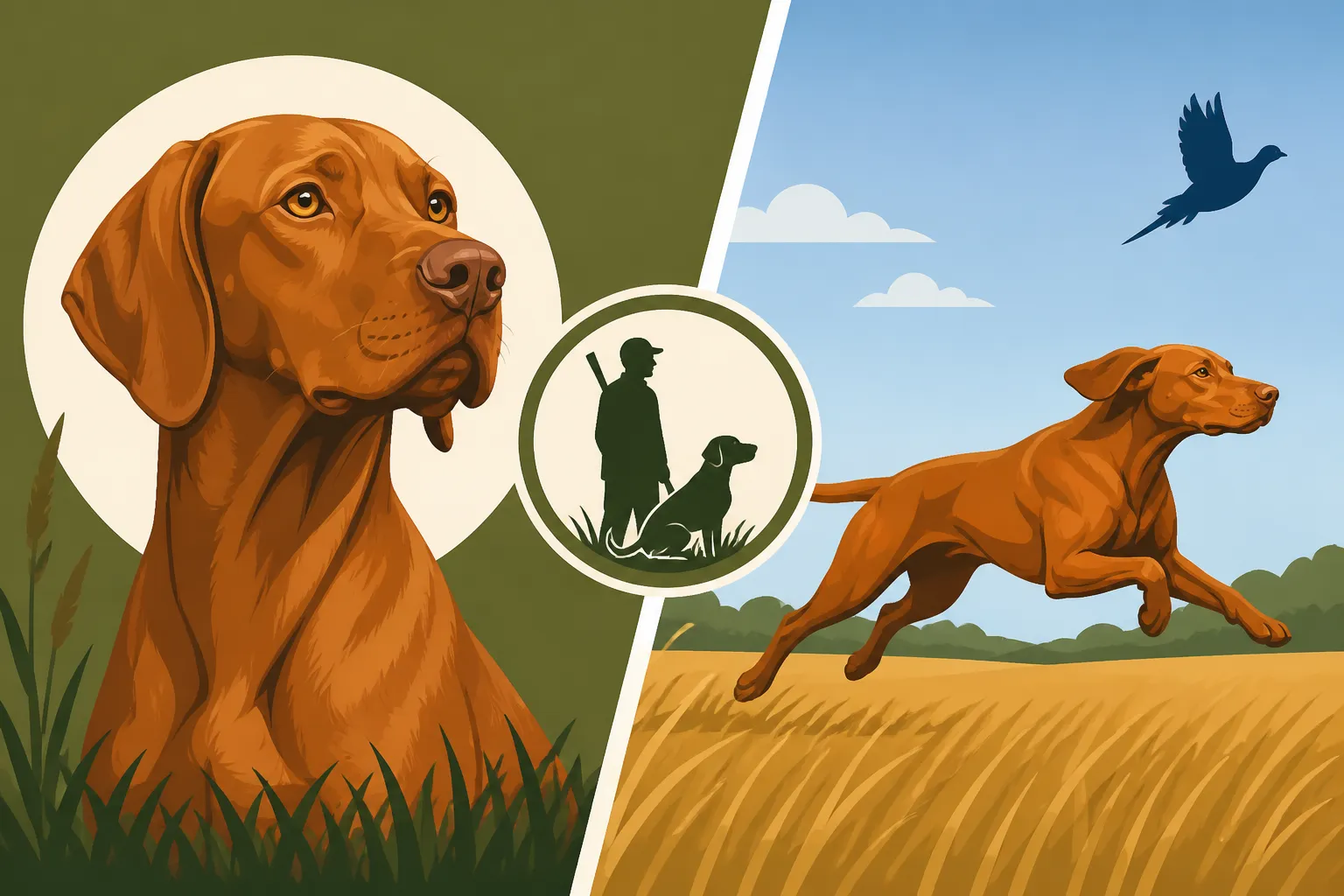
A Vizsla can run in NAVHDA tests, and the breed’s pointing, tracking, retrieving, and water-work instincts make it a natural fit for versatile-dog testing. The part that often catches new handlers off guard is that “natural ability” does not mean a dog arrives fully trained. Here’s what the tests involve, how a Vizsla may fit each level, and how to prepare without rushing the dog.
Can a Vizsla enter NAVHDA tests
What NAVHDA evaluates
NAVHDA, the North American Versatile Hunting Dog Association, tests hunting dogs across several kinds of work rather than judging only one specialty. The program is designed to assess a dog’s abilities in the field, in water, on a track, and in cooperation with its handler. That versatility is one reason Vizsla owners consider the tests: the breed is a pointing dog, but its work is not limited to pointing birds.
NAVHDA tests are not breed-specific competitions. A Vizsla does not need to resemble a particular “ideal” style of pointing dog to take part. The dog is assessed against the test’s requirements, with attention to its performance and cooperation. Its range, pace, and manner of working can vary from those of another dog, even one from the same litter.
That does not mean every Vizsla will enjoy every part of the experience. One dog may be bold in water but need help focusing in a busy field. Another might point naturally yet be reluctant to retrieve. Test readiness depends on the individual dog’s development and training, not simply its breed name.
If you are still working out what “versatile” means in practice, What Versatile Means for a Vizsla offers useful context. A Vizsla’s ability to point, retrieve, and work in different settings can make the format appealing, but it does not remove the need to teach the dog how to work with you.
Does the breed need special permission
In general, Vizslas are among the breeds people bring to NAVHDA events. The important details are the dog’s eligibility under the association’s current rules, the event’s entry requirements, and the paperwork required for that particular test. Check with the local chapter or event organizer before making plans, especially if your dog’s registration or background is unusual.
It is also worth separating eligibility from preparation. Being eligible to enter does not mean a dog is ready to test, and registering for a test does not make it a training program. A handler should understand what will be asked of the dog and give it suitable practice beforehand.
A local chapter can be a practical first stop. You may be able to watch a test, meet handlers with Vizslas, and ask how the event is run before you decide whether to enter. Observing helps make the setting less mysterious: you can see how dogs move between phases, how handlers manage them, and what the pace of the day feels like.
Which NAVHDA test might suit a Vizsla
NAVHDA offers tests for different stages of ability. The names and requirements matter, but so does the dog standing in front of you. A young dog with promising instincts may be a good candidate for an introductory test while still needing ordinary training and maturity before more demanding work.
| Test level | General purpose | What a Vizsla handler should consider |
|---|---|---|
| Natural Ability | Evaluates core inherited hunting abilities and cooperation | Focus on exposure, confidence, and observing what the dog offers naturally |
| Utility Preparatory | Provides a step between natural ability and advanced trained work | Useful when the dog has foundations but needs more polish and reliability |
| Utility | Assesses more advanced, trained performance | Requires deliberate preparation and dependable handling across several tasks |
| Invitational | A high-level event for qualifying dogs | Check current qualification and entry rules before planning toward it |
The table is a broad orientation, not a substitute for the current test rules. The details can change, and a chapter or event organizer can explain the expectations that apply to an upcoming test.
Natural Ability is not a test of perfection
Natural Ability is often the first NAVHDA test owners ask about. It is intended to assess basic hunting characteristics and cooperation, rather than demand the finished performance expected of a highly trained dog. A Vizsla may show an instinctive interest in scent, birds, tracking, or water, but the strength and maturity of those behaviors vary.
Handlers sometimes put unnecessary pressure on themselves at this stage. They may feel their dog has to produce a polished point on command or retrieve perfectly to be considered promising. That is not a helpful way to think about a test focused on natural abilities. The goal is to understand what the dog demonstrates, not to make a young dog look like an experienced hunting partner.
Age alone is not a reliable guide to readiness. A dog may be old enough to enter but lack confidence around water, have limited exposure to birds, or find a busy test environment distracting. For more on early exposure, see The Age a Vizsla Should Meet Its First Bird. Thoughtful introductions should be safe and positive, not a scramble to check boxes before a test date.
Advanced tests require trained skills
Utility Preparatory and Utility are for dogs with more developed training. By those stages, the handler is generally building on instincts and teaching more reliable, deliberate performance. The dog needs to understand cues, respond to direction, and remain connected to its handler even when birds, water, scent, or other dogs are competing for its attention.
This is where a Vizsla’s sensitivity can matter. Some respond eagerly to clear, upbeat handling; others become hesitant if training feels confusing or overly forceful. Steady progress is usually more useful than drilling a task until the dog becomes tired or frustrated. A dog that understands the work and trusts its handler is in a better position to show what it can do.
If you are deciding how much formal instruction is appropriate, Whether a Vizsla Needs Formal Gun Dog Training can help you think through the options. A knowledgeable trainer can be useful, but the owner still needs to learn how to handle the dog consistently. The goal is a working partnership, not simply a dog that has rehearsed a sequence.
What a Vizsla may do well and where it may need help
Pointing is a starting point, not the whole test
Vizslas are pointing dogs, and some show an interest in scent and pointing at a young age. But a natural point is not the same as a finished, steady response in every situation. A dog may point one bird confidently and then get excited, move in, or lose focus the next time. Those variations are part of learning.
Some handlers also worry if their dog does not point on cue. A dog’s natural pointing behavior and its response to formal training are related, but they are not identical. Test preparation should build useful habits without suppressing the dog’s confidence or turning every outing into an examination. Whether a Vizsla Points Naturally explores what owners may see as those instincts emerge.
Field style varies, too. Some Vizslas search energetically and cover ground; others work more closely with their handler. A handler should learn to read the dog, keep it safe, and avoid comparing its every move with a different dog’s performance. The test is an opportunity to assess the individual animal, not a contest to prove that all Vizslas work the same way.
Retrieving and water work are learned as well as inherited
Many Vizslas enjoy retrieving, but “likes to chase a thrown object” and “retrieves reliably to hand” are different skills. A dog may pick up a bumper and parade around with it, drop it short, or become distracted on the way back. Those are training questions, not reasons to assume the dog cannot retrieve. Whether a Vizsla Retrieves to Hand looks more closely at the difference between retrieving interest and a trained delivery.
Water work can be another area of variation. Some dogs enter water readily; others need time to become comfortable with banks, depth, footing, or cold conditions. Never force a dog into water simply to prepare for a test. Calm, controlled introductions in a safe place give you a better sense of the dog’s comfort and ability. For more on individual differences, see Whether a Vizsla Works Water.
Tracking is also worth practicing as a separate skill. A dog that is enthusiastic in the field may initially find a track slow or unfamiliar. Start with manageable exercises and let the dog learn to use its nose methodically. If it becomes confused, simplify the setup rather than adding pressure. Versatile work asks a dog to shift gears, and that takes practice.
Preparing your Vizsla for a NAVHDA test
Build foundations before choosing a date
A useful preparation plan begins with everyday basics: a dog that can settle, come when called in suitable training conditions, walk with its handler, and recover from distractions. Those foundations make field sessions easier and help keep the experience safe. They are especially valuable for an energetic dog that spots a bird or scent and wants to investigate before checking in.
Work on one skill at a time. You might introduce birds in a controlled setting, practice short tracking exercises, and build water confidence separately. Keep sessions brief enough that the dog stays engaged. A session that ends while the dog is still keen is often more productive than one that continues until the dog is tired or frustrated.
The right pace depends on the individual. A young dog who is still growing should not be pushed into demanding repetitive exercise just to meet a calendar. Likewise, a dog with limited bird exposure may need more gradual introductions before testing. It is reasonable to postpone an entry if your dog needs additional time.
A local NAVHDA chapter can help you understand how its training days work and where to observe. Ask what experience is expected before attending, what equipment is appropriate, and whether dogs can watch from a quiet distance. Seeing a test or training day can reveal practical details that are hard to learn from a rulebook alone.
Keep test day focused on the dog
A test day can be stimulating: unfamiliar grounds, other dogs, handlers, equipment, and long periods of waiting. Plan for water, shade or warmth as the weather requires, a secure way to manage your dog, and enough time to let it settle. Follow the event organizer’s instructions about check-in, equipment, and where dogs may be kept.
Avoid trying to teach a major new skill in the parking area. If your dog is nervous or distracted, a frantic last-minute practice session can make the situation worse. Give it a chance to acclimate, and listen to the judges and event staff about how each phase will proceed. You are there to present the dog fairly, not to force a particular result.
A test result is information, not a verdict on your dog’s worth or your ability as a handler. It may show a strength you can build on, or point to an area that needs more exposure. If the dog has a rough day, consider whether it was the environment, training, confidence, or simply an off day before drawing conclusions. A calm debrief is more useful than scolding a dog that does not understand why its performance disappointed you.
For a first outing, it may help to watch without entering. That lets you see the flow of the event and think through what your dog would need to be comfortable. It also gives you the chance to talk with handlers about their preparation, including what they wish they had practiced earlier.
Choosing a realistic goal for your dog
Match the test to the dog you have
A confident young Vizsla with encouraging instincts may be a good candidate for Natural Ability, while a dog with more experience may be ready to work toward advanced training. But a dog’s age, health, confidence, and prior exposure all matter. If your dog is hesitant around birds or water, there is no shame in taking more time before entering.
Think about what your dog can do reliably, not just what it has done once. A single exciting retrieve or a brief point in the backyard does not necessarily mean the dog is ready for a full test environment. Conversely, a dog that is still developing may have plenty of promise even if it is not yet consistent.
It can help to set a goal that is within your control. For example, you might aim to attend a chapter training day, expose your dog to a new environment calmly, or improve one foundational skill. These are worthwhile steps even if you decide not to test immediately.
Keep the bigger picture in mind
NAVHDA can give Vizsla owners a structured way to evaluate and develop hunting abilities. It can also create a community around training, field work, and learning to handle a versatile dog. The best outcome is not necessarily a particular score; it is a dog that gains confidence and a handler who better understands how to work with it.
If you are just beginning, Whether a Vizsla Is Really a Pointer or a Retriever can help frame the breed’s range of hunting work, and Whether a Vizsla Is Ruined by a Bad First Hunt offers another perspective on why patient introductions matter. Thoughtful preparation, clear expectations, and humane handling make the experience more useful for both of you.
So, yes: a Vizsla can run in NAVHDA tests. Confirm the current entry requirements with the event organizer, choose a level that fits your dog’s development, and prepare for the actual tasks rather than the label of the test. Your Vizsla does not need to be perfect to take part. It needs an opportunity to show its abilities safely, with a handler who is ready to learn alongside it.
Disclaimer
This article is for general informational purposes only and does not constitute professional advice. Laws, prices and regulations vary by location and change over time. Consult a qualified professional for guidance on your specific situation.