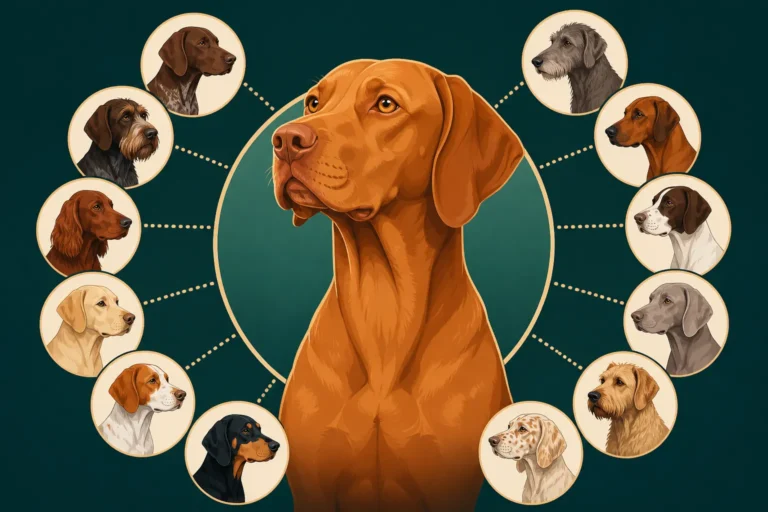
Whether a Wirehaired Vizsla Is Rarer in America
A Wirehaired Vizsla can be surprisingly hard to find in the United States, especially compared with the familiar smooth-coated Vizsla. That does not necessarily mean the breed is endangered or impossible to own; it usually means fewer breeders, smaller local networks, and longer waits. This guide explains why the wirehaired variety is uncommon, how to search responsibly, and what rarity does—and does not—tell you.
Is the Wirehaired Vizsla rare in America
How it compares with the smooth-coated Vizsla
Yes, the Wirehaired Vizsla is generally much less common in the United States than the smooth-coated Vizsla. Many people recognize the smooth, rust-colored dog from parks, sporting events, or breed listings, while they may never have met a Wirehaired Vizsla in person. The wirehaired variety has a smaller presence in American homes and breeding programs, so it is less likely to turn up through a casual local search.
That difference is noticeable when you begin looking for a puppy. There may be fewer breeders within driving distance, fewer litters advertised at any one time, and fewer owners nearby who can share first-hand experience. In some regions, interested buyers may need to speak with breeders in other states or be prepared to wait for a suitable litter.
The two breeds share a name and a Hungarian sporting-dog heritage, but they are not simply two coat types of one registered breed in the United States. The Wirehaired Vizsla is recognized as a separate breed. For a closer look at how their histories and appearances differ, see The Wirehaired Vizsla Is a Different Breed and Whether a Wirehaired Vizsla Is the Same Breed.
Rare does not automatically mean endangered
“Rare” can mean several things in everyday conversation. A breed may be uncommon in a particular country, hard to find in a particular region, or simply less visible than a popular breed. Those descriptions do not automatically mean that the breed is facing imminent extinction. The Wirehaired Vizsla has dedicated breeders and enthusiasts, but its American population is comparatively small.
It is also useful to distinguish rarity from scarcity caused by a temporary gap in available litters. A breeder may plan litters only occasionally, or a responsible breeder may have more qualified homes than puppies. A quiet period in online listings is not, by itself, evidence that the breed has disappeared or that a puppy from an unverified seller is a good opportunity.
Breed history can add context, but it should not be used to assume that all modern lines are identical or that a dog’s country of origin guarantees health or temperament. The broader story of how Hungarian and Western Vizsla populations developed is explored in Whether Hungarian and Western Vizslas Diverged.
Why there are fewer Wirehaired Vizslas in the United States
A smaller breeding and owner network
A less common breed tends to have a smaller circle of breeders, owners, trainers, and clubs. That can make it harder to hear about planned litters through everyday channels. It may also mean fewer nearby opportunities to meet adult dogs or talk with experienced owners before committing.
The smaller network can affect the practical side of ownership, too. You may have fewer local group activities or breed-specific events, and finding a trainer who has worked with Wirehaired Vizslas may take some extra calling. That does not mean general, reward-based training support is unavailable. It simply helps to ask trainers about their experience with active, sensitive sporting breeds rather than assuming they have handled this exact breed.
A breeder who communicates openly can help fill some of that information gap. Ask how they raise puppies, what they prioritize in their breeding choices, and what kind of home suits their dogs. A thoughtful conversation should feel like a two-way fit check, not a rushed transaction.
Recognition and visibility
The Wirehaired Vizsla has a more recent profile in the American dog-show landscape than the smooth-coated Vizsla. The American Kennel Club recognized the breed in 2014, which gave it a clearer place in that organization’s events and public-facing breed information. Recognition can improve visibility, but it does not instantly create a large population or a dense network of breeders across the country.
Visibility also depends on where people spend time. A family that does not attend sporting-dog events may rarely see one, even if a small number of dogs live in the wider region. Meanwhile, the smooth-coated Vizsla has a more established presence in many communities, so people may assume that any rust-colored Vizsla-like dog is the familiar smooth breed.
That assumption can cause confusion in online searches. Use the full breed name when contacting breeders, and ask about registration and parentage rather than relying only on a photograph or a “wirehaired” label in an advertisement. The breed’s coat is a defining feature, but a rough-looking coat alone does not prove that a dog is a Wirehaired Vizsla.
What rarity means when you are looking for one
Finding a responsible breeder
Because the pool is smaller, it can be tempting to move quickly when a puppy appears available. It is worth slowing down. A responsible breeder should be willing to discuss health, temperament, socialization, and the needs of the adult dogs they produce. They should also welcome reasonable questions about their breeding program and be clear about the documentation they provide.
Ask what health screening is appropriate for the breed and for the specific dogs being bred. Request an explanation of the results, rather than treating a list of tests as a guarantee that a puppy will never develop a health problem. You can also ask whether the breeder’s priorities include stable temperament and functional structure, not just coat and color.
A scarce breed does not make every puppy listing trustworthy. Be cautious if a seller pressures you to send money immediately, avoids questions about the parents, or offers to arrange a puppy without a meaningful discussion about your home. A waitlist or a longer search may be frustrating, but it is usually better than choosing a dog based on availability alone.
Comparing your options
It helps to separate the questions “Can I find one?” and “Is this the right dog for me?” Rarity can make the search longer, but it should not be the main reason to choose the breed. Consider the dog’s exercise needs, training needs, coat care, and fit with your household before joining a breeder’s list.
| What you are comparing | Wirehaired Vizsla | Smooth-coated Vizsla |
|---|---|---|
| Availability in the United States | Generally less common, with a smaller breeder network | More commonly encountered |
| Breed status | A distinct breed, not just a coat variation | A separate, established breed |
| Coat | Dense, wiry coat with furnishings | Short, smooth coat |
| Search considerations | You may need to contact breeders farther away or wait | You may have more local options, depending on your region |
| Cold-weather expectations | The coat may offer some added protection, but it does not make the dog cold-proof | The short coat offers limited insulation |
| Best next step | Verify breed identity, health practices, and the breeder’s approach | Apply the same careful checks and evaluate fit |
The Wirehaired Vizsla’s coat does not remove the need for sensible cold-weather care. Individual dogs vary, and wind, wet conditions, activity level, and time outdoors all matter. More detail is available in Whether a Wirehaired Vizsla Handles Cold Better. Size also should not be assumed from the coat type alone; compare individual dogs and breed guidance in Whether a Wirehaired Vizsla Is Bigger.
When gathering basic supplies, make a list based on the dog’s actual coat and daily life rather than buying every product marketed to sporting breeds. For example, you may want a suitable brush, nail-care tools, a secure walking setup, and weather-appropriate gear. If you are comparing everyday pet supplies, Chewy is one retailer you might check alongside local shops; confirm that any product you choose suits a wiry coat and your dog’s needs. Chewy listings and other retailers’ assortments can vary, so use product descriptions as a starting point, not a substitute for breeder or veterinary guidance.
How to search without letting rarity rush your decision
Build a careful search plan
Start by contacting breed clubs and asking for breeder referrals, then widen your search gradually if there are no suitable options nearby. Keep a simple record of who you spoke with, what questions you asked, and what documentation they offered. This makes it easier to compare breeders fairly when conversations happen weeks apart.
If you are open to traveling, ask how the breeder handles visits, puppy introductions, and the transition to a new home. A long-distance arrangement may be workable, but you should still be able to speak directly with the breeder and understand the puppy’s upbringing. Avoid relying only on polished photos, a social-media page, or a seller’s claim that a puppy is “rare.”
You can also ask to meet adult Wirehaired Vizslas, attend a dog event, or speak with owners. Seeing the breed in real life can help you understand the coat, energy, and temperament better than a short description. It is particularly helpful if you are comparing the breed with the smooth-coated Vizsla or another sporting dog.
Check whether the breed suits your household
A less common dog is not automatically a more suitable dog. Wirehaired Vizslas are active sporting dogs, and prospective owners should be ready to provide exercise, training, and companionship. A spacious yard alone does not replace interaction or purposeful activity, and a dog who is bored or under-stimulated can be difficult to live with regardless of how rare the breed is.
If you are a first-time owner, think carefully about the daily routine you can maintain through workdays, bad weather, and busy seasons. Consider whether you can offer consistent training and whether the dog will have an appropriate outlet for its energy. You may find it useful to compare your expectations with Whether a Vizsla Suits a First Time Owner.
Rarity can create a strong urge to claim the first available puppy. Try to treat availability as one factor, not the deciding factor. A well-matched dog from a breeder who answers questions is a better goal than a quick purchase from a seller who uses rarity to create pressure.
For basic care planning, Chewy and other pet retailers can be useful places to compare supplies such as grooming tools or bedding, but check that each item fits the individual dog. A wire coat may need different upkeep from a smooth coat, and advice from a groomer familiar with hand-stripping or breed-appropriate coat care may be more useful than a generic product label. If you are organizing a shopping list, Chewy can be one place to review options while you confirm care choices with your breeder or veterinarian.
Disclaimer
This article is for general informational purposes only and does not constitute professional advice. Laws, prices and regulations vary by location and change over time. Consult a qualified professional for guidance on your specific situation.