How Tall a Vizsla Stands
A Vizsla’s height is easy to misjudge when you’re looking at a puppy, a lanky adolescent, or a dog standing alert with its head held high. Adult males are typically 22 to 24 inches tall at the shoulder, while females are typically 21 to 23 inches. This guide explains where to measure, what those figures mean, and when a height difference may be worth discussing with your vet.
How tall an adult Vizsla stands
Typical height for male and female Vizslas
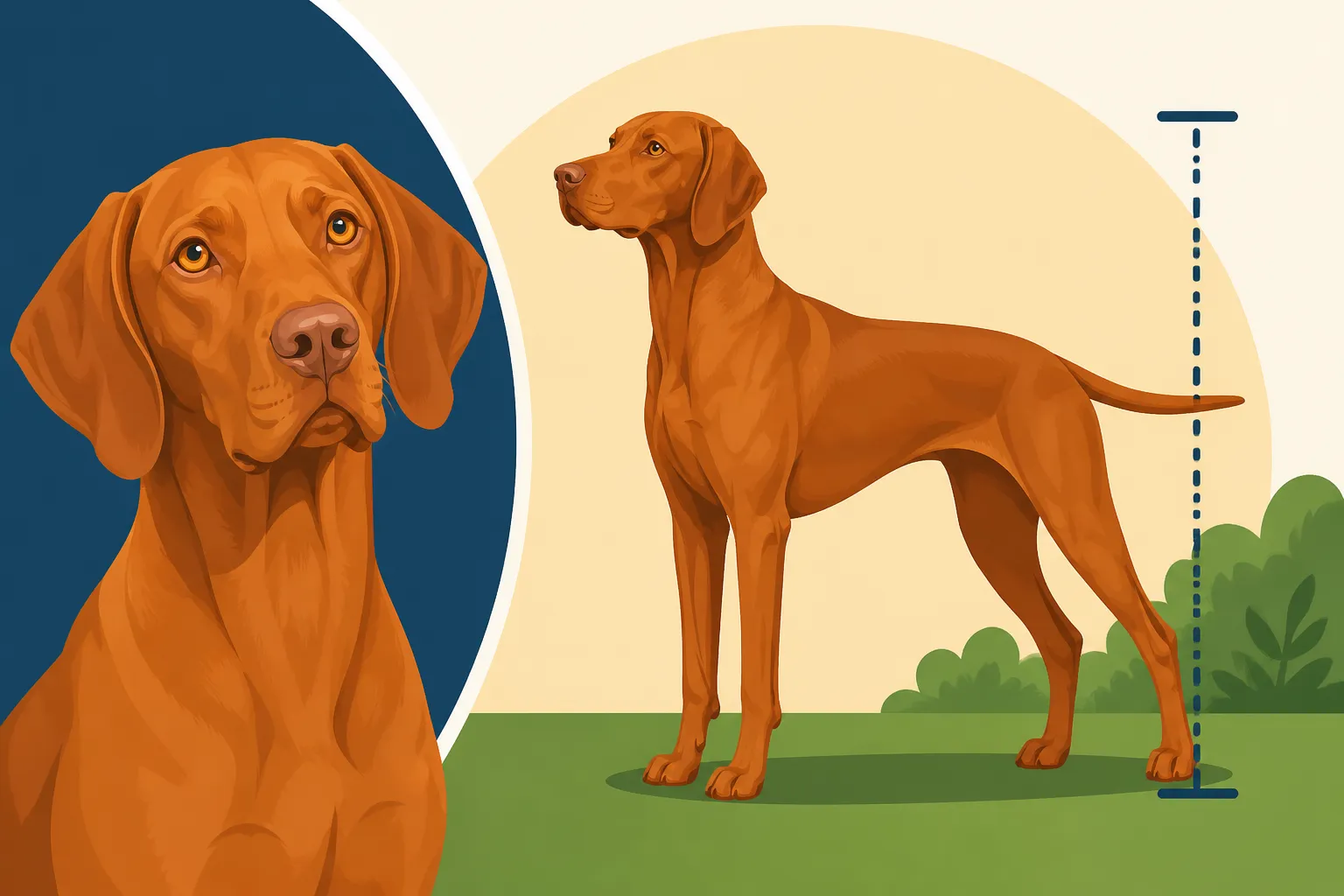
For an adult Vizsla, the usual height range is 22 to 24 inches for males and 21 to 23 inches for females. Height is measured at the withers, the highest point of the shoulder blades—not at the top of the head. A dog that’s standing proudly with its neck stretched can look taller than it is when measured correctly.
| Vizsla | Typical adult height at the withers |
|---|---|
| Male | 22 to 24 inches |
| Female | 21 to 23 inches |
These figures describe a typical breed range, not a promise that every healthy Vizsla will land neatly within it. Individual dogs can vary, and a small difference from the middle of the range doesn’t automatically indicate a problem. Height is only one part of the picture; body condition, overall proportions, movement, and health matter too.
If you’re comparing a Vizsla with another sporting breed, remember that height alone won’t tell you how large or substantial a dog looks. Frame, muscle, coat, and posture all affect the impression. For a broader look at size and build, see How Big a Vizsla Gets and What a Vizsla Actually Weighs.
What the height range means in everyday life
A Vizsla in this range is a medium-sized, athletic dog: tall enough to have a noticeable presence in the house, but not so large that height alone tells you whether a bed, crate, car setup, or harness will fit. Two dogs of the same height can have different body lengths and chest proportions, so measure the dog and the equipment rather than relying only on a breed label.
That’s especially useful when buying a crate. A dog needs room to stand naturally, turn around, and lie down comfortably, but a crate that is much too large may not suit every training situation. If you’re comparing crate options at Chewy or another retailer, check the product’s measurements against your dog’s actual body dimensions rather than choosing by the word “Vizsla” alone.
Height also doesn’t determine how much a dog weighs. A lean, long-legged Vizsla may look quite different from a stockier dog at the same shoulder height. If you’re unsure whether your dog’s shape is typical, Whether a Vizsla Looks Underweight When It Is Not explores why a healthy Vizsla can appear unusually slim.
How to measure a Vizsla’s height accurately
Find the withers before you reach for a tape measure
The withers are at the base of the neck, where the shoulder blades meet. They are the standard reference point for measuring a dog’s height. Measuring to the top of the head, ears, or collar gives a different number and can make a Vizsla seem taller than the breed’s usual height range.
For a simple home measurement, stand your dog on a firm, level surface. Ideally, your Vizsla should be standing naturally, with all four feet bearing weight and the front legs straight beneath the body. A relaxed stance is better than stretching the neck upward or encouraging the dog to lean forward.
Place a flat object, such as a book or a carpenter’s level, across the withers so it sits parallel to the floor. Mark where it meets the wall, then measure from that mark down to the floor. If your walls or floors are uneven, repeat the measurement on another flat surface before drawing conclusions.
Make the measurement easier on a wiggly dog
It can be tricky to measure a young or energetic Vizsla by yourself. Ask another person to keep the dog calmly occupied while you position the level and take the reading. A few quiet treats can help, but try not to lure the dog into stretching upward or shifting its feet, which changes its posture.
Take the measurement more than once, especially if the first attempt was rushed. If the readings differ, check that the dog stood squarely each time and that the level was resting at the withers rather than farther up the neck. A flexible tape can help with other body measurements, but for height, a straight vertical measurement from the floor is easier to interpret.
If you’re putting together a puppy growth record, write down the date, age, and measurement each time. Chewy or another pet-supply retailer may be one place to look for basic measuring or record-keeping supplies, but a notebook and a household ruler can work just as well. Consistent technique matters more than having special equipment.
How a Vizsla’s height changes as it grows
Puppy height is not adult height
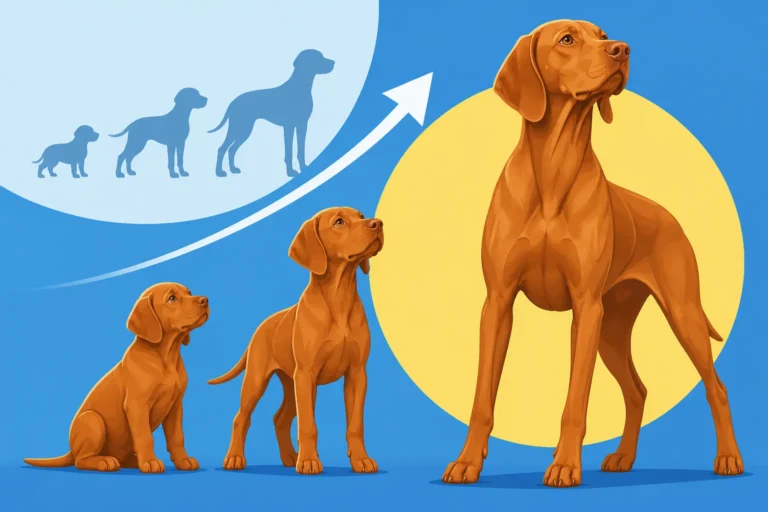
Puppies grow quickly, and a young Vizsla may look all legs one week and suddenly seem broader the next. Growth doesn’t always happen at an even pace: the legs may appear to lengthen before the chest and body fill out. That can make a puppy look awkward or unusually tall for a while without telling you exactly how big the finished dog will be.
A single puppy measurement isn’t a reliable forecast of adult height. Family traits, sex, overall growth pattern, and individual variation all play a part. If you’re choosing a puppy or comparing littermates, focus on health, temperament, and responsible breeding practices rather than trying to predict adult size from one snapshot.
Vizslas commonly continue developing after they have gained much of their adult height. Their bodies may become more mature-looking as they build muscle and fill out. For more on that distinction, read The Age a Vizsla Reaches Full Size. If you’re still comparing the breed with other sporting dogs, The Vizsla Against the Weimaraner and the Shorthair offers useful context beyond height alone.
Track growth without turning it into a daily worry
Most owners don’t need to measure a puppy every few days. Frequent checks can make ordinary fluctuations in posture or measuring technique seem like meaningful changes. Instead, take occasional measurements under similar conditions and look at the overall pattern alongside your vet’s assessment of growth and body condition.
A written record can be useful if you’re concerned about a sudden change or want to describe your puppy’s development at a routine appointment. When noting measurements, use the same surface and method each time, and include the dog’s age. A growth chart or log may be handy, but it should support—not replace—your veterinarian’s view of the puppy’s overall development.
If you’re buying an adjustable harness or planning for a puppy’s future crate, don’t assume that today’s size will last through the growth period. Check the item’s adjustment range and safety guidance, and reassess the fit as your dog changes. When browsing at Chewy, compare the listed measurements with your puppy’s current fit and allow for sensible adjustment rather than selecting an item based on an estimated adult height alone.
When a Vizsla’s height deserves a closer look
Small differences are not automatically a health problem
A dog just outside a typical height range isn’t necessarily unhealthy. Breed ranges describe the usual adult size, but individuals aren’t manufactured to identical measurements. A slight difference can reflect normal variation, and a dog’s apparent height may also change depending on stance, flooring, or how accurately the withers were identified.
It’s more helpful to consider height alongside other signs. Is your dog growing steadily? Does its body look proportionate? Is it eating, moving, and behaving normally? A number on a tape measure can’t answer those questions by itself. If your Vizsla is thriving and your vet is satisfied with its development, a small deviation from a typical range may simply be individual variation.
For owners comparing height and build, Whether a Vizsla Is Lighter Than a Weimaraner can help separate the question of stature from differences in overall mass. The breed’s characteristic outline and coat color can also affect how its proportions look; The Golden Rust Color Only a Vizsla Wears covers that distinctive appearance.
Ask your veterinarian about unusual growth patterns
Bring up height or growth concerns if your puppy’s development seems to change abruptly, if one measurement differs markedly from the next, or if a change comes with other symptoms such as persistent lameness, weakness, appetite changes, or unusual fatigue. Those signs don’t point to one specific cause, but they are good reasons to seek an individual assessment instead of relying on breed averages.
It may help to bring your notes and explain how you measured. A vet can consider your dog’s age, history, body condition, and examination findings together. If you are concerned that your puppy is growing too slowly or looks unusually small, try not to compare it too closely with a single dog at the park; age and build can make same-breed dogs look surprisingly different.
Height can be a useful reference when you’re planning equipment or learning about the breed, but it is not a health test. For a clearer picture of your Vizsla’s size, combine a careful shoulder-height measurement with an assessment of body condition and advice from your veterinary team.
Disclaimer
This article is for general informational purposes only and does not constitute professional advice. Laws, prices and regulations vary by location and change over time. Consult a qualified professional for guidance on your specific situation.