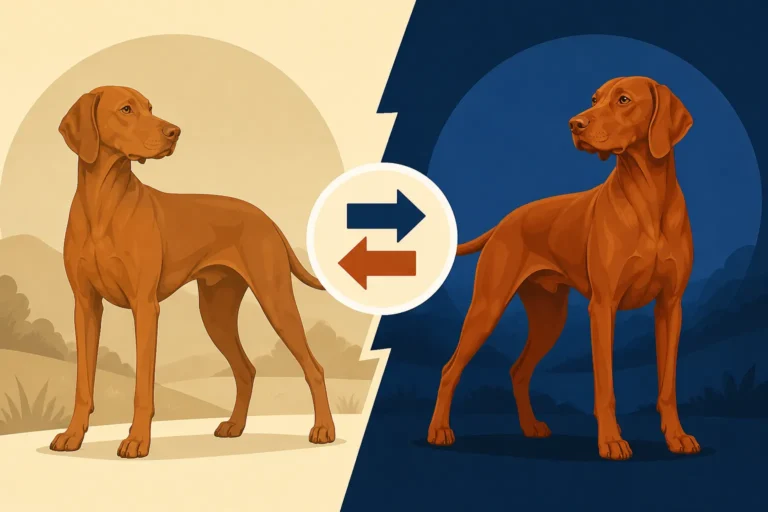
Whether Hungarian and Western Vizslas Diverged
It's a common question among prospective Vizsla owners, and even those of us who have lived with these wonderful dogs for years: are Hungarian Vizslas truly different from what we might call "Western" Vizslas? The truth is, the journey these dogs took from their ancestral home in Hungary to become beloved companions and hunting partners worldwide created some interesting distinctions, and it's not just a matter of geography. Understanding these subtle divergences can really help you appreciate the breed's history and make informed choices.
The Early History and Forced Migration of the Vizsla
To understand any potential differences between Vizslas today, we have to go back to their roots and the dramatic events that shaped the breed. The Vizsla, as we know and love them, almost vanished from the face of the earth not once, but twice. They were the cherished hunting companions of Hungarian nobility, used for centuries to point and retrieve game. This close association with the aristocracy, combined with political upheaval and two World Wars, nearly spelled the end for these magnificent dogs.
During and after World War II, as Hungary faced immense political and social turmoil, many breeders and owners feared for the future of their beloved dogs. Vizslas were literally smuggled out of Hungary by desperate owners who knew the breed could not survive the chaos and poverty engulfing their homeland. These brave efforts saved the breed from complete extinction, but in doing so, they also set the stage for different breeding paths. Imagine having to make that choice, knowing your dog's lineage, its very existence, depended on a risky escape. It’s a testament to the dedication of those early breeders that we have Vizslas at all. You can read more about The Vizsla Came Back From Extinction Twice to truly appreciate this history.
As these courageous dogs found new homes in countries like the United States, Canada, the United Kingdom, and other parts of Western Europe, their breeding continued, but often in isolation from the lines that remained, or were painstakingly rebuilt, in Hungary. The Iron Curtain, a political barrier that physically and ideologically separated Eastern and Western Europe for decades, played a significant role here. It wasn't easy, or often even possible, for breeders to share genetics or collaborate on breed development across these divides. This meant that while all Vizslas shared the same foundational genetic material, the populations began to evolve with different influences and priorities.
Breeding Priorities and Their Impact
Once separated, the various Vizsla populations in Hungary and the West began to be shaped by different environments, cultural values, and breeding goals. This is where the divergence truly started to manifest.
Hungarian Breeding Philosophy
In Hungary, and throughout much of continental Europe, there's often a stronger emphasis on maintaining the Vizsla's original purpose as a versatile hunting dog. The breed standard, as overseen by the Fédération Cynologique Internationale (FCI), under which Hungarian breeders operate, tends to value strong working ability, keen hunting instincts, and a robust physical structure built for endurance in the field. Breeders often prioritize natural pointing, retrieving, and tracking aptitudes. It's not uncommon for breeding dogs to require working titles in addition to conformation titles before they are considered suitable for breeding. This ensures that the essential characteristics that made the Vizsla a prized hunting companion for centuries are preserved.
For example, a Hungarian breeder might evaluate a puppy's "birdiness" from a very young age, looking for that spark and natural inclination towards game. They're often looking for a dog that will enthusiastically range, hold a steady point, and retrieve softly to hand. If you're wondering Whether a Pet Bred Vizsla Still Hunts, this focus is a key difference. While conformation (how the dog looks according to the standard) is still important, it's often viewed through the lens of functionality – does this dog's structure allow it to work effectively all day?
Western Breeding Philosophy
In Western countries, particularly in North America, while hunting ability is still highly valued by many dedicated breeders and owners, there's also been a significant rise in the popularity of the Vizsla as a family companion and show dog. The American Kennel Club (AKC) and The Kennel Club (UK) breed standards, while similar to the FCI standard, can sometimes lead to slightly different interpretations and breeding priorities. For some breeders, the emphasis might shift towards a more "showy" appearance, a slightly heavier bone structure, or a specific temperament that excels in the show ring and as a docile family pet.
This isn't to say that Western Vizslas can't hunt – far from it! Many outstanding field dogs come from Western lines, and many breeders strive for the "dual-purpose" Vizsla that can perform brilliantly in both the field and the show ring. However, the sheer volume of Vizslas bred primarily for pet homes, or where success in conformation shows takes precedence over proven working ability, means that some lines may have subtly drifted from the Hungarian ideal of the ultimate versatile hunting machine. It also means that temperament, while always important, might lean more towards being exceptionally biddable and tolerant in a busy household, even if it means a slight reduction in raw hunting drive in certain lines. Dogs purchased for pet homes might still carry a strong hunt drive, which is why The Exercise a Vizsla Needs Every Day is so important regardless of origin.
Physical and Temperamental Nuances
Given these differing breeding philosophies, have observable differences emerged between Hungarian and Western Vizslas? In many cases, yes, though these are often subtle and not universal.
Physical Distinctions
While both types adhere to the Vizsla breed standard, you might sometimes notice slight variations. Historically, some "Hungarian-bred" Vizslas were perceived to be a bit lighter-boned, perhaps with a more athletic, leaner build that screams "endurance runner." This build would be perfectly suited for long days quartering fields or tracking game. Their coats might appear slightly finer, and their overall presentation might be one of streamlined efficiency rather than power. They generally have the same beautiful golden-rust coat, a hallmark of the breed, but nuances in shade can occur across all lines.
Conversely, some "Western-bred" Vizslas, particularly those from show lines, might present with a slightly heavier bone structure, a more substantial head, and a more pronounced chest. These characteristics can be highly prized in the show ring, where a powerful, elegant outline is rewarded. It's a fine line, of course, as breeders strive to maintain soundness and athleticism. Think of it less as two entirely different dogs and more as different interpretations of the same ideal. Just like people from different regions might have slightly different average builds, so too can dog populations subtly diverge. Regardless of origin, you’ll be checking your Vizsla over for cuts and scrapes after a long day in the field, as The Thin Skin a Vizsla Takes Into the Field is common for all Vizslas.
Temperamental Distinctions
Temperament is another area where subtle differences can arise, though it's important to stress that the core Vizsla personality – affectionate, intelligent, energetic, and sensitive – remains consistent across the board. The "Velcro Vizsla" trait, for instance, is universal. You can explore What Velcro Behavior Looks Like in a Vizsla for more on this unique quality.
However, a Vizsla from lines strictly bred for hunting in Hungary might exhibit an even more intense drive and focus on game. They might be quicker to switch into "work mode" and possess a higher prey drive, requiring experienced handling to channel that energy. This isn't a bad thing; it's what they were bred for! These dogs excel when they have a job to do and thrive on mental and physical challenges.
Western lines, particularly those with a stronger emphasis on companion qualities, might sometimes produce individuals that are a touch more laid-back indoors, quicker to adapt to a purely pet lifestyle, or perhaps slightly less intense in their hunting drive if not specifically selected for it. This can be appealing to families who want the Vizsla charm without the full-throttle hunting machine. However, don't mistake "less intense" for "low energy." A Vizsla is always a high-energy dog, and even a calmer Western-bred Vizsla still needs significant exercise and mental stimulation. Whether your Vizsla is Hungarian or Western bred, you'll still be asking How Many Hours a Vizsla Can Be Left Alone because of their strong desire for companionship.
Here's a simplified comparison of potential general trends, keeping in mind there's significant overlap:
| Characteristic | General Trend in Hungarian-Bred Vizslas | General Trend in Western-Bred Vizslas |
|---|---|---|
| Primary Focus | Strong emphasis on versatile hunting ability and performance. | Strong emphasis on conformation, temperament, and pet suitability. |
| Physical Build | Often leaner, more athletic, built for endurance; efficient. | Potentially slightly heavier bone, more substantial head; elegant. |
| Hunting Drive | Typically very high, intense, natural inclination for game. | Variable; can be very high, but some lines may have slightly less. |
| Temperament | Highly intelligent, driven, can be very focused on tasks. | Very affectionate, eager to please, adaptable to family life. |
| Breeding Criteria | Often requires working titles in addition to conformation. | Conformation titles are common; working titles vary by breeder. |
Navigating the "Hungarian vs. Western" Question for Owners
So, what does all this mean for you if you're looking for a Vizsla? Should you seek out a "Hungarian-bred" dog specifically?
Researching Breeders and Lines
The most crucial advice, regardless of whether you're looking at Hungarian or Western lines, is to do your homework on the breeder. A reputable breeder, no matter their location, will be transparent about their breeding goals, the health testing they conduct, and the temperament and working ability of their breeding stock. They should be able to articulate what traits they prioritize in their puppies.
If you are specifically looking for a strong hunting partner, then seeking out breeders who actively title their dogs in field trials or hunt tests, whether they are in Hungary, Europe, or North America, is paramount. These breeders are consciously selecting for the very traits you desire. They will be dedicated to preserving the Vizsla's working heritage. You can often learn a lot by asking What a Field Bred Vizsla Puppy Costs compared to a pet-bred one, as the investment reflects the specialized breeding.
Understanding the Breed Standard
Familiarize yourself with the breed standards from the various governing bodies (FCI, AKC, The Kennel Club). While they are largely similar, understanding the subtle differences can help you identify a breeder whose interpretation aligns with your vision for your future dog. Don't get too caught up in the "Hungarian vs. Western" label; instead, focus on the individual lines and the breeder's specific goals.
For example, some might believe that Whether Hungarian Vizsla Lines Are Healthier due to a presumed closer adherence to original breed type. However, health issues can occur in any line, and dedicated health testing (hips, elbows, eyes, thyroid, etc.) is the best indicator of a breeder's commitment to sound dogs, regardless of geographical origin. Diseases like Thyroid Failure in a Vizsla or Epilepsy in a Vizsla can affect any Vizsla, and responsible breeders are proactive about screening.
What to Ask a Breeder
When speaking with a potential breeder, ask specific questions about their dogs:
- What are their primary breeding goals? (e.g., strong hunting drive, excellent conformation, family temperament)
- What titles do their dogs hold (both parents)? Are they working titles, show titles, or both?
- What health clearances have been done on the parents (e.g., OFA for hips/elbows, CERF for eyes, thyroid panels)? Ask to see the actual documentation.
- How do they describe the typical temperament of their puppies?
- Do they have an active hunting program, or are their dogs primarily companions and show dogs?
A good breeder will be a wealth of information and will often interview you as much as you interview them, ensuring their puppies go to suitable homes.
The Vizsla's Essential Nature
Ultimately, whether a Vizsla comes from predominantly Hungarian or Western lines, the core traits of the breed shine through. They are still that energetic, intelligent, sensitive, and deeply affectionate "Velcro dog" that thrives on companionship and activity. They require a significant amount of exercise daily, love to be involved in everything their family does, and respond best to positive, gentle training methods. Their needs for mental stimulation and physical activity are paramount, regardless of their specific heritage. Ensuring your Vizsla gets enough activity can be as simple as having a large yard for them to run in, complemented by walks and playtime. If you're buying dog food or supplies, a brand like Chewy offers a wide selection that caters to a Vizsla's active lifestyle, from high-quality performance kibble to durable toys for mental stimulation.
The subtle differences are fascinating from a historical and breed development perspective, but for the average pet owner, focusing on responsible breeding practices, health, temperament, and ensuring the dog fits your lifestyle will lead to a happy, healthy Vizsla, no matter where its ancestors hailed from. Even if your Vizsla comes from show lines, it will still probably need Whether a Vizsla Needs a Performance Formula if you plan to do any serious hunting or dog sports. Many owners find Chewy is a great resource for finding specialized foods and supplements to meet these needs.
Disclaimer
This article is for general informational purposes only and does not constitute professional advice. Laws, prices and regulations vary by location and change over time. Consult a qualified professional for guidance on your specific situation.